Brad Pitt is one of Hollywood’s most recognizable actors, known for his performances in Fight Club, Ocean’s Eleven, and Once Upon a Time in Hollywood. Beyond his professional achievements, Pitt has spoken publicly about his past struggles with alcohol and his decision to pursue sobriety following his separation from Angelina Jolie in 2016.
His openness about attending Alcoholics Anonymous and making significant lifestyle changes has encouraged conversations about addiction, emotional healing, and recovery.
Reports suggesting that Pitt may have returned to drinking after approximately seven years of sobriety raise important questions about the challenges of maintaining recovery. However, a reported return to alcohol use should not be treated as a confirmed relapse without reliable evidence.
Regardless of the accuracy of such reports, the topic offers an opportunity to explore an important reality: recovery from alcohol use disorder is a continuing process, and even individuals who maintain sobriety for many years can encounter new challenges.
Understanding the relationship between stress, emotional health, relapse prevention, and supportive relationships can help individuals and families respond to addiction with compassion rather than judgment.
Brad Pitt Confirms Drinking Again After Seven Years of Sobriety
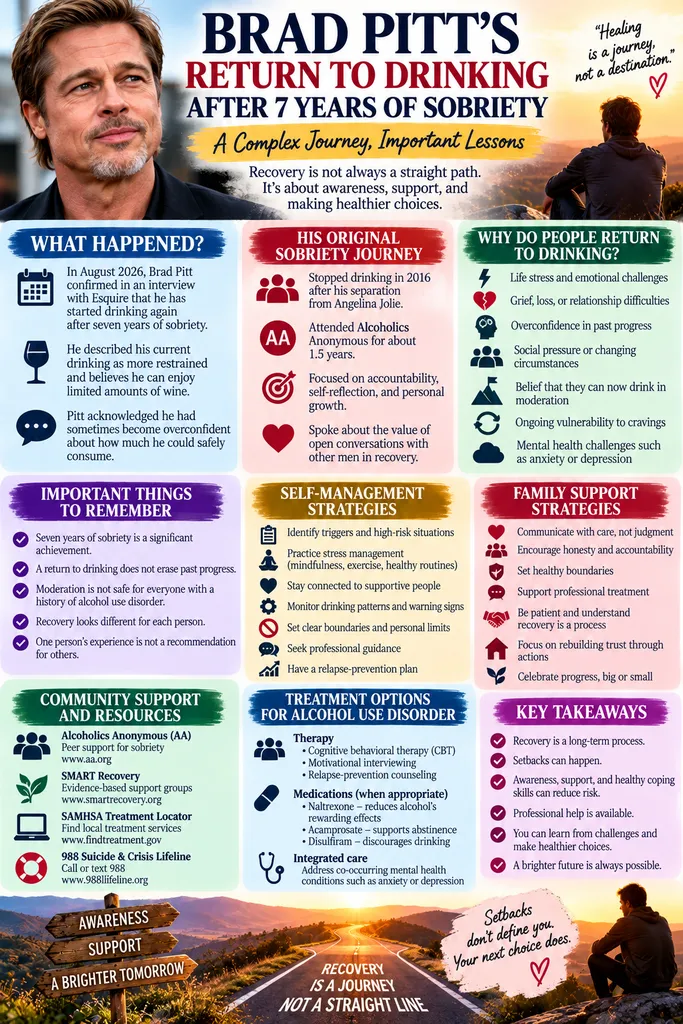
In an August 10, 2026, interview with Esquire, Pitt confirmed that he had resumed drinking after seven years of abstinence. He described his current alcohol consumption as more restrained and acknowledged that he had sometimes become overconfident about how much he could safely consume.
Pitt explained that he now believes he can drink limited amounts of wine while avoiding heavier consumption. ABC News and the Los Angeles Times reported his comments.
This distinction matters: Pitt has confirmed drinking again, but his public statements do not establish that he currently meets diagnostic criteria for alcohol use disorder or has returned to his previous pattern of problematic drinking.
What his disclosure teaches us
- Sobriety can change over time: Some individuals reassess their relationship with alcohol after prolonged abstinence.
- Moderation is not appropriate for everyone: People with a history of alcohol dependence may find controlled drinking difficult or unsafe.
- Overconfidence can increase risk: Believing that past alcohol problems are completely resolved may lead to underestimating vulnerability.
- Recovery experiences differ: What one person reports doing successfully should not be treated as a recommendation for others.
- Long-term support remains valuable: Emotional awareness, professional guidance, and healthy relationships can remain important after years of sobriety.
Brad Pitt’s Original Decision to Stop Drinking
Pitt has described his decision to stop drinking following his separation from Angelina Jolie in 2016 as a major turning point.
In a 2019 interview with The New York Times, he discussed attending Alcoholics Anonymous for approximately a year and a half.
During a June 2025 appearance on Dax Shepard’s Armchair Expert podcast, Pitt described AA as a meaningful environment where men could openly discuss their mistakes, emotional struggles, and personal experiences.
He also emphasized the importance of taking responsibility for past actions and learning from them.
Important elements of his earlier recovery
- Recognizing that his relationship with alcohol needed to change.
- Participating in Alcoholics Anonymous.
- Learning to communicate openly about personal struggles.
- Developing accountability for past behavior.
- Receiving encouragement from supportive peers.
- Reexamining personal priorities and relationships.
His experience demonstrates that recovery often involves much more than removing alcohol. It may also require developing emotional awareness, improving communication, and changing longstanding behaviors.
Does Returning to Alcohol After Seven Years Mean Recovery Has Failed?
A return to drinking after a prolonged period of sobriety can have different meanings depending on an individual’s history, drinking pattern, health, and treatment goals.
For someone whose recovery goal is complete abstinence, consuming alcohol represents a departure from that goal. However, one episode of drinking does not automatically establish a return to alcohol use disorder.
For others, attempts at moderation may become a pathway back to problematic drinking.
Pitt’s situation highlights the importance of avoiding assumptions about someone’s health based solely on a public interview.
Factors that influence the risks of returning to alcohol
- Previous severity of alcohol use disorder.
- History of withdrawal symptoms or medical complications.
- Previous unsuccessful attempts at controlled drinking.
- Presence of depression, anxiety, or trauma-related symptoms.
- Family history of alcohol problems.
- Availability of supportive relationships.
- Personal motivations and treatment goals.
- Ability to recognize increasing consumption or loss of control.
For individuals with moderate or severe alcohol use disorder, abstinence is often the safer approach, particularly when there is a history of significant dependence or repeated loss of control.
Key lesson: Seven years of sobriety represents meaningful progress. A later change in drinking behavior does not erase those years, but it may warrant careful reassessment of health and recovery goals.
The Psychological Challenges of Long-Term Recovery
Alcohol use disorder involves more than physical dependence. It can also affect emotional regulation, stress responses, relationships, and decision-making.
Individuals who have maintained sobriety for years may still experience cravings, difficult emotions, or situations associated with previous drinking habits.
Stressful life events, grief, relationship difficulties, and major transitions can increase vulnerability, although they do not inevitably lead to alcohol use.
In his 2026 interview, Pitt also discussed periods of profound emotional distress involving family matters and grief, including a past period of suicidal thinking. These disclosures should be understood as separate aspects of his reported experience, rather than assumed explanations for why he resumed drinking.
Emotional challenges that can affect recovery
Stress and emotional exhaustion: Chronic stress may weaken coping strategies and increase the desire for immediate relief.
Grief and loss: Bereavement, separation, and changes in important relationships can intensify emotional distress.
Loneliness: Limited social support may increase vulnerability to substance use.
Overconfidence: Individuals may begin believing that previous drinking problems no longer pose a risk.
Shame and guilt: Regret about past behavior may discourage honest conversations or help-seeking.
Changing priorities: Personal circumstances and recovery goals may evolve over time.
Understanding these factors can help individuals prepare for challenges without viewing every difficult emotion as evidence of impending relapse.
Self-Management Strategies: Protecting Long-Term Recovery
Self-management involves recognizing risks, making informed decisions, and maintaining healthy behaviors that support physical and emotional well-being.
For someone considering drinking after prolonged abstinence, consultation with an addiction medicine professional can help assess the risks based on their personal history.
Practical self-management strategies
- Reevaluate recovery goals: Determine whether abstinence or another treatment goal best protects long-term health.
- Identify emotional triggers: Recognize stress, loneliness, grief, conflict, or social pressure that may increase the desire to drink.
- Monitor warning signs: Watch for increasing alcohol consumption, secrecy, cravings, or difficulty stopping.
- Maintain healthy routines: Prioritize sleep, nutrition, exercise, and stress management.
- Practice emotional regulation: Use mindfulness, journaling, therapy, or other healthy coping skills.
- Stay connected to support: Maintain relationships with trusted friends, counselors, or recovery peers.
- Seek professional guidance: Discuss concerns about drinking with a qualified healthcare provider.
- Create a response plan: Establish steps to take if drinking becomes difficult to control.
Recognizing early warning signs of problematic drinking
Potential warning signs include:
- Drinking more than originally intended.
- Repeatedly making exceptions to personal drinking limits.
- Using alcohol to manage emotional distress.
- Hiding or minimizing alcohol consumption.
- Experiencing cravings or preoccupation with drinking.
- Neglecting responsibilities or relationships.
- Continuing to drink despite negative consequences.
Recognizing these signs early can help prevent escalation and encourage timely intervention.
Family Support Strategies: Encouragement Without Judgment
Family members often experience concern, frustration, fear, or uncertainty when a loved one returns to alcohol after years of sobriety.
Some may worry that previous harmful behaviors will return, while others may struggle to understand why someone would reconsider drinking after a successful period of abstinence.
Family support works best when it combines compassion, honest communication, and healthy boundaries.
How families can support a loved one
- Communicate openly: Express concerns without accusations or humiliation.
- Avoid shame: Recognize that substance use disorders are treatable health conditions.
- Encourage professional assessment: Support consultation with addiction specialists when concerns arise.
- Establish healthy boundaries: Clearly communicate expectations about safety and behavior.
- Avoid enabling harmful behavior: Don’t hide serious consequences or take responsibility for another person’s drinking.
- Support emotional well-being: Encourage healthy coping strategies for stress, grief, and relationship difficulties.
- Participate in family counseling: Address communication problems and rebuild trust when appropriate.
- Recognize positive changes: Acknowledge accountability, treatment participation, and healthier decisions.
Rebuilding trust after alcohol-related difficulties
Trust is rebuilt through consistent behavior, not promises alone.
Families may need time to feel confident that previous problems will not recur. Individuals with a history of problematic drinking can support this process by demonstrating accountability, respecting boundaries, and maintaining honest communication.
Family members should also recognize that they cannot control another adult’s recovery decisions.
Key lesson: Compassion does not require ignoring harmful behavior, and accountability does not require shame.
Community Support Strategies: Building a Recovery Network
One of the most valuable aspects of Pitt’s earlier sobriety journey was his participation in Alcoholics Anonymous.
His descriptions of AA meetings emphasized the importance of honesty, shared experiences, and connecting with people who understood the challenges of alcohol recovery.
Peer-support communities can provide encouragement and accountability without requiring individuals to face recovery alone.
Community-based recovery strategies
- Encourage peer-support participation: Support access to Alcoholics Anonymous, SMART Recovery, and other mutual-help organizations.
- Expand addiction education: Teach communities about alcohol use disorder, relapse prevention, and treatment options.
- Improve access to professional treatment: Provide affordable counseling, addiction medicine services, and medication-assisted treatment.
- Promote sober social activities: Create opportunities for meaningful connections without alcohol.
- Reduce stigma: Avoid labeling individuals as failures after setbacks.
- Provide family education: Help loved ones understand addiction and develop healthy boundaries.
- Support long-term follow-up: Encourage continued access to recovery services beyond initial treatment.
- Integrate mental health care: Address depression, anxiety, grief, and other emotional challenges alongside substance use.
Community support can complement professional treatment and help individuals maintain healthier lifestyles.
Can Someone With a History of Alcohol Problems Drink Moderately?
Pitt’s disclosure raises a question frequently discussed in addiction medicine: Can someone who previously experienced problematic drinking return to moderate alcohol consumption?
The answer depends on the individual.
Some people with less severe alcohol problems may achieve sustained reductions in drinking. Others find that repeated attempts at moderation lead to loss of control or harmful consequences.
The National Institute on Alcohol Abuse and Alcoholism recognizes individualized treatment goals while emphasizing that abstinence may be necessary for sustained recovery in some individuals.
Considerations before attempting moderation
- Severity and duration of previous alcohol problems.
- Previous unsuccessful attempts to limit drinking.
- History of alcohol withdrawal or physiological dependence.
- Medical conditions that make alcohol consumption unsafe.
- Use of medications that interact with alcohol.
- Co-occurring psychiatric conditions.
- Personal and family safety concerns.
- Professional assessment of risks and treatment goals.
For people with severe alcohol dependence, abruptly stopping heavy drinking can cause dangerous withdrawal symptoms, including seizures and delirium tremens. Medical supervision may be necessary.
Important distinction: Pitt’s reported ability to consume limited amounts of wine should not be interpreted as evidence that controlled drinking is safe for everyone with a history of alcohol use disorder.
Evidence-Based Treatment Options for Alcohol Use Disorder
Modern addiction medicine offers several treatment approaches that can help individuals reduce harmful drinking, achieve abstinence, and maintain recovery.
Treatment should be individualized according to medical history, severity of alcohol use, personal goals, and co-occurring conditions.
Behavioral treatment approaches
Cognitive behavioral therapy (CBT): Helps identify thoughts, emotions, and situations associated with drinking and develop healthier coping strategies.
Motivational interviewing and motivational enhancement: Strengthen motivation for behavioral change and help individuals resolve ambivalence about alcohol use.
Relapse-prevention counseling: Identifies warning signs and develops strategies for managing high-risk situations.
Family or couples therapy: Improves communication, addresses relationship difficulties, and supports recovery when participation is safe and appropriate.
Medications for alcohol use disorder
| Medication | Primary purpose |
|---|---|
| Naltrexone | Reduces alcohol’s rewarding effects and can decrease heavy drinking |
| Acamprosate | Supports maintenance of abstinence after alcohol cessation |
| Disulfiram | Discourages drinking by producing an unpleasant reaction when alcohol is consumed |
These medications are FDA-approved for alcohol use disorder and may be combined with behavioral therapy and peer support. Medication selection requires individualized clinical assessment.
There is no public basis to assume that Pitt uses or needs any particular medication or treatment today.
What Brad Pitt’s Experience Can Teach Us About Recovery
Pitt’s decision to resume drinking after seven years of sobriety illustrates how complicated personal recovery decisions can be.
His earlier experiences with Alcoholics Anonymous demonstrated the value he placed on accountability, vulnerability, and peer connection.
His recent disclosure opens a different conversation about moderation, risk, and what recovery means.
Five important lessons
- Recovery is personal: Treatment goals and outcomes vary according to individual needs and medical history.
- Sobriety achievements remain meaningful: Years of abstinence are not erased by a subsequent decision to drink.
- Overconfidence deserves attention: Underestimating previous alcohol-related risks can lead to harmful decisions.
- Support remains valuable: Professional care, family involvement, and recovery communities can strengthen long-term well-being.
- Compassion and accountability belong together: Individuals deserve respect while remaining responsible for the consequences of their behavior.
Helpful Alcohol Recovery and Mental Health Resources
Alcoholics Anonymous (AA)
Offers peer-support meetings for individuals who want to stop drinking.
Website: aa.org
SMART Recovery
Provides mutual-support meetings using practical, evidence-informed tools for managing addictive behaviors.
Website: smartrecovery.org
National Institute on Alcohol Abuse and Alcoholism (NIAAA)
Provides research-based education about alcohol use disorder, treatment, and recovery.
Website: niaaa.nih.gov
SAMHSA
Provides treatment referral resources for substance use and mental health conditions.
Treatment locator: FindTreatment.gov
988 Suicide & Crisis Lifeline
Provides confidential crisis support for individuals experiencing suicidal thoughts or severe emotional distress.
Call or text 988 in the United States.
Website: 988lifeline.org
Conclusion: Seven Years of Sobriety Still Matter
Brad Pitt’s confirmation that he resumed drinking after seven years of sobriety has reopened an important conversation about alcohol use disorder, moderation, and long-term recovery.
His journey shows that recovery isn’t always straightforward. People may change their goals, face new emotional challenges, or reconsider earlier decisions.
However, a return to alcohol use deserves thoughtful consideration, particularly when someone has a history of problematic drinking.
For many individuals with alcohol use disorder, continued abstinence remains the safest and most sustainable option.
Self-management strategies can help individuals recognize warning signs and protect their health. Family support can encourage honest communication and accountability. Community resources provide access to professional treatment, peer relationships, and ongoing recovery assistance.
Most importantly, we should not judge recovery by a single decision or a single period of a person’s life.
Seven years of sobriety represent seven years of meaningful effort and personal growth. Whatever happens afterward, those achievements still matter.
Pitt’s experience reminds us that addiction recovery requires awareness, humility, support, and a willingness to reassess decisions when necessary.
Recovery is not measured only by how long someone has avoided alcohol. It is also reflected in the choices, accountability, relationships, and commitment to health that shape the years ahead.
Frequently Asked Questions and Answers
Brad Pitt’s Sobriety and Drinking History
1. Why did Brad Pitt originally stop drinking?
Brad Pitt has discussed stopping alcohol use following his separation from Angelina Jolie in 2016. In interviews, he acknowledged that alcohol had become a problem in his life and described sobriety as an important part of personal change, emotional growth, and accountability.
2. How long was Brad Pitt sober?
Pitt has been described as maintaining approximately seven years of abstinence before reportedly resuming drinking. The exact duration depends on the dates used to establish when abstinence began and ended.
3. Did Brad Pitt attend Alcoholics Anonymous?
Yes. Pitt publicly discussed attending Alcoholics Anonymous for approximately a year and a half. He described the meetings as a supportive environment where participants could openly discuss personal struggles, mistakes, and experiences without judgment.
4. Has Brad Pitt confirmed that he started drinking again?
Reports have attributed comments about renewed alcohol consumption to Pitt. However, his exact current drinking pattern and any associated health consequences cannot be independently determined from public reporting alone. It is important to distinguish a reported return to drinking from a confirmed recurrence of alcohol use disorder.
5. Does Brad Pitt’s return to drinking mean he has relapsed?
Not necessarily. In an abstinence-based recovery program, consuming alcohol would represent a departure from the goal of abstinence. Clinically, however, a single episode of drinking does not automatically establish recurrent alcohol use disorder. Assessment depends on the pattern of consumption, loss of control, consequences, and other diagnostic criteria.
6. Has Brad Pitt publicly discussed alcohol addiction and emotional struggles?
Yes. Pitt has discussed his past drinking, participation in AA, and efforts toward greater personal accountability. These disclosures should not be used to assume additional diagnoses or private medical details that he has not confirmed.
Understanding Alcohol Use After Long-Term Sobriety
7. Can someone start drinking again after seven years of sobriety?
Yes. Some individuals resume alcohol use after years of abstinence. However, people with a history of alcohol use disorder may face increased risks when returning to drinking, particularly if they previously experienced severe dependence, loss of control, or repeated unsuccessful attempts at moderation.
8. Is it possible to drink moderately after recovering from alcohol addiction?
Some individuals with less severe alcohol problems may achieve sustained reductions in drinking. Others find moderation difficult or unsafe. For people with severe alcohol use disorder, a history of withdrawal complications, or repeated loss of control, abstinence is often the safer approach. Make decisions with appropriate clinical guidance.
9. Why might someone return to drinking after many years?
Possible contributing factors include:
- Major life changes or emotional stress.
- Grief, loneliness, or relationship difficulties.
- Social pressure or environments involving alcohol.
- Believing previous drinking problems are fully resolved.
- Changes in personal recovery goals.
- Reduced participation in recovery support.
- Difficulty managing anxiety or other emotional concerns.
These are general risk factors and should not be assumed to explain Pitt’s personal decisions.
10. Does returning to alcohol erase years of sobriety?
No. Years of abstinence can represent meaningful improvements in health, relationships, and emotional functioning. A later return to alcohol does not erase those achievements. However, renewed drinking may require reassessment of recovery goals and potential health risks.
11. What is the difference between a lapse and a relapse?
A lapse commonly refers to an isolated episode of substance use following abstinence, while relapse may describe a more sustained return to problematic use. These terms are not always used consistently in clinical practice. Healthcare professionals increasingly focus on patterns of use and their consequences rather than labels that may create shame.
12. Can someone develop alcohol use disorder again after years without drinking?
Yes. Individuals with a previous history of alcohol use disorder may experience recurrent symptoms after resuming alcohol consumption. Warning signs can include cravings, drinking more than intended, unsuccessful attempts to cut down, and continuing to drink despite harmful consequences.
Mental Health and Relapse Prevention
13. How does stress influence the risk of returning to alcohol?
Stress can increase cravings and make alcohol seem appealing as a way to escape uncomfortable emotions. Chronic stress may also interfere with sleep, judgment, and healthy coping skills. Stress-management strategies and supportive relationships can help reduce vulnerability.
14. Can depression or anxiety contribute to alcohol relapse?
Yes. Depression and anxiety can coexist with alcohol use disorder and may complicate recovery. Some individuals drink to temporarily relieve distress, but alcohol can worsen mood, anxiety, and sleep over time. Integrated treatment that addresses both alcohol use and mental health symptoms is often beneficial.
15. What are the warning signs that drinking is becoming problematic again?
Potential warning signs include:
- Drinking more frequently or in larger amounts than intended.
- Repeatedly exceeding personal drinking limits.
- Experiencing cravings or preoccupation with alcohol.
- Using alcohol to manage emotional distress.
- Concealing or minimizing alcohol consumption.
- Neglecting work, family, or other responsibilities.
- Continuing to drink despite negative consequences.
- Difficulty stopping or reducing consumption.
Early recognition can encourage timely intervention.
16. Can overconfidence increase the risk of returning to problematic drinking?
Yes. Some individuals may believe that prolonged sobriety means they no longer need to monitor their relationship with alcohol. Underestimating previous patterns of dependence or loss of control may increase risk. Maintaining awareness of personal vulnerabilities is an important part of relapse prevention.
17. Why is long-term recovery sometimes challenging even after several sober years?
Recovery involves more than the absence of alcohol. People may still face stressful life events, emotional difficulties, relationship challenges, and changing social circumstances. Long-term recovery benefits from ongoing attention to physical health, emotional well-being, and supportive relationships.
Self-Management Strategies for Long-Term Recovery
18. What self-management strategies help prevent a return to problematic drinking?
Helpful strategies include:
- Identifying emotional and environmental triggers.
- Maintaining consistent sleep, exercise, and nutrition.
- Practicing mindfulness and stress management.
- Developing a personalized relapse-prevention plan.
- Monitoring cravings and changes in drinking behavior.
- Maintaining relationships with supportive individuals.
- Attending therapy or recovery meetings when helpful.
- Seeking medical guidance when recovery goals change.
Self-management is most effective when combined with professional treatment when clinically indicated.
19. How can someone manage cravings after years of sobriety?
Cravings can be managed through identifying triggers, delaying immediate reactions, engaging in alternative activities, contacting supportive people, and practicing coping techniques learned in therapy. If cravings become frequent or difficult to manage, professional treatment may be appropriate.
20. What should someone do if they drink after a long period of abstinence?
First, assess the situation without excessive shame. Individuals should consider whether drinking was isolated or part of an emerging pattern, identify contributing factors, and contact a healthcare professional or recovery supporter as needed. A return to drinking may indicate that the recovery plan needs adjustment.
21. Can exercise and healthy routines support alcohol recovery?
Yes. Regular physical activity, adequate sleep, balanced nutrition, and meaningful daily activities can support emotional regulation and overall well-being. These habits may help reduce stress and improve recovery outcomes, although they do not replace medical treatment for alcohol use disorder.
22. Why is accountability important in addiction recovery?
Accountability involves recognizing the consequences of personal choices, communicating honestly, and taking steps to prevent harmful behavior. Supportive accountability encourages responsibility without humiliation or judgment. It can strengthen trust and improve engagement with recovery services.
Family Support and Relationships
23. How can families respond when a loved one starts drinking again?
Families can express concern calmly, listen without judgment, and encourage professional assessment when appropriate. They should also establish boundaries that protect their own well-being. Family members cannot control another person’s drinking, but they can provide support without enabling harmful behavior.
24. Should family members confront someone who returns to drinking?
A respectful conversation is generally more productive than an angry confrontation. Families can discuss observable behaviors, explain concerns, and ask how they can help. If drinking creates immediate safety risks, such as impaired driving or violence, protecting safety should take priority.
25. How can families rebuild trust after alcohol-related problems?
Families rebuild trust through consistent behavior, honest communication, accountability, and respect for boundaries. Family counseling may help address unresolved conflict. Rebuilding trust takes time, and relatives should not feel pressured to forgive or reconcile before they feel safe.
26. What should families avoid when supporting addiction recovery?
Families should avoid shaming, threatening, humiliating, or attempting to control every aspect of recovery. They should also avoid concealing serious consequences or accepting unsafe behavior. Compassion works best alongside clear expectations and healthy boundaries.
27. Can family therapy improve alcohol recovery outcomes?
Yes. Family or couples therapy may improve communication, address relationship stress, and support engagement in treatment. Participation should be voluntary and appropriate to the family’s circumstances. When relationships involve abuse or coercion, individual safety and specialized support should take priority.
Community Support and Treatment
28. Why are peer-support groups important for long-term sobriety?
Peer-support groups provide connection, encouragement, shared experiences, and accountability. Brad Pitt has publicly described Alcoholics Anonymous as a meaningful part of his earlier sobriety journey. Support groups can complement professional treatment and help reduce isolation.
29. What treatment options are available for alcohol use disorder?
Evidence-based options include cognitive behavioral therapy, motivational enhancement approaches, relapse-prevention counseling, and medications such as naltrexone, acamprosate, and disulfiram. Treatment should be individualized according to the person’s medical history, symptoms, and goals.
30. Can medication help prevent a return to heavy drinking?
Yes. Naltrexone can help reduce heavy drinking, while acamprosate supports maintaining abstinence after alcohol cessation. Disulfiram may help selected individuals maintain abstinence by creating an unpleasant reaction if alcohol is consumed. Make medication decisions with a qualified healthcare professional.
31. Where can individuals find alcohol recovery support?
Several organizations provide helpful resources:
- Alcoholics Anonymous: Peer-support meetings for individuals who want to stop drinking. aa.org
- SMART Recovery: Recovery meetings and practical tools for managing addictive behaviors. smartrecovery.org
- National Institute on Alcohol Abuse and Alcoholism: Research-based information about alcohol use and treatment. niaaa.nih.gov
- SAMHSA: Substance use and mental health treatment referrals. FindTreatment.gov
- 988 Suicide & Crisis Lifeline: Crisis support in the United States by calling or texting 988.
Lessons From Brad Pitt’s Experience
32. What can people learn from Brad Pitt’s decision to resume drinking?
Pitt’s experience illustrates the importance of recognizing personal vulnerabilities, evaluating recovery goals, and avoiding assumptions about controlled drinking. His account also highlights how an individual’s relationship with alcohol may change over time. His personal approach should not be considered a recommendation for others with alcohol use disorder.
33. Does returning to alcohol mean someone has failed at recovery?
No. A return to drinking does not erase previous achievements or determine a person’s worth. However, it may introduce medical and psychological risks that deserve attention. Reassess, seek appropriate treatment, and stay committed to health to strengthen recovery.
34. Why is moderation risky for some individuals with alcohol use disorder?
People with a history of severe dependence, withdrawal complications, or repeated loss of control may find it difficult to maintain drinking limits. For these individuals, abstinence may offer greater protection against recurrent alcohol-related harm.
35. What is the most important message from Brad Pitt’s sobriety journey?
The central lesson is that recovery requires continued awareness, accountability, and informed choices. Long periods of sobriety are meaningful achievements, but they do not guarantee that future alcohol consumption will be risk-free.
Video: Brad Pitt Drinking Again Is Not the Story You Think #bradpitt #shorts