If you or someone you care about is facing a substance use problem, there’s a good chance you’ve heard about both detox and emergency intervention. People sometimes mix these two up, but they each play a different role in the recovery process. Knowing how they work and when each is appropriate is really important for making smart decisions during a tough time.
Detox and Emergency Intervention: What Sets Them Apart
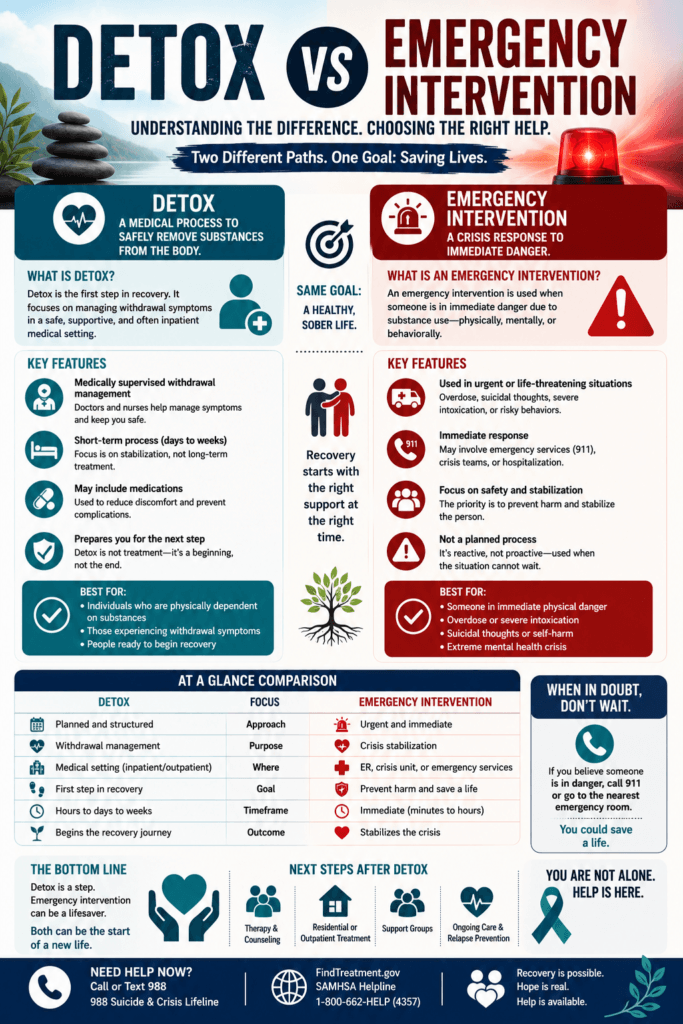
Understanding the difference between detox and emergency intervention is super useful when substance use gets serious. Detox is planned and medically supervised, focusing on helping someone safely stop using drugs or alcohol. Emergency intervention deals with immediate, potentially life-threatening situations that can happen with substance use, like an overdose or severe withdrawal symptoms.
Detox programs often involve a healthcare team that supports a person through the uncomfortable, or sometimes dangerous, effects of quitting. Emergency intervention is fast, sometimes chaotic, and handled by paramedics or ER staff working to keep someone alive. While both can be part of the recovery process, they serve different purposes and happen under very different circumstances.
How Detox Works: Step by Step
Detox is basically the body’s process of getting rid of substances like alcohol, opioids, or stimulants. This can be done at home, but it’s way safer and more comfortable with medical support. Most detox programs happen in hospitals or specialty detox centers. Here’s how it usually works:
- Evaluation: Medical staff assess health status, substance use history, and other health issues.
- Stabilization: Doctors and nurses watch for withdrawal symptoms and provide medication or nutrition as needed to keep things safe and as comfortable as possible.
- Transition to Treatment: Once the physical dangers have passed, the plan switches to ongoing recovery. Therapy, rehab, and support groups are popular next steps.
Detox often lasts from a few days to about a week, depending on what substance was being used and for how long. It’s not a one-size-fits-all setup, either; protocols are different for benzodiazepines, alcohol, opioids, and other substances. In fact, the medical team tailors its approach to maximize safety and comfort for each person undergoing the process.
Breaking Down Emergency Intervention
Emergency intervention is what happens when things go from risky to really serious. This covers situations like:
- Drug or alcohol overdose
- Seizures caused by withdrawal (especially with alcohol or benzodiazepines)
- Dangerous levels of intoxication
- Severe self-harm or suicide risk during withdrawal
When these things happen, calling 911 and getting to an ER is the only smart move. Emergency staff use rapid assessment, life-saving medication (like naloxone for opioid overdose), IV fluids, or even putting someone on a ventilator if things are really bad. The goal here is stabilization, keeping someone alive and safe until they can move to longer-term care, like a detox facility or mental health unit. Emergency intervention is about responding to immediate danger rather than a step-by-step plan.
Common Myths About Detox and Emergency Intervention
There are a lot of confused ideas out there about detox and emergency care, and I’ve heard them all. Here are a few that come up a lot:
- Myth: Detox and emergency intervention are the same thing.
Detox is planned and supportive. Emergency intervention is a matter of life or death when things go south fast. - Myth: Detox can be done safely without any support.
Withdrawal from some substances (like alcohol or benzos) can be deadly. Medical support takes the risk way down. - Myth: If someone overdoses, detox will fix the problem.
Overdose calls for immediate emergency intervention. After that, detox and ongoing treatment can help long-term recovery.
Step By Step: What to Expect in Each Scenario
Detox: Start to Finish
- Check-in: Paperwork, lab tests, and a chat with medical staff about what you’ve used and when.
- Stabilization and Withdrawal Management: Medications to treat symptoms, regular checks for blood pressure, heart rate, and mental health assessments.
- Support and Counseling: Some centers offer counselors and support groups, including during detox, so support starts early.
- Transitioning Out: A discharge plan connecting you with therapy, rehab, or outpatient support for life after detox.
Emergency Intervention: The Critical Moments
- Calling for Help: Paramedics or EMTs arrive. Sometimes police may be involved if safety is a concern.
- On the Spot Treatment: Quick actions like CPR, airway support, or naloxone to reverse certain overdoses.
- Hospital Care: More testing and aggressive treatment if needed; sometimes intensive care or psychiatric evaluation.
- Stabilization: Once things calm down and the crisis is under control, a referral for ongoing care or detox is discussed.
Practical Tips for Families and Friends
Supporting someone through either detox or an emergency can be scary. A few things that really help:
- Know the warning signs of overdose and severe withdrawal—confusion, trouble breathing, seizures, or sudden mood shifts.
- Have numbers handy: local detox centers, crisis hotlines, and 911. In an emergency, don’t wait; call for help right away.
- Be honest and supportive. Shame and blame can push people away from getting help.
- Get informed. There are great resources through the SAMHSA Helpline in the U.S., as well as many local organizations.
Common Challenges With Detox and Emergency Care
Barriers to Entering Detox
Sometimes getting into detox isn’t smooth. Waitlists, insurance hassles, and lack of transportation can make it tough. Some folks are afraid of withdrawal, or worry they’ll be judged. Having a plan and a support network increases the odds of a smoother start. Enlisting help from friends, family, or recovery professionals can smooth the way.
Handling Emergencies Properly
People may hesitate to call for help out of fear: either of legal consequences or stigma. Many states have Good Samaritan laws to protect those who call 911 during an overdose. Being aware of those can take some of the fear out of reaching out for help—read up on your local laws and let others know they exist, so more people feel comfortable getting help when seconds count. Quick action really can save a life.
Modern Advances in Both Areas
Medical science has made detox much safer with better medications for withdrawal symptoms and close monitoring. Some treatment centers offer outpatient detox for less severe cases, which combines medical visits with comfort at home. People can recover in familiar surroundings with a solid safety net.
Emergency care has also improved with wider access to naloxone for treating opioid overdoses and better coordination between ERs and addiction specialists. Hospitals are getting better at moving patients from emergency care into ongoing treatment, making it more likely people get the help they need beyond that initial crisis.
Real World Applications and Scenarios
- Case Example: Alcohol Withdrawal. Some people try to quit drinking on their own, but seizures and hallucinations are possible for heavy drinkers. Medical detox gives close monitoring, while emergency care is needed if seizures or confusion (delirium tremens) start suddenly. Fast intervention makes a huge difference in survival and long-term recovery.
- Case Example: Opioid Overdose. Overdose calls for instant emergency intervention—like naloxone, CPR, and possibly a trip to the ER. Later, a person might enter detox before moving to ongoing medication-assisted treatment with buprenorphine or methadone. That coordinated care can really pump up long-term success rates.
FAQs About Detox vs. Emergency Intervention
Question: Why can’t detox be skipped after emergency intervention?
Answer: Emergency intervention just keeps someone alive. Without follow-up detox and treatment, the cycle often continues or repeats.
Question: Is it possible to detox at home?
Answer: It depends on the substance. Detox from alcohol or benzodiazepines can be deadly without medical help. Opioid or stimulant withdrawal is usually less risky, but medical detox is more comfortable and much safer overall.
Question: What’s the biggest risk during detox?
Answer: The highest risks are medical complications from withdrawal symptoms, like seizures or dehydration. That’s why supervised detox is super important for some substances.
What It All Means for Recovery
Recognizing the difference between detox and emergency intervention is super important when facing substance use problems. Emergency care can save lives in a crisis, but it’s only the start. Detox gives someone a safer, more stable foundation for moving into deeper recovery. Each has a place in treatment, and determining which one is needed sometimes depends on how urgent and life-threatening the situation has become. Both need the support of medical professionals, and both are a vital part of helping people move forward when substance use takes over.
Recovery looks different for everyone, but it almost always starts with reaching out for help—either because you plan it, or because an emergency forces your hand. Knowing how these two processes work can help you or your loved one get on the right path faster. There’s a lot of hope and support available if you know where to look. Taking that first step, however it happens, is the most important move toward a healthier future.
Video: Detox or Emergency? Your Life Depends on It #shorts