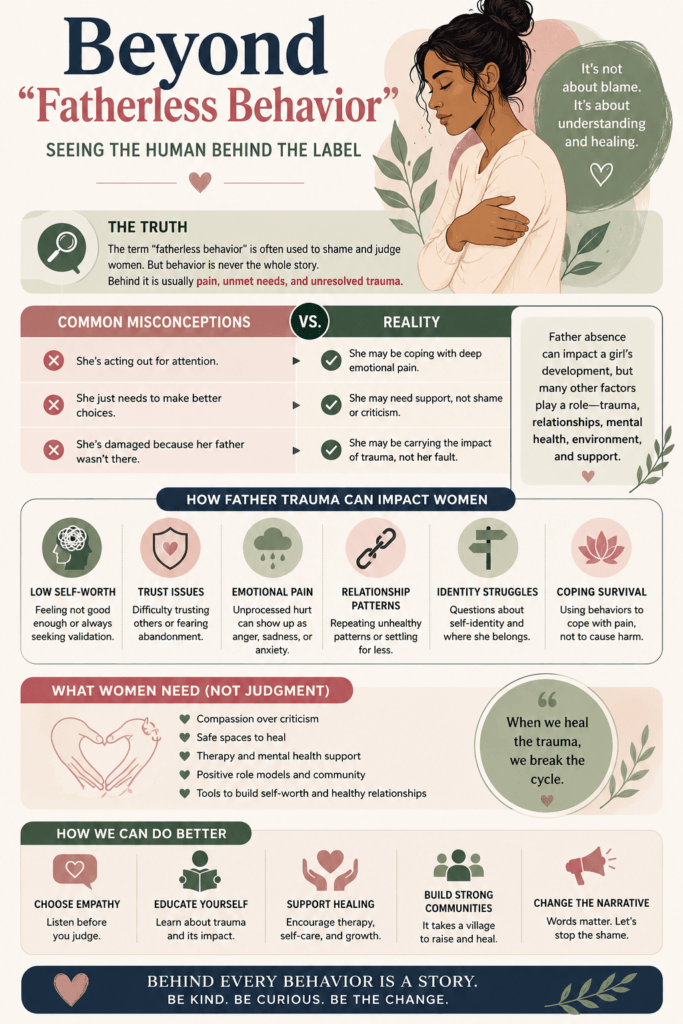
People toss around the phrase “fatherless behavior” a lot, especially on social media, to explain or judge women’s actions. Usually, it’s meant as a dig. But real-life stories behind family situations are never that simple. There’s a lot of outdated thinking tied up in this label, ignoring what trauma and family instability actually do and how women find ways to cope, heal, and even thrive.
Understanding the ‘Fatherless Behavior’ Stereotype
The term “fatherless behavior” usually pops up when people criticize women for anything from how they date to their confidence levels. At its core, it’s an oversimplified way of blaming any challenge or struggle a woman faces on not growing up with an involved dad. But real trauma and healing can’t be boxed into a single stereotype like this. By looking only at family structure, people ignore the real-life complexity of each person’s story and miss the broader picture.
Blaming stuff on “fatherlessness” ignores tons of research around family trauma, resilience, and social dynamics. It doesn’t acknowledge that plenty of women with all kinds of families still face challenges, and that trauma comes from many places, not just an absent dad. Many respected mental health sources, including the American Psychological Association, explain that child outcomes depend more on the quality of caregiving and support than on any one family structure.
Where the Trauma Really Comes From
Trauma can be rooted in all sorts of experiences: emotional neglect, abuse, poverty, instability, and chaotic home environments. Sometimes, a parent’s absence is just one of many hard things happening at home. Other times, kids with both parents under the same roof still experience trauma; parents might be distant, critical, or struggling themselves, affecting the household’s emotional climate.
Focusing on trauma gives us a better view of what’s actually happening. Trauma isn’t just about a missing parent. It’s the ripple effect of being let down, overlooked, or lacking a safe place, physically or emotionally. This can mess with feelings of self-worth, trust, and relationships later in life, but everyone processes and responds differently. Understanding this helps move past surface-level judgments and toward genuine support.
Common Myths About “Fatherless” Women
I see a lot of myths floating around, so here’s where things tend to miss the mark:
- Myth: All women from single-parent homes are “damaged” or behave badly.
There are plenty of examples of women who’ve grown up with single moms, grandparents, foster care, or other arrangements and lead fulfilling, balanced lives. How someone was raised doesn’t automatically decide their future. - Myth: A father figure is the only way kids learn boundaries or confidence.
Kids learn from everyone around them, including moms, relatives, mentors, teachers, coaches, and community leaders. Healthy adults can step up and fill these roles in all kinds of family structures, providing strong examples and guidance. - Myth: Trauma always leads to rebellion, risky behavior, or low self-esteem in women.
Sometimes, trauma shows up this way. But sometimes it shows up in striving to succeed, taking on responsibilities early, or forming close friendships. People can respond in really different ways, with some channeling their experiences into personal growth or community involvement.
What Trauma Actually Looks Like in Women
Women who experience trauma from family instability might feel it in ways that aren’t obvious from the outside. Sometimes it shows up in perfectionism, always trying to prove themselves, or finding it really hard to trust anyone. Other times, it might look like avoiding relationships out of fear, being super independent, or having trouble asking for help even when they need it most. Each pathway can affect everything from school and work to friendships and romance.
According to recent studies, the real impact of family trauma isn’t a single “type” of behavior, but a unique pattern for each person. Some find healing through therapy or tight-knit friendships, while others use creativity, activism, or community involvement as a positive outlet. Because everyone has a distinct set of coping mechanisms, it’s important not to make blanket assumptions.
How Trauma Impacts Relationships and Self-Image
One of the toughest things about growing up in a tough situation is figuring out how to connect with people later on. If someone didn’t have reliable adults around as a kid, trusting new people can feel risky. Boundaries might be confusing, and learning what’s healthy in a relationship isn’t always automatic. It’s something people have to figure out through experience, reflection, or therapy; sometimes it takes years of practice and support to rebuild these social muscles.
Self-image can take a hit, too. If someone got the message early on that they weren’t worthy of attention or stability, shaking that belief takes work. Social support from trusted friends, mentors, or therapists can help rebuild that foundation. Organizations like Mental Health America have tons of helpful info and tools for anyone looking for strategies to build self-worth. Establishing a sense of self and confidence is an ongoing process, but it is possible for anyone willing to work on it.
Building Resilience and Overcoming Stereotypes
Trying to put all women who face trauma into a box and label them “fatherless” erases the real grit and creativity many develop just to get by and eventually to grow beyond the hard stuff. Here are a few ways I’ve seen women build resilience, both through my own experiences and from hearing others’ stories:
- Building chosen family: Creating networks of friends, mentors, or even neighbors who step in as role models and supporters. These bonds offer support and inspiration that can help fill gaps at home.
- Seeking therapy: Finding a counselor or support group who gets it is really important for working through old wounds and patterns, often giving people new tools to handle life’s challenges.
- Learning to trust again: Taking risks in relationships, one step at a time, is scary but essential for expanding your sense of what’s possible and safe.
- Developing new skills: Focusing on practical things like setting boundaries, asking for help, or working through emotional triggers pays off in every area of life, from friendships and romance to advocacy and personal achievement.
Books, online forums, and organizations around trauma recovery, like the National Center for PTSD, have a lot of advice on building resilience in the face of tough starts. You can stumble upon workshops, peer groups, and written guides to help you add more coping resources to your toolbox.
Common Challenges Facing Women After Childhood Trauma
There’s no one-size-fits-all reaction, but a few common challenges show up for many women trying to heal from family trauma:
- Difficulty with trust and intimacy: Opening up can feel risky. Some might keep people at arm’s length, while others jump into relationships quickly in search of security. Finding balance takes intentional effort and sometimes outside support.
- Struggles with boundaries: If boundaries weren’t modeled at home, it takes trial and error, and sometimes therapy, to learn what’s healthy. Growing comfortable with setting limits is tough but necessary for healthy connections.
- Perfectionism or peoplepleasing: to what others want. It can be hard to voice their own needs, making self-care more difficult to practice.
- Fear of repeating the past: Anxiety about making the same mistakes as their caregivers can linger, especially when thinking about having their own families. This can lead to hesitation around long-term commitments or parenting, but support and education can help break negative cycles.
Another common challenge is self-doubt. Many women raised in unstable households internalize the idea that they’re “too much” or “not enough.” These insecurities don’t disappear overnight, but support networks and positive feedback help foster self-appreciation and growth over time.
Getting Support and Moving Forward
Support can come from friends, groups, or professionals. Sometimes online communities are a low-pressure place to start connecting with others who get it. For deeper healing, connecting with a mental health professional is worth considering. Many organizations offer affordable or sliding-scale options; these resources are worth checking out for anyone curious but worried about cost.
It’s also really important to know that healing and confidence aren’t impossible or only for people with “perfect” family backgrounds. Growth might involve a few setbacks and tough days, but change is totally possible. Making small progress counts just as much as big breakthroughs, and every day offers a new chance to move forward.
Real-Life Stories Make the Difference
Since no two experiences are exactly the same, I’ve found it incredibly eye-catching to listen to women tell their own stories. Some talk about working two jobs as teens to help support their households. Others lean into creative projects, activism, or education to break the cycle. A big takeaway is that while trauma leaves marks, it doesn’t define someone forever.
Podcasts, memoirs, and community events create space for these stories. Following creators who talk about healing from difficult childhoods can be a good reminder that you’re not alone and that many people are redefining what “family” and “success” look like for themselves. These shared experiences shed light on how strength and flexibility grow over time, and how a tough start doesn’t rule out a bright future.
There’s power in sharing even small wins, whether that’s setting a boundary for the first time, finding joy in a new hobby, or helping someone else through a rough patch. Celebrating these successes can inspire others to keep moving forward, too.
Frequently Asked Questions
Here are some questions I’ve been asked, or wondered myself, that might help clear things up for anyone trying to understand this topic better.
Question: Is growing up without a father always traumatic?
Answer: Not necessarily. Some people feel supported and loved in single-parent families and do just fine. Trauma depends on many factors, including relationships with other adults, the community, resources, and support.
Question: Is there any truth to ‘fatherless behavior’ as a diagnosis?
Answer: “Fatherless behavior” isn’t a real diagnosis. It’s a label used by social commentators but has no clinical meaning in psychology or social work. Trauma, though, is widely studied and well-documented.
Question: What can women do to heal from family trauma?
Answer: Healing looks different for everyone. Therapy, building strong friendships, learning about boundaries and self-care, and finding meaningful activities all help. Support from people who understand trauma is really important, too.
Rewriting the Narrative
Women who grew up in tough circumstances don’t need to be reduced to outdated stereotypes. The real impact of trauma is complex and deeply personal. It’s not about a single “bad behavior” but about the lasting effects of family dynamics, and just as importantly, about the ways people adapt, heal, and grow. The more voices that challenge the “fatherless” myth and speak up about real-life challenges and solutions, the healthier and more compassionate our conversations get.
It’s okay to rewrite your own story, find what works for you, and support others doing the same. There’s no single timeline for healing, but moving toward understanding, connection, and growth is always worth the effort.
Video: It’s Not About Having a Father #psychology #mindset