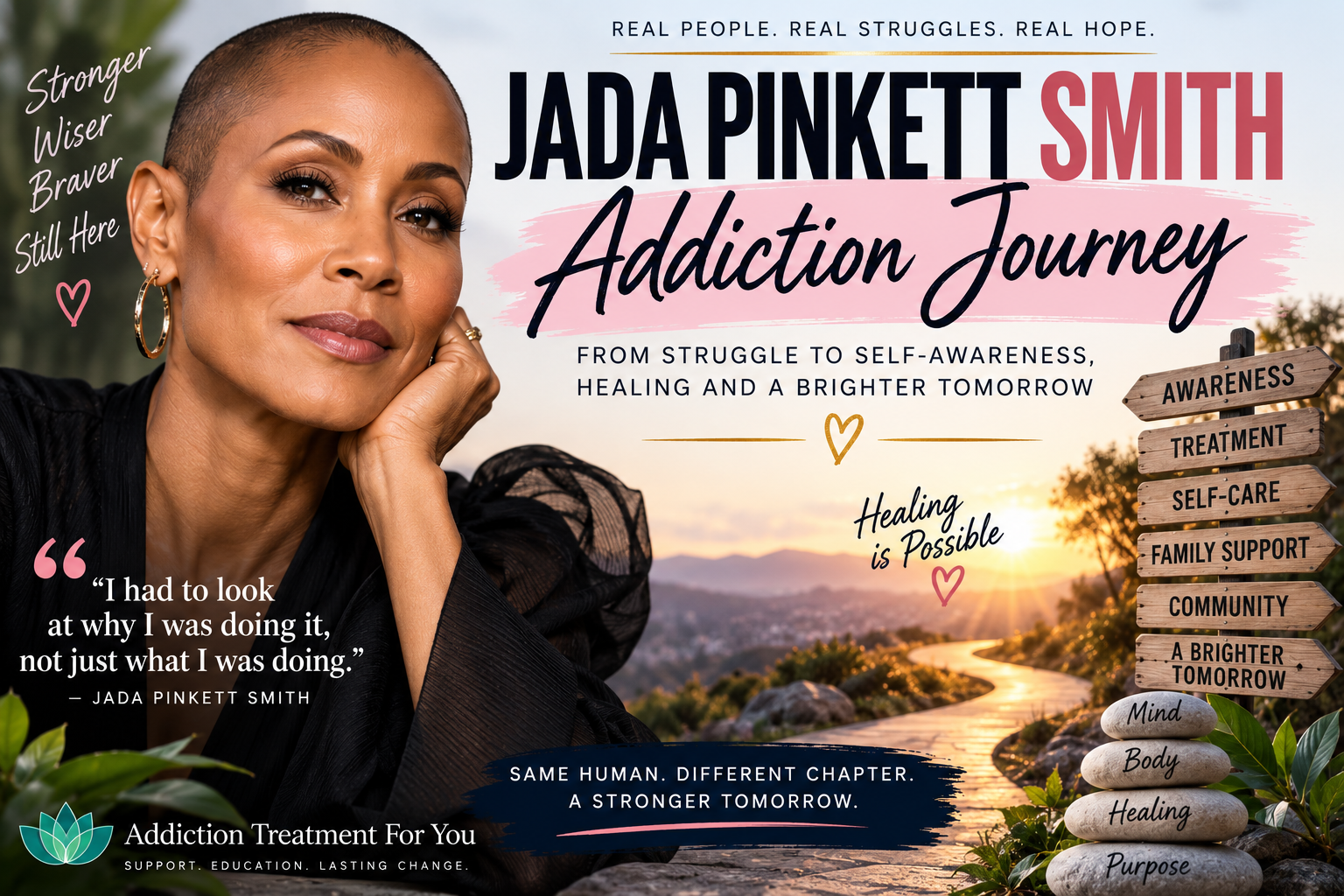
Jada Pinkett Smith has spoken publicly about periods in her younger life when alcohol, drugs, and other compulsive behaviors became problematic. Her story provides an opportunity to discuss how addiction does not always look the same from one person to another. Someone can maintain a career, relationships, and public success while privately recognizing that certain behaviors are becoming unhealthy.
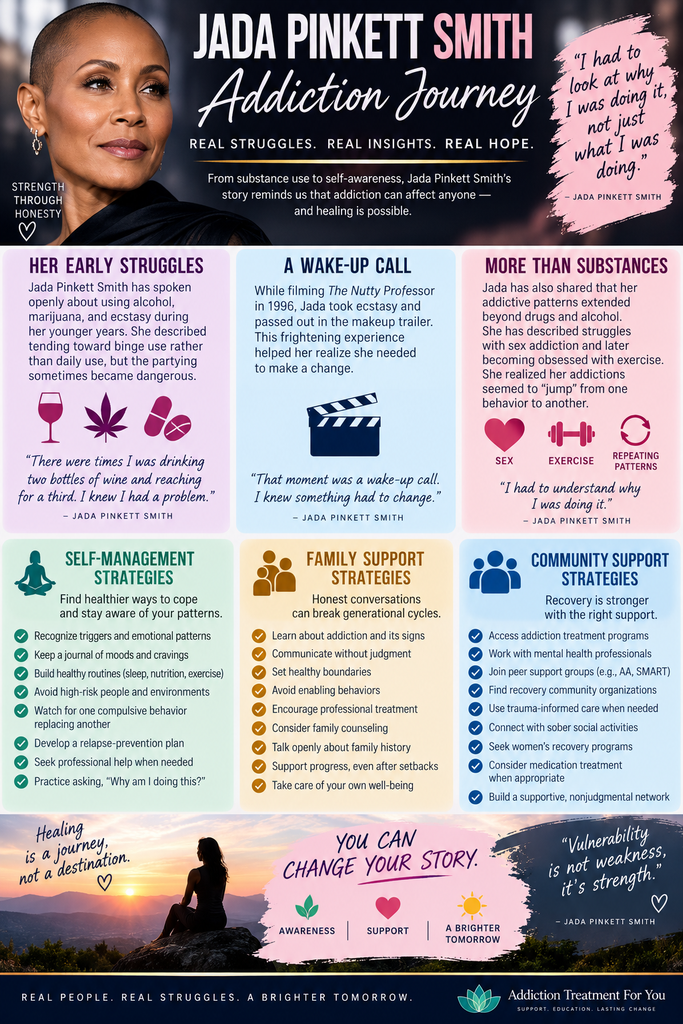
Pinkett Smith has described herself as someone prone to bingeing and becoming intensely focused on behaviors. She has said that her addictions seemed to “jump” from one behavior to another, including alcohol, sex, and exercise. She has also discussed using alcohol, marijuana, and ecstasy during her younger years.
Her experiences highlight an important recovery lesson: addressing addiction may require looking beyond the substance itself and asking what emotional need, trigger, or behavioral pattern the substance or activity is serving.
When Substance Use Became a Warning Sign
Pinkett Smith has described drinking heavily beginning when she was young and later combining alcohol with marijuana and ecstasy. She explained that she was not necessarily drinking every day but tended toward periods of heavy partying.
One particularly serious incident occurred while she was working on the 1996 film The Nutty Professor. Pinkett Smith has said she went to work after taking ecstasy and passed out in the makeup trailer. She later described the experience as an important wake-up call.
She has also recalled being home alone after drinking two bottles of wine and preparing to open a third when she recognized that her drinking had become a problem.
These experiences demonstrate why problematic substance use should not be judged only by whether someone drinks or uses drugs every day. Binge patterns, loss of control, increasing tolerance, risky combinations, and consequences at home or work can also be warning signs.
Addiction Can Move From One Behavior to Another
One of the most interesting aspects of Pinkett Smith’s public discussion has been her recognition that compulsive patterns are not limited to a single substance.
She has described experiencing what she considered a form of sex addiction when she was younger and later becoming intensely focused on exercise. She explained that understanding why she was engaging in a behavior was important to recognizing whether it had become unhealthy.
This idea is valuable in recovery because simply removing one substance or behavior does not automatically address the underlying emotional patterns.
A person may stop drinking but begin coping excessively through gambling, shopping, food, exercise, relationships, work, or another activity. This does not happen to everyone, but recognizing substitute behaviors can be an important part of long-term self-awareness.
Family History and Understanding Addiction
Pinkett Smith has also discussed addiction within her family. Her mother, Adrienne Banfield-Norris, has publicly described her own past heroin addiction and recovery. Pinkett Smith has said that alcohol and drug addiction ran through her family.
Family history does not mean someone is destined to develop addiction. Substance use disorders develop through a complicated interaction of biological, psychological, social, and environmental influences.
However, knowing your family history can encourage greater awareness of personal risk.
Self-Management Strategies: Recognizing Your Own Patterns
Pinkett Smith’s story emphasizes self-observation. She recognized patterns of bingeing, obsession, and triggers and began questioning the motivation behind her behaviors.
Self-management strategies for someone in recovery may include:
- Identify situations, emotions, people, or environments that trigger cravings.
- Pay attention to binge patterns rather than focusing only on daily substance use.
- Keep a journal of cravings, moods, and stressful situations.
- Develop healthy ways of responding to anxiety, loneliness, anger, grief, or boredom.
- Establish consistent sleep, nutrition, exercise, and daily routines.
- Avoid substances or environments strongly connected with previous problematic use.
- Watch for one compulsive behavior replacing another.
- Develop a relapse-prevention plan before a crisis occurs.
- Seek professional help when self-management alone is not enough.
- Practice asking, “Why am I doing this, and what am I trying to feel or avoid?”
Pinkett Smith has said that she stopped her problematic substance use “cold turkey.” That is part of her individual account, not general medical advice. Abruptly stopping some substances—particularly alcohol or benzodiazepines after significant physical dependence—can cause dangerous withdrawal and may require medical supervision.
Family Support Strategies: Understanding Without Enabling
Pinkett Smith’s public conversations with her mother and daughter demonstrate how families can talk openly about substance use across generations.
Families cannot recover for someone, but they can help create an environment that encourages treatment and accountability.
Helpful family strategies include:
- Learn about addiction rather than viewing it solely as a character problem.
- Discuss family histories of substance misuse honestly and appropriately.
- Listen without immediately criticizing or shaming.
- Encourage professional assessment when concerning behaviors appear.
- Establish clear boundaries around unacceptable behavior.
- Avoid providing money or assistance that unintentionally supports continued substance use.
- Encourage treatment following a relapse rather than treating relapse as proof of failure.
- Consider family counseling when addiction has damaged relationships.
- Recognize that family members may need their own support.
Family conversations can also help younger generations understand their potential vulnerabilities before substance use becomes severe.
Community Support Strategies: Recovery Does Not Have to Happen Alone
Pinkett Smith has used public conversations about addiction to challenge stigma. Her mother has similarly discussed how shame and stereotypes can make it more difficult for people to seek help.
Community support can provide something self-management and family support cannot always provide: connection with professionals and other people who understand recovery firsthand.
Helpful resources can include:
- Addiction treatment programs
- Primary care and behavioral health professionals
- Individual and family counseling
- Peer recovery specialists
- Recovery community organizations
- Alcoholics Anonymous, SMART Recovery, or other mutual-support programs
- Medication treatment when clinically appropriate
- Women’s recovery programs
- Trauma-informed mental health services
- Sober recreational and social activities
Different people need different combinations of treatment and support. There is no single recovery pathway that works for everyone.
What Her Journey Can Teach About “Rock Bottom”
Pinkett Smith has used the phrase “rock bottom” to describe her experiences. But people do not need to wait for a catastrophic event before asking for help.
Someone does not need to lose a marriage, career, home, or health before substance use deserves attention.
Early warning signs are enough reason to seek assistance.
If drinking or drug use is becoming difficult to control, creating secrecy, increasing tolerance, interfering with responsibilities, producing dangerous situations, or becoming the primary method of coping with emotions, those concerns deserve attention before the consequences become more severe.
Recovery Requires Looking Beneath the Behavior
Perhaps one of the most useful lessons from Pinkett Smith’s public discussions is the importance of examining what lies underneath compulsive behavior.
Stopping a substance is important, but recovery can also involve asking:
What am I escaping?
What triggers me?
What emotions am I struggling to tolerate?
Am I replacing one unhealthy coping mechanism with another?
Who can I contact when I begin struggling again?
Those questions move recovery beyond simply saying, “Don’t use.”
They encourage someone to understand the function that alcohol, drugs, or compulsive behaviors once served and develop healthier alternatives.
Conclusion
Jada Pinkett Smith’s publicly shared experiences illustrate that problematic substance use can exist even alongside professional achievement and outward success. She has described heavy drinking, marijuana and ecstasy use, binge patterns, and other behaviors she considered addictive, as well as moments when she recognized that change was necessary.
Her story can also encourage a broader understanding of recovery.
Self-management helps a person recognize triggers, patterns, and substitute behaviors. Family support can provide education, boundaries, accountability, and connection. Community support provides access to treatment, counseling, peer support, and recovery resources.
Most importantly, a person’s recovery story should not become a reason for shame. It can be an opportunity to understand how addiction develops, recognize warning signs earlier, and show that meaningful change can begin when someone is willing to examine not only what they are doing but also why they are doing it.
Frequently Asked Questions
Here are some common questions:
1. Has Jada Pinkett Smith publicly discussed addiction?
Yes. Jada Pinkett Smith has openly discussed periods of problematic alcohol and drug use when she was younger. She has also described having a tendency toward compulsive or binge-like behaviors.
2. What substances has Jada Pinkett Smith said she used?
Pinkett Smith has publicly discussed using alcohol, marijuana, and ecstasy during her younger years. She has described periods of combining substances while partying and eventually recognizing that her behavior was becoming dangerous.
3. Did Jada Pinkett Smith consider herself a daily drinker?
She has described her pattern more as binge drinking than drinking every day. This distinction is important because problematic alcohol use does not have to occur daily to create serious health, safety, relationship, or occupational consequences.
4. What was a major wake-up call in her journey?
Pinkett Smith has recalled taking ecstasy while working on the 1996 movie The Nutty Professor and passing out in her makeup trailer. She has described the incident as a significant warning that her substance use needed to change.
5. Has she discussed addiction beyond alcohol and drugs?
Yes. Pinkett Smith has spoken about what she considered compulsive patterns involving sex and exercise. She has described feeling that her addictions could move from one behavior to another.
6. What does her experience teach us about replacing one addiction with another?
Her account highlights the importance of examining the reasons behind compulsive behavior. Stopping one substance does not necessarily address stress, trauma, emotional distress, or coping patterns that may have contributed to the behavior.
7. Did family history play a role in her understanding of addiction?
Pinkett Smith has discussed addiction within her family. Her mother, Adrienne Banfield-Norris, has publicly spoken about recovering from heroin addiction. Family history can increase vulnerability to substance use disorders, but it does not mean someone is destined to develop addiction.
8. What self-management strategies can someone learn from her story?
Recovery strategies can include identifying emotional and environmental triggers, recognizing binge patterns, developing healthier coping skills, maintaining supportive routines, avoiding high-risk situations, monitoring for substitute compulsive behaviors, and seeking professional treatment when necessary.
9. Why is asking “why am I doing this?” important?
Understanding the purpose a behavior serves can reveal underlying triggers. Someone might use substances to cope with stress, painful emotions, loneliness, trauma, or other difficulties. Recognizing these patterns can help a person develop healthier alternatives.
10. How can families support someone struggling with addiction?
Families can educate themselves about addiction, communicate concerns without unnecessary shame, encourage professional treatment, maintain healthy boundaries, avoid enabling substance use, and participate in family counseling when appropriate.
11. Why are healthy boundaries important?
Supporting someone does not mean accepting every behavior associated with substance use. Boundaries can protect family members, encourage accountability, and clarify which behaviors they will and will not support.
12. What community resources can support recovery?
Depending on individual needs, support may include addiction treatment programs, behavioral health professionals, peer recovery specialists, mutual-support groups, recovery community organizations, trauma-informed counseling, and medication treatment when clinically appropriate.
13. Did Jada Pinkett Smith go to rehab?
Her widely reported personal accounts have focused primarily on recognizing her problematic substance use and stopping it rather than describing a traditional residential rehabilitation experience. It is important not to add treatment details that she has not publicly confirmed.
14. Did she stop using substances “cold turkey”?
Pinkett Smith has described stopping her problematic substance use abruptly. However, her experience should not be treated as medical guidance. Abrupt withdrawal from heavy alcohol use or certain drugs, particularly benzodiazepines, can be medically dangerous and sometimes life-threatening. Professional assessment may be necessary.
15. Does someone have to hit “rock bottom” before getting help?
No. A person does not need to experience an overdose, job loss, divorce, arrest, or other major crisis before seeking treatment. Increasing tolerance, binge use, inability to control consumption, risky behavior, cravings, or interference with everyday responsibilities can all justify seeking help.
16. What does Jada Pinkett Smith’s story teach families about addiction?
Her public discussions demonstrate that addiction and problematic substance use can exist alongside professional achievement and outward success. Families should pay attention to behavioral changes and consequences rather than assuming someone is fine simply because they remain successful.
17. Can recovery involve more than simply stopping drugs or alcohol?
Yes. Long-term recovery may involve addressing emotional health, relationships, trauma, stress management, routines, triggers, and the reasons substances became coping mechanisms in the first place.
18. What is the biggest lesson from Jada Pinkett Smith’s addiction journey?
One of the strongest lessons from her public account is the importance of self-awareness. Recognizing that a behavior has become harmful—and examining what drives it—can be an important starting point for change. With appropriate self-management, family involvement, professional care, and community support, people struggling with addiction can build healthier ways of coping and moving forward.
Video: What You Didn’t Know About Jada Pinkett Smith’s Past #jadapinkett #story