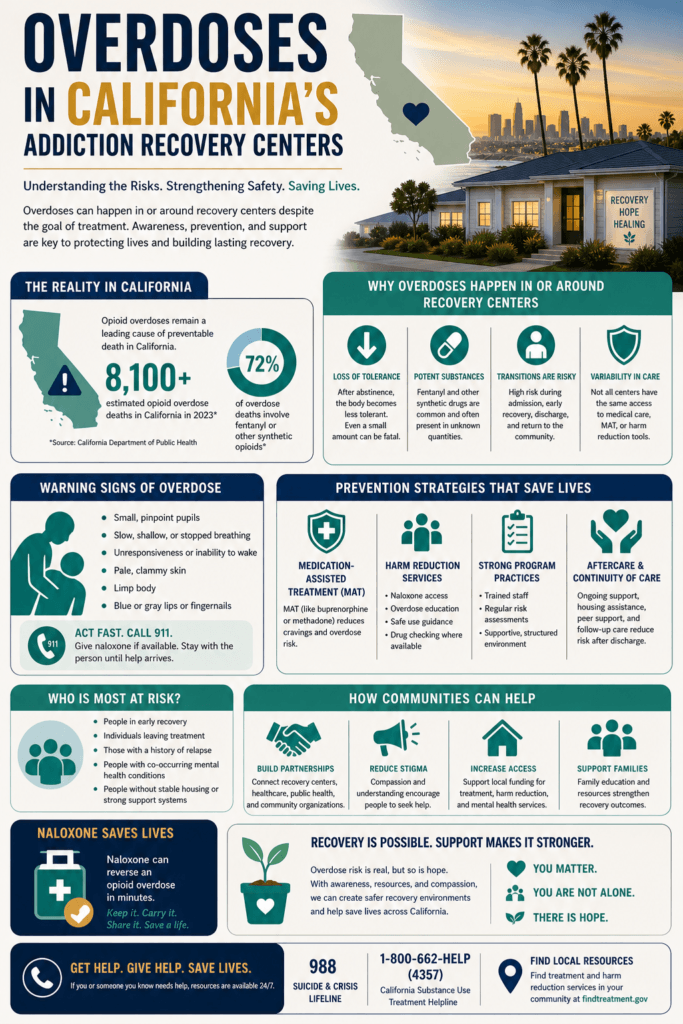
Overdoses in addiction recovery centers represent a troubling and often misunderstood aspect of the recovery process. In California, where the opioid crisis continues to evolve, these incidents highlight the ongoing vulnerability individuals face—even within structured treatment environments. Factors such as reduced tolerance after abstinence, exposure to potent substances like fentanyl, and inconsistencies in treatment approaches contribute to this risk. Understanding why overdoses occur in these settings is essential for improving safety, strengthening care models, and ensuring that recovery environments truly support long-term healing.
A Complex Reality: Overdoses in California’s Addiction Recovery Centers
Addiction recovery centers are meant to provide safety, structure, and a path toward healing. Yet, a troubling issue has emerged—overdoses occurring within or near recovery settings in California. This highlights a difficult truth: recovery is not a controlled or risk-free process. Even in supportive environments, individuals remain vulnerable, especially during early stages of treatment or transition periods.
One of the most significant factors contributing to overdoses is the loss of tolerance. When individuals stop using substances during treatment, their bodies adjust. If relapse occurs, even a previously tolerated dose can become fatal—especially with the widespread presence of potent substances like fentanyl. This makes relapse episodes particularly dangerous within recovery populations.
Another challenge is the variation in treatment quality and oversight. Not all recovery centers provide the same level of care, and some may lack medical supervision, structured programming, or access to evidence-based treatments. These gaps can increase the risk of relapse and overdose, particularly for individuals with severe substance use disorders.
Key Risk Factors in Recovery Settings:
- Loss of tolerance after periods of abstinence
- Exposure to high-potency substances like fentanyl
- Limited access to medication-assisted treatment (MAT)
- Inconsistent supervision or program structure
- Easy access to substances in surrounding communities
The role of medication-assisted treatment (MAT) is critical in reducing overdose risk. Medications such as buprenorphine and methadone help stabilize individuals and reduce cravings. However, some recovery programs emphasize abstinence-only approaches, which may leave individuals more vulnerable if relapse occurs.
Environmental factors also play a role. Many recovery centers are located in areas where drugs are readily available, increasing exposure and temptation. Without strong accountability systems and support mechanisms, individuals may struggle to maintain recovery in these environments.
To address these concerns, efforts across California are focusing on improving safety and treatment outcomes through evidence-based strategies.
Prevention and Safety Strategies:
- Expanding access to MAT within recovery programs
- Increasing regulation and oversight of treatment facilities
- Distributing naloxone to clients, staff, and families
- Providing overdose education and prevention training
- Strengthening discharge planning and aftercare support
Harm reduction is becoming an essential part of the conversation. Rather than focusing solely on abstinence, harm reduction strategies aim to minimize the risks associated with relapse. This includes education, access to life-saving tools such as naloxone, and ongoing support, even when setbacks occur.
Family involvement and community support further enhance recovery outcomes. When individuals have stable support systems and access to resources, they are more likely to maintain progress and navigate challenges effectively.
Ultimately, overdoses in recovery centers do not indicate failure—they reflect the chronic and complex nature of addiction. Recovery is not linear, and risk persists even in structured environments. The goal is not to eliminate risk entirely, but to manage it through comprehensive, compassionate, and evidence-based care.
By strengthening clinical practices, improving oversight, and embracing harm reduction, recovery centers in California can better protect individuals and support long-term healing.
Recovery is a journey that requires vigilance, adaptability, and support. With the right strategies in place, even complex challenges like overdose risk can be addressed—ensuring that treatment centers remain places of safety, growth, and hope.
Staying Safe in Recovery: Self-Management Strategies to Navigate Overdose Risks in California’s Addiction Recovery Centers
Recovery centers are designed to support healing, but individuals in treatment—especially in California—may still face real risks related to overdose. Understanding these risks and developing strong self-management strategies can empower individuals to protect their recovery and make informed decisions. While clinical care and program structure are essential, personal awareness and daily actions play a critical role in maintaining safety.
One of the most important realities to understand is the risk of overdose after reduced tolerance. During treatment, the body becomes less accustomed to substances. If relapse occurs, even small amounts—particularly of potent opioids like fentanyl—can be life-threatening. Self-management begins with recognizing this risk and taking proactive steps to prevent harm.
Understanding Personal Risk:
- Recognize that tolerance decreases quickly during abstinence
- Be aware of the dangers of fentanyl and unknown drug potency
- Understand that relapse can significantly increase overdose risk
- Learn the signs of overdose and when to seek help
Another essential strategy is staying actively engaged in treatment. Recovery programs provide structure, but individuals must take responsibility for participating fully and using available resources.
Staying Engaged in Recovery:
- Attend all therapy sessions and group meetings consistently
- Communicate openly with staff about cravings or struggles
- Follow treatment plans, including medication-assisted treatment (MAT) if prescribed
- Ask questions and stay informed about your care
Self-awareness is a powerful tool in preventing relapse and overdose. Identifying triggers and high-risk situations allows individuals to respond early rather than react after a setback occurs.
Building Self-Awareness:
- Identify personal triggers such as stress, environments, or relationships
- Monitor emotional changes like anxiety, frustration, or isolation
- Use journaling or reflection to track patterns
- Apply coping strategies learned in treatment
Environmental awareness is especially important in recovery settings. Some centers may be located in areas where substances are accessible, increasing temptation. Managing surroundings can reduce exposure to risk.
Managing Your Environment:
- Avoid high-risk areas or individuals associated with past use
- Stay within structured program settings when possible
- Build connections with peers focused on recovery
- Create a safe, supportive personal space
Harm reduction is a critical part of self-management, even within recovery. Being prepared does not mean expecting failure—it means prioritizing safety.
Harm Reduction Strategies:
- Carry naloxone and know how to use it
- Avoid using substances alone if relapse occurs
- Test substances when possible (where resources are available)
- Inform someone you trust if you feel at risk
Connection and support play a major role in maintaining safety. Isolation increases vulnerability, while consistent support strengthens resilience.
Staying Connected:
- Build relationships with supportive peers in treatment
- Stay in contact with family or trusted individuals
- Participate in peer support or recovery groups
- Reach out immediately when feeling overwhelmed
Finally, self-compassion is essential. Recovery is not a perfect process, and setbacks can happen. Responding with awareness rather than shame helps individuals re-engage with treatment quickly and safely.
Mindset for Recovery:
- Focus on progress rather than perfection
- Recognize early warning signs and act quickly
- Seek help without fear of judgment
- Stay committed to long-term recovery goals
Overdoses in recovery settings highlight the complexity of addiction—not failure. By developing strong self-management strategies, individuals in California can better understand risks and take active steps to protect themselves.
Recovery is not just about avoiding substances—it is about building the awareness, skills, and support needed to stay safe and move forward. With the right strategies, individuals can navigate challenges and continue their path toward lasting recovery.
Supporting Safety at Home: Family Strategies to Address Overdose Risks in California’s Addiction Recovery Centers
Addiction recovery is a complex and ongoing process, and even within structured environments, individuals remain vulnerable to relapse and overdose. In California, concerns about overdoses in and around recovery centers highlight the need for strong, informed family involvement. Families are not just observers in the recovery journey—they are essential partners who can help reinforce safety, awareness, and long-term stability. By understanding overdose risks and applying practical support strategies, families can play a critical role in protecting their loved ones.
One of the most important steps families can take is educating themselves about overdose risk—especially the danger of reduced tolerance after periods of abstinence. When individuals leave treatment or experience a lapse, their bodies are more sensitive to substances, increasing the likelihood of overdose. Awareness of this reality helps families respond with urgency and preparedness rather than misunderstanding.
Understanding Overdose Risk:
- Learn how tolerance decreases during treatment
- Understand the dangers of fentanyl and unknown drug potency
- Recognize that relapse can significantly increase overdose risk
- Be aware of high-risk periods, such as early recovery or post-discharge
Creating a supportive and stable environment is another essential strategy. While recovery centers provide structure, much of the individual’s experience is influenced by what happens outside of formal treatment settings. Families can help reduce stress and promote consistency at home.
Creating a Safe Environment:
- Encourage routines around sleep, meals, and recovery activities
- Reduce exposure to triggers or high-risk situations
- Promote a calm, structured, and supportive atmosphere
- Support participation in treatment and aftercare programs
Communication plays a central role in effective family support. Open, nonjudgmental dialogue allows individuals to share their struggles without fear, making it easier to identify early warning signs and intervene when necessary.
Healthy Communication Strategies:
- Practice active listening without interrupting or criticizing
- Use supportive, nonjudgmental language
- Encourage honesty about cravings or challenges
- Maintain regular check-ins to stay connected
Harm reduction is a critical component of family support, particularly in areas like California where overdose risk is elevated. Families should be prepared to respond quickly and effectively in emergencies.
Harm Reduction and Safety:
- Keep naloxone readily available and know how to use it
- Learn to recognize the signs of an overdose
- Ensure all household members understand emergency response steps
- Encourage safe practices and reduce isolation
Families can also help by supporting engagement with treatment and recovery resources. Encouragement and practical assistance can make it easier for individuals to stay connected to care.
Encouraging Treatment Engagement:
- Support attendance at therapy and medical appointments
- Reinforce adherence to medication-assisted treatment (MAT) if prescribed
- Help with transportation or scheduling when needed
- Stay informed about treatment plans (with consent)
At the same time, maintaining healthy boundaries is essential. Support should not become enabling. Clear expectations help create accountability while still offering care and encouragement.
Setting Healthy Boundaries:
- Establish clear expectations around safety and behavior
- Avoid minimizing or covering up risky actions
- Encourage responsibility and independence
- Communicate boundaries consistently and respectfully
Finally, families must take care of their own well-being. Supporting someone at risk of overdose can be emotionally taxing, and maintaining personal resilience is key to providing consistent support.
Family Self-Care:
- Seek support through counseling or peer groups
- Take time for rest and personal needs
- Stay connected with trusted support networks
- Recognize limits and ask for help when needed
Overdoses in recovery settings reflect the reality that addiction is a chronic and complex condition. However, with informed and proactive family support, many risks can be reduced. Families who combine education, communication, preparedness, and compassion create a powerful safety net for their loved ones.
Recovery is not a journey taken alone. In California and beyond, families who stay engaged and prepared can help ensure that recovery remains not only possible but also safer and more sustainable.
Strengthening the Safety Net: Community Resource Strategies to Address Overdoses in California’s Addiction Recovery Centers
Overdoses occurring in and around addiction recovery centers highlight a critical gap between clinical care and real-world support systems. In California, where the opioid crisis continues to evolve, community resources play a vital role in reducing overdose risk and supporting individuals beyond the walls of treatment facilities. Recovery does not happen in isolation—it depends on a network of accessible, coordinated, and responsive services that extend into the community.
One of the most important realities to understand is that recovery centers alone cannot eliminate overdose risk. Individuals often move between levels of care, interact with surrounding environments, and face ongoing exposure to triggers. Community resources act as a bridge, providing continuity of care, harm reduction support, and essential services that stabilize recovery in everyday life.
A major challenge in addressing overdoses is the fragmentation of services. Without coordination between treatment centers, healthcare providers, and community organizations, individuals may fall through the cracks—especially during transitions such as discharge or relapse.
Key Community Challenges:
- Limited coordination between treatment centers and local services
- Gaps in care during transitions (admission, discharge, relapse)
- Easy access to high-risk substances in surrounding areas
- Insufficient harm reduction resources in some communities
- Stigma that limits access to support services
To address these issues, communities across California are implementing strategies that prioritize accessibility, safety, and connection. Expanding harm reduction services is one of the most effective approaches. These services meet individuals where they are, focusing on reducing risk rather than requiring immediate abstinence.
Harm Reduction Strategies:
- Widespread distribution of naloxone in communities and recovery centers
- Education on overdose prevention and response
- Access to drug checking services where available
- Outreach programs targeting high-risk populations
- Safe-use education to reduce immediate harm
Another critical strategy is improving continuity of care. Individuals leaving recovery centers are at particularly high risk for overdose due to reduced tolerance. Community-based programs can help ensure that support continues during these vulnerable transitions.
Continuity of Care Strategies:
- Coordinated discharge planning with community providers
- Connection to outpatient treatment and medication-assisted treatment (MAT)
- Follow-up outreach and case management services
- Peer support programs to maintain engagement
- Access to housing and social support services
Community partnerships are essential for building a strong support network. Collaboration between healthcare systems, local governments, nonprofits, and recovery organizations helps create a more comprehensive and responsive system of care.
Building Community Partnerships:
- Integrating services between treatment centers and public health agencies
- Collaborating with nonprofits and recovery organizations
- Engaging local law enforcement in harm reduction initiatives
- Supporting community-based outreach and education efforts
Peer support networks also play a powerful role in reducing overdose risk. Individuals with lived experience can connect with those in recovery in ways that are relatable and nonjudgmental, helping to build trust and encourage ongoing engagement.
Role of Peer Support:
- Providing mentorship and shared experience
- Offering emotional support and accountability
- Assisting with navigation of resources
- Reducing stigma and isolation
Technology can further enhance community resource strategies. Digital tools allow individuals to stay connected to support systems, access information, and find services quickly.
Using Technology for Support:
- Recovery apps for tracking progress and accessing resources
- Online directories of local services
- Virtual support groups and telehealth options
- Communication platforms for peer and provider support
Ultimately, addressing overdoses in recovery settings requires a shift from isolated care to integrated, community-based support systems. Treatment centers are just one part of the recovery journey—what happens outside those walls is equally important.
In California, strengthening community resources means creating a safety net that is flexible, accessible, and responsive to real-world challenges. When individuals are supported by a coordinated network of care, the risk of overdose decreases, and the path to long-term recovery becomes more achievable.
Recovery is not confined to a single place—it is sustained through connection. With strong community resource strategies, recovery centers can be supported by a broader system that protects, empowers, and saves lives.
Frequently Asked Questions
Here are some common questions:
1. Do overdoses really happen in addiction recovery centers?
Yes. While recovery centers are designed to support sobriety, overdoses can still occur—especially during relapse or transition periods. This has been a growing concern in California.
2. Why are individuals at risk of overdose during recovery?
The biggest reason is loss of tolerance. After a period of abstinence, the body becomes more sensitive to substances. If someone relapses and uses the same amount as before, it can lead to overdose.
3. What role does fentanyl play in overdose risk?
Fentanyl is a highly potent synthetic opioid that is often present in the drug supply—sometimes without the user’s knowledge. Even a small amount can be fatal, significantly increasing overdose risk.
4. Are all recovery centers equally safe?
No. There is variation in quality, supervision, and services among recovery centers. Some may lack:
- Medical oversight
- Access to medication-assisted treatment (MAT)
- Structured programming
These differences can impact safety and outcomes.
5. What is medication-assisted treatment (MAT), and why is it important?
MAT uses medications like buprenorphine or methadone to:
- Reduce cravings
- Stabilize brain chemistry
- Lower overdose risk
Programs that include MAT are generally more effective in preventing relapse and overdose.
6. When is overdose risk highest during recovery?
High-risk periods include:
- Early stages of treatment
- Immediately after leaving a recovery center
- During relapse after a period of abstinence
7. Can recovery centers prevent all overdoses?
No. While they reduce risk, they cannot eliminate it entirely. Addiction is a chronic and complex condition, and relapse can occur even in structured environments.
8. What is naloxone, and why is it important?
Naloxone is a life-saving medication that can reverse an opioid overdose. Many recovery programs in California now provide naloxone to:
- Patients
- Staff
- Families
9. What are the signs of an opioid overdose?
Common signs include:
- Slow or stopped breathing
- Unresponsiveness
- Blue or gray lips and fingernails
- Pinpoint pupils
- Limp body
Immediate action is critical.
10. What should someone do during an overdose?
- Call emergency services (911) immediately
- Administer naloxone if available
- Stay with the person until help arrives
11. How can recovery centers reduce overdose risk?
Effective strategies include:
- Providing MAT
- Offering overdose education
- Distributing naloxone
- Ensuring strong supervision and structure
- Creating comprehensive aftercare plans
12. What role do families play in prevention?
Families can:
- Learn overdose signs and response
- Keep naloxone available
- Support treatment engagement
- Provide emotional and practical support
13. How do community resources help?
Communities support recovery by:
- Offering peer support groups
- Providing harm reduction services
- Expanding access to healthcare and housing
- Reducing stigma
14. Is relapse considered failure in recovery?
No. Relapse is often part of the recovery process. It should be viewed as a signal to adjust treatment, not as failure.
15. What is the key takeaway about overdoses in recovery centers?
Overdose risk remains present even during treatment, but it can be significantly reduced through:
- Education
- Evidence-based care
- Harm reduction strategies
- Strong support systems
Conclusion
Addressing overdoses in recovery centers requires a balanced, comprehensive approach that combines clinical care, harm reduction, and strong community support. While treatment programs play a critical role, reducing overdose risk also depends on continuity of care, access to evidence-based therapies, and ongoing support beyond the facility. In California, efforts to improve oversight, expand access to medication-assisted treatment, and increase awareness are key steps toward safer recovery environments. Ultimately, recognizing the complexity of addiction and responding with flexible, compassionate strategies can help ensure that recovery centers remain places of protection, growth, and hope.
Video: Tolerance Loss During Recovery Can Be Fatal #opioiduseorder #prevention