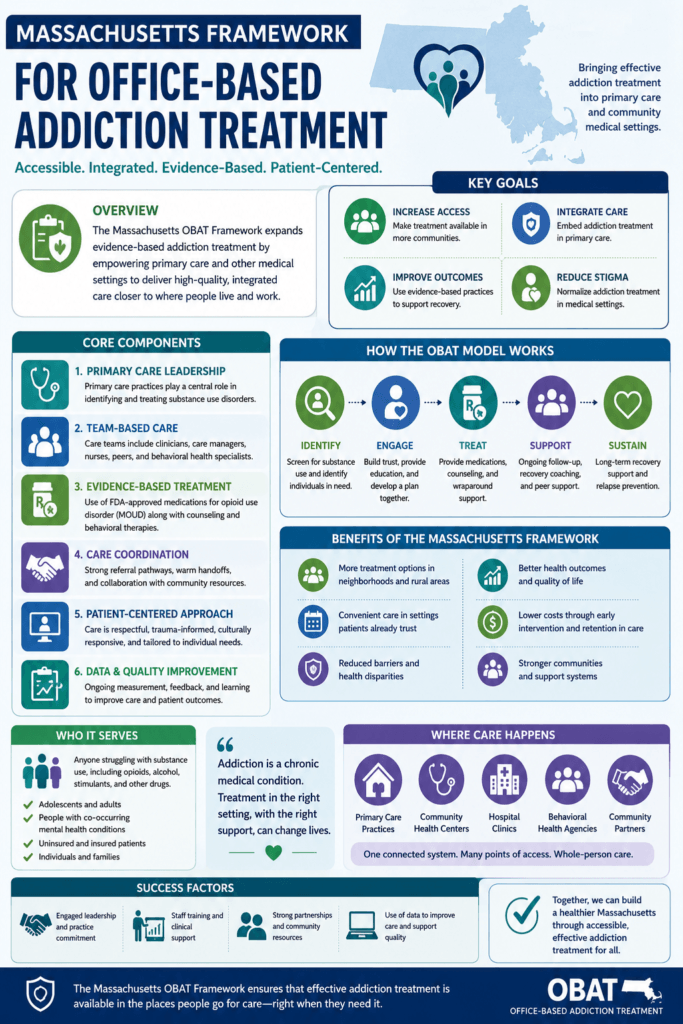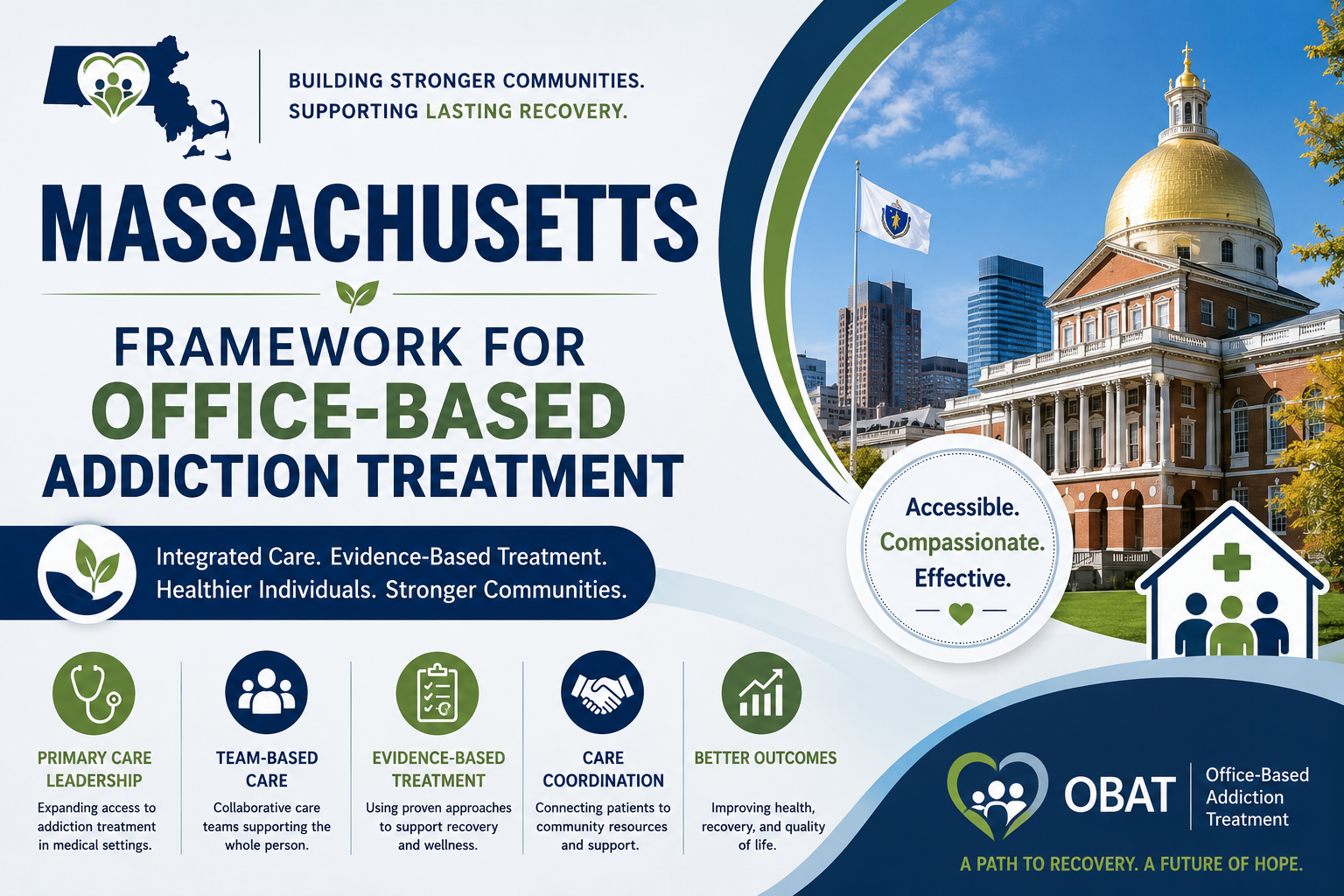
The Massachusetts Framework for Office-Based Addiction Treatment (OBAT) represents a transformative approach to addressing opioid use disorder (OUD) and other substance use conditions by integrating care directly into primary healthcare settings. Rather than separating addiction treatment into specialized facilities, this model embeds services within everyday medical environments, making care more accessible, less stigmatized, and better aligned with whole-person health. By combining medication-assisted treatment, behavioral health support, and care coordination, the framework allows individuals to receive comprehensive, continuous care while maintaining their daily responsibilities and routines.
Expanding Access and Integration: The Massachusetts Framework for Office-Based Addiction Treatment
The Massachusetts Framework for Office-Based Addiction Treatment (OBAT) represents a forward-thinking approach to addressing opioid use disorder (OUD) and other substance use conditions. By integrating addiction treatment into primary care and outpatient medical settings, this model removes many of the traditional barriers associated with specialized treatment centers. Patients can receive care in familiar healthcare environments, reducing stigma and improving engagement while allowing providers to address addiction as part of overall health.
At its core, the OBAT model treats addiction as a chronic medical condition that requires ongoing management rather than isolated intervention. Medical providers—including physicians, nurse practitioners, and physician assistants—are trained to prescribe medications such as buprenorphine and to manage co-occurring physical and mental health conditions. This comprehensive approach improves continuity of care and ensures that patients receive well-rounded treatment.
Key Components of the OBAT Model:
- Integration of addiction treatment into primary care settings
- Use of medication-assisted treatment (MAT), including buprenorphine
- Coordination between medical and behavioral health services
- Focus on long-term, chronic disease management
- Emphasis on reducing stigma through routine healthcare delivery
A defining feature of the Massachusetts framework is its team-based care structure. Rather than relying solely on a single provider, OBAT programs include care coordinators, behavioral health clinicians, and recovery coaches who work together to support the patient. This collaborative model helps address not only medical needs but also social and emotional factors that influence recovery.
Team-Based Care Approach:
- Care coordinators to manage appointments and follow-ups
- Behavioral health specialists to provide counseling and therapy
- Recovery coaches offering peer support and guidance
- Collaboration with community services for housing, employment, and social needs
Accessibility is another major strength of the OBAT framework. Traditional addiction treatment programs often involve long wait times or strict entry requirements. In contrast, office-based models prioritize low-barrier access, allowing patients to begin treatment more quickly and with fewer obstacles. This is particularly important in responding to the urgency of the opioid crisis.
Improving Access to Care:
- Reduced wait times for treatment initiation
- Flexible scheduling and outpatient visits
- Integration with existing primary care relationships
- Easier access for underserved or rural populations
The model also emphasizes continuity and flexibility. Patients can move between different levels of care—such as outpatient services, intensive programs, or inpatient treatment—while maintaining a connection to their primary provider. This adaptability supports long-term recovery and helps prevent gaps in care.
Continuity and Flexibility:
- Seamless transitions between levels of care
- Ongoing monitoring and adjustment of treatment plans
- Long-term engagement with healthcare providers
- Integration of aftercare and relapse prevention strategies
Despite its effectiveness, implementing the OBAT model requires resources and commitment. Clinics must invest in training, staffing, and coordination efforts. Providers may also face challenges related to time constraints or reimbursement structures. However, the success of this framework demonstrates that these barriers can be addressed through strong policy support and system-level investment.
In conclusion, the Massachusetts Framework for Office-Based Addiction Treatment offers a scalable and patient-centered solution to one of today’s most pressing public health issues. By embedding addiction care into everyday healthcare settings, it expands access, reduces stigma, and supports long-term recovery.
Through integration, collaboration, and accessibility, the OBAT model shows that effective addiction treatment can—and should—be part of routine healthcare, ensuring that more individuals receive the support they need when and where they need it.
Taking Charge of Recovery: Self-Management Strategies Within the Massachusetts Framework for Office-Based Addiction Treatment
The Massachusetts Framework for Office-Based Addiction Treatment (OBAT) is designed to make addiction care more accessible by integrating it into primary care settings. While this model provides strong clinical and team-based support, its success also depends on the individual’s ability to actively engage in their own recovery. Self-management plays a critical role in helping patients navigate treatment, maintain consistency, and build long-term stability within this integrated care approach.
In an office-based setting, patients often have more independence compared to structured inpatient programs. This flexibility can be empowering, but it also requires individuals to take responsibility for managing appointments, medications, and daily recovery practices. Understanding how to effectively self-manage within the OBAT framework enables patients to fully benefit from available resources while maintaining control over their recovery journey.
One of the most important aspects of self-management is staying engaged with treatment. Regular communication with healthcare providers and care teams ensures that treatment plans remain effective and responsive to changing needs.
Staying Engaged in Care:
- Attend scheduled medical and therapy appointments consistently
- Communicate openly with providers about symptoms, cravings, or challenges
- Follow prescribed medication plans, including proper use of buprenorphine or other treatments
- Ask questions to better understand treatment goals and expectations
Another key strategy is building structure into daily life. Because OBAT operates in outpatient settings, individuals must create their own routines to support recovery outside of appointments. Structure helps reduce stress, improve focus, and reinforce healthy habits.
Creating Daily Structure:
- Set consistent times for medication, meals, and sleep
- Schedule recovery-related activities such as meetings or exercise
- Use reminders or planners to stay organized
- Balance responsibilities like work, school, and treatment
Self-awareness is also essential in managing recovery. Recognizing triggers, emotional patterns, and early warning signs of relapse allows individuals to respond proactively rather than reactively. This awareness is often developed through therapy and must be practiced in everyday life.
Developing Self-Awareness:
- Identify personal triggers and high-risk situations
- Monitor mood, stress levels, and behavioral changes
- Use journaling or reflection to track progress
- Apply coping strategies learned in treatment
Utilizing the full care team is another important component of self-management within the OBAT model. Patients are not expected to manage recovery alone—care coordinators, behavioral health specialists, and recovery coaches are there to provide guidance and support.
Using the Care Team Effectively:
- Reach out to care coordinators for scheduling or resource needs
- Engage in counseling sessions with behavioral health providers
- Connect with recovery coaches for peer support and motivation
- Ask for help when challenges arise rather than waiting
Connection and support outside the clinical setting are equally important. While OBAT integrates care into primary healthcare, recovery is strengthened through community and social support networks.
Building Support Systems:
- Participate in peer support groups or recovery meetings
- Stay connected with supportive friends and family
- Use community resources for additional support
- Limit exposure to environments that may trigger relapse
Finally, accountability and goal-setting help maintain progress over time. Setting realistic, measurable goals allows individuals to track improvement and stay motivated throughout their recovery journey.
Accountability and Goal-Setting:
- Set short-term and long-term recovery goals
- Track progress and celebrate small achievements
- Adjust goals as needs and circumstances change
- Stay committed to continuous improvement
The Massachusetts OBAT framework provides a strong foundation for accessible, integrated addiction treatment, but self-management is what transforms that foundation into lasting recovery. By staying engaged, building structure, developing awareness, and using available supports, individuals can take an active role in their healing process.
Recovery within an office-based model is not just about attending appointments—it is about learning how to live differently every day. With the right self-management strategies, patients can turn accessible care into sustainable, long-term success.
Strengthening Recovery at Home: Family Support Strategies Within the Massachusetts Framework for Office-Based Addiction Treatment
The Massachusetts Framework for Office-Based Addiction Treatment (OBAT) emphasizes accessibility, integration, and long-term care by embedding addiction treatment within primary care settings. While this model provides strong clinical and team-based support, family involvement remains a powerful factor in improving outcomes. Because OBAT operates in outpatient environments, much of the recovery process takes place at home—making family support strategies essential for reinforcing stability, accountability, and long-term success.
Families play a unique role in bridging the gap between clinical care and daily life. Unlike inpatient settings where care is highly structured, office-based treatment requires individuals to manage recovery within their everyday routines. Supportive, informed family members can help create an environment that encourages consistency, reduces stress, and strengthens engagement with treatment.
One of the most important ways families can support recovery is by understanding the OBAT model itself. When families recognize that addiction is treated as a chronic medical condition, they are better equipped to provide empathy and realistic expectations.
Understanding the OBAT Approach:
- Learn about medication-assisted treatment (MAT), including medications like buprenorphine
- Recognize addiction as a long-term health condition, not a short-term issue
- Understand the role of primary care providers and care teams
- Be aware that recovery is ongoing and may include setbacks
Supporting treatment engagement is another key strategy. Families can help ensure that their loved one remains connected to care by encouraging consistency and reducing barriers to participation.
Encouraging Treatment Engagement:
- Remind and support attendance at medical and therapy appointments
- Encourage adherence to prescribed medications
- Help manage schedules and transportation if needed
- Reinforce the importance of staying connected to the care team
Creating a stable and structured home environment is especially important in an outpatient model. Structure helps individuals maintain focus and reduces the likelihood of relapse.
Creating a Supportive Environment:
- Promote consistent daily routines (meals, sleep, medication times)
- Reduce exposure to triggers or high-risk situations
- Provide a calm, organized, and safe living space
- Encourage healthy habits such as exercise and proper nutrition
Communication plays a central role in family support. Open, respectful dialogue helps build trust and allows individuals to share their challenges without fear of judgment.
Healthy Communication Strategies:
- Practice active listening without interrupting or criticizing
- Use nonjudgmental language when discussing concerns
- Express support while maintaining honesty
- Encourage open conversations about progress and struggles
Families must also balance support with healthy boundaries. While encouragement is essential, enabling behaviors can undermine recovery. Clear boundaries help maintain accountability while still offering care.
Setting Healthy Boundaries:
- Define expectations around behavior and responsibilities
- Avoid covering up or excusing harmful actions
- Encourage independence and personal responsibility
- Communicate limits clearly and consistently
Utilizing the broader care team is another important strategy. OBAT programs are designed to include multiple professionals who can support both the individual and their family.
Collaborating with the Care Team:
- Participate in family therapy sessions when available
- Communicate with providers (with consent) to stay informed
- Seek guidance from recovery coaches or counselors
- Access educational resources offered by the program
Finally, families must prioritize their own well-being. Supporting a loved one in recovery can be emotionally demanding, and maintaining personal resilience is critical for long-term support.
Family Self-Care:
- Seek support through counseling or peer groups
- Take time for rest and personal needs
- Stay connected with supportive networks
- Recognize personal limits and avoid burnout
The Massachusetts OBAT framework creates a strong foundation for accessible, integrated addiction treatment, but family support is what helps sustain recovery in everyday life. By understanding the model, encouraging engagement, maintaining structure, and practicing balanced support, families can play a vital role in the recovery process.
Recovery in an office-based setting does not happen only in the clinic—it continues at home. With informed and supportive families, individuals are better equipped to achieve lasting, meaningful change through clinical care.
Building Stronger Networks: Community Resource Strategies Within the Massachusetts Framework for Office-Based Addiction Treatment
The Massachusetts Framework for Office-Based Addiction Treatment (OBAT) is designed to integrate addiction care into primary care settings, making treatment more accessible and less stigmatized. While clinical care is central to this model, its effectiveness is significantly enhanced by integrating community resources. Recovery does not occur in isolation—it is shaped by the environment, opportunities, and support systems available outside the clinic. Community resource strategies play a vital role in helping individuals navigate treatment, address social determinants of health, and sustain long-term recovery.
In an office-based model, patients often balance treatment with work, family responsibilities, and daily life challenges. Community resources provide the additional support needed to stabilize these areas, ensuring that recovery is not undermined by external stressors such as housing instability, unemployment, or lack of social support. By connecting clinical care with community-based services, the OBAT framework creates a more comprehensive and realistic approach to recovery.
One of the most important strategies is linking patients to essential services that address basic needs. When individuals have access to stable housing, food, transportation, and employment opportunities, they are better positioned to focus on recovery and engage consistently in treatment.
Addressing Social Determinants of Health:
- Connect patients with housing assistance or sober living programs
- Provide access to food banks and nutritional support services
- Link individuals to transportation resources for medical appointments
- Offer job training and employment support programs
- Assist with access to insurance and financial aid services
Peer support and community-based recovery networks are also critical components of the OBAT model. These resources offer connection, shared experience, and accountability beyond clinical settings, reinforcing recovery in everyday life.
Leveraging Peer and Community Support:
- Encourage participation in peer-led recovery groups
- Connect patients with recovery coaches or mentors
- Utilize local community centers and nonprofit organizations
- Promote engagement in faith-based or volunteer activities
- Build networks that reduce isolation and strengthen belonging
Coordination between healthcare providers and community organizations is another key strategy. OBAT programs often rely on care coordinators to bridge the gap between medical care and external services, ensuring that patients receive holistic support.
Care Coordination and Integration:
- Collaborate with community organizations to streamline referrals
- Use care coordinators to track and support patient needs
- Maintain communication between providers and service agencies
- Ensure continuity of care across different support systems
Access to mental health and behavioral health services within the community further strengthens recovery efforts. Many individuals with substance use disorders also experience co-occurring mental health conditions, making integrated support essential.
Expanding Behavioral Health Support:
- Connect patients to counseling and therapy services
- Provide access to crisis intervention and mental health hotlines
- Integrate trauma-informed care resources
- Support ongoing mental health treatment alongside addiction care
Technology can also enhance community resource strategies. Digital tools and platforms help individuals locate services, attend virtual support groups, and stay connected to recovery networks.
Using Technology to Enhance Access:
- Provide directories of local and virtual resources
- Encourage use of recovery and wellness apps
- Support telehealth for counseling and follow-up care
- Maintain communication through digital platforms
Finally, community engagement and purpose-driven activities play an important role in long-term recovery. Opportunities to contribute, connect, and build meaningful relationships help individuals develop a sense of identity beyond addiction.
Encouraging Community Engagement:
- Promote volunteering and community involvement
- Support participation in educational or skill-building programs
- Encourage recreational and wellness activities
- Foster a sense of purpose and belonging
The Massachusetts OBAT framework demonstrates that effective addiction treatment extends beyond the clinic walls. Integrating community resources into care addresses the full spectrum of needs that influence recovery, from medical treatment to social stability.
In conclusion, community resource strategies are essential to the success of office-based addiction treatment. When healthcare systems collaborate with community networks, they create a stronger, more resilient support system that empowers individuals to achieve and sustain recovery. Through connection, coordination, and comprehensive care, the OBAT model transforms recovery into a shared community effort rather than an isolated clinical process.
Frequently Asked Questions
Here are some common questions:
1. What is the Massachusetts OBAT framework?
The Massachusetts OBAT (Office-Based Addiction Treatment) framework is a model that integrates addiction treatment into primary care and outpatient medical settings, allowing patients to receive care in familiar healthcare environments rather than specialized facilities.
2. What types of conditions does OBAT treat?
OBAT primarily treats:
- Opioid use disorder (OUD)
- Other substance use disorders
- Co-occurring mental health conditions (e.g., anxiety, depression)
3. How is OBAT different from traditional addiction treatment programs?
Unlike traditional programs that rely on specialized clinics or inpatient settings, OBAT:
- Operates within primary care offices
- Offers more flexibility and accessibility
- Treats addiction as a chronic medical condition
4. What medications are used in OBAT?
OBAT commonly uses medication-assisted treatment (MAT), including:
- Buprenorphine
- Naltrexone
These medications help reduce cravings and support recovery.
5. Who provides care in the OBAT model?
OBAT uses a team-based approach, including:
- Physicians, nurse practitioners, or physician assistants
- Behavioral health clinicians
- Care coordinators
- Recovery coaches or peer specialists
6. What is the role of a care coordinator?
Care coordinators help:
- Schedule appointments
- Track patient progress
- Connect patients to community resources
- Ensure continuity of care
7. Is OBAT effective?
Yes. The OBAT model has been shown to:
- Improve treatment access and retention
- Reduce stigma
- Support long-term recovery outcomes
8. How does OBAT improve access to care?
It improves access by:
- Offering treatment in local primary care settings
- Reducing wait times
- Allowing flexible scheduling
- Serving underserved and rural populations
9. Can patients receive mental health treatment in OBAT?
Yes. OBAT integrates behavioral health services, allowing patients to receive counseling and mental health support alongside addiction treatment.
10. What are the benefits of a team-based approach?
The team-based model provides:
- Comprehensive care (medical + behavioral + social)
- Better coordination between providers
- Increased patient support and engagement
11. How long do patients stay in OBAT treatment?
Treatment duration varies, but OBAT is designed for long-term care, similar to managing other chronic conditions. Some patients may remain in treatment for months or years.
12. Does OBAT replace inpatient or residential treatment?
No. OBAT is part of a continuum of care. Patients may:
- Start in OBAT
- Transition to higher levels of care if needed
- Return to OBAT for ongoing support
13. What challenges does the OBAT model face?
Common challenges include:
- Staffing and training needs
- Time constraints for providers
- Reimbursement and funding limitations
- Coordination across services
14. Who benefits most from OBAT?
OBAT is especially beneficial for:
- Individuals seeking flexible, outpatient care
- People with stable living environments
- Patients needing integrated medical and behavioral care
15. What is the key takeaway about the Massachusetts OBAT framework?
The OBAT model shows that addiction treatment can be accessible, integrated, and patient-centered when delivered through everyday healthcare systems—making recovery more attainable for a wider population.
Conclusion
Ultimately, the Massachusetts OBAT framework highlights the importance of integration, accessibility, and long-term support in addiction treatment. By treating substance use disorders as chronic conditions and leveraging team-based care, this model improves patient engagement and outcomes while reducing barriers to care. Its success demonstrates that effective addiction treatment can be delivered within routine healthcare systems, creating a more inclusive and sustainable path to recovery. As healthcare systems continue to evolve, the OBAT model serves as a valuable blueprint for expanding access and improving the quality of care for individuals affected by addiction.
Video: Why Addicts Are Finally Getting Help From Their Primary Care Doctor #treatment #health #change