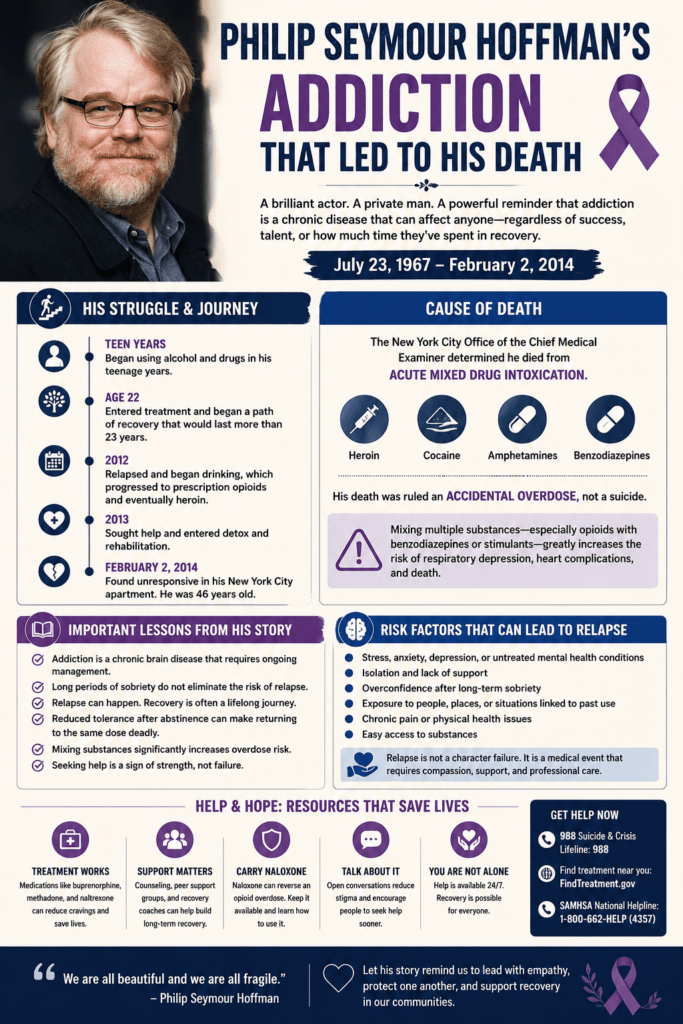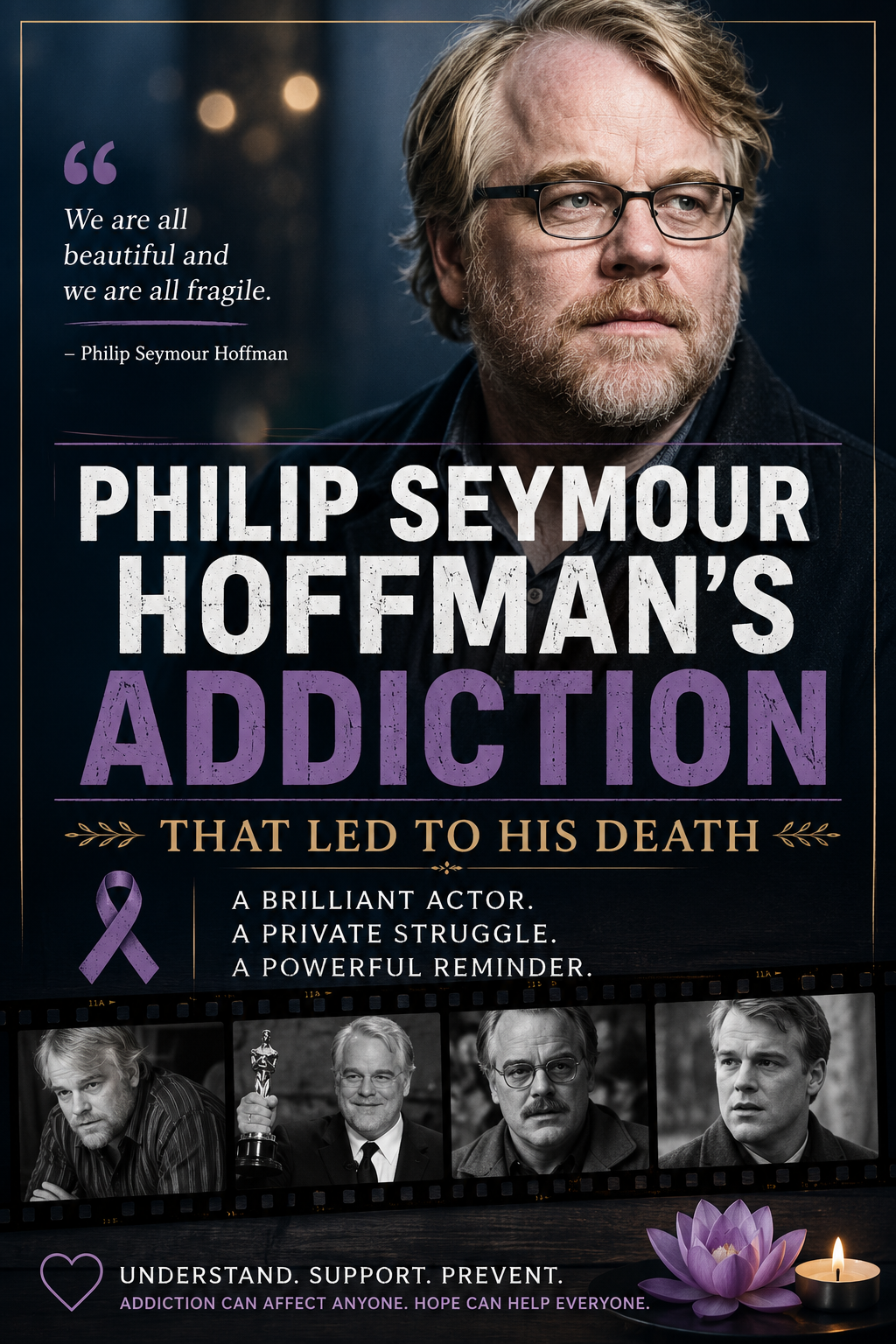
Philip Seymour Hoffman was an Academy Award-winning actor celebrated for his extraordinary talent and acclaimed performances. Although he achieved remarkable professional success, he also lived with substance use disorder, a chronic medical condition that can affect individuals regardless of their background or accomplishments. After maintaining sobriety for more than 20 years, Hoffman experienced a relapse that resulted in his accidental overdose death in 2014. His story underscores the chronic nature of addiction, the possibility of relapse even after long-term recovery, and the importance of ongoing, evidence-based treatment, mental health care, and strong support systems. Hoffman’s experience reminds us that addiction is a lifelong medical condition requiring continued management, compassion, and access to appropriate care rather than judgment or stigma.
Philip Seymour Hoffman’s Addiction That Led to His Death
Philip Seymour Hoffman was one of the most respected actors of his generation, known for his emotional depth and memorable performances. Behind his successful career, however, he struggled with substance use disorder for much of his life. His death became a powerful reminder that addiction is a chronic medical condition that can affect anyone, regardless of talent, success, or financial resources.
Early Struggles with Addiction
Hoffman began experimenting with alcohol and drugs during his teenage years. By his early twenties, he had developed significant problems with substance use. Recognizing that his addiction was becoming life-threatening, he entered treatment at age 22 and achieved long-term recovery. He remained sober for approximately 23 years while building an extraordinary acting career.
Relapse After Years of Sobriety
Around 2012, Hoffman experienced a relapse. He later acknowledged publicly that he had resumed drinking alcohol, which progressed to prescription opioid misuse and eventually heroin use. In 2013, he entered a detoxification and rehabilitation program, demonstrating that he recognized he needed help. Despite treatment, maintaining recovery proved difficult, illustrating that relapse can occur even after decades of sobriety.
Cause of Death
On February 2, 2014, Hoffman was found dead in his New York City apartment at the age of 46. The New York City Office of the Chief Medical Examiner determined that he died from acute mixed drug intoxication involving:
- Heroin
- Cocaine
- Amphetamines
- Benzodiazepines
His death was ruled an accidental overdose, not a suicide. The combination of these substances significantly increased the risk of respiratory depression, cardiac complications, and death.
Why Relapse Can Be So Dangerous
One of the greatest dangers after a period of sobriety is reduced drug tolerance. When a person returns to using the same amount of drugs they previously tolerated, their body may no longer be able to handle the dose, greatly increasing the risk of overdose. This is one reason overdose deaths often occur after relapse following treatment or incarceration.
Lessons from Hoffman’s Story
Hoffman’s experience highlights several important facts about addiction:
- Addiction is a chronic brain disease that requires ongoing management.
- Long periods of sobriety do not eliminate the risk of relapse.
- Recovery often involves multiple episodes of treatment and continued support.
- Mixing opioids with benzodiazepines or stimulants greatly increases overdose risk.
- Seeking help after relapse is a sign of strength, not failure.
Reducing the Risk of Overdose
Evidence-based strategies that save lives include:
- Medication treatment for opioid use disorder, such as buprenorphine or methadone when appropriate.
- Ongoing counseling and peer recovery support.
- Identifying relapse triggers and developing a prevention plan.
- Carrying and knowing how to use naloxone.
- Avoiding the use of opioids with alcohol or benzodiazepines unless closely supervised by a healthcare professional.
Conclusion
Philip Seymour Hoffman’s death was a tragic loss for his family, friends, and the entertainment industry. His story demonstrates that addiction does not discriminate based on intelligence, achievement, or fame. It also reinforces an important message: relapse can happen, but recovery remains possible with timely, evidence-based treatment, long-term support, and compassion rather than stigma.
Self-Management Strategies to Learn About Philip Seymour Hoffman’s Addiction That Led to His Death
Philip Seymour Hoffman’s story demonstrates that addiction is a chronic medical condition that requires lifelong attention and ongoing recovery efforts. Although every person’s recovery journey is unique, his experience offers valuable lessons about preventing relapse, recognizing risk factors, and seeking help early. The following self-management strategies can help individuals better understand addiction and support long-term recovery.
1. Learn That Addiction Is a Chronic Disease
Understand that addiction changes the brain’s reward, motivation, memory, and self-control systems. Like diabetes or hypertension, substance use disorder often requires long-term treatment and ongoing monitoring rather than a one-time cure.
Practice:
- Read reliable educational resources about substance use disorders.
- Discuss questions with healthcare professionals.
- Attend educational recovery workshops or support groups.
2. Recognize Relapse Warning Signs Early
Relapse rarely happens suddenly. Emotional stress, isolation, anxiety, depression, overconfidence, and returning to high-risk environments often develop before substance use resumes.
Practice:
- Keep a daily journal of moods and stress levels.
- Identify personal triggers.
- Create an action plan for managing cravings before they become overwhelming.
3. Understand the Dangers of Reduced Tolerance
After weeks, months, or years of abstinence, the body loses its previous tolerance to drugs. Returning to former doses greatly increases the risk of accidental overdose.
Practice:
- Remind yourself that “using like before” can be life-threatening.
- Learn about overdose risks from healthcare providers.
- Share this information with trusted family members.
4. Build a Strong Recovery Support Network
Recovery is more successful when individuals stay connected to supportive people rather than trying to manage addiction alone.
Practice:
- Attend peer support meetings regularly.
- Maintain regular appointments with counselors or addiction specialists.
- Stay connected with trusted family members and sober friends.
5. Develop Healthy Stress Management Skills
Stress is one of the most common relapse triggers. Learning healthy coping strategies reduces the urge to use substances for temporary relief.
Practice:
- Exercise most days of the week.
- Practice mindfulness, meditation, or deep breathing.
- Maintain consistent sleep habits.
- Engage in hobbies and meaningful activities.
6. Follow an Individualized Treatment Plan
Recovery often requires a combination of counseling, behavioral therapies, medications when appropriate, and regular follow-up care.
Practice:
- Take prescribed medications exactly as directed.
- Attend therapy consistently.
- Be honest with healthcare providers about cravings or setbacks.
7. Avoid High-Risk Situations
Returning to places, people, or situations associated with past substance use can increase relapse risk.
Practice:
- Identify environments that trigger cravings.
- Develop alternative routines.
- Leave situations immediately if cravings become intense.
8. Prepare for Cravings
Cravings usually rise and fall within several minutes. Having coping strategies ready can prevent impulsive decisions.
Practice:
- Delay acting on the craving.
- Call a trusted support person.
- Take a walk or exercise.
- Use relaxation techniques until the craving passes.
9. Carry Naloxone if Opioid Relapse Is Possible
People recovering from opioid use disorder should understand how naloxone can reverse an opioid overdose. Family members and close friends should also know when and how to use it.
Practice:
- Keep naloxone accessible if recommended by your healthcare provider.
- Learn the signs of opioid overdose.
- Call emergency medical services immediately if an overdose is suspected.
10. Practice Self-Compassion After Setbacks
A relapse does not mean recovery has failed. Viewing relapse as a signal to strengthen treatment rather than as a personal failure can help people return to recovery more quickly.
Practice:
- Seek help immediately after a setback.
- Review what contributed to the relapse.
- Adjust your recovery plan with your treatment team.
- Focus on progress instead of perfection.
Key Lessons from Philip Seymour Hoffman’s Story
Philip Seymour Hoffman maintained many years of recovery before experiencing a relapse, illustrating that addiction can remain a lifelong vulnerability. His accidental overdose underscores the dangers of opioid use after a period of abstinence, especially when multiple substances are involved. His story highlights the importance of ongoing treatment, strong social support, early recognition of relapse warning signs, and access to life-saving interventions such as naloxone. With education, evidence-based treatment, and consistent self-management, individuals living with substance use disorder can reduce their risk of relapse and build lasting recovery.
Family Support Strategies to Understand Philip Seymour Hoffman’s Addiction That Led to His Death
Philip Seymour Hoffman’s death highlights how addiction is a chronic medical condition that can affect anyone, regardless of success, intelligence, or social status. His experience reminds families that recovery is often a lifelong process and that ongoing support can play an important role in helping a loved one maintain recovery. While family support cannot prevent every relapse or overdose, it can encourage treatment engagement, improve communication, and promote safety.
1. Learn About Addiction as a Chronic Disease
Families should understand that addiction is a medical condition involving changes in the brain’s reward, motivation, and decision-making systems. Viewing addiction as an illness rather than a moral failing can reduce stigma and encourage compassionate support.
How families can help:
- Learn about substance use disorder from reputable medical organizations.
- Attend educational programs or family workshops.
- Discuss treatment options with healthcare professionals.
2. Recognize the Warning Signs of Relapse
Relapse often develops gradually, with emotional, behavioral, and social changes appearing before substance use resumes.
Possible warning signs include:
- Increased isolation from family and friends.
- Mood swings, anxiety, or depression.
- Missing appointments or support meetings.
- Returning to old friends or environments associated with substance use.
- Secretive behavior or financial problems.
Families should encourage early conversations when these changes are noticed rather than waiting for a crisis.
3. Encourage Ongoing Treatment
Recovery does not end after detoxification or rehabilitation. Continued treatment and follow-up care are often necessary to reduce the risk of relapse.
How families can help:
- Encourage attendance at counseling sessions and medical appointments.
- Support adherence to prescribed medications when appropriate.
- Celebrate milestones in recovery while recognizing that challenges may still occur.
4. Promote Open and Nonjudgmental Communication
People struggling with addiction may avoid seeking help if they fear criticism or shame.
Helpful communication strategies:
- Listen without interrupting.
- Express concern using calm, supportive language.
- Focus on behaviors rather than blame.
- Encourage honest conversations about stress, cravings, and mental health.
5. Help Reduce Relapse Triggers
Stress, grief, loneliness, and exposure to people or places associated with previous drug use can increase relapse risk.
Families can:
- Encourage healthy daily routines.
- Support participation in enjoyable, substance-free activities.
- Help identify situations that increase cravings.
- Encourage healthy sleep, nutrition, and exercise.
6. Understand the Risk After Long-Term Sobriety
Philip Seymour Hoffman had maintained many years of recovery before his relapse. Families should know that after prolonged abstinence, a person’s tolerance to opioids decreases significantly. Returning to previously tolerated doses can greatly increase the risk of overdose.
Family education should include:
- Reduced tolerance increases overdose risk.
- Relapse should be treated as a medical emergency.
- Immediate professional help is essential after renewed substance use.
7. Learn the Signs of an Opioid Overdose
Knowing how to recognize an overdose can save a life.
Warning signs include:
- Slow, shallow, or stopped breathing.
- Blue or gray lips and fingertips.
- Pinpoint pupils.
- Inability to wake the person.
- Unresponsiveness.
If an overdose is suspected:
- Call 911 immediately.
- Administer naloxone if available.
- Stay with the person until emergency responders arrive.
8. Carry Naloxone When Appropriate
For families supporting someone at risk of opioid overdose, having naloxone readily available can be lifesaving.
Families should:
- Learn how to administer naloxone.
- Keep it accessible at home and during travel.
- Ensure multiple family members know where it is stored and how to use it.
9. Take Care of Your Own Well-Being
Supporting someone with addiction can be emotionally exhausting. Family members also need support to maintain their own health and resilience.
Healthy strategies include:
- Join family support groups.
- Seek counseling if needed.
- Maintain healthy boundaries.
- Practice regular stress management and self-care.
10. Offer Hope Without Enabling
Supporting recovery means encouraging healthy choices while avoiding behaviors that unintentionally allow substance use to continue.
Healthy support includes:
- Encouraging treatment and recovery activities.
- Holding consistent, respectful boundaries.
- Offering emotional support without providing money or covering up substance use.
- Recognizing that setbacks may occur while continuing to encourage professional care.
Conclusion
Philip Seymour Hoffman’s death serves as a powerful reminder that addiction is a lifelong medical condition that can affect anyone, even after many years of recovery. Families cannot control another person’s addiction, but they can make a meaningful difference by learning about substance use disorders, recognizing early warning signs of relapse, encouraging ongoing treatment, communicating with compassion, and preparing for emergencies. Through education, empathy, healthy boundaries, and access to evidence-based care, families can become valuable partners in supporting long-term recovery while also protecting their own well-being.
Community Resource Strategies to Understand Philip Seymour Hoffman’s Addiction That Led to His Death
Philip Seymour Hoffman’s death from an accidental mixed-drug overdose illustrates that addiction is a chronic medical condition that requires long-term treatment, recovery support, and community involvement. His story underscores the importance of accessible healthcare, evidence-based treatment, overdose prevention, and public education. Communities can play a vital role in reducing stigma, expanding treatment access, and supporting individuals and families affected by substance use disorder.
1. Promote Addiction Education
Communities can help reduce stigma by providing accurate, science-based information about addiction as a chronic brain disease rather than a personal weakness or moral failing.
Community strategies:
- Offer educational seminars at schools, workplaces, libraries, and community centers.
- Invite addiction medicine specialists and recovery advocates to speak.
- Distribute evidence-based educational materials about substance use disorders and recovery.
2. Increase Access to Evidence-Based Treatment
Early access to effective treatment improves recovery outcomes and reduces the risk of overdose.
Community resources include:
- Addiction treatment centers.
- Medication-assisted treatment (MAT) programs using buprenorphine, methadone, or extended-release naltrexone when clinically appropriate.
- Outpatient counseling services.
- Behavioral health clinics that integrate mental health and addiction treatment.
3. Expand Overdose Prevention Programs
Many overdose deaths are preventable through education and timely intervention.
Community strategies:
- Provide free or low-cost naloxone distribution programs.
- Offer overdose recognition and naloxone training.
- Teach community members how to respond to an opioid overdose while waiting for emergency medical services.
4. Support Recovery Community Organizations
Long-term recovery is strengthened when individuals have ongoing peer support.
Examples of community support include:
- Peer recovery centers.
- Recovery community organizations.
- Recovery coaching services.
- Sober social activities and community events.
These programs help reduce isolation and encourage long-term engagement in recovery.
5. Strengthen Family Education Programs
Families often need guidance on how to support a loved one while maintaining healthy boundaries.
Communities can provide:
- Family education workshops.
- Support groups for families affected by addiction.
- Counseling services focused on family communication and relapse prevention.
- Educational materials on recognizing relapse warning signs.
6. Improve Access to Mental Health Services
Mental health conditions frequently occur alongside substance use disorders. Treating both conditions together improves recovery outcomes.
Community resources include:
- Mental health counseling.
- Psychiatric evaluation and medication management.
- Crisis stabilization services.
- Integrated behavioral health programs.
7. Encourage Safe Medication Practices
Communities can reduce opioid misuse through education about medication safety.
Strategies include:
- Prescription drug take-back events.
- Secure medication storage education.
- Safe disposal locations for unused medications.
- Public awareness campaigns about the dangers of sharing prescription medications.
8. Develop Recovery-Friendly Communities
Reducing stigma encourages individuals to seek help earlier.
Community initiatives may include:
- Recovery-friendly workplaces.
- Employer education on substance use disorders.
- Second-chance employment opportunities.
- Public campaigns highlighting that recovery is possible.
9. Expand Crisis and Emergency Resources
People experiencing a substance use crisis should have immediate access to professional help.
Important community resources include:
- Local emergency departments.
- Mobile crisis response teams.
- Crisis stabilization units.
- Local behavioral health crisis services.
- Emergency medical services (911) for suspected overdoses.
10. Encourage Long-Term Recovery Support
Recovery is an ongoing process that often continues long after formal treatment ends.
Communities can support recovery by:
- Offering relapse prevention programs.
- Providing vocational rehabilitation and employment assistance.
- Supporting housing programs for individuals in recovery.
- Promoting volunteer opportunities and community engagement to build purpose and connection.
Key Lessons from Philip Seymour Hoffman’s Story
Philip Seymour Hoffman’s life reminds us that addiction does not discriminate based on talent, intelligence, or success. His relapse after many years of sobriety demonstrates that substance use disorder is a chronic condition requiring ongoing care and support. His accidental overdose also highlights the dangers of opioid use after a period of abstinence, particularly when multiple substances are involved. Communities can reduce similar tragedies by improving education, expanding access to evidence-based treatment, increasing naloxone availability, supporting recovery programs, and reducing the stigma that often prevents people from seeking help.
Conclusion
Philip Seymour Hoffman’s death emphasizes the importance of viewing addiction as a treatable medical condition rather than a personal failure. Strong community resources—including addiction treatment programs, mental health services, recovery organizations, family education, overdose prevention initiatives, and recovery-friendly environments—can help individuals access care earlier and remain engaged in long-term recovery. By working together to provide education, compassion, and evidence-based support, communities can help prevent overdose deaths and offer hope to individuals and families affected by addiction.
How Philip Seymour Hoffman’s Addiction Struggles Could Be Managed Using Today’s Treatment Strategies
Philip Seymour Hoffman was an Academy Award-winning actor whose life demonstrated both the possibility of long-term recovery and the ongoing challenges of addiction. After maintaining sobriety for more than 20 years, he experienced a relapse involving prescription opioids that progressed to heroin use. He died in 2014 from acute mixed drug intoxication involving heroin, cocaine, benzodiazepines, and amphetamine. While no one can know whether any treatment would have changed the outcome, today’s evidence-based addiction care offers several strategies that may have improved his chances of sustained recovery and overdose prevention.
Understanding His Addiction
Addiction is now understood as a chronic medical condition that can involve periods of recovery, relapse, and renewed recovery. In Hoffman’s case, several factors may have contributed to his relapse:
- History of substance use disorder
- Long-term changes in brain reward pathways
- Stress associated with work and public life
- Increased exposure to prescription opioid medications
- Co-occurring emotional or psychological challenges
- Reduced tolerance after years of sobriety, increasing overdose risk if opioid use resumes
Today’s addiction specialists recognize that relapse is not a moral failure but a signal that treatment should be reassessed and strengthened.
How Today’s Treatment Strategies Could Have Helped
1. Comprehensive Addiction Evaluation
Treatment would begin with a thorough assessment by an addiction medicine team to evaluate:
- Opioid use severity
- Use of other substances
- Mental health conditions
- Physical health
- Overdose history
- Family and social support
- Recovery strengths
- Relapse triggers
An individualized treatment plan would then be developed.
2. Medications for Opioid Use Disorder (MOUD)
One of the greatest advances in addiction medicine is the use of medications for opioid use disorder.
Evidence-based options include:
- Buprenorphine to reduce cravings and withdrawal while lowering overdose risk.
- Methadone for individuals who benefit from daily supervised treatment through specialized opioid treatment programs.
- Extended-release naltrexone for selected patients who have completed detoxification and wish to remain opioid-free.
These medications significantly reduce illicit opioid use, improve treatment retention, and lower the risk of fatal overdose.
3. Medically Supervised Withdrawal Management
If physical opioid dependence were present, medically supervised withdrawal could provide:
- Symptom management
- Safe monitoring
- Hydration and nutrition
- Transition into long-term treatment rather than detoxification alone
Modern practice emphasizes that detox without ongoing treatment carries a high risk of relapse.
4. Cognitive Behavioral Therapy (CBT)
CBT helps patients:
- Identify triggers
- Recognize unhealthy thinking patterns
- Develop healthier coping skills
- Manage stress
- Prevent relapse
Patients learn practical strategies to respond to cravings without returning to substance use.
5. Relapse Prevention Planning
Because Hoffman had maintained many years of sobriety before relapsing, today’s care would likely emphasize a detailed relapse prevention plan, including:
- Early warning signs
- High-risk situations
- Coping strategies
- Emergency support contacts
- Scheduled follow-up visits
- Rapid access to treatment if cravings increase
6. Treatment for Co-Occurring Mental Health Conditions
If anxiety, depression, trauma, or other mental health concerns were present, integrated treatment would address both addiction and mental health simultaneously.
This approach often includes:
- Psychiatric evaluation
- Appropriate medications when indicated
- Individual psychotherapy
- Stress management
- Sleep treatment
7. Family Involvement
Family education can improve recovery by helping loved ones:
- Recognize relapse warning signs
- Encourage treatment participation
- Avoid enabling behaviors
- Support healthy boundaries
- Respond effectively during crises
A strong support system is associated with better long-term outcomes.
8. Peer Recovery Support
Many individuals benefit from connecting with others in recovery through:
- Peer recovery coaches
- Mutual-help groups
- Recovery community organizations
- Sober social networks
These supports reduce isolation and reinforce long-term recovery.
9. Overdose Prevention
One of today’s most important strategies is overdose prevention.
This includes:
- Carrying naloxone
- Educating family and friends on overdose recognition
- Avoiding use while alone
- Understanding the dangers of mixing opioids with sedatives or other drugs
- Access to syringe service programs and harm reduction services where available
Rapid administration of naloxone can reverse many opioid overdoses while emergency medical care is on the way.
10. Long-Term Recovery Monitoring
Recovery from opioid use disorder often requires ongoing care rather than a single episode of treatment.
Modern follow-up may include:
- Regular appointments with addiction specialists
- Medication management
- Counseling
- Telehealth visits
- Recovery coaching
- Drug screening when clinically appropriate
- Periodic reassessment of treatment goals
How These Strategies Might Have Reduced Risk
Although no treatment can guarantee recovery, earlier or continued engagement with today’s comprehensive addiction care might have:
- Reduced opioid cravings
- Lowered the risk of relapse
- Decreased the likelihood of fatal overdose
- Improved management of stress and emotional challenges
- Strengthened recovery supports
- Encouraged earlier intervention if substance use returned
- Improved long-term health and quality of life
Lessons for Others
Philip Seymour Hoffman’s story illustrates that addiction can recur even after decades of sobriety. His experience highlights the importance of viewing recovery as a lifelong process rather than a permanent cure. Modern treatment emphasizes medications for opioid use disorder, behavioral therapies, family involvement, peer support, and overdose prevention as complementary approaches that improve safety and long-term recovery. Seeking help promptly after a return to substance use can make a meaningful difference, and relapse should be viewed as a reason to re-engage with care rather than as a sign of failure.
It is important to remember that discussions like this are necessarily hypothetical. While today’s treatment strategies have been shown to improve outcomes for many people with opioid use disorder, no one can know with certainty how any specific individual’s life would have unfolded.
Frequently Asked Questions
Here are some common questions:
1. Who was Philip Seymour Hoffman?
Philip Seymour Hoffman was an Academy Award-winning American actor known for acclaimed performances in films such as Capote, The Master, Doubt, and The Hunger Games series. He was widely respected for his talent and dedication to his craft.
2. Did Philip Seymour Hoffman struggle with addiction?
Yes. Hoffman publicly acknowledged that he struggled with alcohol and drug addiction beginning in his teenage years. He entered treatment in his early twenties and maintained approximately 23 years of sobriety before experiencing a relapse.
3. What substances was Philip Seymour Hoffman addicted to?
Following his relapse, Hoffman reportedly struggled with alcohol, prescription opioids, and heroin. His death was caused by acute mixed drug intoxication involving heroin, cocaine, amphetamines, and benzodiazepines.
4. What caused Philip Seymour Hoffman’s death?
He died on February 2, 2014, from an accidental overdose. The New York City Office of the Chief Medical Examiner ruled the cause of death as acute mixed drug intoxication involving multiple substances.
5. Was Philip Seymour Hoffman’s death ruled a suicide?
No. His death was officially ruled an accidental overdose, not a suicide.
6. Why is relapse so dangerous after years of sobriety?
During prolonged abstinence, the body’s tolerance to drugs decreases. If someone returns to using amounts they previously tolerated, the risk of overdose is much higher because the body can no longer safely handle the same dose.
7. Can addiction return after many years of recovery?
Yes. Substance use disorder is considered a chronic medical condition. Although many people achieve long-term recovery, relapse remains possible, particularly during periods of stress, untreated mental health conditions, or exposure to triggers.
8. What are common warning signs of relapse?
Warning signs may include:
- Increased stress or anxiety
- Social isolation
- Mood changes or depression
- Returning to people or places associated with drug use
- Missing counseling appointments or recovery meetings
- Increased secrecy or changes in behavior
9. Why is mixing drugs especially dangerous?
Combining opioids with substances such as benzodiazepines or alcohol can greatly increase the risk of slowed breathing, unconsciousness, and fatal overdose. Mixing stimulants and opioids can also place extreme stress on the heart and other organs.
10. What can families learn from Philip Seymour Hoffman’s story?
Families can learn that addiction is a chronic illness requiring ongoing support. Compassion, education, open communication, and encouraging continued treatment are more effective than judgment or blame.
11. What treatments are available for opioid use disorder?
Evidence-based treatments include:
- Medications such as buprenorphine, methadone, or extended-release naltrexone when clinically appropriate
- Individual and group counseling
- Cognitive behavioral therapy (CBT)
- Peer recovery support
- Long-term relapse prevention planning
12. What is naloxone, and why is it important?
Naloxone is a medication that can rapidly reverse an opioid overdose by restoring breathing. It should be administered immediately when an opioid overdose is suspected while emergency medical services are called.
13. Can successful people develop addiction?
Yes. Addiction affects people of every profession, age, income level, and educational background. Philip Seymour Hoffman’s life demonstrates that talent, fame, and financial success do not protect someone from developing substance use disorder.
14. What role does mental health play in addiction?
Mental health conditions such as depression, anxiety, trauma, and chronic stress can increase the risk of substance use and relapse. Treating both mental health conditions and addiction together often leads to better outcomes.
15. How can individuals reduce their risk of relapse?
Helpful relapse prevention strategies include:
- Following a personalized treatment plan
- Attending counseling and support groups regularly
- Learning to recognize personal triggers
- Building healthy coping skills for stress
- Exercising regularly and maintaining healthy sleep habits
- Staying connected with supportive family and friends
16. What are the signs of an opioid overdose?
Signs may include:
- Slow or stopped breathing
- Pinpoint pupils
- Blue or gray lips and fingertips
- Extreme drowsiness or inability to wake up
- Unresponsiveness
If these signs are present, call 911 immediately, administer naloxone if available, and remain with the person until emergency responders arrive.
17. What is the most important lesson from Philip Seymour Hoffman’s story?
His story reminds us that addiction is a lifelong medical condition that requires ongoing treatment, recovery support, and compassion. It also emphasizes the importance of reducing stigma, recognizing relapse as a medical event rather than a personal failure, and expanding access to evidence-based treatment and overdose prevention resources.
Conclusion
Philip Seymour Hoffman’s death serves as a powerful reminder that addiction does not discriminate based on talent, intelligence, wealth, or achievement. His experience demonstrates that recovery is often a lifelong journey and that relapse can occur even after many years of sobriety. While his loss was tragic, his story has helped raise awareness about the importance of early intervention, ongoing treatment, relapse prevention, and overdose education. It also reinforces the need for reducing stigma so that individuals feel safe seeking help before a crisis occurs. By promoting education, supporting evidence-based treatment, strengthening family and community involvement, and improving access to lifesaving resources such as naloxone, we can honor Hoffman’s legacy by helping prevent future overdose deaths and supporting lasting recovery for those living with substance use disorders.
Video: Philip Seymour Hoffman: How Even Years of Recovery Can’t Guarantee Safety