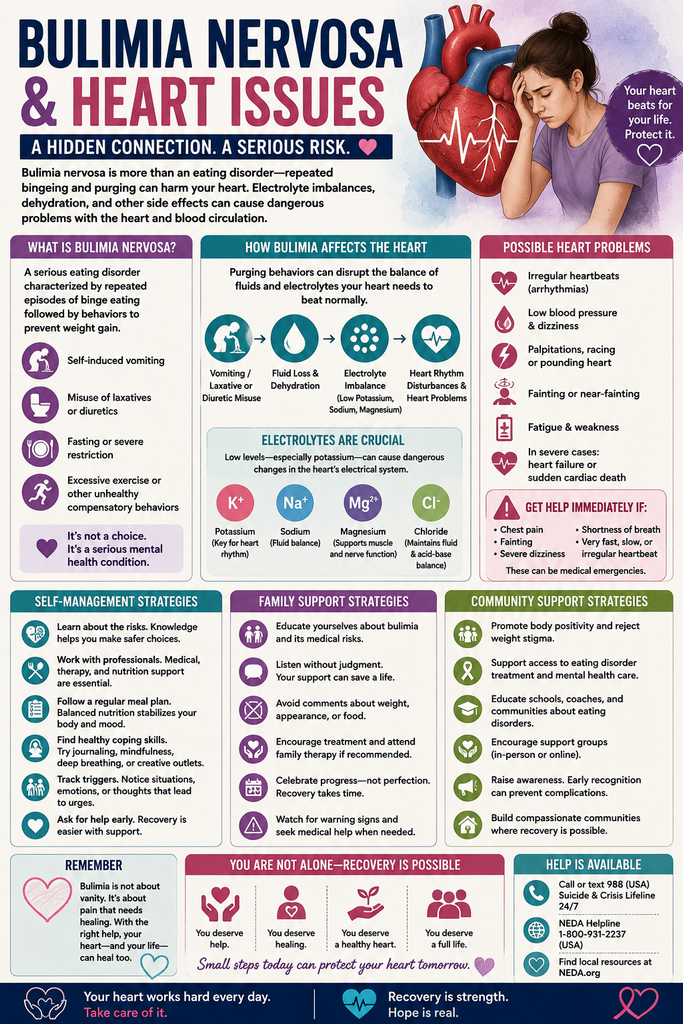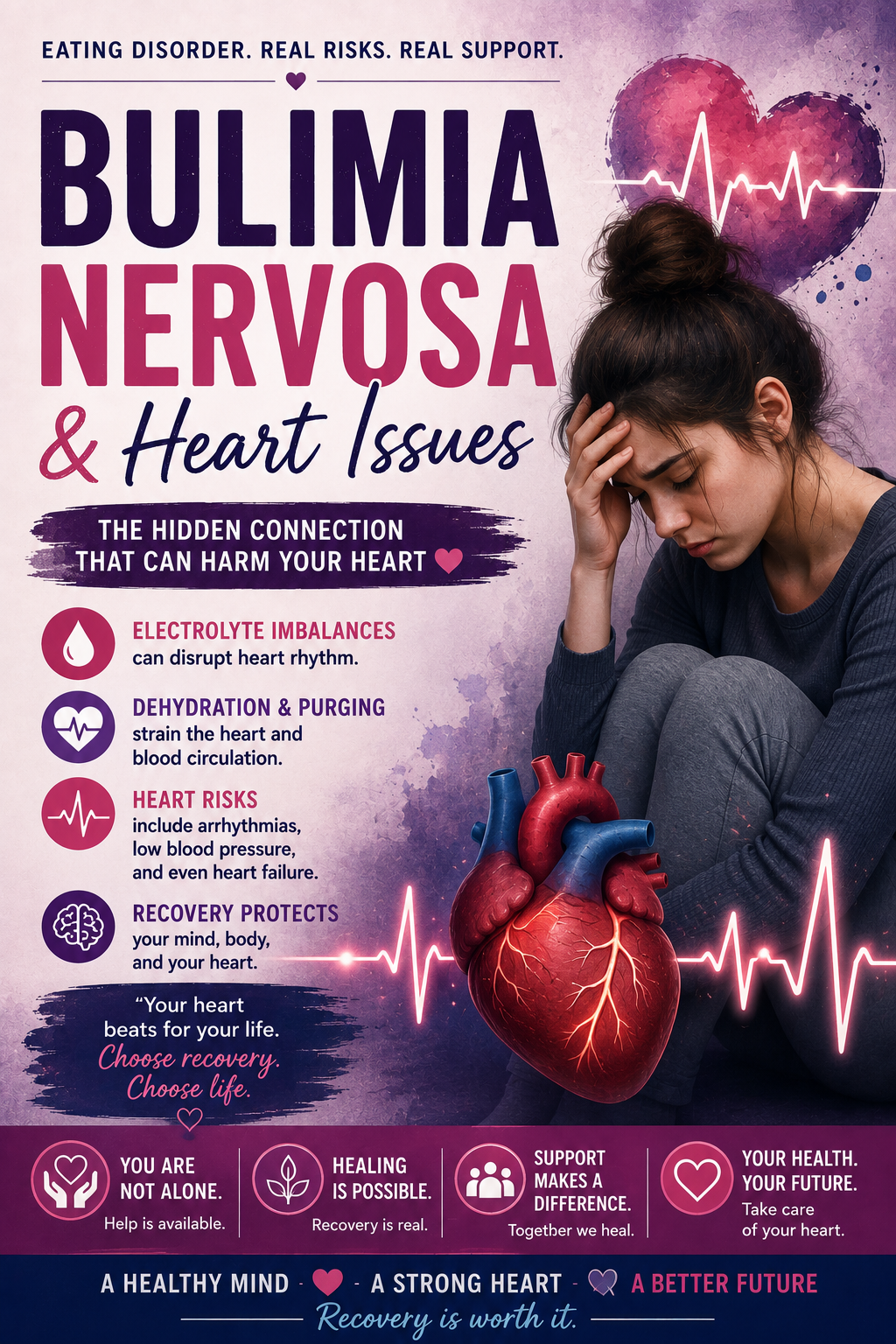
Bulimia nervosa is a serious eating disorder that can affect both mental and physical health. Repeated cycles of binge eating and compensatory behaviors, such as vomiting, fasting, excessive exercise, or misuse of laxatives and diuretics, can place significant stress on the body. One of the most serious—and sometimes hidden—consequences involves the heart.
Purging can cause dehydration and dangerous electrolyte imbalances, particularly changes in potassium, that interfere with the heart’s normal electrical activity. This can contribute to palpitations, abnormal heart rhythms, low blood pressure, fainting, and, in severe cases, life-threatening cardiac complications. Because someone with bulimia may appear physically healthy, these problems can easily go unnoticed. Understanding this connection highlights why recovery requires comprehensive care that addresses nutrition, medical safety, mental health, and ongoing family and community support.
What Is Bulimia Nervosa?
Bulimia nervosa is a serious mental health disorder characterized by recurrent binge-eating episodes accompanied by inappropriate compensatory behaviors intended to prevent weight gain.
These behaviors may include:
- Self-induced vomiting.
- Misuse of laxatives or diuretics.
- Fasting or severe dietary restriction.
- Excessive or compulsive exercise.
- Other unhealthy attempts to compensate for eating.
People with bulimia may experience intense shame and secrecy surrounding these behaviors. Because body weight may remain within a range that does not immediately attract attention, the disorder can sometimes remain hidden from family members and healthcare professionals.
How Can Bulimia Affect the Heart?
The heart depends on a carefully regulated balance of fluids and electrolytes to contract normally.
Purging can disrupt that balance.
Vomiting, laxative misuse, and diuretic misuse can contribute to dehydration and changes in electrolytes such as potassium, sodium, magnesium, and chloride. Potassium is particularly important for normal electrical activity within the heart.
When potassium becomes dangerously low—a condition called hypokalemia—the heart’s electrical system can become unstable.
Potential cardiovascular complications may include:
- Heart palpitations.
- Abnormally fast or slow heartbeat.
- Low blood pressure.
- Dizziness.
- Fainting.
- Electrolyte-related abnormal heart rhythms.
- Weakness and reduced exercise tolerance.
- Serious cardiac complications in severe cases.
This is one reason purging should never be dismissed as harmless simply because someone appears well.
Electrolytes: The Hidden Danger
Electrolytes are minerals that help regulate essential processes throughout the body. The heart relies on them to maintain normal electrical conduction.
Repeated vomiting can cause significant fluid and electrolyte losses. Laxative or diuretic misuse can create additional disturbances.
A person may initially experience:
- Muscle weakness.
- Fatigue.
- Cramping.
- Dizziness.
- Palpitations.
- Confusion.
However, serious electrolyte abnormalities do not always produce dramatic warning symptoms before becoming medically dangerous.
Laboratory testing may therefore be necessary to determine whether an electrolyte imbalance is present.
Bulimia and Abnormal Heart Rhythms
An arrhythmia occurs when the heart beats with an abnormal rhythm.
Electrolyte disturbances associated with purging can interfere with the electrical signals coordinating each heartbeat. Some arrhythmias may cause relatively mild symptoms, while others can become dangerous.
Possible warning symptoms include:
- A racing or pounding heartbeat.
- Feeling that the heart is skipping beats.
- Chest discomfort.
- Shortness of breath.
- Lightheadedness.
- Fainting.
These symptoms should not automatically be attributed to anxiety in someone with an eating disorder. Medical causes need to be considered.
Dehydration and Low Blood Pressure
Purging behaviors can also cause dehydration.
When circulating blood volume decreases, blood pressure may fall. The heart and blood vessels must compensate to maintain adequate blood flow to the brain and other organs.
A person may experience dizziness when standing, weakness, fatigue, or fainting.
Repeated dehydration can also place stress on the kidneys, which play a major role in regulating electrolytes and fluid balance. This creates another pathway through which eating-disorder behaviors can affect cardiovascular health.
The Mental Health Cycle
Bulimia is not simply a problem of willpower or eating habits. It is a psychiatric disorder that can involve complex interactions among body image, emotional regulation, restrictive eating, anxiety, depression, perfectionism, shame, trauma, and other psychological factors.
A common cycle may involve:
Restriction or emotional distress → binge eating → guilt or fear → purging → temporary relief → shame → renewed restriction.
The temporary sense of relief after purging can reinforce the behavior, making the cycle increasingly difficult to interrupt.
Recovery involves addressing the entire pattern rather than focusing only on food.
Self-Management Strategies
Self-management can support recovery, but bulimia should not be managed without professional care, particularly when purging is occurring. Medical and psychological treatment are important because complications may not always be obvious.
Helpful strategies include:
- Seek professional assessment. Medical evaluation can identify dehydration, electrolyte abnormalities, cardiovascular complications, and other consequences.
- Be honest about purging behaviors. Clinicians need accurate information about vomiting, laxatives, diuretics, restriction, exercise, and other behaviors to assess risk.
- Follow a structured eating plan when recommended. Regular nutrition can help interrupt cycles of restriction and binge eating.
- Identify triggers. Stress, loneliness, body dissatisfaction, restrictive dieting, interpersonal conflict, and certain situations may contribute to urges.
- Develop alternative coping strategies. Journaling, grounding techniques, calling a supportive person, or using skills learned in therapy can provide alternatives to acting on urges.
- Reduce body-checking behaviors. Repeated weighing, mirror checking, or comparing one’s body with others may reinforce distress.
- Use social media intentionally. Consider limiting content that promotes extreme dieting, unrealistic body standards, or eating-disorder behaviors.
- Attend treatment consistently. Recovery often requires ongoing medical, nutritional, and psychological care.
- Create a relapse plan. Identify warning signs and decide in advance whom to contact if symptoms return.
Self-management strategies complement treatment; they do not replace it.
Family Support Strategies
Families often struggle to understand eating disorders. A loved one may wonder why the person cannot simply stop bingeing or purging.
Criticism and shame rarely solve the problem.
Families can provide more effective support by:
- Learning that bulimia is a serious mental health disorder.
- Listening without criticizing body size or food choices.
- Avoiding comments about weight, dieting, or appearance.
- Encouraging professional treatment.
- Taking dizziness, fainting, chest symptoms, and palpitations seriously.
- Supporting regular meals according to the treatment team’s recommendations.
- Learning the person’s relapse warning signs.
- Encouraging honesty without punishment.
- Celebrating progress that has nothing to do with weight.
- Participating in family therapy when recommended.
- Seeking their own support when caregiving becomes overwhelming.
Families should also understand that recovery may include setbacks. A recurrence of symptoms should be treated as a signal that additional support is needed rather than as evidence that treatment has failed.
What Families Should Avoid
Certain comments can unintentionally reinforce eating-disorder thinking.
Families should avoid statements such as:
“You look healthier now.”
“Just eat normally.”
“You don’t look like someone with an eating disorder.”
“Why would you do this to yourself?”
Even comments intended as compliments may increase anxiety when they focus on weight or appearance.
Instead, emphasize health, relationships, emotions, accomplishments, and recovery behaviors.
Community Support Strategies
Eating-disorder recovery requires accessible healthcare and supportive communities.
Community strategies can include:
- Increasing access to specialized eating-disorder treatment.
- Training primary-care clinicians to recognize eating disorders at different body sizes.
- Providing affordable mental health services.
- Improving access to registered dietitians experienced in eating disorders.
- Providing family education and support groups.
- Developing school and college prevention programs.
- Teaching coaches and athletic staff to recognize concerning behaviors.
- Challenging weight stigma.
- Promoting realistic and diverse body representations.
- Providing coordinated medical and psychiatric treatment.
- Supporting transitions from intensive treatment back to school, work, or community life.
Early intervention can reduce the amount of time someone remains trapped in the eating-disorder cycle.
Treatment for Bulimia Nervosa
Treatment depends on the person’s age, medical stability, symptom severity, co-occurring conditions, and individual circumstances.
Care may involve a multidisciplinary team that includes:
- A primary-care clinician or other medical professional.
- A mental health professional.
- A registered dietitian experienced in eating disorders.
- A psychiatrist when medication management is appropriate.
- Eating-disorder specialists or treatment programs when more intensive care is required.
Evidence-based psychotherapy—particularly cognitive behavioral therapy approaches designed for eating disorders—can help people identify and change patterns involving restrictive eating, bingeing, purging, body image, and emotional distress.
Medication may also be appropriate for some individuals, but medication decisions should be made by qualified clinicians who understand the person’s medical and psychiatric history.
When Heart Symptoms Require Urgent Attention
Someone with bulimia should receive prompt medical assessment when concerning cardiovascular or neurological symptoms develop.
Potential warning signs include:
- Chest pain or pressure.
- Fainting or near-fainting.
- Severe or persistent heart palpitations.
- Significant shortness of breath.
- Severe weakness.
- Confusion.
- Seizures.
- Inability to keep fluids down.
- Signs of severe dehydration.
- A very abnormal heartbeat.
Chest pain, fainting, severe breathing difficulty, seizures, severe confusion, or other potentially life-threatening symptoms warrant emergency medical care.
People should not attempt to correct potentially serious electrolyte abnormalities on their own with supplements. Electrolyte replacement can require laboratory testing and medical supervision.
Recovery Is More Than a Number on the Scale
Eating-disorder recovery cannot be measured only by body weight.
Someone can experience serious medical complications at many different body sizes. Likewise, improvement involves much more than reaching a particular weight.
Recovery may mean:
- Reducing and stopping binge-purge behaviors.
- Restoring consistent nutrition.
- Correcting medical complications.
- Learning to tolerate uncomfortable emotions without purging.
- Developing a healthier relationship with food.
- Reducing obsessive thoughts about weight and shape.
- Rebuilding relationships.
- Returning to meaningful activities.
- Developing self-worth beyond appearance.
Conclusion
Bulimia nervosa is a serious eating disorder with potentially dangerous consequences for the heart and cardiovascular system. Repeated vomiting and misuse of laxatives or diuretics can contribute to dehydration and electrolyte disturbances, including low potassium. These changes can interfere with normal cardiac electrical activity and may lead to abnormal heart rhythms and other serious complications.
The good news is that bulimia is treatable. Recovery is strengthened when medical monitoring is combined with evidence-based psychological treatment, nutritional support, self-management strategies, family involvement, and accessible community resources.
Families should replace criticism with understanding, while individuals should be encouraged to disclose symptoms honestly and seek treatment early. Communities can help by reducing stigma and making specialized eating-disorder care easier to access.
The heart may reveal some of the physical consequences of bulimia, but lasting recovery requires caring for the whole person—body, mind, relationships, and future.
Frequently Asked Questions
Here are some common questions:
1. What is bulimia nervosa?
Bulimia nervosa is a serious eating disorder involving recurrent episodes of binge eating followed by compensatory behaviors intended to prevent weight gain. These may include self-induced vomiting, fasting, excessive exercise, or misuse of laxatives or diuretics. It is a mental health disorder that can also cause significant physical complications.
2. Can bulimia nervosa damage the heart?
Yes. Bulimia can affect the heart, particularly when repeated purging causes dehydration and electrolyte abnormalities. These disturbances can interfere with the electrical signals that maintain a normal heartbeat.
3. Why are electrolytes important for the heart?
Electrolytes—including potassium, sodium, magnesium, and chloride—help regulate fluid balance, muscle contraction, and electrical activity. The heart depends on the correct balance of these minerals to beat normally.
4. Why is low potassium particularly dangerous?
Repeated vomiting and certain other purging behaviors can contribute to hypokalemia, or low potassium. Because potassium plays an important role in cardiac electrical activity, severe abnormalities in potassium levels can increase the risk of dangerous cardiac arrhythmias.
5. What heart problems can occur with bulimia?
Potential cardiovascular complications can include:
- Heart palpitations.
- Abnormal heart rhythms, or arrhythmias.
- Low blood pressure.
- Dizziness and fainting.
- Changes in heart rate.
- Reduced circulation from dehydration.
- Serious cardiac complications when electrolyte abnormalities become severe.
6. Can someone have dangerous heart complications without looking sick?
Yes. Appearance and body weight do not reliably indicate the medical severity of an eating disorder. Someone may appear outwardly healthy while experiencing dehydration, electrolyte disturbances, or cardiovascular complications.
7. How does vomiting affect the heart?
Repeated vomiting causes the body to lose fluids and important electrolytes. Over time, these losses can disrupt the body’s acid-base and electrolyte balance and interfere with normal cardiac function.
8. Can laxative misuse cause heart problems?
Yes. Laxative misuse can cause diarrhea, dehydration, and electrolyte disturbances. These problems can indirectly affect cardiovascular function and may also damage other organs, particularly when misuse becomes frequent or severe.
9. Can diuretic misuse affect the heart?
Yes. Diuretics increase fluid and electrolyte loss through urination. Misusing them for weight control can cause dehydration and potentially dangerous electrolyte abnormalities that may affect heart rhythm and blood pressure.
10. Can excessive exercise become dangerous in bulimia?
It can. Compulsive or excessive exercise may place additional strain on a body already affected by inadequate nutrition, dehydration, or electrolyte abnormalities. Exercise recommendations during eating-disorder recovery should therefore be individualized by the treatment team.
11. What symptoms might suggest a heart complication?
Concerning symptoms include a racing, pounding, unusually slow, or irregular heartbeat; significant dizziness; fainting or near-fainting; chest discomfort; severe weakness; or shortness of breath.
These symptoms deserve medical evaluation rather than being automatically attributed to anxiety.
12. When is emergency medical attention necessary?
Chest pain, fainting, severe shortness of breath, seizures, severe confusion, or a significantly abnormal heartbeat can represent a medical emergency. Emergency services should be contacted when someone appears seriously ill or is in immediate danger.
13. Can drinking water correct the problem?
Not necessarily. Drinking fluids cannot reliably correct serious electrolyte abnormalities, and excessive water consumption can create additional problems. Someone with significant purging behaviors should receive medical assessment rather than attempting to correct electrolyte problems independently.
14. Should someone take potassium supplements after purging?
Not without medical guidance. Potassium that is too low can be dangerous, but excessive potassium can also cause life-threatening heart rhythm problems. Laboratory testing and medically supervised replacement may be necessary.
15. What medical tests may be needed?
Depending on the person’s symptoms and severity, clinicians may consider blood tests to evaluate electrolytes and kidney function, vital signs, and an electrocardiogram (ECG/EKG) to examine the heart’s electrical activity. Additional testing depends on individual circumstances.
16. Can heart problems improve after bulimia treatment?
Many complications related to dehydration and electrolyte disturbances can improve when the eating disorder is effectively treated, and medical abnormalities are corrected. However, recovery varies, and serious or prolonged complications require individualized medical follow-up.
17. What self-management strategies can support recovery?
Self-management should complement professional treatment rather than replace it. Helpful strategies include following the treatment team’s nutrition plan, identifying binge-purge triggers, attending therapy consistently, developing healthier coping strategies, reducing body checking, avoiding unsupervised supplements, and being honest with clinicians about purging behaviors.
18. How can families help?
Families can learn about bulimia, listen without judgment, avoid criticizing weight or appearance, encourage treatment, support structured recovery plans, and take physical symptoms seriously. Family members should also recognize that bulimia is a psychiatric disorder rather than simply a behavior someone can stop through willpower.
19. What community resources can support recovery?
Community resources may include eating-disorder treatment programs, primary-care clinicians, therapists, psychiatrists, registered dietitians experienced in eating disorders, school or college counseling programs, and peer or family support organizations.
20. What is the most important message about bulimia and heart health?
Bulimia nervosa can become medically dangerous even when its effects are not visible. Repeated purging can disrupt the fluid and electrolyte balance the heart needs to function normally. Early medical evaluation and comprehensive eating-disorder treatment can reduce complications and support recovery.
Video: Why You Can’t Ignore Your Heart Health #eatingdisorder #shorts