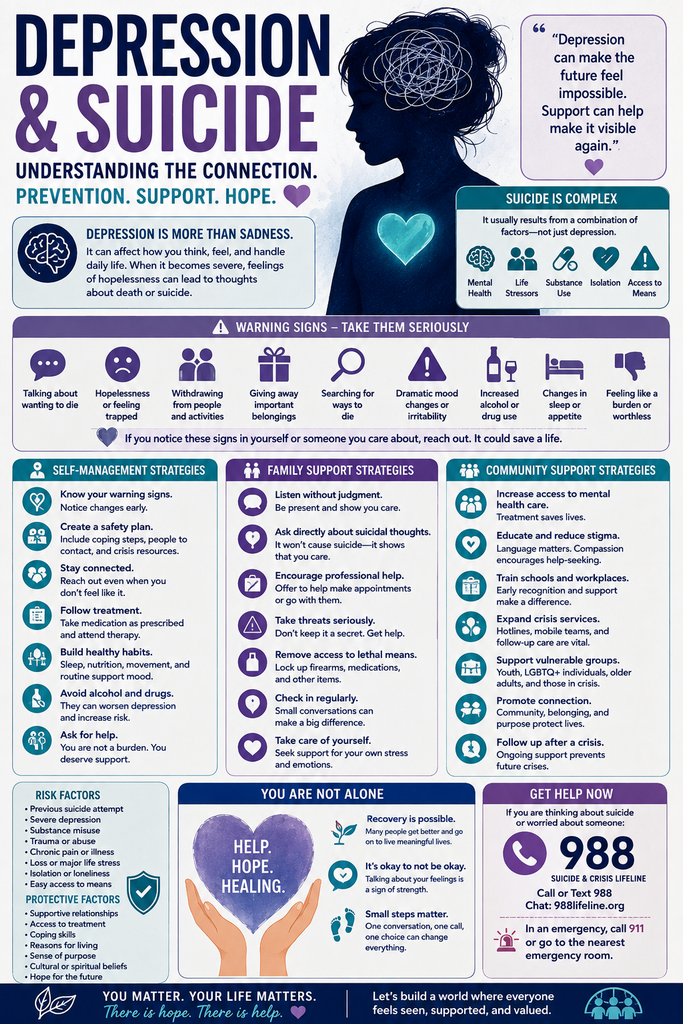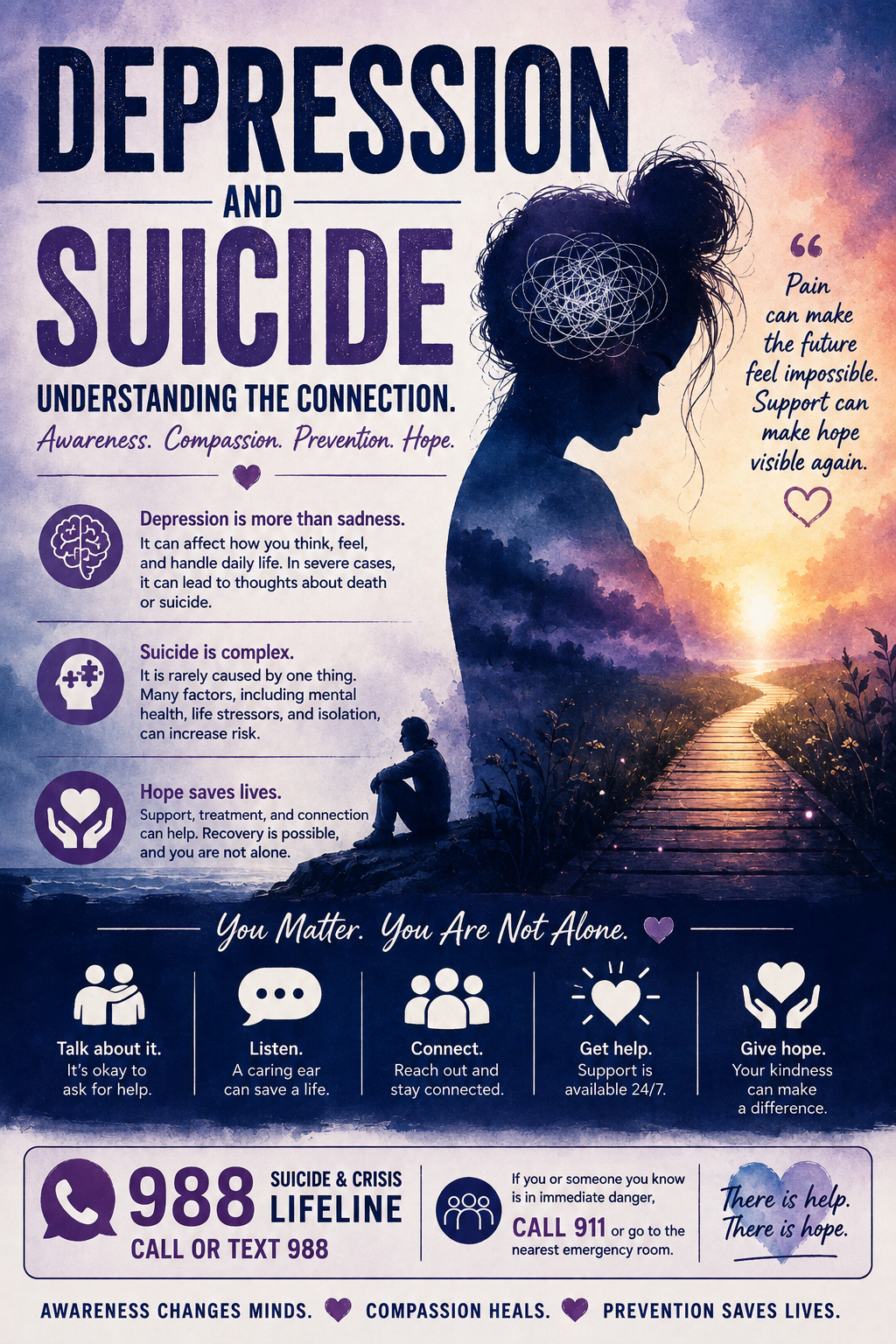
Depression is more than feeling sad after a difficult day. Major depressive disorder is a serious mental health condition that can affect mood, thinking, sleep, appetite, energy, concentration, relationships, work, and the ability to experience pleasure. For some people, depression can also involve feelings of hopelessness, worthlessness, thoughts about death, or suicidal thinking.
Depression is an important risk factor for suicide, but depression does not automatically lead to suicide. Many people with depression never attempt suicide, and effective treatments are available. Suicide is complex and usually involves an interaction of psychological, biological, social, environmental, and situational factors. Understanding these factors can help individuals, families, and communities recognize distress earlier and connect people with appropriate support.
What Is Depression?
Everyone experiences sadness, disappointment, or grief at different points in life. Clinical depression is different because symptoms are generally more persistent and can significantly interfere with everyday functioning.
Symptoms may include:
- Persistent sadness, emptiness, or hopelessness.
- Loss of interest or pleasure in activities.
- Changes in appetite or weight.
- Sleeping too much or too little.
- Fatigue or loss of energy.
- Difficulty concentrating or making decisions.
- Feelings of worthlessness or excessive guilt.
- Irritability or restlessness.
- Social withdrawal.
- Thoughts about death or suicide.
Not everyone experiences depression in the same way. Some individuals appear visibly sad, while others continue working, caring for families, attending school, or socializing while privately experiencing significant emotional pain.
Understanding the Link Between Depression and Suicide
Severe depression can change the way a person interprets themselves, their circumstances, and their future.
A person experiencing depression may begin believing:
“Nothing will ever improve.”
“Everyone would be better without me.”
“There is no way out of this.”
These thoughts can feel completely convincing during a severe depressive episode, even though they are influenced by illness and circumstances that can change.
This is where hopelessness becomes particularly concerning. When someone cannot imagine a future in which their suffering decreases, suicide may begin to appear to them as an escape from psychological pain.
Suicide prevention therefore involves helping the person survive the crisis while addressing the underlying depression and other contributing factors.
Depression Is Only Part of the Picture
It is important not to explain every suicide as being caused solely by depression.
Suicide risk may involve several interacting factors, including:
- Depression or other mental health disorders.
- Previous suicide attempts.
- Substance or alcohol misuse.
- Trauma.
- Chronic pain or serious illness.
- Relationship difficulties.
- Financial or occupational stress.
- Grief and significant losses.
- Social isolation.
- Exposure to suicide.
- Easy access to highly lethal means during a crisis.
- Feelings of hopelessness or being a burden.
Protective factors also matter. Supportive relationships, access to effective healthcare, coping skills, reasons for living, meaningful activities, cultural or spiritual connections, and reduced access to lethal means during crises may help decrease risk.
Warning Signs of Suicide
Recognizing warning signs can create an opportunity to intervene.
Warning signs may include:
- Talking about wanting to die.
- Expressing hopelessness or a lack of reason to live.
- Saying that others would be better off without them.
- Feeling trapped or unable to tolerate emotional pain.
- Increasing alcohol or drug use.
- Withdrawing from family and friends.
- Giving away meaningful possessions.
- Saying goodbye unexpectedly.
- Searching for information about suicide methods.
- Dramatic changes in mood or behavior.
- Severe agitation, anxiety, or insomnia.
- Engaging in unusually reckless behavior.
A person does not need to display every warning sign to be at risk.
Asking About Suicide Does Not Cause Suicide
Some families avoid asking about suicide because they fear putting the idea into someone’s mind.
Direct, compassionate questions are appropriate when there is concern.
A person might ask:
“Are you thinking about suicide?”
or
“Are you thinking about hurting yourself?”
Asking directly can give someone permission to discuss thoughts they may have been hiding because of fear or shame.
If someone says they are suicidal, take the answer seriously.
Self-Management Strategies for Depression
Self-management strategies can strengthen recovery, but they should complement professional treatment rather than replace it, particularly when depression is severe or suicidal thoughts are present.
Helpful strategies include:
- Recognize personal warning signs. Learn how depression begins to change your sleep, thinking, relationships, motivation, and behavior.
- Stay connected with treatment. Attend therapy and medical appointments even when motivation decreases.
- Take medications as prescribed. Discuss side effects or concerns with the prescribing clinician rather than abruptly stopping treatment.
- Create a safety plan. Identify warning signs, coping strategies, supportive people, professional resources, crisis services, and ways to make the environment safer.
- Maintain daily structure. Regular sleep, meals, movement, hygiene, and planned activities can provide stability.
- Reduce isolation. Depression often encourages withdrawal. Maintaining contact with supportive people can be protective.
- Avoid using alcohol or drugs to cope. Substances can worsen mood, judgment, impulsivity, and suicide risk.
- Break tasks into small goals. During severe depression, getting dressed, eating a meal, or making one phone call may represent meaningful progress.
- Delay major decisions during a crisis. Depression can temporarily distort expectations about the future.
- Seek immediate help when safety becomes uncertain. Suicidal thinking should not be managed alone.
Creating a Suicide Safety Plan
A safety plan is a personalized strategy developed before or during periods of increased suicide risk.
It may identify:
- Personal warning signs.
- Internal coping strategies.
- People or places that provide distraction and connection.
- Trusted individuals who can provide direct support.
- Mental health professionals and crisis services.
- Steps for reducing access to lethal means.
- Reasons for staying alive and future goals.
A safety plan is different from simply asking someone to promise not to harm themselves. Effective safety planning focuses on practical actions to take when a crisis develops.
Family Support Strategies
Families frequently feel frightened or helpless when someone they love has depression.
They may worry that mentioning suicide will make the situation worse, or they may try to motivate the person with statements such as:
“You have so much to be grateful for.”
“Other people have it worse.”
“You just need to think positively.”
These comments may unintentionally increase shame.
Families can provide more helpful support by:
- Listening without judgment.
- Taking statements about suicide seriously.
- Asking directly about suicidal thoughts when concerned.
- Encouraging professional treatment.
- Helping arrange appointments when welcomed.
- Learning the person’s warning signs.
- Participating in safety planning.
- Helping reduce access to lethal means during periods of elevated risk.
- Checking in regularly after a crisis or hospitalization.
- Encouraging healthy routines without demanding immediate recovery.
- Avoiding arguments about whether the person’s feelings are justified.
- Seeking support for themselves when caregiving becomes overwhelming.
What to Say to Someone Who Is Depressed
Support does not require having perfect words.
Helpful statements may include:
“I’m here with you.”
“I want to understand what you’re experiencing.”
“You don’t have to handle this alone.”
“Let’s find someone who can help us with this.”
When suicide is a concern, direct communication is better than vague reassurance.
Family Support After a Suicide Crisis
Risk does not necessarily disappear immediately after an emergency-room visit, psychiatric hospitalization, or apparent improvement.
The transition back into everyday life deserves careful attention.
Families can:
- Understand the follow-up treatment plan.
- Help coordinate appointments when appropriate.
- Keep communication open.
- Know whom to contact if symptoms worsen.
- Continue reducing access to lethal means when recommended.
- Monitor significant behavioral changes.
- Avoid treating hospitalization as something shameful.
- Encourage gradual return to normal responsibilities.
- Continue checking in even when the person appears better.
Recovery from severe depression often occurs gradually rather than in a straight line.
Community Support Strategies
Suicide prevention is not solely an individual’s responsibility. Communities can create environments that make it easier to recognize distress and access care.
Effective community strategies include:
- Expanding affordable mental health treatment.
- Integrating depression and suicide-risk screening into healthcare settings.
- Improving access to crisis services.
- Training schools and workplaces to recognize warning signs.
- Supporting school and college mental health programs.
- Expanding addiction treatment because substance use can increase suicide risk.
- Providing services for people experiencing grief, trauma, unemployment, or isolation.
- Supporting older adults vulnerable to loneliness and loss.
- Providing culturally responsive mental healthcare.
- Reducing stigma surrounding psychiatric treatment.
- Educating communities about safe firearm and medication storage during periods of suicide risk.
- Providing follow-up support after psychiatric hospitalization or suicide crises.
Depression Treatment Can Save Lives
Depression is treatable.
Treatment may include psychotherapy, medication, lifestyle interventions, social support, or a combination of these approaches. Some people with severe or treatment-resistant depression may require specialized treatments determined by psychiatric professionals.
Psychotherapies can help people identify distorted thinking patterns, improve emotional regulation, strengthen coping skills, address interpersonal difficulties, and develop strategies for managing suicidal thoughts.
Medication may be appropriate for some individuals and should be prescribed and monitored by qualified healthcare professionals.
The appropriate treatment depends on the individual’s diagnosis, severity, medical history, age, preferences, and other circumstances.
Recovery Is Not Always Linear
Someone may feel significantly better for months and later experience another depressive episode.
That does not mean recovery has failed.
Mental health recovery may involve periods of improvement, setbacks, medication adjustments, changes in therapy, and new coping strategies.
Recognizing early warning signs can enable intervention before symptoms become overwhelming.
Replacing Shame With Understanding
Depression often tells people that needing help represents weakness.
It does not.
Seeking treatment for depression should be approached with the same seriousness as seeking care for other significant health conditions.
Communities can help replace statements such as:
“Why can’t you just get over it?”
with:
“What kind of support do you need?”
That change in language can make it easier for people to disclose distress before reaching a crisis.
Hope Is Part of Suicide Prevention
A person experiencing severe depression may temporarily lose the ability to imagine life becoming different.
That is why support matters.
Someone else may need to hold onto hope while the depressed person cannot.
Treatment can reduce symptoms. Relationships can change. Circumstances can improve. Coping skills can develop. A crisis that feels permanent today may look very different after appropriate treatment and time.
The goal during a suicidal crisis is not to solve someone’s entire life immediately. The immediate goal is safety, connection, and getting through the crisis alive.
Conclusion
Depression and suicide are strongly connected, but they are not the same thing. Most importantly, having depression does not mean suicide is inevitable.
Severe depression can create hopelessness, isolation, distorted beliefs about self-worth, and thoughts that emotional pain will never end. Recognizing these changes early provides an opportunity for intervention.
Individuals can learn warning signs, develop safety plans, maintain treatment, and reach out when symptoms worsen. Families can listen, ask directly about suicide, encourage professional care, and help create safer environments. Communities can expand mental health treatment, crisis services, education, and follow-up care.
Suicide prevention begins long before the final moments of a crisis. It begins when emotional suffering is recognized, taken seriously, and met with compassionate, evidence-based support.
Depression can make the future feel impossible. Treatment and human connection can help make that future visible again.
If you or someone you know is experiencing suicidal thoughts in the United States, call or text 988 to reach the Suicide & Crisis Lifeline. If there is immediate danger, a suicide attempt has occurred, or the person cannot remain safe, call 911 or seek emergency medical care.
Frequently Asked Questions
Here are some common questions:
1. What is the connection between depression and suicide?
Depression is an important risk factor for suicide because severe depression can produce hopelessness, emotional pain, feelings of worthlessness, and thoughts about death. However, having depression does not mean a person will become suicidal. Most people with depression do not die by suicide, and effective treatment can substantially improve symptoms.
2. Does everyone with depression experience suicidal thoughts?
No. Many people with depression never experience suicidal thoughts. Depression varies greatly in severity and symptoms. Nevertheless, thoughts about death, self-harm, or suicide should always be taken seriously.
3. Why can severe depression lead to suicidal thinking?
Severe depression can change how someone perceives themselves and their future. A person may temporarily believe that nothing will improve, that they are a burden, or that their emotional pain will never end. These beliefs can make suicide appear like an escape from suffering even though treatment and circumstances can change.
4. Is depression the only cause of suicide?
No. Suicide is complex and usually cannot be explained by one diagnosis or event. Risk may involve interactions among mental health disorders, substance use, trauma, previous suicide attempts, chronic pain, relationship problems, financial difficulties, grief, isolation, and other stressful circumstances.
5. What are common warning signs of suicide?
Warning signs may include:
- Talking about wanting to die.
- Expressing hopelessness or feeling trapped.
- Saying others would be better off without them.
- Withdrawing from family and friends.
- Giving away important possessions.
- Unexpectedly saying goodbye.
- Searching for suicide methods.
- Increasing alcohol or drug use.
- Severe agitation or dramatic behavioral changes.
- Engaging in unusually dangerous behavior.
6. Can someone appear happy and still be suicidal?
Yes. Outward appearance does not reliably reveal someone’s internal emotional state. Some people continue working, socializing, caring for family, or appearing cheerful while privately experiencing severe depression or suicidal thoughts.
7. Does asking someone about suicide put the idea into their head?
No. Asking directly about suicidal thoughts does not create suicidal thinking. A compassionate question such as, “Are you thinking about suicide?” can provide an opportunity for someone to disclose distress and receive help.
8. What should I do if someone tells me they are suicidal?
Take the statement seriously. Listen without judgment, stay with the person when there is immediate danger, and help connect them with professional or crisis support. Do not promise to keep imminent suicide risk secret.
9. What is a suicide safety plan?
A safety plan is a personalized, practical plan for managing periods of increased suicide risk. It may identify personal warning signs, coping strategies, supportive people, professional contacts, crisis services, reasons for living, and steps for reducing access to lethal means.
10. How can someone manage depression?
Self-management strategies can complement professional treatment. Helpful approaches may include maintaining regular sleep and meals, staying physically active as appropriate, maintaining supportive relationships, following prescribed treatment, attending therapy, limiting alcohol and non-prescribed drugs, establishing small daily goals, and recognizing early warning signs.
11. Can exercise and healthy habits cure depression?
Healthy habits can support mental health, but they should not be presented as a substitute for treatment when someone has significant clinical depression. Psychotherapy, medication, or other treatments may be necessary depending on the individual’s condition.
12. How can families support someone with depression?
Families can listen without judgment, encourage professional treatment, help with appointments when welcomed, maintain regular contact, learn warning signs, participate in safety planning when appropriate, and take suicidal statements seriously.
13. What should families avoid saying?
Comments such as “Just think positively,” “You have nothing to be depressed about,” “Other people have it worse,” or “Snap out of it” can increase shame and misunderstanding. Depression is not simply a lack of gratitude or motivation.
14. Why is reducing access to lethal means important?
Suicidal crises can intensify rapidly. Creating distance between a person at risk and highly lethal methods can provide additional time for the crisis to pass and for treatment or support to intervene. Families can discuss safe storage of firearms, medications, and other potentially dangerous items with healthcare professionals.
15. Can alcohol and drugs increase suicide risk?
Yes. Alcohol and other substances can worsen depression, decrease judgment, increase impulsivity, and make it more difficult to use healthy coping strategies. Co-occurring depression and substance use should be addressed together.
16. Can depression and suicidal thoughts be treated?
Yes. Depression is treatable, and suicidal thoughts can improve. Treatment may involve psychotherapy, medication, psychiatric care, treatment of co-occurring substance use or medical conditions, social support, and safety planning. Treatment should be individualized.
17. How can communities help prevent suicide?
Communities can improve access to affordable mental healthcare, provide crisis services, educate people about warning signs, reduce stigma, support school and workplace mental health programs, expand addiction treatment, and strengthen follow-up care after psychiatric emergencies.
18. Is someone safe once they leave a psychiatric hospital?
Not necessarily. Discharge is an important transition rather than proof that all suicide risk has disappeared. Follow-up appointments, medication management when appropriate, safety planning, family communication, and continued support are particularly important after a mental health crisis.
19. When should emergency help be sought?
Immediate help is appropriate when someone has attempted suicide, has an imminent plan or intent, cannot maintain their safety, or is experiencing another life-threatening psychiatric emergency. Stay with the person when it is safe to do so and obtain emergency assistance.
20. What is the most important message about depression and suicide?
Depression can make emotional pain feel permanent, but the crisis itself can change. Treatment, safety planning, supportive relationships, and timely intervention can save lives. Suicidal thoughts should be treated as a signal for additional care—not as evidence that recovery is impossible.
Video: Why Depression Doesn’t Always Lead to Suicide #mentalhealth #hope