Getting your self-esteem back on track after an experience with addiction can feel like a challenge, but it’s completely possible. Building confidence in yourself during recovery is really important, not just for your mental health but for the whole adventure ahead. These days, lots of people are talking about self-esteem in recovery, and for good reason; when you start feeling good about yourself, everything starts to click a little bit better. Here, I’m sharing practical, down-to-earth steps to boost self-esteem after addiction, with real advice for day-to-day life.
The Role of Self‑Esteem in Addiction Recovery
For many folks who’ve struggled with addiction, self-esteem tends to hit some really low points. Sometimes addiction takes a toll on how you see yourself, leading to feelings of guilt, shame, or even hopelessness. Low self-esteem isn’t just tough emotionally; it can make recovery harder, make relapse more tempting, and even slow down progress in creating a new lifestyle. These negative feelings often hang around even as you start making positive changes, so learning to spot and shift them is key to staying on track.
On the flip side, a boost in self-esteem helps people believe in themselves again, pushes them to take healthy risks, and builds up motivation. According to the National Institutes of Health, people who feel better about themselves during recovery often stick with it longer and bounce back more easily when they hit a rough patch. This sense of self-worth can actually help you set firmer boundaries, stick to routines, and see the big picture more clearly.
Understanding the Roots of Low Self‑Esteem in Addiction
Addiction and self-esteem have a way of feeding off each other. Sometimes, low self-esteem can show up long before someone struggles with addiction; it might come from childhood experiences, trauma, or difficult life events. Once substance use kicks in, it usually adds more stress, hurts relationships, and creates a cycle where you might feel even worse about yourself.
It’s really common to carry guilt, shame, or even regret about things done while using. But understanding that addiction changes the way the brain handles stress and decision-making is important. It doesn’t make anyone a bad or weak person. Recognizing that you’re not alone in these feelings is a pretty big step toward change—there are plenty of others who know exactly what you’re feeling. Social support and professional help can make it easier to break out of this loop and reclaim a sense of self-worth.
Practical Steps To Boost Self‑Esteem After Addiction
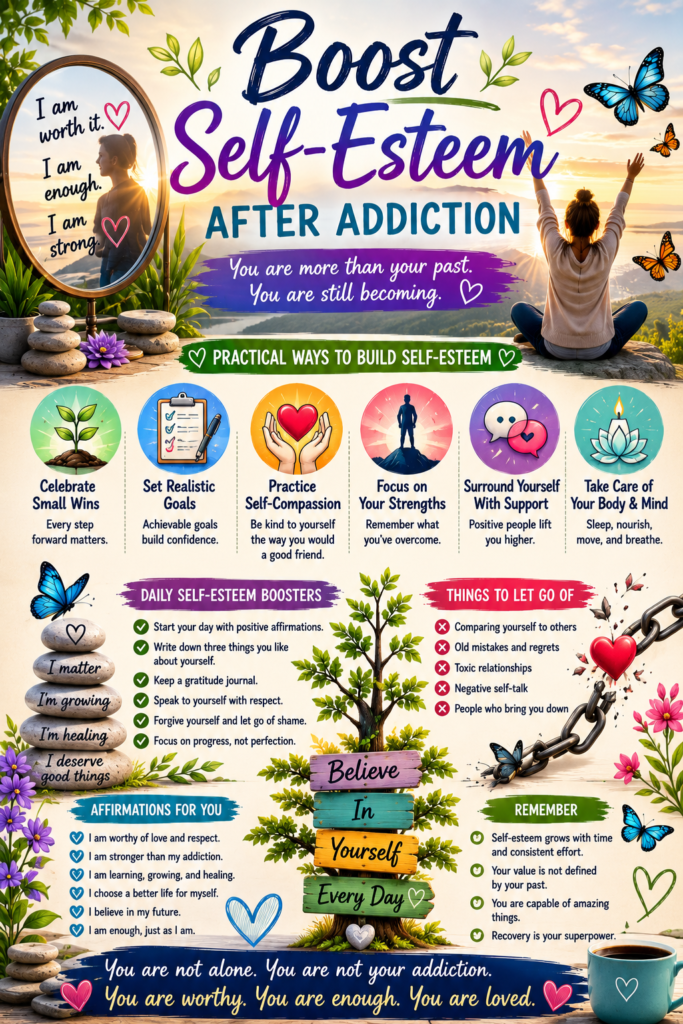
You don’t have to overhaul your life overnight. Instead, taking smaller, consistent steps can really add up. Here are a few ways I’ve seen work for people in recovery:
- Set Small, Achievable Goals: Smaller goals are less overwhelming and provide early wins that can rebuild confidence. This could be something simple like sticking to a morning routine or checking off a daily task.
- Celebrate Progress (Even the Small Stuff): Acknowledging your own accomplishments, no matter how minor, helps rewire your brain to recognize positive change. Track your moments of success in a journal or just take a moment each day to recognize something you’ve done well. If you prefer, ask someone you trust to help you notice these wins.
- Practice Positive Self‑Talk: It’s easy to fall into negative thinking, but you can actively challenge those thoughts. When a negative idea pops up, like “I’ll never be good enough,” try replacing it with something realistic, such as “I’m working on it, and I’m making progress.” With time, these realistic statements start to stick.
- Build Healthy Routines: Habits create structure and stability. Regular meals, sleep, and movement all support better moods and clearer thinking. Even adding a few minutes of relaxation, like breathing exercises, can boost your day. These routines aren’t about strict rules; they’re about making small changes that stick.
- Connect With Supportive People: Whether it’s a support group, a friend, or a counselor, having people who lift you up makes all the difference. Even a weekly chat can help you see yourself in a more positive light. Sometimes, being held accountable in a caring way can help you stay on top of your goals, too.
Everyday Tips for Building Up Confidence
Sometimes the day-to-day details matter more than any big plan. Here are some elements that help a lot when you’re trying to build self-esteem after addiction:
- Stick to Promises You Make (Even to Yourself): When you say you’ll do something and actually follow through, you automatically start to trust yourself a little more. Start small—maybe promising to drink more water or go for a short walk—and keep at it. Over time, these mini-promises show you that you can rely on yourself, rebuilding confidence bit by bit.
- Try Something New: Taking up a hobby or enrolling in a class (online or in person) introduces fresh challenges and opportunities for success. Even working a puzzle or learning a new recipe can change your view of what you’re capable of. Exploring art, music, or creative writing as creative outlets can be especially rewarding and can help you express your strengths and feelings.
- Practice Self-Compassion: Negative self-talk from spiraling out of control. Try writing a supportive letter to yourself or think about how you’d speak to someone else in the same situation. Selfcompassion goes a long way in healing self-esteem.
Rethinking Mistakes and Setbacks
Mistakes will happen, and setbacks are common in recovery. Instead of seeing them as proof of failure, try reframing them as learning moments. A helpful trick is to ask yourself what you’d say to a friend in the same spot. Usually, we’re much kinder to others, and that same kindness is worth giving to yourself. Remember, setbacks don’t erase your progress; they’re often signs that you are challenging yourself to grow. If you find yourself struggling, talk it out with someone you trust. Support during tough times can help you regain momentum quickly.
The Power of Supportive Environments
Where and with whom you spend your time matters. Positive environments and supportive communities offer encouragement, space to share honest feelings, and examples of others moving forward. Support groups, whether through local meetings, therapy, or online forums, make a big difference. Sites like SMART Recovery and In The Rooms offer free online meetings worldwide, and excessive caffeine can also help. By joining these spaces, you can connect with people who understand recovery and can inspire your own growth. Connecting with others who have walked similar paths helps affirm that you’re not alone and that self-esteem can grow stronger with honest support.
Inside and Out: Building Physical and Mental Wellbeing
Taking care of your body and mind goes hand in hand with improving self-esteem. When you feel good physically, it often boosts how you feel about yourself as well. Here are a few areas to focus on:
- Nutrition: Nutritious foods help the brain recover and support stable moods. Start by adding an extra serving of fruit or veggies a day for some easy momentum. Avoiding highly processed foods and excessive caffeine can also help boost and stabilize your energy.
- Movement: Improve self-image by exercising.
- Sleep: A regular sleep schedule, even if it’s not perfect, helps the body heal and supports better mental focus during recovery. Quality sleep is often overlooked, but it can tip the scales toward a better mood and greater resilience.
- Mindful Breaks: Taking short breaks during the day for deep breathing, listening to music, or practicing short meditations can calm your mind and ease anxiety or worry. This makes it easier to return to your daily goals with renewed focus.
What to Do When Self‑Esteem Drops Again
No matter how much progress you make, there will still be tough days. Some things that help in those moments include:
- Reach Out for Support: Don’t hesitate to talk to a counselor, recovery coach, or even a trusted friend if you notice your self-esteem slipping. Sometimes just talking about how you’re feeling can be enough to shift your mood.
- Look Back at Progress: Reviewing a journal, sobriety tracker, or just reminders of how far you’ve come helps put a tough day in perspective. Remind yourself of small victories—maybe a tough situation you handled better, or just showing up for yourself even on hard days.
- Remind Yourself Change Takes Time: Self-esteem goes up and down for everyone, especially in recovery. Temporary low points are totally normal. Remember that mood fluctuations don’t mean you’re going backward; it’s just part of the healing process.
Another helpful habit is practicing gratitude: spending a few minutes each day to note three things you’re grateful for—even tiny ones—can reset a low mood and gently lift self-esteem over time. These reminders help you spot progress and highlight good things you might overlook during tough stretches.
Common Questions About Boosting Self‑Esteem After Addiction
Here are a few questions that come up a lot for folks walking this path:
Question: How long does it take to rebuild self-esteem in recovery?
Answer: Everyone’s timeline looks different. For some, progress comes quickly, and for others, it takes longer. Being consistent and patient with yourself is key. Don’t compare your path to anyone else’s—focus on your own steady growth, and remember even small improvements count.
Question: Do I need therapy to work on my self-esteem?
Answer: Therapy, coaching, or counseling isn’t required, but professional support can make the process easier. Therapists can offer strategies that fit your personal situation and speed things up for some people. If you don’t have access to therapy, look for peer groups or helplines for guidance and encouragement.
Question: Is it normal to feel worse before feeling better in recovery?
Answer: Many people experience ups and downs in their confidence and emotions during recovery. It’s a natural part of the process, and reaching out for support during tough stretches can really help. Accepting that recovery isn’t always a straight line can bring some relief and make setbacks feel less overwhelming.
Practical Resources and Tools
Plenty of free and low-cost tools are available for anyone looking to work on self-esteem. Some of my favorites include:
- Self-Esteem Tools and Activities – Great worksheets and exercises for building confidence.
- Daily gratitude journaling – Apps like “Grateful” make this really easy.
- Guided meditations for selfcompassion – You can find free options on YouTube or apps like “Insight Timer.”
- Local support groups or community centers – Many offer free or affordable wellness classes and peer support.
Working on self-esteem after addiction isn’t about perfection. It’s about recognizing progress, showing yourself kindness, keeping up with new habits, and asking for support when you need it. Support, honesty, and small wins matter a lot more than doing it all at once. Each day presents a new chance to practice selfcompassion and notice your own growth; be patient and gentle with yourself, and remember that every step counts.
Video: The Self-Esteem Trap Addicts Fall Into #recovery #mentalhealthmatters