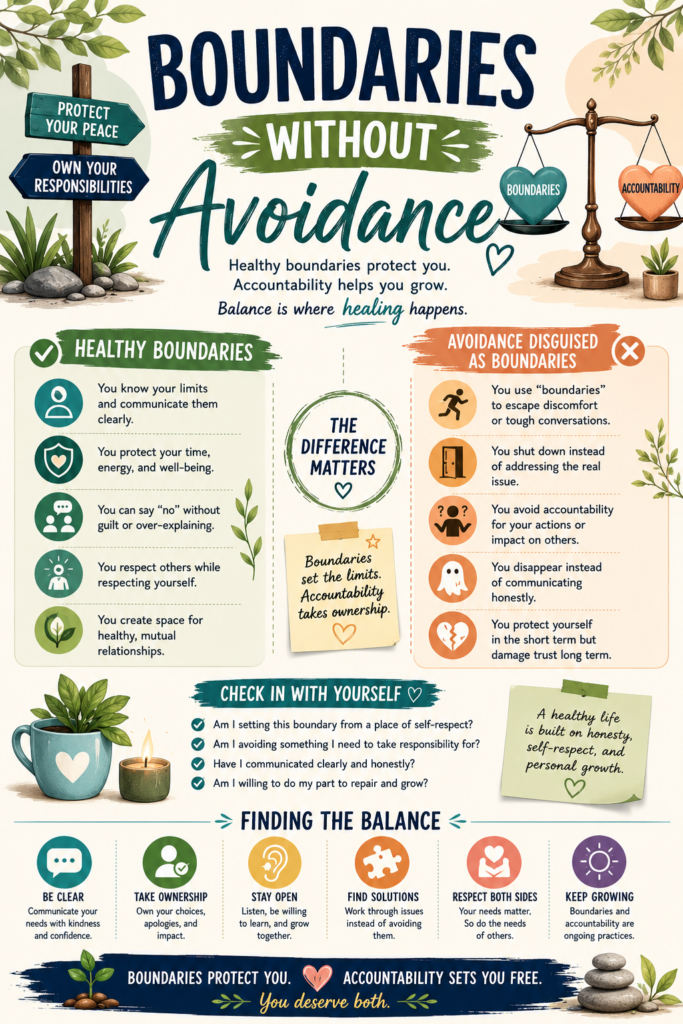
Setting boundaries and taking responsibility for your actions are both crucial in healthy relationships, at work, and with yourself. There’s a tricky side, though—sometimes people claim they’re “setting boundaries” when what’s actually happening is dodging accountability. On the flip side, some folks worry that holding themselves accountable means letting everyone trample their limits. Finding that sweet spot where you respect your boundaries but also own your actions takes a bit of self-awareness and some practical strategies anyone can use.
Why Boundaries Matter and What They Actually Are
Boundaries are limits you set for yourself and others. They help guide what’s okay and what’s not in your personal life, at work, or pretty much anywhere you spend time. Having boundaries lets you feel safe, respected, and clear about your needs. For example, you might say no to late-night emails from work, or you could tell a friend you’re not comfortable discussing certain topics.
It’s easy to see boundaries as something you put up to keep others out, but they work best as a way of protecting your energy and values. Healthy boundaries aren’t about controlling people or dodging every tough situation. They’re more like a tool to help you connect honestly while still honoring yourself.
What Avoiding Accountability Looks Like
Avoiding accountability means dodging responsibility for your behavior, decisions, or mistakes. This can happen in really subtle ways, and sometimes it even hides behind the language of “boundaries.” Maybe you blame others for your feelings or actions, or you use boundaries as a reason not to own up to missed deadlines or hurtful words.
Here are a few signs someone might be avoiding accountability:
- Shifting blame: Always pointing to outside factors or other people when things go wrong.
- Refusing feedback: Getting defensive or shutting down instead of listening when someone raises concerns.
- Ghosting or stonewalling: Cutting off communication instead of addressing issues.
- Weaponizing boundaries: Using “boundaries” as an excuse not to answer for behavior that affected others.
These patterns create confusion and keep you from learning, growing, or building trust with others.
Understanding the Difference: Boundaries vs. Avoiding Accountability
At first glance, holding your boundaries and dodging accountability can feel pretty similar, especially when emotions are running high. The difference boils down to intent and outcome.
- Boundaries protect your wellbeing while allowing room for communication and respect on all sides.
- Avoiding accountability means escaping consequences or feedback, often at the expense of honesty or connection.
If you’re saying no because your plate is full and you need to recharge, that’s a boundary. If you’re saying no to discussing something because you don’t want to admit you dropped the ball, it’s probably avoidance. One moves you toward healthier relationships, while the other distances you and leaves problems unresolved.
Practical Steps for Finding the Right Balance
Getting the hang of this balancing act doesn’t happen overnight. It involves checking in with yourself and making small adjustments to how you do things.
- Check your intent: Ask yourself, “Am I protecting my needs right now, or am I dodging responsibility for something I said or did?”
- Be upfront with your boundaries: Saying what you need is great. Just be clear and communicate your limits in a way that’s honest and respectful.
- Take responsibility for your impact: Even with solid boundaries, your actions might affect others. If someone shares that your words or choices hurt them, listen. Taking responsibility doesn’t mean giving in; it just means acknowledging how your actions landed.
- Apologize when needed: Owning up to mistakes builds trust. You can stick to your boundaries and say you’re sorry when things don’t go as planned.
- Stay open to feedback: Listening to input from those around you shows that you value their experience, even if you don’t agree with everything they say.
Mixing these steps into your normal routine keeps boundaries sturdy yet flexible and prevents avoidance from slipping under the radar.
Common Hurdles and How to Handle Them
No matter how well you set things up, there are always a few bumps in the road. Here are some of the challenges people face and some tips for handling them.
- Feeling guilty for setting boundaries: Guilt is common, especially for those new to saying no. Remind yourself that taking care of your needs isn’t selfish. It actually helps you show up better in all areas of your life.
- Trying to please everyone: Wanting to keep the peace can make you bend your boundaries or dodge tough conversations. That usually leads to resentment or stress down the line.
- Not knowing where your responsibility stops: Sometimes, you might feel like you “owe” people more explanation or effort than is reasonable. But you’re only responsible for your actions and reactions—not for making everyone happy.
- Fear of conflict: Most people don’t love confrontations, but avoiding issues often creates more drama than facing them kindly and directly.
Building the confidence to stand by your boundaries while also taking responsibility gets easier with practice. Checking in with a trusted friend, journaling, or even talking to a therapist can give extra support as you build new habits.
Guilt About Boundaries
This is the number-one challenge I hear from friends and clients. If you’re used to putting others first, speaking up for your own needs can feel uncomfortable. It helps to remember that boundaries don’t cut people out; they let you show up more honestly and prevent burnout. Repeating a little reassurance—like, “It’s okay for me to take care of myself”—can make a difference.
Being Assertive Without Being Harsh
Standing up for yourself isn’t about being cold or rigid. Using a calm tone, “I” statements, and empathy goes a long way. For example, “I need to turn emails off after 7 p.m. to recharge. I’ll be happy to check any urgent messages in the morning.” That feels much better than snapping, “Stop messaging me after hours!”
Tips for Staying Accountable While Honoring Your Boundaries
Once you’re comfortable expressing what works for you, the real magic comes in how you follow through consistently. Here are some habits that are genuinely helpful:
- Check in on your behavior: Spend five minutes now, then think about how you’re treating others and whether you’re meeting your own expectations.
- Ask for feedback: We all have blind spots. Checking in shows you care about how your actions affect your team, friends, or family.
- Own your mistakes: Nobody’s perfect. A quick, honest apology with some action to make it right helps you bounce back from slipups.
- Don’t confuse boundaries with walls: Healthy boundaries let the right people in and keep out what doesn’t serve you. Putting up walls keeps everyone at a distance—including you from learning and growing.
Consistency in these habits makes it easier to feel grounded and maintain trust, both with yourself and others. Remember, growth is gradual; every step counts.
Real-World Examples
It becomes clearer with examples that highlight the difference between genuine boundaries and avoidance:
- Work scenario: Let’s say you decline overtime to keep your evenings free. If your boss asks for help on an urgent task and you simply ignore emails, that’s avoidance. But if you reply, acknowledge the request, and state your limit—“I need to log off at 6 to recharge, but I can help tomorrow morning”—you’re setting a solid boundary while staying accountable.
- Friendship issue: If you stop replying to a friend after a hurtful comment without explaining why, that’s more about avoidance. If you’re upfront and say, “I felt hurt by that comment and need a little space before we chat again,” you set a clear boundary while respecting the relationship.
Over time, these small changes lead to better trust, fewer misunderstandings, and more honest connections.
Frequently Asked Questions
Question: How do I know if I’m genuinely setting boundaries and not just avoiding responsibility?
Answer: Check if you’re willing to state your boundary, listen to the other person, and own your part if someone feels hurt or let down. If you find yourself shutting down conversations or disappearing, it could be a sign of avoidance.
Question: Is it possible to be too firm with boundaries?
Answer: Boundaries work best when they align with your needs while remaining open to conversation. If your boundaries block out all feedback or flexibility, you might start pushing others away.
Question: Can accountability and self-care go together?
Answer: Absolutely. You can hold yourself responsible and still take breaks or say no when you need to. In fact, being accountable means taking care of yourself so you can do your best for others and yourself.
Bottom Line
Striking a balance between honoring your boundaries and owning your actions is an ongoing process. I notice that the clearer and more honest I am—with myself and with others—the easier it becomes to build trust and keep stress at bay. Nobody gets it right every time, but with open communication and a willingness to reflect, you’ll land in that healthy spot where you feel uplifted and trustworthy in all your connections.
Video: Boundaries Should Protect, Not Punish #healthyboundaries #mindset #shorts