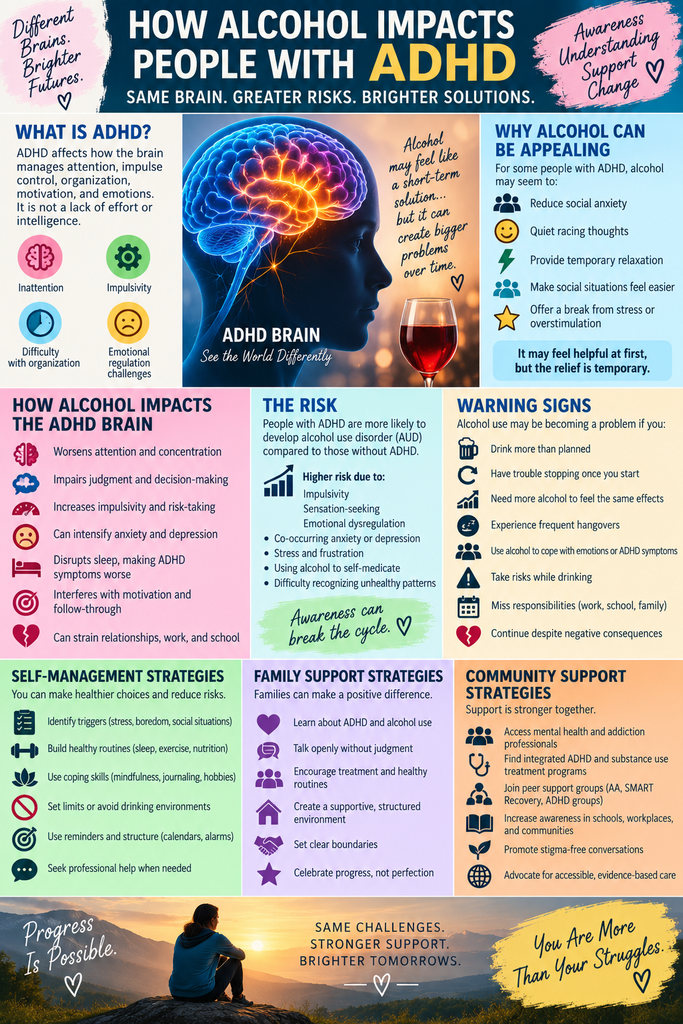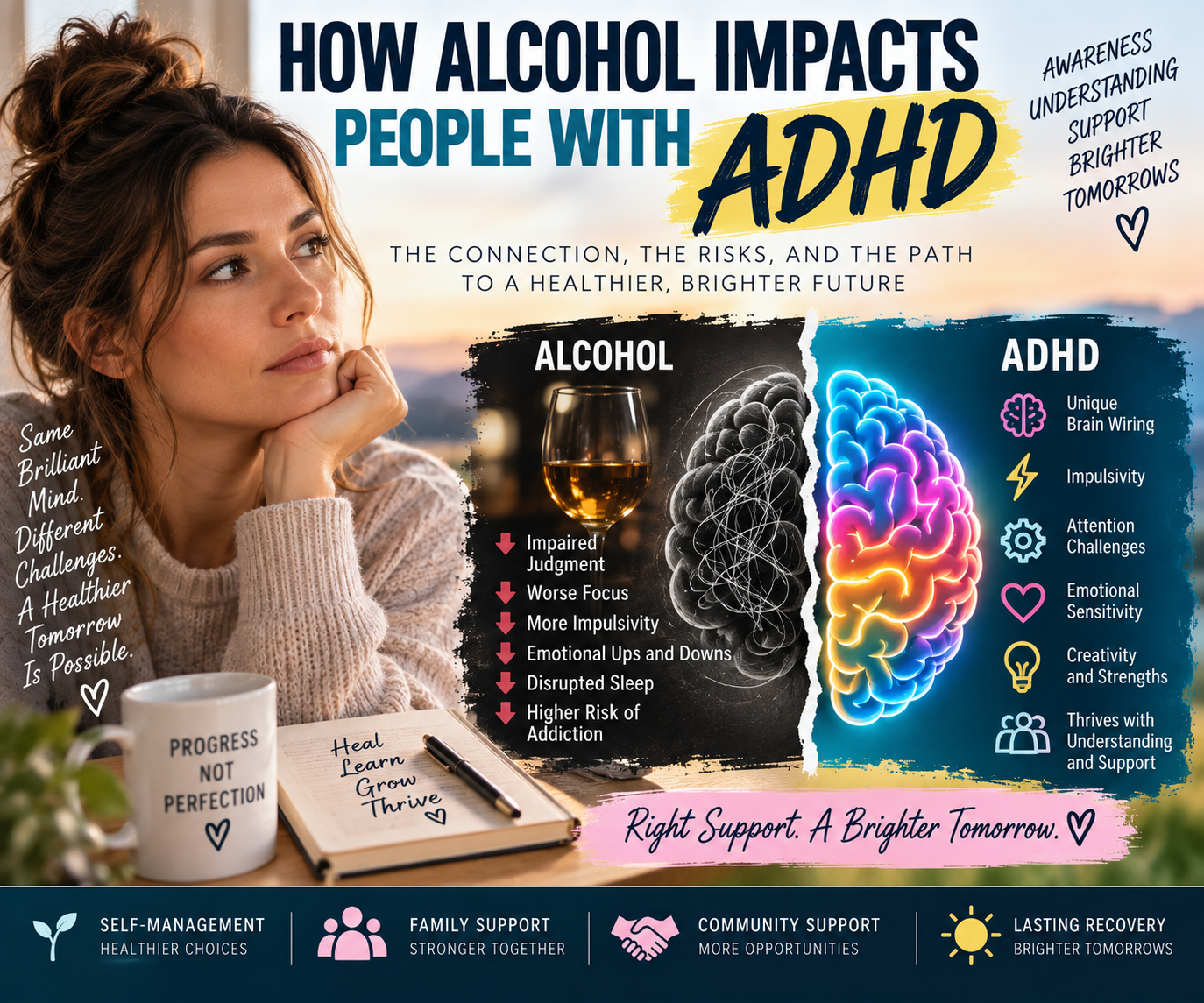
Attention-deficit/hyperactivity disorder (ADHD) affects attention, impulse control, organization, motivation, and emotional regulation. Alcohol affects many of these same brain functions. When ADHD and alcohol use overlap, the combination can create challenges involving decision-making, relationships, work, school, medication management, and mental health.
Some people with ADHD may initially experience alcohol as relaxing. It might seem to quiet racing thoughts, reduce social anxiety, ease emotional tension, or provide temporary relief from feeling overstimulated. However, temporary relief does not mean alcohol is treating ADHD. As drinking becomes more frequent or heavier, it can worsen many of the difficulties a person was attempting to escape.
Why ADHD and Alcohol Can Become Connected
ADHD does not automatically lead to alcohol problems. Many people with ADHD never develop alcohol use disorder. However, research has found an association between ADHD and increased vulnerability to substance-use disorders.
Several ADHD-related difficulties may contribute to this risk:
- Impulsivity and difficulty delaying rewards.
- Sensation-seeking or boredom.
- Difficulty managing intense emotions.
- Chronic stress and frustration.
- Social difficulties or rejection.
- Anxiety or depression occurring alongside ADHD.
- Using alcohol as an informal way to cope with symptoms.
- Difficulty maintaining routines and recognizing unhealthy patterns early.
The reasons differ for each individual. Genetics, environment, trauma, relationships, mental health, and access to treatment can also influence risk.
Alcohol Can Make ADHD Symptoms Harder to Manage
Alcohol is a central nervous system depressant. As alcohol levels increase, attention, judgment, reaction time, coordination, and impulse control can become impaired.
For someone already struggling with ADHD-related executive-function difficulties, drinking may further interfere with:
- Concentration.
- Working memory.
- Planning.
- Organization.
- Emotional regulation.
- Decision-making.
- Time management.
- Impulse control.
Someone may drink to temporarily escape ADHD-related frustration only to discover that the consequences of drinking create additional problems the following day.
The Impulsivity Problem
Impulsivity deserves particular attention.
A person with ADHD may sometimes make decisions quickly without fully considering future consequences. Alcohol further reduces inhibition and judgment. Together, these effects can increase the likelihood of risky decisions.
Possible consequences include unsafe driving, arguments, unplanned spending, risky sexual behavior, injuries, missed responsibilities, or consuming more alcohol than originally intended.
Creating safeguards before drinking occurs can therefore be particularly important.
Alcohol, Sleep, and the ADHD Brain
People sometimes use alcohol because they believe it helps them sleep. Alcohol may make someone feel sleepy initially, but it can disrupt normal sleep quality and contribute to nighttime awakenings.
Poor sleep can make ADHD symptoms worse the next day.
A difficult cycle may develop:
ADHD symptoms → stress → alcohol → disrupted sleep → worse concentration and emotional regulation → more stress → more alcohol.
Breaking even one part of this cycle can make addressing the rest easier.
Alcohol and ADHD Medication
People taking ADHD medication should discuss alcohol use with their healthcare professional. The effects and risks can differ depending on the medication, dose, health history, drinking pattern, and other medications or substances being used.
Stimulant medications do not make someone immune to alcohol impairment. A person may still experience impaired judgment and coordination even if they feel more alert.
Never change, skip, double, or discontinue prescribed ADHD medication simply to accommodate drinking without discussing the decision with the prescribing clinician.
Recognizing When Drinking Is Becoming a Problem
Alcohol use deserves closer attention when someone notices patterns such as:
- Drinking more than originally planned.
- Difficulty stopping once drinking begins.
- Increasing tolerance.
- Frequent hangovers.
- Using alcohol specifically to manage ADHD symptoms or emotions.
- Missing work, school, appointments, or responsibilities.
- Drinking despite relationship problems.
- Taking significant risks while intoxicated.
- Trying unsuccessfully to reduce alcohol use.
- Experiencing cravings.
- Continuing despite physical or psychological consequences.
These signs do not automatically establish a diagnosis, but they are reasons to consider professional assessment.
Self-Management Strategies
Managing ADHD effectively can reduce the need to rely on alcohol as a coping mechanism. Strategies should be realistic because complicated plans can be especially difficult to maintain when executive functioning is already challenged.
Helpful approaches include:
- Identify drinking triggers. Notice whether boredom, stress, rejection, anger, loneliness, social anxiety, or overstimulation increases the urge to drink.
- Create structure. Regular sleep, meals, exercise, medication routines, and appointments can reduce chaos and impulsive decisions.
- Use external reminders. Calendars, alarms, medication organizers, and written plans reduce reliance on memory alone.
- Develop healthier stimulation. Exercise, music, hobbies, creative activities, and social connection can provide rewarding alternatives.
- Practice emotional regulation. Breathing exercises, mindfulness, journaling, therapy, or taking a brief break can help manage intense emotions.
- Reduce exposure to drinking environments. If certain places or people repeatedly lead to excessive drinking, changing the environment may be necessary.
- Protect sleep. Consistent sleep routines can improve attention and emotional regulation.
- Track alcohol use. Writing down when and why drinking occurs can reveal patterns.
- Follow ADHD treatment consistently. Proper ADHD management may improve functioning and reduce untreated symptoms that contribute to unhealthy coping.
- Seek addiction treatment when needed. Alcohol problems are treatable, and early intervention can prevent additional consequences.
Family Support Strategies
Families can play an important role without becoming responsible for controlling another person’s behavior.
Family members can help by:
- Learning about both ADHD and alcohol use disorder.
- Understanding that executive-function difficulties are not simply laziness.
- Discussing concerning behaviors when the person is sober.
- Using specific examples rather than accusations.
- Helping establish predictable household routines.
- Encouraging medication and treatment adherence.
- Supporting alcohol-free family activities.
- Recognizing progress rather than demanding perfection.
- Avoiding repeatedly rescuing someone from alcohol-related consequences.
- Establishing clear and reasonable boundaries.
- Participating in family therapy when appropriate.
Statements such as “I’ve noticed alcohol seems to make things harder for you. How can we help?” may create a more productive conversation than criticism or shame.
Community Support Strategies
Recovery becomes easier when people can access services that recognize both ADHD and substance use.
Helpful community resources may include:
- Primary-care providers.
- Psychiatrists and ADHD specialists.
- Addiction-treatment programs.
- Behavioral therapy.
- Cognitive behavioral therapy.
- Peer recovery specialists.
- Alcoholics Anonymous.
- SMART Recovery.
- ADHD support groups.
- Family education programs.
- College or workplace accommodations when appropriate.
- Community mental-health centers.
Ideally, treatment providers should understand that ADHD and alcohol problems may interact rather than treating them as completely unrelated conditions.
Treating ADHD During Addiction Recovery
Historically, there has sometimes been concern about treating ADHD when someone also has a substance-use disorder, particularly because some ADHD medications are controlled substances. Modern treatment requires a more individualized approach.
Clinicians can evaluate the person’s ADHD symptoms, substance-use history, recovery stability, cardiovascular health, psychiatric conditions, medication response, and risk of misuse. Depending on the situation, stimulant or non-stimulant medications and behavioral interventions may be considered with appropriate monitoring.
The important point is that untreated ADHD should not simply be ignored during recovery.
If difficulties with impulsivity, organization, emotional regulation, or attention remain severe, they may make maintaining recovery more challenging.
Building an ADHD-Friendly Recovery Plan
Traditional recovery advice can sometimes be difficult for someone with ADHD to follow. Instructions such as “be more organized” or “remember your appointments” do not address executive-function difficulties.
An ADHD-friendly recovery plan may instead use:
- Short daily goals.
- Written checklists.
- Automatic reminders.
- Consistent appointment times.
- Medication organizers.
- Accountability partners.
- Visible calendars.
- Simple routines.
- Immediate positive reinforcement.
- Regular follow-up with treatment providers.
The easier a healthy behavior is to start and repeat, the more likely it is to become part of everyday life.
When Professional Help Is Needed
Someone should consider professional evaluation when alcohol use is becoming difficult to control, interfering with responsibilities, worsening ADHD symptoms, damaging relationships, or creating health or safety concerns.
People who drink heavily or regularly should not necessarily stop suddenly without medical guidance. Alcohol withdrawal can become medically dangerous for some individuals. Symptoms such as seizures, severe confusion, hallucinations, or significant autonomic instability require urgent medical attention.
Conclusion
ADHD and alcohol can create a complicated relationship. Alcohol may initially appear to provide relief from restlessness, stress, social anxiety, boredom, or overwhelming emotions, but repeated drinking can worsen attention, impulse control, sleep, judgment, and emotional regulation.
Effective support addresses both sides of the problem.
Self-management provides structure and healthier coping strategies. Families can offer encouragement, boundaries, and practical support without enabling harmful behavior. Communities can improve access to integrated ADHD, mental-health, and addiction services.
Most importantly, treatment should focus on the whole person rather than asking whether ADHD or alcohol came first.
Alcohol may temporarily quiet ADHD-related distress, but sustainable recovery comes from understanding the underlying needs, treating ADHD appropriately, strengthening coping skills, and building a life that no longer depends on alcohol for relief.
Frequently Asked Questions
Here are some common questions:
1. Does alcohol affect people with ADHD differently?
Alcohol affects everyone’s attention, judgment, coordination, and impulse control. For someone with ADHD who already experiences difficulties with attention, executive functioning, impulsivity, or emotional regulation, these effects can compound existing challenges.
2. Are people with ADHD at greater risk of alcohol problems?
Research has found an association between ADHD and an increased risk of developing substance-use disorders, including alcohol use disorder. This does not mean that everyone with ADHD will develop an alcohol problem. Genetics, environment, mental health, trauma, social circumstances, and access to effective ADHD treatment can all influence risk.
3. Why might someone with ADHD use alcohol?
Some people may drink because alcohol temporarily seems to reduce stress, restlessness, social anxiety, racing thoughts, or emotional discomfort. Others may drink because of boredom, sensation-seeking, impulsivity, or social pressure. Alcohol may provide short-term relief while creating additional problems over time.
4. Can alcohol calm ADHD symptoms?
Alcohol is not a treatment for ADHD. Although someone may initially feel calmer after drinking, alcohol can impair attention, memory, judgment, sleep, and impulse control. Using alcohol to “self-medicate” ADHD symptoms can become an unhealthy coping pattern.
5. Can alcohol make impulsivity worse?
Yes. Alcohol reduces inhibition and affects decision-making. Because impulsivity may already be challenging for some people with ADHD, drinking can increase the likelihood of making decisions without fully considering the consequences.
6. How does alcohol affect concentration in someone with ADHD?
Alcohol can impair concentration, working memory, reaction time, and executive functioning. Someone with ADHD may therefore find it even harder to organize tasks, remember information, complete responsibilities, or maintain attention after drinking.
7. Can alcohol make ADHD-related emotional problems worse?
It can. Alcohol may temporarily numb difficult emotions, but intoxication and the period after drinking can contribute to irritability, anxiety, mood changes, and poor emotional control. This can create a cycle of distress followed by further drinking.
8. Does alcohol interfere with sleep in people with ADHD?
Yes. Alcohol may make someone sleepy initially, but it can disrupt normal sleep quality and contribute to nighttime awakenings. Poor sleep can worsen attention, irritability, executive functioning, and emotional regulation the following day.
9. Can someone drink alcohol while taking ADHD medication?
This should be discussed with the prescribing healthcare professional because risks depend on the specific medication, dose, medical history, other medications, and drinking pattern.
People should not assume that stimulant medication prevents alcohol impairment simply because they feel more alert. Prescribed medication should not be skipped, doubled, or changed to accommodate drinking without medical guidance.
10. What are warning signs that alcohol use is becoming a problem?
Possible warning signs include:
- Drinking more than originally intended.
- Difficulty stopping once drinking begins.
- Frequent cravings.
- Increasing tolerance.
- Using alcohol primarily to cope with ADHD symptoms or emotions.
- Missing work, school, appointments, or family responsibilities.
- Taking significant risks while drinking.
- Repeated relationship problems related to alcohol.
- Trying unsuccessfully to reduce drinking.
- Continuing to drink despite negative consequences.
A professional assessment can determine whether these symptoms meet the criteria for alcohol use disorder.
11. What self-management strategies can help?
Helpful strategies may include:
- Identifying emotional and environmental drinking triggers.
- Maintaining consistent sleep and meal routines.
- Using calendars, alarms, and reminders.
- Developing healthier ways to manage boredom and stress.
- Exercising regularly.
- Practicing mindfulness or relaxation techniques.
- Reducing exposure to environments centered around alcohol.
- Following an ADHD treatment plan consistently.
- Tracking alcohol consumption.
- Seeking professional help when drinking becomes difficult to control.
Simple and structured strategies are often easier to maintain than complicated plans.
12. How can families support someone with ADHD who is struggling with alcohol?
Families can learn about both ADHD and alcohol use disorder, listen without judgment, encourage professional treatment, support predictable routines, and participate in alcohol-free activities.
Clear boundaries are also important. Supporting someone does not require repeatedly protecting them from the consequences of harmful drinking.
13. What should families avoid doing?
Families should avoid shaming the person, calling ADHD-related difficulties laziness, arguing while someone is intoxicated, or assuming that addiction is simply a lack of willpower.
It is usually more productive to discuss specific behaviors and consequences when everyone is sober and calm.
14. What community resources can help?
Depending on individual needs, helpful resources may include:
- Primary-care providers.
- Psychiatrists or ADHD specialists.
- Addiction-treatment professionals.
- Mental-health counselors.
- Peer recovery specialists.
- Alcoholics Anonymous.
- SMART Recovery.
- ADHD support groups.
- Family counseling and education.
- Community mental-health programs.
Programs that understand both ADHD and substance use can be particularly valuable.
15. Can ADHD and alcohol use disorder be treated together?
Yes. When both conditions are present, treatment should consider how they interact. Depending on the individual, care may involve ADHD medication, behavioral interventions, addiction treatment, psychotherapy, recovery support, and treatment for co-occurring anxiety or depression.
16. Does having a history of alcohol problems mean ADHD cannot be treated with medication?
Not necessarily. Treatment decisions are individualized. Healthcare professionals can consider the person’s substance-use history, current recovery, ADHD symptoms, medical conditions, and risk of medication misuse when selecting stimulant or non-stimulant treatments and appropriate monitoring.
17. Can treating ADHD help addiction recovery?
Appropriate treatment for ADHD may improve attention, organization, emotional regulation, and daily functioning. Addressing untreated ADHD can therefore be an important part of a comprehensive recovery plan when both conditions are present.
Treatment should address the whole person rather than focusing exclusively on alcohol or ADHD.
18. Is it safe for a heavy drinker to suddenly stop drinking?
Not always. Someone who has developed physical dependence on alcohol can experience dangerous withdrawal after abruptly stopping. Severe withdrawal may involve seizures, hallucinations, confusion, or other serious symptoms and requires urgent medical care.
People who drink heavily or regularly and are concerned about withdrawal should obtain medical guidance before attempting to stop suddenly.
19. What is the most important message for someone with ADHD who is worried about drinking?
Having ADHD does not mean alcohol problems are inevitable. Recognizing patterns early, receiving appropriate ADHD treatment, developing healthier coping skills, creating structure, and seeking addiction support when necessary can significantly change the direction of someone’s life.
Video: