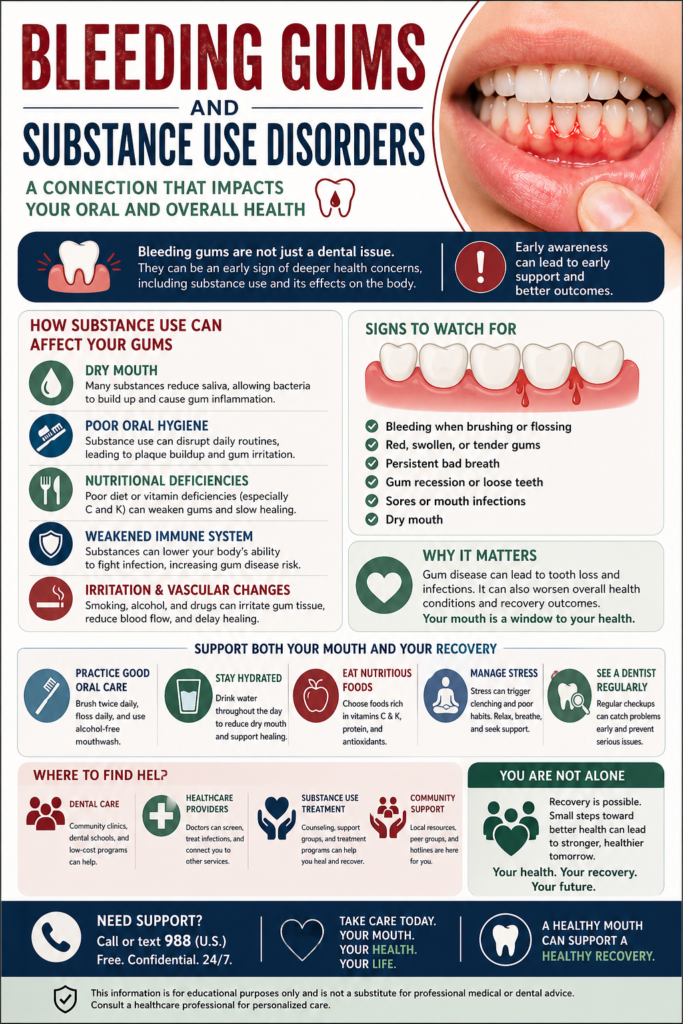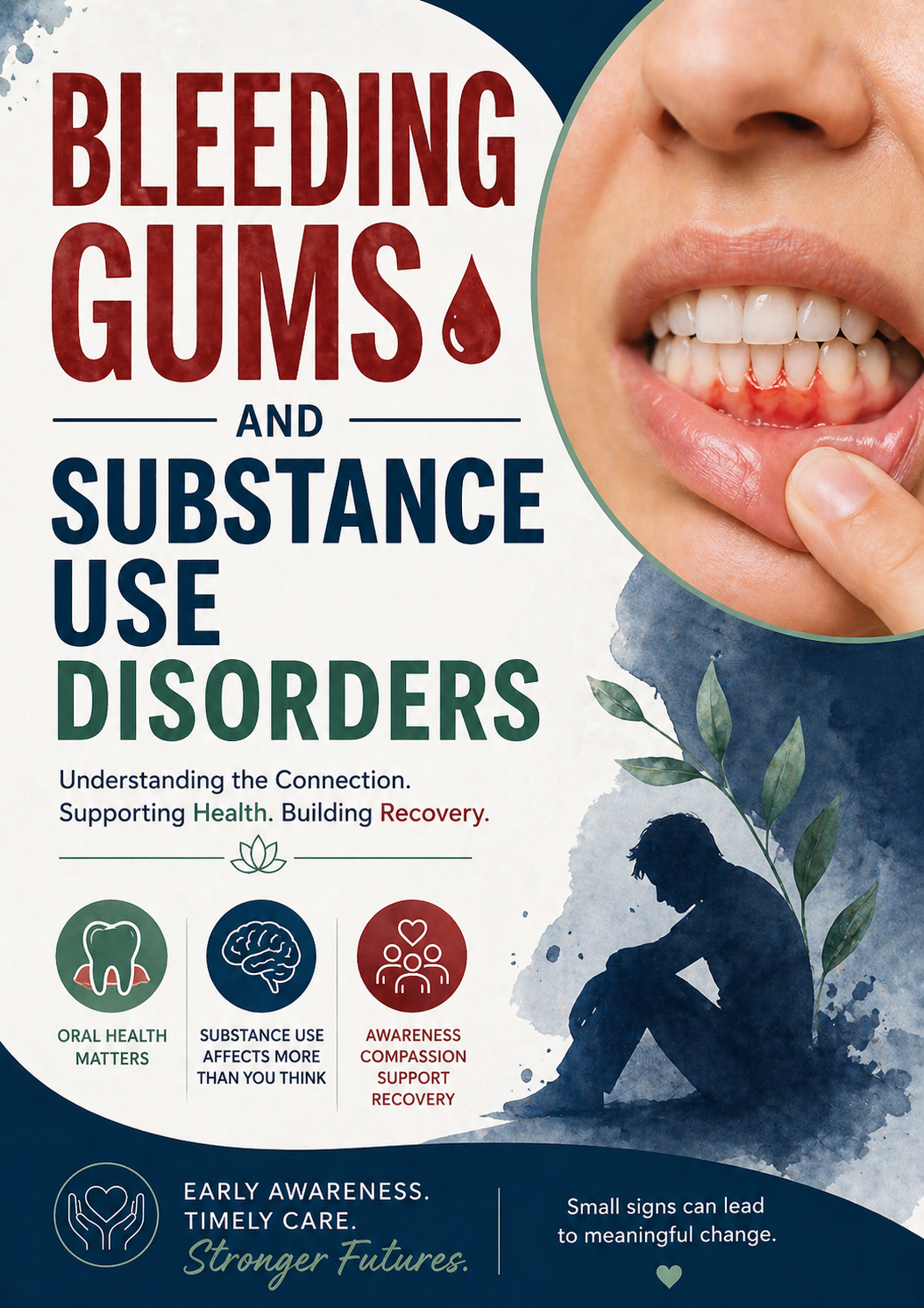
Bleeding gums are often viewed as a minor dental concern, but they can sometimes signal deeper health issues—especially when connected to patterns seen in Substance Use Disorder. Changes in oral health may reflect shifts in daily habits, nutrition, and overall well-being, all of which can be affected by substance use. Because these signs are often subtle and develop gradually, they can be easy to overlook or dismiss. Understanding the connection between bleeding gums and broader health factors is an important step toward recognizing early warning signs and addressing underlying concerns.
More Than a Dental Issue: Understanding Bleeding Gums and Substance Use Disorders
Bleeding gums are often dismissed as a minor dental concern—something caused by brushing too hard or forgetting to floss. But in some cases, they can signal something deeper. When oral health changes begin to appear alongside behavioral or physical shifts, it may point to broader health issues, including substance use.
Understanding the connection between bleeding gums and substance use disorders can help identify early warning signs, encourage timely care, and support overall recovery.
What Causes Bleeding Gums?
Bleeding gums are most commonly linked to gum inflammation (gingivitis), which occurs when plaque builds up along the gumline. Left untreated, this can progress into more serious conditions like periodontitis.
Common causes include:
- Poor oral hygiene
- Vitamin deficiencies
- Hormonal changes
- Certain medications
- Smoking or substance use
When bleeding becomes frequent or persistent, it’s important to look beyond surface-level explanations.
The Link to Substance Use Disorders
Substance use can significantly impact oral health—both directly and indirectly. Individuals with Substance Use Disorder may experience changes in behavior, nutrition, and physical health that increase the risk of gum disease.
1. Dry Mouth (Reduced Saliva)
Many substances reduce saliva production. Saliva is essential for:
- Neutralizing acids
- Washing away bacteria
- Protecting gum tissue
Without it, bacteria thrive—leading to inflammation and bleeding.
2. Neglect of Oral Hygiene
Substance use can disrupt daily routines, including brushing and flossing. Over time, plaque buildup increases, contributing to gum irritation and bleeding.
3. Nutritional Deficiencies
Poor nutrition—common among people who use substances—can weaken gum tissue. Deficiencies in vitamins like C and K can make gums more prone to bleeding and slower to heal.
4. Immune System Suppression
Some substances weaken the immune system, making it harder for the body to fight off infections, including gum disease.
5. Direct Irritation and Damage
Smoking, alcohol, and certain drugs can:
- Irritate gum tissue
- Reduce blood flow to the gums
- Increase the risk of infection
These effects accelerate gum deterioration.
Signs That May Indicate a Larger Issue
Bleeding gums may be part of a broader pattern. Watch for:
- Persistent gum bleeding or swelling
- Bad breath that doesn’t improve
- Loose teeth or gum recession
- Dry mouth or sores
- Changes in eating or hygiene habits
When combined with behavioral or emotional changes, these signs may point to deeper health concerns.
Why Early Awareness Matters
Oral health is often one of the first areas where systemic issues show up. Recognizing changes like bleeding gums can:
- Prompt early medical or dental intervention
- Encourage conversations about overall health
- Support earlier identification of substance-related challenges
Early action can prevent both dental complications and broader health risks.
Supporting Recovery Through Oral Health
1. Rebuild Daily Care Routines
- Brush twice daily and floss regularly
- Use alcohol-free mouthwash if recommended
- Schedule regular dental checkups
Small habits restore consistency and control.
2. Stay Hydrated
Drinking water helps counter dry mouth and supports overall oral health.
3. Improve Nutrition
A balanced diet rich in vitamins supports gum healing and resilience.
4. Seek Professional Support
Dentists, doctors, and recovery professionals can work together to address both oral health and underlying causes.
5. Approach With Awareness, Not Judgment
If you’re supporting someone else, focus on:
- Encouraging care, not criticizing
- Noticing patterns without assumptions
- Offering support and resources
Compassion leads to better outcomes than confrontation.
The Bigger Picture: Oral Health as a Window to Overall Health
Bleeding gums are not always just about brushing technique—they can reflect what’s happening throughout the body. In the context of substance use, they may be an early, visible signal of deeper imbalance.
Final Thought
Paying attention to small physical changes—like bleeding gums—can lead to important insights about overall health. Whether for yourself or someone you care about, noticing these signs early creates an opportunity for support, healing, and recovery.
Oral health is not separate from the rest of the body—it’s part of the bigger picture. And sometimes, it’s the first place that the picture begins to change.
Taking Control of Your Health: Self-Management Strategies for Bleeding Gums and Substance Use Disorders
Bleeding gums can be easy to ignore—but in some cases, they are early signals of deeper health concerns. When combined with patterns related to Substance Use Disorder, changes in oral health can reflect shifts in hygiene, nutrition, and overall well-being.
The good news is that bleeding gums are often manageable and reversible—especially when addressed early. Self-management strategies empower you to understand what’s happening in your body and take practical steps toward healing, both orally and systemically.
Why Self-Management Matters
In the context of substance use or recovery, daily routines and physical health can become disrupted. Self-management helps you:
- Rebuild consistency in care habits
- Identify early warning signs
- Support gum healing and prevent progression
- Strengthen overall recovery and well-being
Small, consistent actions can make a significant difference.
1. Recognize Early Signs of Gum Problems
Awareness is the first step.
Watch for:
- Bleeding when brushing or flossing
- Red, swollen, or tender gums
- Persistent bad breath
- Gum sensitivity
Catching these early prevents more serious conditions.
2. Rebuild a Consistent Oral Hygiene Routine
Consistency matters more than perfection.
Focus on:
- Brushing twice daily with a soft-bristle toothbrush
- Flossing once a day
- Using a gentle, alcohol-free mouthwash is recommended
Routine restores balance and reduces inflammation.
3. Stay Hydrated to Combat Dry Mouth
Many substances reduce saliva, which protects your gums.
Support your mouth by:
- Drinking water regularly
- Limiting dehydrating substances (caffeine, alcohol when possible)
- Using sugar-free gum or lozenges to stimulate saliva
Hydration helps wash away bacteria and support healing.
4. Improve Nutrition for Gum Health
Your gums need nutrients to repair and stay strong.
Prioritize:
- Vitamin C (citrus, berries, leafy greens)
- Vitamin K (leafy greens)
- Protein for tissue repair
Balanced nutrition supports both oral and overall recovery.
5. Track Patterns and Triggers
Noticing patterns helps you stay ahead.
Track:
- When bleeding occurs
- Changes in hygiene habits
- Stress levels or substance use patterns
This builds awareness and helps guide adjustments.
6. Reduce Harmful Habits Gradually
Substances like tobacco, alcohol, and certain drugs can worsen gum health by:
- Irritating tissue
- Reducing blood flow
- Slowing healing
If stopping completely isn’t immediate, focus on:
- Reducing frequency
- Avoiding use before oral care
- Seeking support for long-term change
Progress—not perfection—is the goal.
7. Manage Stress and Emotional Health
Stress can lead to:
- Neglected hygiene
- Teeth grinding
- Increased inflammation
Support yourself with:
- Mindfulness or relaxation techniques
- Physical activity
- Talking through stress instead of internalizing it
Reducing stress supports both gum health and recovery.
8. Seek Professional Support When Needed
Self-management works best alongside professional care.
Consider:
- Regular dental checkups and cleanings
- Talking to a healthcare provider about symptoms
- Seeking recovery or counseling support if needed
Early intervention prevents complications.
The Bigger Shift: From Neglect to Awareness
Over time, these strategies help you shift from:
- Inconsistent care → Daily routine
- Ignoring symptoms → Early awareness
- Physical decline → Active healing
Final Thought
Bleeding gums may seem small, but they can be a powerful signal from your body. In the context of substance use or recovery, they often reflect deeper patterns that deserve attention—not judgment.
By taking consistent, manageable steps, you’re not just improving your oral health—you’re reinforcing a broader commitment to caring for your body and supporting long-term recovery.
Supporting Health Together: Family Strategies for Understanding Bleeding Gums and Substance Use Disorders
Bleeding gums are often seen as a minor dental issue—but in some cases, they can signal deeper concerns related to overall health and daily habits. When these changes appear alongside behavioral or lifestyle shifts, they may be connected to challenges such as Substance Use Disorder. For families, recognizing this connection can feel complex, especially when signs are subtle or gradual.
Family support plays a critical role in early awareness, prevention, and recovery. By approaching the situation with understanding and practical strategies, families can help address both oral health concerns and the broader factors influencing them.
Why Family Support Matters
Individuals experiencing substance-related challenges may:
- Struggle with consistent hygiene routines
- Experience nutritional imbalances
- Feel overwhelmed or avoid health concerns
Family involvement can help:
- Reinforce healthy habits
- Encourage early intervention
- Create a supportive, non-judgmental environment
1. Notice Changes Without Jumping to Conclusions
Early signs may be subtle:
- Bleeding during brushing
- Red or swollen gums
- Avoidance of dental care
- Changes in hygiene routines
Approach these observations with curiosity, not assumptions. The goal is awareness—not immediate judgment.
2. Start Supportive, Non-Judgmental Conversations
How you communicate matters.
Instead of:
- “You’re not taking care of yourself.”
Try:
- “I’ve noticed your gums seem irritated—how have you been feeling lately?”
This keeps the conversation open and reduces defensiveness.
3. Encourage Consistent Daily Routines
Routine is often disrupted during substance use or recovery.
Families can help by:
- Encouraging regular brushing and flossing
- Creating structure around daily habits
- Modeling consistent self-care
Small routines rebuild stability over time.
4. Support Healthy Nutrition and Hydration
Nutrition plays a key role in gum health.
You can support by:
- Preparing balanced meals
- Encouraging hydration
- Reducing sugary or acidic foods when possible
Better nutrition supports healing and immune function.
5. Understand the Impact of Substance Use on Oral Health
Substance use can affect gums by:
- Reducing saliva (dry mouth)
- Increasing bacterial growth
- Slowing healing processes
- Causing tissue irritation
Understanding this connection helps families respond with informed support rather than frustration.
6. Encourage Professional Care Without Pressure
Dental visits may be avoided due to fear, shame, or neglect.
Supported by:
- Offering to help schedule appointments
- Accompanying them if needed
- Framing care as support—not correction
Gentle encouragement is more effective than force.
7. Reduce Stigma Around Health and Recovery
Shame can prevent people from seeking help.
Families can:
- Normalize conversations about health and recovery
- Avoid blame or criticism
- Focus on progress rather than perfection
A safe environment encourages openness and change.
8. Be Patient With the Process
Improvement takes time—both in oral health and recovery.
Expect:
- Gradual habit rebuilding
- Occasional setbacks
- Ongoing support needs
Consistency matters more than speed.
The Bigger Picture: Seeing the Whole Person
Bleeding gums may be a visible symptom, but they often reflect deeper patterns involving:
- Physical health
- Emotional well-being
- Daily habits
Family support helps connect these pieces rather than treating them in isolation.
Final Thought
Addressing bleeding gums in the context of substance use isn’t just about dental care—it’s about understanding the person as a whole. With awareness, patience, and supportive strategies, families can play a meaningful role in both health improvement and recovery.
Sometimes, the most powerful step isn’t fixing the problem—it’s creating an environment where change feels possible.
Community Matters: Resource Strategies for Understanding Bleeding Gums and Substance Use Disorders
Bleeding gums are often treated as a simple dental issue, but in some cases, they can reflect broader health challenges—especially when connected to patterns seen in Substance Use Disorder. Because these signs can be subtle and easily overlooked, many individuals and families may not recognize the deeper connection until symptoms worsen.
Community resources play a vital role in bridging that gap. They provide access to education, healthcare, and supportive networks that help individuals understand the relationship between oral health and substance use—while also offering pathways toward recovery and long-term well-being.
Why Community Resources Matter
When substance use affects daily habits and physical health, individuals may experience:
- Disrupted oral hygiene routines
- Nutritional deficiencies
- Avoidance of healthcare services
- Increased risk of gum disease
Community resources help by:
- Offering accessible care and guidance
- Reducing barriers to treatment
- Providing non-judgmental support systems
They make it easier to address both symptoms and underlying causes.
1. Dental Clinics and Community Oral Health Programs
Local dental clinics—especially community or low-cost programs—are often the first point of care.
They provide:
- Gum disease evaluation and treatment
- Preventive cleanings and education
- Guidance on improving oral hygiene
Early dental care can stop bleeding gums from progressing into more serious conditions.
2. Primary Healthcare and Public Health Services
Primary care providers can help connect oral health symptoms to overall health.
They may:
- Screen for underlying conditions
- Address nutritional deficiencies
- Provide referrals for additional care
Integrated care ensures that oral symptoms are not treated in isolation.
3. Substance Use Treatment and Recovery Programs
Structured recovery programs address the root causes of health issues.
They offer:
- Counseling and behavioral support
- Tools for rebuilding routines and self-care
- Education on how substance use impacts the body
Improving overall health naturally supports better oral hygiene and healing.
4. Nutritional Support Services
Nutrition plays a major role in gum health.
Community resources may include:
- Food assistance programs
- Nutritional counseling
- Access to healthy meals
These services help restore the nutrients needed for gum repair and immune function.
5. Mental Health and Counseling Services
Emotional health is closely tied to physical health behaviors.
Counseling can help individuals:
- Address stress and triggers
- Build healthier routines
- Reduce avoidance of self-care
This indirectly improves oral health outcomes.
6. Harm Reduction and Outreach Programs
For individuals not yet ready for full treatment, harm reduction services provide practical support.
They may offer:
- Health education
- Basic hygiene supplies
- Referrals to medical and dental care
These programs meet people where they are—without judgment.
7. Educational Workshops and Awareness Programs
Education empowers individuals to recognize early warning signs.
Workshops may cover:
- Proper oral hygiene techniques
- Effects of substances on the body
- Prevention strategies
Knowledge helps individuals take proactive steps.
8. Crisis and Immediate Support Services
When health concerns are connected to emotional distress, immediate support can be critical.
In the U.S., the 988 Suicide & Crisis Lifeline is available 24/7 by calling or texting 988.
These services:
- Provide emotional support
- Help reduce crisis situations
- Guide individuals toward additional resources
Building a Personal Support Network
You don’t need every resource—just the right combination.
A balanced support system might include:
- Dental care: for immediate oral health needs
- Medical care: for overall health support
- Recovery programs: for long-term change
- Community services: for daily stability
Layering these resources creates a stronger foundation for healing.
The Bigger Picture: Connecting Oral Health to Whole-Body Health
Bleeding gums are not just a dental issue—they can reflect:
- Physical health changes
- Emotional challenges
- Lifestyle patterns
Community resources help connect these areas, providing a more complete approach to care.
Final Thought
Understanding bleeding gums in the context of substance use requires looking beyond the surface. Community resources make that possible by offering access, education, and support at every stage.
No one has to navigate these challenges alone. With the right network, small signs—like bleeding gums—can become opportunities for awareness, intervention, and meaningful recovery.
Frequently Asked Questions
Here are some common questions:
1. Are bleeding gums always a sign of something serious?
Not always. Bleeding gums are commonly caused by gum inflammation (gingivitis). However, when they are persistent or combined with other health or behavioral changes, they may signal deeper issues, including those related to Substance Use Disorder.
2. How does substance use affect gum health?
Substance use can impact gums in several ways:
- Reducing saliva (dry mouth)
- Increasing bacterial growth
- Weakening the immune system
- Slowing healing
These factors make gums more prone to bleeding, infection, and disease.
3. Which substances are most likely to cause gum problems?
Several substances can affect oral health, including:
- Tobacco (smoking or chewing)
- Alcohol
- Stimulants (e.g., methamphetamine, cocaine)
- Opioids (indirectly through neglect and dry mouth)
Each can contribute to irritation, dryness, or reduced care routines.
4. What is dry mouth, and why does it matter?
Dry mouth occurs when saliva production is reduced. Saliva is important because it:
- Washes away bacteria
- Protects gum tissue
- Neutralizes acids
Without enough saliva, gums become more vulnerable to inflammation and bleeding.
5. Can poor oral hygiene alone cause bleeding gums?
Yes. Inconsistent brushing and flossing can lead to plaque buildup, which irritates the gums. Substance use can make it harder to maintain these routines, increasing the risk.
6. Are nutritional deficiencies involved?
Often, yes. Poor nutrition—common among people who use substances—can lead to deficiencies in vitamins such as C and K, which are essential for gum health and healing.
7. What are the early warning signs to watch for?
- Bleeding when brushing or flossing
- Red or swollen gums
- Persistent bad breath
- Gum tenderness
- Dry mouth
These signs should not be ignored if they continue over time.
8. Can bleeding gums improve if substance use is reduced or stopped?
Yes, in many cases. When substance use is reduced, and healthy habits are restored, gums can heal—especially if damage has not progressed too far.
9. Is gum disease reversible?
Early-stage gum disease (gingivitis) is usually reversible with proper care. More advanced stages (periodontitis) can be managed but may not be fully reversible, which is why early action is important.
10. How can I manage bleeding gums at home?
Helpful steps include:
- Brushing twice daily with a soft-bristle toothbrush
- Flossing daily
- Staying hydrated
- Eating a balanced diet
- Avoiding irritants like tobacco
Consistency is key.
11. When should I see a dentist or doctor?
Seek professional care if:
- Bleeding is frequent or severe
- Gums remain swollen or painful
- You notice loose teeth or gum recession
- Symptoms don’t improve with better hygiene
Early care prevents complications.
12. How can families support someone with these issues?
Families can:
- Encourage gentle, consistent routines
- Offer support without judgment
- Help with scheduling appointments
- Create a stable, supportive environment
Support is most effective when it feels safe and non-critical.
13. Are bleeding gums a reliable sign of substance use?
No—bleeding gums alone do not confirm substance use. They are just one possible indicator among many. It’s important to look at the full picture, including physical, emotional, and behavioral changes.
14. What’s the most important takeaway?
Bleeding gums are more than a dental issue—they can be an early signal of overall health imbalance.
Addressing them means:
- Caring for your oral health
- Paying attention to lifestyle patterns
- Seeking support when needed
Small signs can lead to meaningful awareness and positive change.
Conclusion
Bleeding gums should not be ignored, particularly when they occur alongside changes in behavior or health. They can serve as an early indicator of bodily imbalance, offering an opportunity for timely awareness and intervention. By recognizing these signs and addressing both oral health and contributing factors like substance use, individuals can take meaningful steps toward healing. With proper care, support, and attention, it is possible to improve gum health while also supporting overall recovery and long-term well-being.
Video: This Gum Problem Is Screaming Addiction #health #recovery