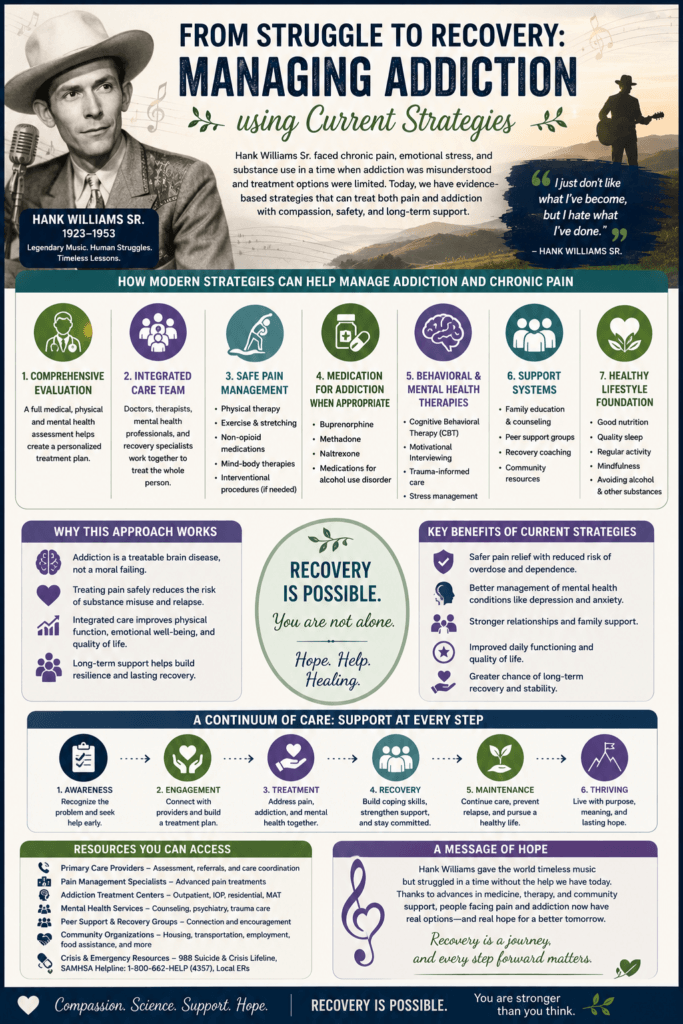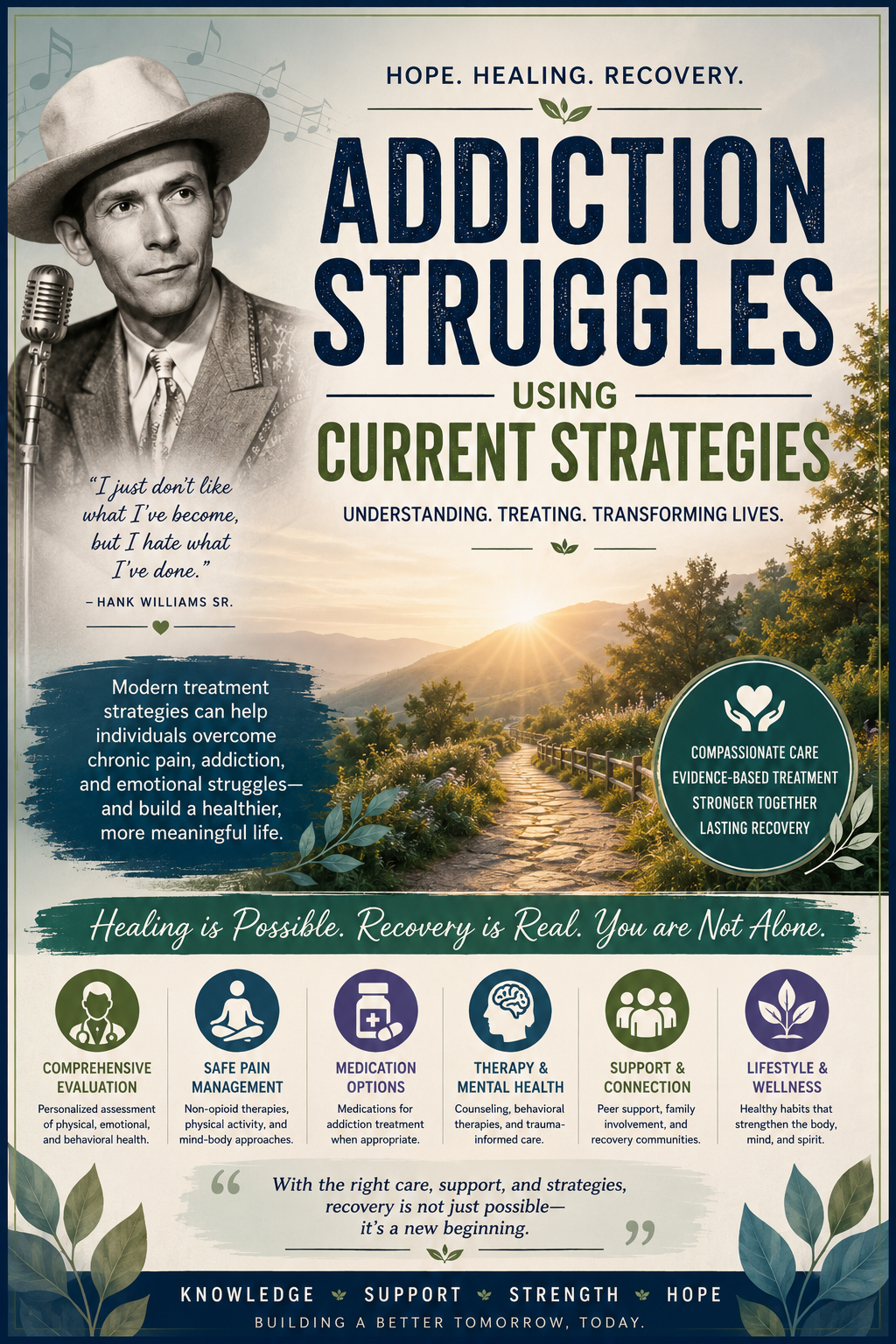
Hank Williams Sr.’s life is remembered not only for his extraordinary contributions to country music but also for his struggles with chronic pain, alcohol misuse, and dependence on prescription pain medications. During his lifetime, addiction was poorly understood, and treatment options were limited compared to the evidence-based approaches available today. Modern healthcare recognizes that chronic pain, mental health conditions, and substance use disorders often occur together and should be treated through an integrated, patient-centered approach. By examining how Hank Williams’ addiction struggles might be managed using current treatment strategies, we gain valuable insight into the importance of comprehensive pain management, medication-assisted treatment when appropriate, behavioral therapy, mental health care, family involvement, and long-term recovery support. His story serves as an opportunity to better understand how advances in addiction medicine can improve health outcomes and offer hope to individuals facing similar challenges.
Hank Williams Sr.’s Addiction Struggles
Hank Williams is widely regarded as one of the most influential figures in country music. Despite his extraordinary talent and lasting musical legacy, he struggled with severe alcohol misuse and dependence on prescription pain medications during the final years of his life. His story illustrates the complex relationship between chronic pain, mental and emotional stress, substance use, and the limited addiction treatment options available during the early 1950s.
Living with Chronic Pain
One of the major contributors to Hank Williams’ addiction was lifelong chronic back pain. He was born with spina bifida occulta, a congenital spinal condition that was associated with recurring back pain throughout much of his life. The demands of constant touring, long hours of travel, and physically demanding performances often worsened his symptoms. In 1951, a fall during a hunting trip further aggravated his spinal condition, eventually leading to spinal surgery later that year. Unfortunately, the surgery did not completely relieve his pain, and he increasingly relied on prescription pain medications in addition to alcohol.
Alcohol and Prescription Drug Dependence
As Williams’ pain intensified, so did his use of alcohol and prescribed medications, including morphine and other painkillers commonly used at the time. Although these medications were intended to manage severe pain, repeated use—combined with heavy alcohol consumption—contributed to physical dependence and worsening health. Today, healthcare providers recognize that combining opioids with alcohol substantially increases the risk of respiratory depression, overdose, and other serious complications.
Career Pressures and Personal Challenges
Williams also faced enormous professional and personal stress. As his popularity grew, so did the pressures of recording, touring, and maintaining public success. His marriage to Audrey Williams became increasingly strained, and his alcohol misuse affected his relationships and reliability. Missed performances, canceled shows, and unpredictable behavior eventually damaged his reputation despite his remarkable songwriting abilities.
Decline of His Career
By 1952, Williams’ addiction had significantly affected his professional life. He missed scheduled performances, frequently appeared intoxicated, and became increasingly difficult to manage. Because of repeated absences and alcohol-related problems, he was dismissed from the Grand Ole Opry in August 1952. Although he continued to perform elsewhere and remained a popular recording artist, his health declined.
Death at a Young Age
On January 1, 1953, Hank Williams died at only 29 years old while traveling to a scheduled concert. Historical accounts indicate that his death occurred in the setting of severe health problems and the combined effects of alcohol and prescription medications used to manage his chronic pain, although the exact medical circumstances have been debated over the years. His death highlighted the dangers of untreated substance use disorders and inadequate pain management.
Lessons from Hank Williams’ Story
Although addiction treatment was far less developed during Williams’ lifetime, his experience offers important lessons that remain relevant today:
- Chronic pain and addiction often occur together and require comprehensive treatment.
- Alcohol and prescription opioids can be especially dangerous when used together.
- Untreated mental health challenges, chronic pain, and ongoing stress can increase the risk of substance misuse.
- Early intervention and evidence-based addiction treatment can improve outcomes.
- Recovery is possible when individuals receive coordinated care that addresses both physical pain and substance use disorders.
Legacy
Despite his brief life, Hank Williams transformed country music with timeless songs such as “Your Cheatin’ Heart,” “I’m So Lonesome I Could Cry,” and “Hey, Good Lookin’.” His personal struggles also serve as a reminder that addiction can affect anyone, regardless of talent, success, or fame. Today, his story is often discussed as an example of the importance of compassionate, integrated care for chronic pain, mental health conditions, and substance use disorders.
Self-Management Strategies to Understand How Chronic Pain and Addiction Can Be Treated
Managing chronic pain and addiction at the same time can be challenging because each condition often affects the other. Chronic pain may increase the risk of substance misuse, while addiction can worsen physical health, emotional well-being, and quality of life. Effective treatment addresses both conditions together through a combination of medical care, behavioral therapies, healthy lifestyle changes, and ongoing recovery support. The following self-management strategies can help individuals better understand and actively participate in their treatment and recovery.
1. Learn About the Connection Between Pain and Addiction
Understanding that chronic pain and addiction frequently occur together can reduce self-blame and encourage treatment. Chronic pain affects the brain’s pain pathways, while addiction alters the brain’s reward system. Recognizing this relationship helps individuals appreciate why comprehensive treatment is necessary.
2. Follow Your Healthcare Provider’s Treatment Plan
Work closely with healthcare providers and follow prescribed treatment recommendations. Attend medical appointments, take medications exactly as directed, and discuss any concerns about pain control, side effects, or cravings before making changes to your treatment plan.
3. Use Non-Opioid Pain Management Techniques
Many effective treatments can reduce pain without relying solely on opioid medications. These may include:
- Physical therapy
- Exercise programs
- Stretching and strengthening exercises
- Heat and cold therapy
- Massage therapy
- Acupuncture
- Occupational therapy
- Transcutaneous electrical nerve stimulation (TENS), when recommended
4. Practice Healthy Coping Skills
Pain and addiction can both create emotional distress. Develop healthier ways to cope by practicing:
- Deep breathing exercises
- Progressive muscle relaxation
- Mindfulness meditation
- Guided imagery
- Journaling
- Listening to calming music
- Engaging in enjoyable hobbies
These strategies may reduce stress and improve pain tolerance.
5. Stay Physically Active
Regular physical activity can improve flexibility, strength, mood, and overall function. Low-impact exercises such as walking, swimming, yoga, or cycling may reduce pain over time while also supporting recovery. Always consult your healthcare provider before beginning a new exercise program.
6. Prioritize Good Sleep
Poor sleep can worsen both chronic pain and addiction recovery. Establish healthy sleep habits by:
- Maintaining a consistent bedtime
- Limiting caffeine late in the day
- Avoiding screen time before bed
- Creating a quiet, comfortable sleep environment
- Discussing persistent sleep problems with your healthcare provider
7. Address Mental Health
Depression, anxiety, trauma, and chronic stress commonly occur alongside chronic pain and addiction. Counseling, cognitive behavioral therapy (CBT), support groups, and other evidence-based treatments can improve emotional well-being and strengthen recovery.
8. Identify Personal Triggers
Keep a journal to identify situations that increase pain, cravings, or emotional distress. Common triggers include:
- Stress
- Fatigue
- Isolation
- Conflict
- Negative emotions
- Physical overexertion
- Uncontrolled pain
Recognizing triggers allows you to develop healthier coping strategies.
9. Build a Strong Support System
Recovery is easier when you are supported by others. Stay connected with:
- Family members
- Trusted friends
- Recovery support groups
- Peer recovery coaches
- Healthcare providers
- Mental health professionals
Accepting support can reduce isolation and improve motivation.
10. Take Medications Safely
If medications are prescribed, use them exactly as directed. Never increase doses without medical guidance, avoid sharing medications, and store them securely. Inform all healthcare providers about every medication you are taking to reduce the risk of dangerous drug interactions.
11. Develop a Relapse Prevention Plan
Prepare for difficult situations before they occur. Your plan should include:
- Personal warning signs
- Healthy coping strategies
- Emergency contacts
- Support group meetings
- Crisis resources
- Steps to take if cravings become overwhelming
Having a written plan increases confidence and preparedness.
12. Maintain a Healthy Lifestyle
Healthy daily habits support both pain management and recovery:
- Eat a balanced, nutritious diet.
- Stay hydrated.
- Exercise regularly.
- Avoid alcohol and illicit drugs.
- Quit smoking or vaping if possible.
- Schedule time for relaxation and enjoyable activities.
Small lifestyle improvements can significantly enhance overall health.
13. Be Patient With Recovery
Both chronic pain management and addiction recovery take time. There may be setbacks, but progress often occurs gradually. Focus on improving daily function, reducing pain, strengthening coping skills, and maintaining recovery rather than expecting immediate perfection.
14. Continue Learning About Your Conditions
Educate yourself about chronic pain, addiction, treatment options, and recovery strategies. Reliable information helps you make informed decisions and become an active participant in your healthcare.
15. Celebrate Progress
Recognize and celebrate achievements, whether they involve improved pain control, attending therapy sessions, remaining substance-free, exercising regularly, or reaching personal recovery goals. Celebrating progress builds confidence and reinforces long-term success.
Key Takeaway
Successfully treating chronic pain and addiction requires an integrated, whole-person approach that addresses physical symptoms, emotional health, and lifestyle factors together. Self-management strategies—such as following a treatment plan, using healthy coping skills, staying physically active, practicing safe medication use, building a support network, and maintaining hope—can improve quality of life and support lasting recovery. With comprehensive care and ongoing commitment, individuals can effectively manage pain, reduce the risk of relapse, and lead healthier, more fulfilling lives.
Family Support Strategies to Understand How Chronic Pain and Addiction Can Be Treated
Chronic pain and addiction often affect the entire family, not just the individual receiving treatment. Family members may struggle to understand why pain persists despite treatment or why a loved one has difficulty controlling substance use. Learning about both conditions can reduce frustration, improve communication, and create a supportive environment that promotes healing. Families play an important role in encouraging treatment participation, reinforcing healthy behaviors, and providing emotional support while respecting appropriate boundaries.
1. Learn About Chronic Pain and Addiction
Educate yourself about both chronic pain and substance use disorders. Understand that chronic pain is a complex medical condition and that addiction is a chronic, treatable brain disease—not a sign of weakness or lack of willpower. Increased knowledge helps families respond with compassion rather than judgment.
2. Encourage Comprehensive Treatment
Support your loved one in participating in a treatment plan that addresses both chronic pain and addiction simultaneously. Integrated care may include medical management, counseling, physical therapy, behavioral therapies, medication-assisted treatment when appropriate, and recovery support services.
3. Promote Open and Respectful Communication
Create a safe environment where your loved one feels comfortable discussing pain levels, emotional struggles, treatment progress, and recovery challenges. Listen without interrupting, avoid blaming language, and encourage honest conversations built on trust and empathy.
4. Support Safe Medication Practices
Help reinforce safe medication use by encouraging your loved one to:
- Take medications exactly as prescribed.
- Never mix medications with alcohol or illicit drugs.
- Store medications securely.
- Dispose of unused medications properly.
- Communicate openly with healthcare providers about pain control and side effects.
Avoid taking responsibility for managing medications unless specifically recommended by healthcare professionals.
5. Encourage Healthy Pain Management Strategies
Support non-drug approaches that may improve pain and recovery, including:
- Physical therapy exercises
- Gentle physical activity
- Stretching
- Mindfulness and meditation
- Relaxation techniques
- Healthy nutrition
- Adequate sleep
- Stress management
Participating in healthy activities together can strengthen motivation and relationships.
6. Help Identify Triggers
Work together to recognize situations that may worsen pain or increase the risk of substance use. Common triggers include stress, emotional conflict, fatigue, isolation, financial concerns, or uncontrolled pain. Planning ahead can help reduce the risk of relapse.
7. Set Healthy Boundaries
Supporting recovery does not mean removing all consequences of unhealthy behaviors. Establish clear, respectful boundaries regarding finances, medication access, household responsibilities, and substance use. Healthy boundaries protect both the individual and the family.
8. Encourage Mental Health Care
Chronic pain and addiction often occur alongside depression, anxiety, trauma, or other mental health conditions. Encourage participation in counseling, psychotherapy, support groups, or psychiatric care when recommended. Treating mental health concerns can improve both pain management and recovery outcomes.
9. Celebrate Progress Rather Than Perfection
Recovery and pain management often involve gradual improvement. Recognize milestones such as attending appointments, completing physical therapy sessions, maintaining sobriety, improving daily functioning, or developing healthier coping skills. Positive reinforcement helps build confidence and resilience.
10. Participate in Family Therapy
Family counseling can improve communication, resolve conflicts, strengthen relationships, and educate everyone about addiction and chronic pain. It also provides practical strategies for supporting recovery while maintaining healthy family dynamics.
11. Take Care of Yourself
Supporting someone with chronic pain and addiction can be emotionally and physically exhausting. Family members should:
- Maintain their own medical care.
- Exercise regularly.
- Get adequate sleep.
- Eat nutritious meals.
- Spend time with supportive friends.
- Seek counseling if needed.
- Participate in family support groups.
Self-care improves resilience and allows family members to provide healthier support.
12. Prepare for Setbacks
Recovery is rarely a straight path. Pain flare-ups, emotional struggles, or relapse may occur during treatment. Rather than responding with anger or hopelessness, encourage your loved one to reconnect with healthcare providers, adjust the treatment plan if needed, and continue moving forward.
13. Encourage Long-Term Recovery Support
Support ongoing participation in recovery programs, peer support groups, follow-up medical care, pain management appointments, and wellness activities. Long-term support helps maintain both pain control and sustained recovery.
14. Reduce Stigma Within the Family
Avoid labeling your loved one as “weak,” “lazy,” or “an addict.” Use respectful, person-first language such as “a person with chronic pain” or “a person with a substance use disorder.” Reducing stigma fosters trust and encourages continued treatment.
15. Maintain Hope
Many individuals successfully manage chronic pain while achieving long-term recovery from addiction. Families who remain supportive, informed, patient, and hopeful can make a meaningful difference in their loved one’s healing journey.
Key Takeaway
Families are essential partners in the treatment of chronic pain and addiction. By learning about both conditions, encouraging integrated medical and behavioral healthcare, promoting healthy coping strategies, supporting safe medication use, setting healthy boundaries, and practicing compassionate communication, families can create a strong foundation for recovery. Combined with self-care and ongoing education, family support can improve treatment outcomes, strengthen relationships, reduce the risk of relapse, and help individuals build healthier, more fulfilling lives.
Community Resource Strategies to Understand How Chronic Pain and Addiction Can Be Treated
Chronic pain and addiction are complex health conditions that often occur together and require comprehensive, coordinated care. Many individuals living with chronic pain may develop substance use disorders, while others with addiction experience ongoing pain that complicates recovery. Community resources provide education, medical care, behavioral health services, peer support, and social assistance that help individuals and families manage both conditions safely and effectively. Understanding and utilizing these resources can improve treatment outcomes and promote long-term recovery.
1. Connect With Primary Healthcare Providers
Primary care providers are often the first point of contact for individuals experiencing chronic pain or concerns about substance use. They can perform evaluations, coordinate care, monitor medications, and refer patients to pain specialists, addiction medicine providers, mental health professionals, or rehabilitation services when needed.
2. Utilize Comprehensive Pain Management Clinics
Pain management clinics offer multidisciplinary care that may include physicians, physical therapists, psychologists, occupational therapists, and other specialists. These clinics focus on improving function and quality of life through individualized treatment plans that often emphasize non-opioid pain management strategies.
3. Access Addiction Treatment Programs
Community addiction treatment programs provide evidence-based care for substance use disorders. Services may include:
- Outpatient treatment
- Intensive outpatient programs (IOP)
- Residential treatment
- Medication-assisted treatment (MAT)
- Individual and group counseling
- Relapse prevention planning
- Recovery coaching
Integrated treatment that addresses both chronic pain and addiction often leads to better outcomes.
4. Participate in Mental Health Services
Depression, anxiety, post-traumatic stress disorder (PTSD), and other mental health conditions frequently accompany chronic pain and addiction. Community mental health centers offer counseling, psychotherapy, psychiatric care, crisis intervention, and medication management that support emotional well-being and recovery.
5. Utilize Physical and Occupational Therapy
Physical and occupational therapists help individuals improve mobility, strength, flexibility, and daily functioning while reducing pain. These therapies may decrease reliance on opioid medications and improve independence through personalized exercise and rehabilitation programs.
6. Join Peer Support Groups
Peer support groups provide encouragement, shared experiences, and practical coping strategies. Individuals recovering from addiction or living with chronic pain often benefit from connecting with others who understand their challenges. Peer recovery coaches and mutual support groups can help reduce isolation and strengthen long-term recovery.
7. Explore Community Wellness Programs
Many communities offer wellness programs that promote healthy living and pain management, including:
- Yoga
- Tai Chi
- Swimming
- Walking clubs
- Mindfulness classes
- Meditation groups
- Nutrition education
- Stress management workshops
These programs can improve both physical and emotional health.
8. Learn About Safe Medication Practices
Community pharmacies, healthcare organizations, and public health agencies provide education on:
- Safe opioid use
- Medication storage
- Proper disposal of unused medications
- Drug interaction risks
- Naloxone availability
- Overdose prevention
These educational resources help reduce medication-related harm.
9. Access Social Support Services
Social workers and community organizations assist individuals facing challenges such as housing instability, transportation difficulties, unemployment, financial stress, or food insecurity. Addressing these social needs can improve treatment participation and recovery success.
10. Participate in Family Education Programs
Many hospitals, treatment centers, and community organizations offer educational programs for families affected by chronic pain and addiction. These programs teach communication skills, healthy boundaries, relapse prevention, and ways to provide effective support while maintaining family well-being.
11. Utilize Telehealth Services
Telehealth has expanded access to healthcare by allowing individuals to receive medical consultations, behavioral therapy, medication follow-up, pain management visits, and recovery counseling from home. This is especially beneficial for people living in rural or underserved areas.
12. Engage in Community Education and Prevention Programs
Community organizations, schools, and public health departments often provide educational workshops about chronic pain, opioid safety, addiction prevention, and mental health awareness. These programs help reduce stigma and encourage early intervention.
13. Advocate for Integrated Care
Support healthcare systems and community organizations that coordinate treatment for chronic pain, addiction, and mental health conditions. Integrated care improves communication among providers and helps ensure that all aspects of a person’s health are addressed together.
14. Know Emergency Resources
Individuals and families should know how to access emergency services during a crisis. Resources include emergency departments, crisis intervention services, poison centers, naloxone distribution programs, and emergency medical services. Early intervention during overdose or severe withdrawal can save lives.
15. Promote Recovery-Friendly Communities
Communities can support recovery by encouraging recovery-friendly workplaces, expanding access to treatment, reducing stigma, supporting prevention initiatives, and increasing public awareness about chronic pain and addiction. Compassionate communities help individuals seek treatment earlier and remain engaged in recovery.
Key Takeaway
Successfully treating chronic pain and addiction requires collaboration among healthcare providers, behavioral health professionals, families, peer support networks, and community organizations. By utilizing pain management services, addiction treatment programs, mental health care, rehabilitation therapies, wellness programs, social support services, and educational resources, individuals can receive comprehensive care that addresses both conditions simultaneously. Strong community support promotes safer pain management, reduces the risk of relapse, improves overall quality of life, and helps individuals achieve lasting recovery and greater independence.
How Hank Williams Sr.’s Addiction Struggles Could Be Managed Using Today’s Treatment Strategies
Hank Williams Sr.’s life illustrates how chronic pain, substance use, emotional stress, and demanding work schedules can interact to create a complex health crisis. During the early 1950s, addiction was often viewed as a personal failing rather than a treatable medical condition, and many of today’s evidence-based treatments were not yet available. If Hank Williams were living today, modern medicine would likely approach his care with a comprehensive, multidisciplinary treatment plan that addresses both his chronic pain and substance use disorder simultaneously.
Comprehensive Medical Evaluation
Treatment would begin with a thorough evaluation by healthcare professionals specializing in pain management, addiction medicine, and mental health. Providers would assess his spinal condition, pain severity, substance use history, mental health, physical functioning, and social circumstances. This comprehensive assessment would help create an individualized treatment plan.
Integrated Treatment for Chronic Pain and Addiction
Rather than treating pain and addiction separately, current best practices emphasize integrated care. A multidisciplinary team—including physicians, addiction specialists, psychologists, physical therapists, and social workers—would work together to address all aspects of his health. Coordinated care helps improve pain control while reducing the risk of relapse.
Safer Pain Management
Because Hank Williams experienced chronic back pain related to a congenital spinal condition and later injury, today’s treatment would prioritize safer pain management strategies, such as:
- Physical therapy
- Occupational therapy
- Exercise and stretching programs
- Cognitive behavioral therapy (CBT) for pain
- Non-opioid medications when appropriate
- Interventional pain procedures, if indicated
- Heat, cold, massage, acupuncture, or transcutaneous electrical nerve stimulation (TENS)
If opioid medications were considered necessary, they would be prescribed cautiously with close monitoring, regular reassessment, and clear safety plans.
Medication for Substance Use Disorder
If Williams developed opioid use disorder today, medication for opioid use disorder (MOUD) could significantly improve outcomes. Depending on his individual needs, treatment might include:
- Buprenorphine to reduce cravings and withdrawal symptoms while lowering overdose risk.
- Methadone through a structured opioid treatment program for individuals with more severe opioid use disorder.
- Extended-release naltrexone after detoxification for appropriate candidates who wish to remain opioid-free.
If alcohol use disorder were also present, medications such as naltrexone, acamprosate, or disulfiram might be considered alongside counseling and medical supervision.
Behavioral Therapies
Evidence-based counseling would play a central role in recovery. Treatment could include:
- Cognitive behavioral therapy (CBT)
- Motivational interviewing
- Relapse prevention therapy
- Trauma-informed care if needed
- Stress management training
- Mindfulness-based interventions
These therapies help individuals develop healthier coping skills, manage cravings, and respond to stress without relying on alcohol or drugs.
Mental Health Assessment
Living with chronic pain, constant touring, public expectations, and personal relationship difficulties may have contributed to emotional distress. Today, Williams would likely be screened for depression, anxiety, trauma-related conditions, and other mental health disorders. Treating co-occurring mental health conditions improves both pain management and addiction recovery.
Lifestyle and Wellness Support
Recovery would also emphasize healthy daily habits that support both physical and emotional well-being, including:
- Regular exercise tailored to his abilities
- Healthy nutrition
- Good sleep hygiene
- Stress reduction techniques
- Mindfulness and relaxation exercises
- Smoking cessation if applicable
- Structured daily routines
These lifestyle changes help improve resilience and reduce the risk of relapse.
Family Involvement
Modern addiction treatment recognizes the importance of family support. Family education and counseling could help loved ones understand addiction as a medical condition, improve communication, establish healthy boundaries, and participate in long-term recovery planning.
Peer Recovery Support
Williams would likely benefit from peer support through recovery groups, peer recovery coaches, or other community-based recovery services. Connecting with others who have experienced similar challenges can reduce isolation and strengthen motivation for long-term recovery.
Ongoing Monitoring and Relapse Prevention
Recovery would not end after initial treatment. Long-term follow-up might include:
- Regular medical appointments
- Medication management
- Counseling sessions
- Recovery support groups
- Pain management follow-up
- Routine screening for relapse risk
- Adjustments to the treatment plan as needed
Addiction is considered a chronic condition, and continued support improves long-term outcomes.
Lessons for Today
Hank Williams’ story reminds us that chronic pain and addiction often occur together and require compassionate, comprehensive care. His struggles also highlight the importance of recognizing addiction as a treatable medical condition rather than a moral failing. While no one can know exactly how his life would have unfolded with today’s treatments, modern evidence-based strategies offer significantly more options for managing chronic pain safely, treating substance use disorders, supporting mental health, and helping individuals maintain long-term recovery.
Key Takeaway
If Hank Williams Sr. were treated today, his care would likely involve integrated pain management, medication for substance use disorder when appropriate, behavioral therapy, mental health treatment, family involvement, peer recovery support, and ongoing medical follow-up. Although recovery outcomes can never be guaranteed, today’s comprehensive treatment approaches provide far greater opportunities to manage chronic pain safely, reduce substance-related harm, improve quality of life, and support lasting recovery.
Frequently Asked Questions
Here are some common questions:
1. Who was Hank Williams Sr.?
Answer:
Hank Williams was one of the most influential country music artists of all time. He was known for timeless songs such as Your Cheatin’ Heart, I’m So Lonesome I Could Cry, and Hey, Good Lookin’. Despite his success, he struggled with chronic pain, alcohol misuse, and dependence on prescription pain medications.
2. What contributed to Hank Williams’ addiction?
Answer:
Several factors likely contributed to his substance use, including:
- Chronic back pain from spina bifida occulta
- Injuries that worsened his pain
- Long touring schedules
- Physical exhaustion
- Emotional stress
- Limited addiction treatment options during the 1950s
These factors increased his reliance on alcohol and prescription pain medications.
3. Could Hank Williams have been treated differently today?
Answer:
Yes. Modern healthcare recognizes addiction as a treatable medical condition. Today, he would likely receive comprehensive care involving addiction medicine, pain management, mental health services, physical therapy, and long-term recovery support.
4. How would chronic pain be managed today?
Answer:
Current pain management often uses multiple approaches rather than relying only on opioids. Treatment may include:
- Physical therapy
- Exercise programs
- Non-opioid medications
- Cognitive Behavioral Therapy (CBT)
- Heat and cold therapy
- Acupuncture
- Massage therapy
- Interventional pain procedures when appropriate
The goal is to improve function while minimizing the risk of medication dependence.
5. What medications are available today for opioid addiction?
Answer:
Several FDA-approved medications help treat opioid use disorder:
- Buprenorphine
- Methadone
- Extended-release naltrexone
These medications reduce cravings, relieve withdrawal symptoms, and lower the risk of overdose when combined with counseling and recovery support.
6. How would alcohol use disorder be treated today?
Answer:
Treatment may include:
- Medically supervised detoxification (when needed)
- Individual counseling
- Cognitive Behavioral Therapy (CBT)
- Support groups
- Medications such as naltrexone or acamprosate for appropriate patients
- Long-term relapse prevention planning
7. Why is mental health treatment important?
Answer:
Chronic pain and addiction often occur alongside depression, anxiety, trauma, or chronic stress. Modern treatment addresses these conditions together because improving mental health can strengthen recovery and reduce relapse risk.
8. Would family members be involved in treatment?
Answer:
Yes. Family education and counseling are important parts of modern addiction treatment. Families learn how to:
- Support recovery
- Improve communication
- Set healthy boundaries
- Recognize relapse warning signs
- Encourage long-term treatment participation
9. What role does physical therapy play?
Answer:
Physical therapy helps reduce pain, improve flexibility and strength, restore mobility, and increase daily function. It can decrease dependence on pain medications and improve overall quality of life.
10. Could peer support have helped Hank Williams?
Answer:
Possibly. Peer recovery groups and recovery coaches provide encouragement, accountability, shared experiences, and emotional support. These resources help many individuals maintain long-term recovery.
11. How is relapse viewed today?
Answer:
Relapse is not considered a personal failure. Addiction is a chronic medical condition, and relapse may indicate that treatment needs to be adjusted or additional support is needed. Recovery is often a long-term process with periods of progress and setbacks.
12. How would healthcare providers monitor someone like Hank Williams today?
Answer:
A multidisciplinary healthcare team would likely monitor:
- Pain levels
- Medication use
- Mental health
- Liver and kidney function
- Physical activity
- Sleep quality
- Nutrition
- Recovery progress
Regular follow-up appointments help identify problems early and improve treatment outcomes.
13. What healthy lifestyle changes would support recovery?
Answer:
Helpful lifestyle strategies include:
- Regular physical activity
- Heart-healthy nutrition
- Adequate sleep
- Stress management
- Mindfulness or meditation
- Avoiding alcohol and illicit drugs
- Maintaining social support
- Following medical recommendations
These habits improve both physical and emotional health.
14. What is the biggest lesson from Hank Williams’ story?
Answer:
His story demonstrates that chronic pain and addiction often occur together and require compassionate, evidence-based treatment. It also shows the importance of recognizing addiction early, providing comprehensive medical care, and addressing physical, emotional, and social needs together.
15. What message should people remember today?
Answer:
Hank Williams Sr.’s remarkable musical legacy continues to inspire millions, while his personal struggles remind us that addiction can affect anyone. Today’s evidence-based treatments—including integrated pain management, medications for substance use disorders, behavioral therapy, mental health care, family involvement, and peer recovery support—offer hope for recovery and a healthier future. Seeking help early can improve quality of life, reduce complications, and support individuals in building lasting recovery.
Conclusion
Although Hank Williams Sr.’s life ended tragically at a young age, his experiences highlight the progress that has been made in the understanding and treatment of chronic pain and addiction. Today, integrated care combines medical treatment, non-opioid pain management, behavioral therapies, medication for substance use disorders when indicated, mental health services, peer recovery support, and family involvement to address the whole person rather than a single condition. While no treatment can guarantee recovery, these comprehensive strategies significantly improve the chances of managing chronic pain safely, reducing substance-related harm, and achieving long-term recovery. Hank Williams’ legacy reminds us that addiction is a treatable medical condition, that compassionate and evidence-based care can change lives, and that continued advances in healthcare provide greater hope for individuals and families affected by chronic pain and substance use disorders.
Video: His Legacy Teaches Us About Hidden Addiction #countrymusic #trueStory #help