A night out with friends, a celebration, or a few drinks at dinner can sometimes be followed by an unpleasant morning of headache, nausea, fatigue, thirst, dizziness, stomach irritation, and difficulty concentrating. These symptoms are commonly known as a hangover.
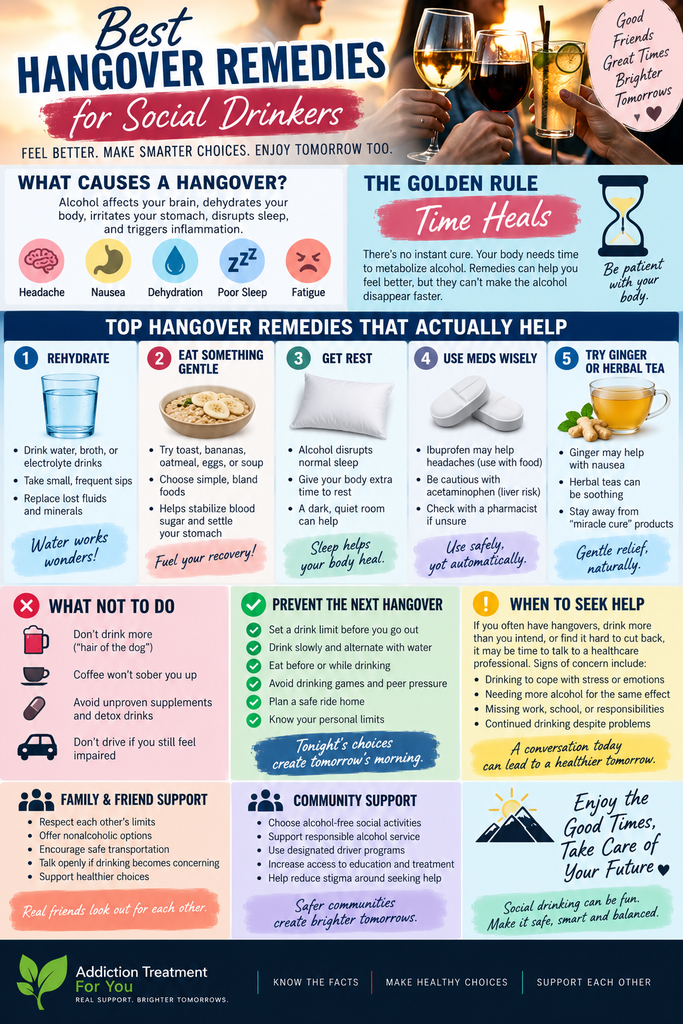
Although countless products promise an instant hangover cure, there is no scientifically proven remedy that rapidly reverses all the effects of alcohol. The most reliable treatment is time, while hydration, food, sleep, and symptom management may help you feel more comfortable as your body recovers.
Understanding why hangovers happen can also encourage safer decisions before the next social occasion.
Why Does Alcohol Cause a Hangover?
Alcohol affects several systems throughout the body. It increases urination, can interfere with sleep, irritates the stomach, influences blood vessels and inflammatory responses, and is metabolized into substances including acetaldehyde before ultimately being broken down further.
A hangover may therefore involve more than dehydration alone.
Common symptoms include:
- Headache
- Fatigue and weakness
- Thirst and dry mouth
- Nausea or stomach discomfort
- Dizziness
- Sensitivity to light or sound
- Difficulty concentrating
- Irritability or anxiety
- Poor-quality sleep
- Rapid heartbeat in some people
Symptoms typically improve as the body finishes processing alcohol and returns toward its usual balance.
1. Give Your Body Time
The most important hangover remedy is also the least exciting: time.
Coffee, cold showers, exercise, supplements, and special drinks cannot make the liver instantly eliminate alcohol. Your body needs time to metabolize it and recover from its effects.
If you still feel impaired the next morning, do not drive or perform activities requiring good judgment and coordination.
2. Rehydrate Gradually
Alcohol can contribute to fluid loss, so drinking water may help with thirst and dehydration-related symptoms.
Try:
- Water
- Oral rehydration fluids when significant fluid loss has occurred
- Broth or soup
- Small, frequent sips if nausea makes drinking difficult
Sports drinks may replace some electrolytes, but they are not a cure for alcohol’s other effects.
One useful strategy is to drink water throughout an evening rather than waiting until the next morning.
3. Eat Something Gentle
Alcohol can irritate the stomach, and a heavy meal may make nausea worse. If you can tolerate food, choose something relatively simple.
Options may include:
- Toast
- Crackers
- Bananas
- Oatmeal
- Eggs
- Rice
- Soup
- Fruit
Food will not instantly eliminate alcohol from your bloodstream, but nutrition can help restore energy while you recover.
4. Prioritize Sleep and Rest
Alcohol may make people sleepy initially, but it can disrupt normal sleep architecture and contribute to waking during the night.
That means eight hours in bed after drinking does not necessarily provide eight hours of restorative sleep.
Allow yourself additional rest when possible. Avoid using more alcohol, sedatives, or unprescribed sleep medications to force yourself to sleep.
5. Be Careful With Pain Relievers
Medication deserves special caution after drinking.
Acetaminophen is metabolized by the liver, and combining it with significant alcohol exposure may increase the risk of liver injury in certain circumstances. NSAIDs such as ibuprofen or naproxen can irritate the stomach and may increase gastrointestinal or kidney risks, particularly when someone is dehydrated or has relevant medical conditions.
Rather than automatically reaching for medication, read the label, consider your medical history and other medications, and ask a pharmacist or healthcare professional when uncertain.
6. Skip the “Hair of the Dog”
Drinking more alcohol the next morning may temporarily change how someone feels, but it does not cure the underlying hangover.
More importantly, repeatedly using alcohol to relieve withdrawal-like symptoms can be a warning sign of alcohol dependence.
The healthier response is to stop drinking, hydrate, eat if tolerated, rest, and allow the body to recover.
7. Coffee Is Not a Sobering-Up Treatment
Coffee may make someone feel more awake, but feeling more alert does not mean alcohol has left the bloodstream.
Caffeine does not accelerate alcohol metabolism enough to make an intoxicated person safe to drive.
If you normally drink coffee, a modest amount may help prevent a caffeine-withdrawal headache, but excessive caffeine can worsen jitteriness, anxiety, stomach discomfort, or sleep problems.
8. Avoid the “Miracle Hangover Cure” Trap
Supplements, detox drinks, IV services, herbal products, vitamins, and other commercial remedies are frequently marketed as hangover cures.
Be skeptical of dramatic claims.
No product can simply flush alcohol out of the body or undo all its physiological effects. Some supplements may also interact with medications or contain ingredients that have not been adequately studied.
Self-Management: Preventing the Next Hangover
The best approach to hangovers is reducing the chance of developing one in the first place.
Helpful self-management strategies include:
- Decide how much you intend to drink before going out.
- Drink slowly rather than consuming several drinks rapidly.
- Eat before or while drinking.
- Alternate alcoholic drinks with water or other nonalcoholic beverages.
- Avoid drinking games and pressure to keep pace with others.
- Keep track of standard drinks rather than judging consumption by the number of glasses.
- Plan transportation before drinking.
- Avoid combining alcohol with medications or other substances that can cause dangerous interactions.
- Schedule alcohol-free social activities.
- Notice whether drinking is becoming your primary way of coping with stress, anxiety, loneliness, or sleep problems.
Some people should avoid alcohol entirely, including people who are pregnant, taking certain interacting medications, recovering from alcohol use disorder, or managing medical conditions for which alcohol is unsafe.
Family and Friend Support Strategies
Friends and relatives can make social environments safer without becoming controlling.
Supportive strategies include:
- Never pressure someone to drink.
- Make nonalcoholic beverages readily available.
- Respect someone’s decision to stop after one drink—or not drink at all.
- Arrange designated drivers or other safe transportation.
- Do not encourage someone to “drink through” a hangover.
- Talk privately and respectfully if someone’s drinking pattern becomes concerning.
- Encourage medical or behavioral-health support when alcohol begins causing repeated problems.
A social gathering does not need alcohol to be successful, and choosing not to drink should never require an explanation.
Community Support Strategies
Communities also influence drinking behavior. Bars, restaurants, workplaces, colleges, healthcare organizations, and social groups can help reduce alcohol-related harm.
Community strategies may include:
- Providing appealing alcohol-free beverage choices.
- Supporting designated-driver programs and safe transportation.
- Educating people about standard drink sizes and alcohol-related risks.
- Training staff to recognize severe intoxication.
- Promoting responsible alcohol service.
- Providing screening and early intervention in healthcare settings.
- Increasing access to addiction and mental health treatment.
- Supporting peer recovery organizations and alcohol-free community activities.
These approaches shift the conversation from simply treating tomorrow’s hangover to preventing today’s alcohol-related harm.
When “Social Drinking” Deserves a Second Look
An occasional hangover does not automatically mean someone has alcohol use disorder. However, repeated hangovers can provide an opportunity to examine drinking patterns.
Consider speaking with a healthcare professional if you notice:
- Drinking more than you intended.
- Repeated unsuccessful attempts to cut back.
- Needing increasing amounts of alcohol to achieve the same effect.
- Drinking to manage anxiety, sadness, stress, or sleep.
- Frequently forgetting events after drinking.
- Missing work, school, or responsibilities because of alcohol.
- Continuing to drink despite relationship or health problems.
- Regularly drinking alone or hiding alcohol consumption.
- Experiencing shaking, sweating, anxiety, nausea, or other symptoms when alcohol wears off.
- Needing a morning drink to feel normal.
These signs deserve more attention than simply finding a better hangover remedy.
When a Hangover Could Actually Be an Emergency
Not every person who appears to be “sleeping it off” is experiencing an ordinary hangover. Alcohol poisoning can be life-threatening.
Call emergency services when someone who has been drinking has severe confusion, repeated vomiting, seizures, difficulty remaining conscious, slow or irregular breathing, pale or bluish skin, or cannot be awakened normally.
Do not leave an unconscious intoxicated person alone and assume sleep will solve the problem.
The Best Hangover Remedy Starts Before Drinking
Water, food, rest, and time can make recovery from a hangover more manageable, but they cannot erase the effects of excessive alcohol consumption.
The bigger lesson is prevention. Drinking less, drinking more slowly, eating beforehand, staying hydrated, planning safe transportation, and recognizing personal limits can reduce alcohol-related harm.
And if hangovers become frequent, severe, or part of a pattern of losing control over alcohol, the question may need to change from “How do I cure my hangover?” to “What is my drinking trying to tell me?”
Both recovery and prevention begin with paying attention to the answer.
Frequently Asked Questions
Here are some common questions:
1. What is the best remedy for a hangover?
There is no instant cure for a hangover. Time is the main remedy because the body needs to recover from alcohol’s effects. Water, food, rest, and appropriate symptom management may help you feel more comfortable while recovering.
2. Does drinking water cure a hangover?
Water cannot cure a hangover, but it can help with thirst and dehydration. Drinking water during an evening of alcohol consumption and again afterward may help reduce dehydration-related discomfort.
3. Are electrolyte drinks better than water?
Electrolyte solutions may be useful when someone has lost significant fluids through vomiting or dehydration. For many mild hangovers, ordinary water and food are sufficient. Electrolytes do not make the liver metabolize alcohol faster.
4. What foods are best for a hangover?
If your stomach is sensitive, simple foods are often easier to tolerate. Options include:
- Bananas
- Toast or crackers
- Oatmeal
- Eggs
- Rice
- Soup or broth
- Fruit
Food may provide energy and nutrients, but no particular food can instantly eliminate a hangover.
5. Does coffee help a hangover?
Coffee may make you feel more awake, particularly if you normally consume caffeine, but coffee does not sober you up. Too much caffeine may also worsen anxiety, jitteriness, stomach irritation, or sleep problems.
6. Does a cold shower sober you up?
No. A cold shower may temporarily make someone feel more alert, but it does not accelerate alcohol metabolism or reduce blood alcohol concentration. Feeling awake should never be confused with being safe to drive.
7. Does “hair of the dog” cure a hangover?
No. Drinking alcohol the next morning may temporarily change symptoms, but it delays recovery and adds more alcohol for the body to process. Regularly needing alcohol in the morning to feel normal can also indicate alcohol dependence and deserves medical attention.
8. Can I take pain medication for a hangover headache?
Use caution. Acetaminophen can present liver concerns in the context of significant alcohol use, while NSAIDs such as ibuprofen and naproxen may irritate the stomach and pose additional risks for some people, particularly with dehydration or certain medical conditions. Check medication labels and ask a healthcare professional or pharmacist when uncertain.
9. Does vomiting get alcohol out of your system faster?
Usually not once alcohol has already been absorbed into the bloodstream. Intentionally inducing vomiting is not recommended and can increase the risks of dehydration, aspiration, and injury.
10. Can sleep cure a hangover?
Sleep does not instantly cure a hangover, but rest is helpful because alcohol can significantly disrupt normal sleep. Giving your body additional time to recover may improve fatigue and other symptoms.
11. Are hangover supplements and detox drinks effective?
Be skeptical of products promising rapid or guaranteed cures. Vitamins, herbal supplements, detox products, and commercial hangover preparations cannot instantly reverse alcohol’s effects. Supplements can also have side effects or interact with medications.
12. How can social drinkers prevent hangovers?
Reducing alcohol consumption is the most reliable strategy. Other harm-reduction approaches include:
- Eat before and while drinking.
- Drink alcohol slowly.
- Alternate alcoholic drinks with water or nonalcoholic beverages.
- Decide on a limit before going out.
- Avoid drinking games.
- Do not allow friends to pressure you into additional drinks.
- Arrange safe transportation in advance.
- Consider alcohol-free alternatives.
13. Is it safe to drive the morning after drinking?
Not necessarily. Alcohol may remain in your system the following morning depending on how much you consumed and how much time has passed. Coffee, food, sleep, and showers do not rapidly eliminate alcohol. If you may still be impaired, do not drive.
14. Why do I feel anxious after drinking?
Alcohol can affect sleep, stress responses, mood, and brain signaling. Some people experience increased anxiety, irritability, or low mood as alcohol wears off. Frequent or severe anxiety after drinking may be a reason to reduce alcohol consumption and discuss the symptoms with a healthcare professional.
15. Why are some hangovers worse than others?
Hangover severity can be influenced by the amount and speed of alcohol consumption, hydration, sleep, food intake, individual metabolism, medications, other substances, and personal health factors.
16. Does having frequent hangovers mean I have alcohol use disorder?
Not automatically. However, repeated hangovers may indicate risky drinking and are worth paying attention to. Warning signs include repeatedly drinking more than intended, difficulty cutting down, blackouts, neglecting responsibilities, continuing despite consequences, or needing alcohol to cope or feel normal.
17. How can family and friends support safer social drinking?
Friends and relatives can avoid pressuring others to drink, provide nonalcoholic options, arrange safe transportation, respect personal limits, and speak privately when someone’s drinking becomes concerning. Supporting someone does not mean covering up harmful alcohol-related behavior.
18. What community resources are available if drinking becomes a problem?
Resources can include primary care professionals, addiction medicine specialists, counselors, outpatient treatment programs, Alcoholics Anonymous, SMART Recovery, recovery community organizations, and family-support programs such as Al-Anon.
19. When is alcohol consumption an emergency rather than a hangover?
Seek emergency help if someone who has been drinking is difficult or impossible to awaken, has seizures, repeatedly vomits, has severe confusion, or has slow, irregular, or otherwise abnormal breathing. Suspected alcohol poisoning should never simply be treated as a hangover.
20. What is the most important hangover advice for social drinkers?
Focus on prevention rather than searching for a miracle cure. Drinking less, pacing alcohol consumption, eating, staying hydrated, respecting your limits, and planning safe transportation can reduce alcohol-related harm.
Video: Stop Doing This When You Have a Hangover #healthtips #mistakes #hangover