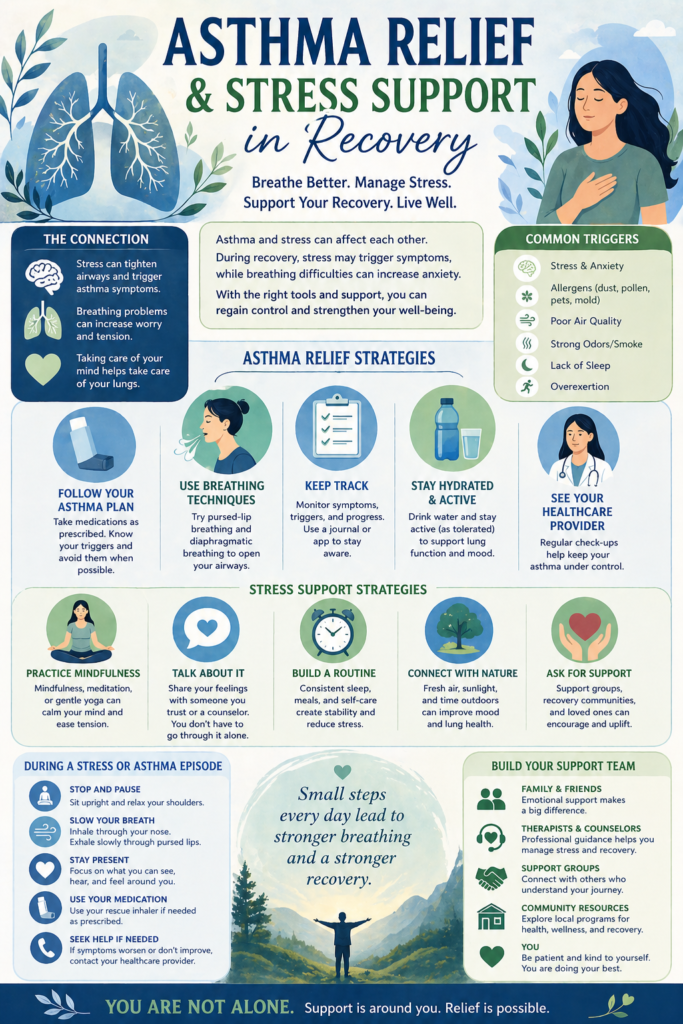
Asthma relief in recovery involves more than just managing physical symptoms—it requires understanding the powerful connection between breathing, stress, and emotional regulation. During recovery, the body and mind are often in a heightened state of sensitivity, making it easier for stress to trigger or intensify asthma symptoms. What might feel like purely physical breathlessness can also be influenced by anxiety, tension, and changes in breathing patterns. Recognizing this mind-body interaction is a key step toward gaining control, reducing fear, and creating a more stable and manageable experience of both asthma and recovery.
Breathing Through Recovery: Asthma Relief and Stress Support Strategies
Living with asthma can feel overwhelming on its own—but when combined with stress, especially during recovery, breathing can become even more challenging. Many people describe a tight, restricted feeling, as if they “can’t fully breathe in.” This sensation is not just physical; it’s often influenced by emotional and psychological factors as well.
In recovery—whether from substance use, chronic stress, or major life changes—your body and mind are recalibrating. Understanding how asthma and stress interact is essential for creating a sense of control, safety, and relief.
Understanding the Asthma–Stress Connection
Asthma is a chronic condition involving airway inflammation and narrowing, making breathing more difficult. However, stress can amplify symptoms by:
- Tightening the chest and breathing muscles
- Increasing sensitivity to airway irritation
- Triggering rapid, shallow breathing patterns
In recovery, the nervous system may already be heightened, making the body more reactive. This can intensify the sensation of breathlessness—even when oxygen levels are normal.
Why It Can Feel Like You “Can’t Breathe In”
Many people expect asthma to feel like they can’t breathe out, but stress-related breathing patterns can create the opposite sensation:
- Over-breathing (hyperventilation) reduces carbon dioxide levels
- This creates a feeling of air hunger or incomplete inhalation
- Chest tension reinforces the sensation
This cycle can feel alarming, but it is often manageable with the right strategies.
Asthma Relief Strategies in Recovery
1. Follow Your Medical Plan Consistently
- Use prescribed inhalers or medications as directed
- Track triggers (allergens, cold air, exercise, stress)
- Stay in regular contact with a healthcare provider
Consistency builds stability and reduces uncertainty.
2. Practice Controlled Breathing Techniques
Slowing and regulating your breath can calm both the lungs and the nervous system.
Try:
- Pursed-lip breathing: Inhale through your nose, exhale slowly through pursed lips
- Diaphragmatic breathing: Focus on expanding your belly rather than your chest
- Box breathing: Inhale (4), hold (4), exhale (4), hold (4)
These techniques help restore balance and reduce the feeling of restriction.
3. Reduce Physical Tension
Stress often shows up as tightness in the chest, shoulders, and neck.
Helpful practices:
- Gentle stretching
- Progressive muscle relaxation
- Posture correction (opening the chest area)
Relaxing the body can directly improve breathing comfort.
4. Identify Stress Triggers in Recovery
Recovery can bring emotional waves—anxiety, uncertainty, or past memories.
Ask yourself:
- What situations make my breathing worse?
- Is this physical, emotional, or both?
Awareness helps you respond earlier and more effectively.
5. Use Grounding Techniques During Flare-Ups
When breathing feels restricted, panic can make it worse.
Try grounding:
- Name 5 things you can see
- 4 things you can feel
- 3 things you can hear
This shifts focus away from fear and back to the present moment.
6. Build a Calm Daily Routine
Structure supports both recovery and respiratory health.
Include:
- Regular sleep patterns
- Light physical activity (as tolerated)
- Time for relaxation or mindfulness
A predictable routine helps regulate your nervous system.
7. Seek Support When Needed
Asthma and stress don’t have to be managed alone.
Consider:
- Respiratory therapists
- Mental health professionals
- Recovery support groups
Support provides tools, reassurance, and perspective.
When to Seek Medical Attention
While stress can mimic or worsen symptoms, always take breathing concerns seriously.
Seek immediate help if:
- Breathing becomes severely difficult
- Rescue inhalers are not effective
- You experience chest pain or bluish lips
It’s always better to err on the side of caution.
The Bigger Picture: Regaining Control
Asthma in recovery is not just about managing lungs—it’s about managing the mind-body connection.
Over time, the goal is to shift from:
- Panic → Awareness
- Tightness → Regulation
- Fear → Confidence
Final Thought
Breathing is both automatic and deeply connected to how you feel. In recovery, learning to work with your breath—not against it—can become one of your most powerful tools.
Asthma may shape your breathing, but it doesn’t have to control your life. With the right strategies, support, and awareness, you can find steadiness—even in moments that feel restrictive.
Taking Back Your Breath: Self-Management Strategies for Asthma Relief and Stress Support in Recovery
Managing asthma during recovery can feel complex. Breathing—something that should be automatic—can suddenly feel effortful, tight, or incomplete, especially during moments of stress. For individuals in recovery, this experience can be intensified by heightened emotional sensitivity and nervous system reactivity.
The key is understanding that asthma symptoms are not purely physical—they are influenced by interactions among your lungs, your nervous system, and your emotional state. Self-management strategies help you regain a sense of control by addressing all three.
Why Self-Management Matters
In recovery, your body is learning to stabilize again. Stress can amplify asthma symptoms, and breathing difficulties can increase anxiety—creating a cycle.
Self-management helps you:
- Interrupt that cycle
- Regulate your breathing patterns
- Reduce emotional reactivity
- Build confidence in handling symptoms
1. Learn to Recognize Early Warning Signs
Awareness is your first line of defense.
Watch for:
- Subtle chest tightness
- Shallow or rapid breathing
- Increased anxiety or restlessness
Catching symptoms early allows you to respond before they escalate.
2. Practice Intentional Breathing Daily
Breathing techniques aren’t just for flare-ups—they’re preventive.
Focus on:
- Diaphragmatic breathing: slow, deep breaths using your diaphragm
- Pursed-lip breathing: extending exhalation to reduce air trapping
- Rhythmic breathing: steady inhale-exhale patterns
Practicing daily helps retrain your body to breathe more efficiently under stress.
3. Separate Physical Symptoms from Stress Responses
Not every breathing discomfort is a full asthma attack.
Ask yourself:
- Is my breathing restricted, or am I breathing too fast?
- Did this start with stress or a trigger?
This distinction helps you choose the right response—medical or calming.
4. Reduce Baseline Stress Levels
Lowering overall stress makes asthma symptoms less reactive.
Incorporate:
- Mindfulness or meditation
- Gentle exercise (as tolerated)
- Quiet, restorative time
A calmer baseline means fewer intense flare-ups.
5. Create a Personalized Action Plan
Structure reduces uncertainty.
Include:
- When to use medications
- What triggers to avoid
- Steps to take during early symptoms
- When to seek medical help
Having a plan reduces panic and increases confidence.
6. Use Grounding Techniques During Breathing Distress
When breathing feels restricted, anxiety can escalate quickly.
Try:
- Focusing on your surroundings
- Naming sensory details (what you see, hear, feel)
- Keeping your attention anchored in the present
Grounding reduces the emotional intensity of the moment.
7. Improve Body Awareness and Posture
Physical positioning directly affects breathing.
Practice:
- Sitting or standing with an open chest
- Relaxing shoulders and neck
- Avoiding slouched positions
Better posture creates more space for effective breathing.
8. Build a Support System
Self-management doesn’t mean doing it alone.
Support can include:
- Healthcare providers
- Therapists
- Recovery groups
Sharing experiences reduces isolation and provides practical tools.
The Bigger Shift: From Reacting to Regulating
Over time, these strategies help you shift from:
- Panic → Awareness
- Tight breathing → Controlled breathing
- Fear → Confidence
You begin to understand your body rather than fear it.
Final Thought
Asthma in recovery is not just about managing symptoms—it’s about learning how your body responds to stress and how to guide it back to balance.
The more you practice self-management, the more breathing becomes something you can trust again—not something you fear.
Breathing Together: Family Support Strategies for Asthma Relief and Stress Support in Recovery
Asthma can be challenging on its own—but when combined with stress and the emotional demands of recovery, it can become even more overwhelming. For many individuals, breathing difficulties are not just physical; they are closely tied to anxiety, tension, and emotional regulation. This is where family support becomes essential.
Families play a powerful role in helping create a calm, stable environment that supports both respiratory health and emotional recovery. With the right understanding and approach, they can help reduce triggers, ease stress, and build a sense of safety that makes breathing easier—both physically and psychologically.
Why Family Support Matters
In recovery, the body and mind are more sensitive to stress. For someone with asthma, this can mean:
- Increased frequency of symptoms
- Heightened awareness of breathing discomfort
- Greater risk of anxiety-driven breathing patterns
Supportive family involvement can:
- Reduce environmental and emotional triggers
- Reinforce healthy coping strategies
- Provide reassurance during difficult moments
1. Create a Calm and Low-Stress Environment
Stress is a major trigger for both asthma symptoms and breathing discomfort.
Families can help by:
- Reducing conflict and tension in shared spaces
- Maintaining predictable routines
- Encouraging a calm, supportive atmosphere
A stable environment helps regulate the nervous system and supports easier breathing.
2. Learn the Signs of Asthma and Stress Interaction
Understanding the difference between physical asthma symptoms and stress-related breathing changes is key.
Watch for:
- Chest tightness or wheezing (asthma-related)
- Rapid, shallow breathing (often stress-related)
- Increased anxiety during breathing discomfort
Awareness allows for quicker, more appropriate responses.
3. Encourage (But Don’t Force) Breathing Techniques
During moments of distress, breathing techniques can help—but pressure can make things worse.
Supported by:
- Gently reminding them of techniques (like slow breathing)
- Modeling calm breathing yourself
- Avoiding urgency or panic in your tone
Calm guidance is more effective than instruction.
4. Support Medication and Health Management
Consistency with treatment is essential for asthma control.
Families can:
- Help remind (without nagging) about medications
- Understand how inhalers or treatments work
- Be aware of emergency steps if symptoms worsen
Knowledge reduces fear and increases preparedness.
5. Respond Calmly During Breathing Episodes
Breathing difficulty can quickly trigger panic—for both the individual and those around them.
What helps:
- Staying calm and steady
- Speaking slowly and reassuringly
- Avoiding alarmed reactions
Your calm presence can help regulate their response.
6. Encourage Emotional Expression
Stress often builds when emotions are unspoken.
Create space for:
- Talking about fears or frustrations
- Sharing recovery challenges
- Expressing how asthma affects daily life
Emotional release can reduce physical tension and improve breathing.
7. Help Identify and Reduce Triggers
Triggers may be physical or emotional.
Families can assist by:
- Maintaining clean, allergen-reduced environments
- Noticing patterns between stress and symptoms
- Supporting lifestyle adjustments when needed
Reducing triggers lowers overall symptom frequency.
8. Support Recovery as a Whole
Asthma and stress don’t exist in isolation—especially in recovery.
Support includes:
- Encouraging healthy routines (sleep, nutrition, activity)
- Supporting therapy or recovery programs
- Celebrating progress, not perfection
A holistic approach strengthens both physical and emotional health.
The Bigger Picture: From Fear to Stability
Family support can help shift the experience from:
- Panic → Calm response
- Isolation → Connection
- Reactivity → Stability
Over time, this creates a safer internal and external environment for healing.
Final Thought
Asthma in recovery is not just about managing symptoms—it’s about supporting the whole person. Families don’t need to have all the answers; they just need to provide consistency, understanding, and calm.
Sometimes, the most powerful support is simple: being present, staying steady, and reminding someone—through your actions—that they are not alone in learning how to breathe again.
Stronger Breathing Through Connection: Community Resource Strategies for Asthma Relief and Stress Support in Recovery
Managing asthma during recovery can feel overwhelming, especially when stress intensifies breathing difficulties. The experience is not just physical—it’s deeply connected to emotional regulation, environmental triggers, and overall well-being. While self-management and family support are important, community resources provide an additional layer of structure, guidance, and connection that can significantly improve both asthma control and stress resilience.
Why Community Resources Matter
In recovery, individuals may face:
- Heightened stress sensitivity
- Increased physical symptom awareness
- Emotional triggers that affect breathing
Community resources help by:
- Offering professional guidance
- Creating supportive environments
- Providing education and coping tools
They bridge the gap between managing symptoms alone and having a reliable support system.
1. Healthcare Providers and Respiratory Specialists
Consistent medical support is the foundation of asthma management.
These professionals help with:
- Personalized asthma action plans
- Medication management and adjustments
- Identifying physical triggers
Regular check-ins provide stability and reduce uncertainty about symptoms.
2. Mental Health and Counseling Services
Stress plays a major role in breathing patterns. Therapy can help individuals:
- Understand the mind-body connection
- Develop stress-reduction techniques
- Manage anxiety related to breathing difficulties
This is especially important in recovery, where emotional regulation is still developing.
3. Support Groups for Asthma and Recovery
Connecting with others who share similar experiences reduces isolation.
Benefits include:
- Learning practical coping strategies
- Feeling understood and validated
- Gaining insight from others’ experiences
Peer support often makes challenges feel more manageable.
4. Pulmonary Rehabilitation and Breathing Programs
These structured programs focus on improving breathing efficiency.
They offer:
- Guided breathing techniques
- Physical conditioning tailored to respiratory health
- Education on managing symptoms
This helps individuals regain confidence in their breathing.
5. Community Wellness and Mindfulness Programs
Mindfulness-based practices can significantly reduce stress-related breathing issues.
Programs may include:
- Yoga or gentle movement
- Meditation and breath awareness
- Stress management workshops
These approaches help regulate the nervous system and improve overall breathing patterns.
6. Environmental and Public Health Resources
External factors like air quality can affect asthma symptoms.
Community resources can provide:
- Air quality alerts and monitoring tools
- Guidance on reducing allergens at home
- Public health recommendations
Awareness of environmental triggers helps prevent flare-ups.
7. Crisis and Immediate Support Services
In moments of severe distress—physical or emotional—immediate support is essential.
In the U.S., the 988 Suicide & Crisis Lifeline provides 24/7 emotional support by calling or texting 988.
These services:
- Help de-escalate panic
- Provide calming guidance
- Offer immediate emotional support
8. Recovery-Focused Community Programs
For individuals in recovery, structured programs provide:
- Emotional support and accountability
- Tools for managing stress triggers
- A sense of belonging and shared purpose
These communities help stabilize both mental and physical health.
Building a Personal Support Network
You don’t need every resource—just the right combination.
A balanced approach might include:
- Medical support: doctors or respiratory specialists
- Emotional support: therapy or peer groups
- Wellness support: mindfulness or breathing programs
- Recovery support: structured community programs
Layering these supports creates a stronger, more resilient foundation.
Final Thought
Asthma relief in recovery is not just about managing symptoms—it’s about understanding how your body, mind, and environment interact. Community resources provide the tools, structure, and connection needed to navigate that complexity.
You don’t have to figure it out alone. With the right support system, breathing can shift from something that feels uncertain and stressful to something steady, manageable, and even empowering.
Frequently Asked Questions
Here are some common questions:
1. How are asthma and stress connected?
Asthma and stress are closely linked. Stress can:
- Tighten the airway muscles
- Trigger inflammation
- Lead to rapid or shallow breathing
This can worsen symptoms of Asthma or even mimic an asthma flare-up.
2. Why does breathing feel worse during recovery?
During recovery (especially from addiction or chronic stress), the nervous system is more sensitive. This can cause:
- Increased awareness of breathing
- Heightened anxiety
- Stronger reactions to physical sensations
All of these can make breathing feel more difficult, even if lung function hasn’t significantly changed.
3. How can I tell if it’s asthma or anxiety?
It can be tricky, but some differences include:
Asthma:
- Wheezing
- Chest tightness
- Relief from an inhaler
Stress/Anxiety:
- Rapid breathing
- Tingling or dizziness
- Improves with calming techniques
Sometimes both happen together, so it’s important to learn your personal patterns.
4. Can stress alone trigger an asthma attack?
Yes, stress can act as a trigger. It may not cause asthma by itself, but it can:
- Increase airway sensitivity
- Make symptoms feel more intense
- Lower your threshold for flare-ups
5. What breathing techniques help the most?
Common helpful techniques include:
- Pursed-lip breathing (slows exhale)
- Diaphragmatic breathing (uses the belly instead of the chest)
- Slow rhythmic breathing
These help regulate both breathing and the nervous system.
6. Should I use my inhaler during stress-related breathing issues?
If you’re unsure, follow your prescribed asthma action plan.
If symptoms feel like asthma (tight chest, wheezing), use your inhaler as directed.
If symptoms improve mainly with calming techniques, stress may be the primary factor—but never ignore severe symptoms.
7. What are common triggers during recovery?
Triggers may include:
- Emotional stress or anxiety
- Poor sleep
- Environmental irritants (dust, smoke)
- Physical overexertion
- Strong emotions or cravings
Recovery can temporarily increase sensitivity to these triggers.
8. How can I prevent breathing flare-ups?
Prevention strategies include:
- Following your medical plan consistently
- Practicing daily breathing exercises
- Managing stress proactively
- Avoiding known triggers
- Maintaining a regular routine
Consistency is key.
9. Can mindfulness or meditation really help asthma?
Yes. While they don’t replace medical treatment, they can:
- Reduce stress-related triggers
- Improve breathing patterns
- Lower anxiety during flare-ups
They are especially helpful in recovery settings.
10. What should I do during a breathing episode?
Try to:
- Sit upright and relax your shoulders
- Slow your breathing (inhale through your nose, exhale slowly)
- Use your inhaler if prescribed
- Stay calm and grounded
Seek medical help if symptoms worsen or don’t improve.
11. Is it normal to feel anxious about breathing?
Yes. Breathing is essential, so any difficulty can naturally cause anxiety.
In recovery, this awareness can be heightened—but with practice, you can learn to:
- Recognize patterns
- Respond calmly
- Reduce fear over time
12. How can others support someone with asthma in recovery?
Supportive people can:
- Stay calm during breathing episodes
- Encourage (not force) breathing techniques
- Help reduce stress in the environment
- Understand triggers and warning signs
A calm environment helps regulate both breathing and emotions.
13. When should I seek medical help?
Get immediate help if:
- Breathing becomes severely difficult
- Your inhaler isn’t working
- You have chest pain or bluish lips
Never assume symptoms are “just stress” if they feel severe.
14. What’s the most important takeaway?
Asthma in recovery is both a physical and emotional experience.
Managing it effectively means:
- Treating the lungs
- Calming the nervous system
- Building awareness and support
You’re not just learning to breathe—you’re learning to feel safe while breathing again.
Conclusion
Supporting asthma relief during recovery is ultimately about restoring balance—physically, emotionally, and mentally. By learning to recognize triggers, practicing calming and controlled breathing techniques, and building supportive routines, individuals can reduce both the frequency and intensity of symptoms. Over time, this awareness transforms breathing from something unpredictable and distressing into something steadier and more manageable. With the right strategies and support, it becomes possible not only to cope with asthma in recovery but to build confidence, resilience, and a renewed sense of control over one’s well-being.
Video: That Breathing Problem? It’s Actually Stress #asthma #stress #discovery