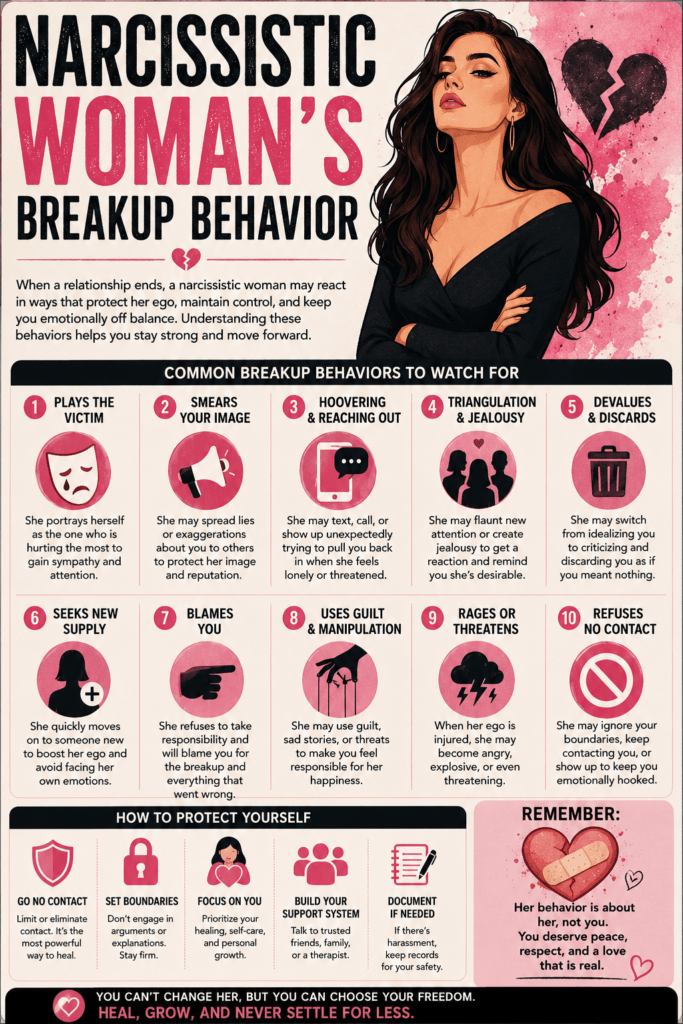
If you’ve ever found yourself struggling to understand what happens when a narcissistic woman goes through a breakup, you’re definitely not alone. I’ve noticed the aftermath can look pretty different from your average breakup, and the strategies and behaviors that tend to pop up are both unique and, honestly, kind of eye-catching. By picking apart these patterns, you can get a better sense of what to expect and figure out how to protect your own peace if you’re ever in this situation.
Understanding Narcissistic Traits in Breakups
A narcissistic woman often displays clear patterns during and after a breakup. These aren’t just about being self-focused; they’re about holding on to control, maintaining a certain image, and sometimes trying to make you question your own experience. Spotting these tendencies can help you take a step back and realize you’re not imagining things.
Some common traits that show up after a breakup include manipulative communication (“hoovering” or sudden remorseful messages), a need for validation, refusal to accept responsibility, twisting the story, and sometimes even quick rebounds to new relationships. If any of this rings true, you’re seeing some classic post-breakup behavior from a narcissist.
Behaviors to Expect After a Breakup
The way a narcissistic woman behaves after a breakup is pretty telling. From the stories I’ve heard and my own observations, the actions can swing from cold silence to sudden, confusing contact. Here’s what often shows up:
- Hoovering Attempts: Sometimes she’ll try to pull you back in, either with guilt, charm, or grand promises of change.
- Smear Campaigns: Talking behind your back to mutual friends, painting herself as the victim and you as the villain, is pretty common.
- Seeking Admiration: You might notice a rush of social media activity aiming for attention and sympathy from others.
- Quickly Moving On: Jumping into a new relationship or flaunting new connections publicly also happens a lot.
- Emotional Withdrawal: Shutting down completely and pretending you never existed can cause confusion and pain.
If you experience any of these, it’s not about you. It’s about having control over the story and protecting her ego.
Common Manipulation Tactics Post-Breakup
After a breakup, the emotional games sometimes ramp up instead of dying down. Here are a few specific manipulation strategies to keep an eye out for:
- Love Bombing (Again): Out-of-the-blue, extreme texts or calls where she swears she’s changed or you’re the only one who ever understood her.
- Guilt Trips: Subtle or direct messages suggesting you’re abandoning her in her time of need.
- Gaslighting: Twisting events to make you doubt your memories of the relationship or the breakup itself.
- Silent Treatment: Refusing communication to punish you and make you chase after her for closure.
- Social Media Triggers: Sharing photos or statuses designed to get a reaction, such as looking extra happy, mysterious, or “better off.”
Dealing with these strategies can be really draining, especially since they’re meant to keep you off balance or draw you back in. Sometimes, these tactics show up in waves, causing even more confusion just when you think things have settled.
Reactions in Different Scenarios
A narcissistic woman’s post-breakup behavior can switch up a lot depending on who ended things and the circumstances around the split. Here’s how this might play out:
- If you ended the relationship: Expect either an attempt to regain control (hoovering, guilt-tripping) or complete emotional withdrawal with a possible public smear campaign.
- If she ended the relationship: She may act unaffected, jump into a new romance, or reach out occasionally to keep you in her orbit just in case she wants more attention later.
- If the breakup was messy: Expect even more dramatic social media updates and more stories about how she was wronged.
No matter how mature you try to be, these situations can get messy fast if you aren’t aware of what’s going on behind the scenes.
Why Cutting Off Contact is Hard but Helpful
Going “no contact” is super important for recovering from this kind of breakup. It breaks the cycle of manipulation and lets you focus on your own healing instead of reacting to whatever she does next. For a narcissist, losing the chance to keep tabs on an ex is one of the few things they can’t stand, so sticking to your boundaries really matters.
Muting, blocking, or unfollowing on social media can give you some much-needed space. This means not letting curiosity win when you see those online updates designed to get a rise out of you. It might feel strange or even mean, but protecting your energy is the real priority here.
It’s also helpful to remove reminders and triggers in your space. That may mean boxing up old photos or items that spark too many memories. Giving your environment a small upgrade can make the healing process a little smoother by creating a space that feels safe and comfortable for your present, not just a collection of reminders of the past.
Challenges for Those Caught in the Aftermath
It’s really tough to make sense of someone’s behavior when it seems to flip so suddenly. Some of the hardest parts are dealing with confusion (“Was it really that bad?”), Second-guessing your choices, or even missing the good moments. It’s very common to wonder if you’re just overreacting, especially if others in your shared circle seem sympathetic to her side of things.
Journaling, leaning on trusted friends, and talking openly about what happened can help you work through those doubts. This is where self-care goes beyond bubble baths; setting boundaries, seeking support, and being honest with yourself about what’s healthy really count. Meditation, therapy, and spending time in nature are additional strategies that many people find useful.
How to Handle Triggers and Setbacks
Things like mutual friends mentioning her, seeing social media updates, or receiving random texts can all set healing back. Here are a few ways I’ve found useful for dealing with those triggers:
- Politely change the subject if friends bring up her name.
- Take breaks from apps or change privacy settings to avoid stumbling onto updates.
- Have a couple of go-to activities or songs that lift your mood if you get hit by a wave of nostalgia or hurt.
It’s not about pretending none of it affects you. It’s about recognizing the feelings, letting them pass, and then getting back to living your life.
You can also set small, achievable goals for yourself in the weeks after a breakup. These give you quick wins and help rebuild your confidence. Over time, even small efforts add up to significant progress.
Real-World Examples of Post-Breakup Behavior
I’ve seen some pretty consistent patterns across different situations. Here are a couple of examples (with key details changed for privacy):
- After an abrupt breakup, “Samantha” started messaging all the couple’s mutual friends about how misunderstood she’d been, making her ex sound like the bad guy. Meanwhile, she was posting photos with a new fling less than a week later.
- Another woman, “Jill,” cut off all contact but began regularly viewing her ex’s stories on social media, just to keep herself on his mind and make sure he noticed.
- “Maya,” after being called out for lying, suddenly backtracked, apologized profusely, and made dramatic promises about how she’d change if given one more chance. Then she ghosted again once she got attention.
It’s tough to deal with these scenarios, but knowing they’re textbook moves for narcissists can help you not take them personally. When you spot the pattern, it becomes easier to step back and put your own needs first.
Frequently Asked Questions
People often have a lot of questions about narcissistic breakups, so I’ve pulled together answers to the ones I hear the most.
Question: Why does a narcissistic woman act as if nothing happened after a breakup?
Answer: This is usually about self-protection and image control. Acting indifferent makes it look like she was unaffected, even if she’s spinning a totally different story behind the scenes.
Question: Will a narcissistic ex ever apologize sincerely?
Answer: Genuine apologies are rare. Most apologies are about getting something in return (like attention or forgiveness), not true understanding or growth.
Question: Is it possible for a narcissist to really “move on” after a breakup?
Answer: She may jump into a new relationship quickly, but this is usually about getting validation and attention, not genuine healing.
Question: What if I keep thinking I was at fault?
Answer: This is honestly one of the lingering effects of narcissistic manipulation. It helps to talk with someone who understands these dynamics; sometimes seeing a therapist or counselor gives the clearest perspective.
Practical Steps for Moving Forward
Dealing with the aftermath of a breakup with a narcissistic woman isn’t about “winning” or getting closure from her. It’s about refocusing on yourself. Here are some practical ways to move forward:
- Don’t expect closure. Accept that some explanations and apologies might never come.
- Strengthen your support circle by reaching out to friends who get your situation.
- Focus on personal hobbies or projects that give you a sense of accomplishment and belonging.
- If her actions cross a line, don’t hesitate to seek outside help or set firmer boundaries.
- Consider picking up new skills or volunteering, as these can boost your self-worth and broaden your network beyond your existing connections.
Healing takes time, and it’s not always a straight path. But by putting energy back into yourself, you start to loosen the hold those old relationship patterns have on you. It really is possible to move past the confusion and find real peace again. Remember, looking ahead, you’ve got a new adventure to shape however you want.
Video: The Hidden Dangers of a Narcissistic Woman’s Breakup