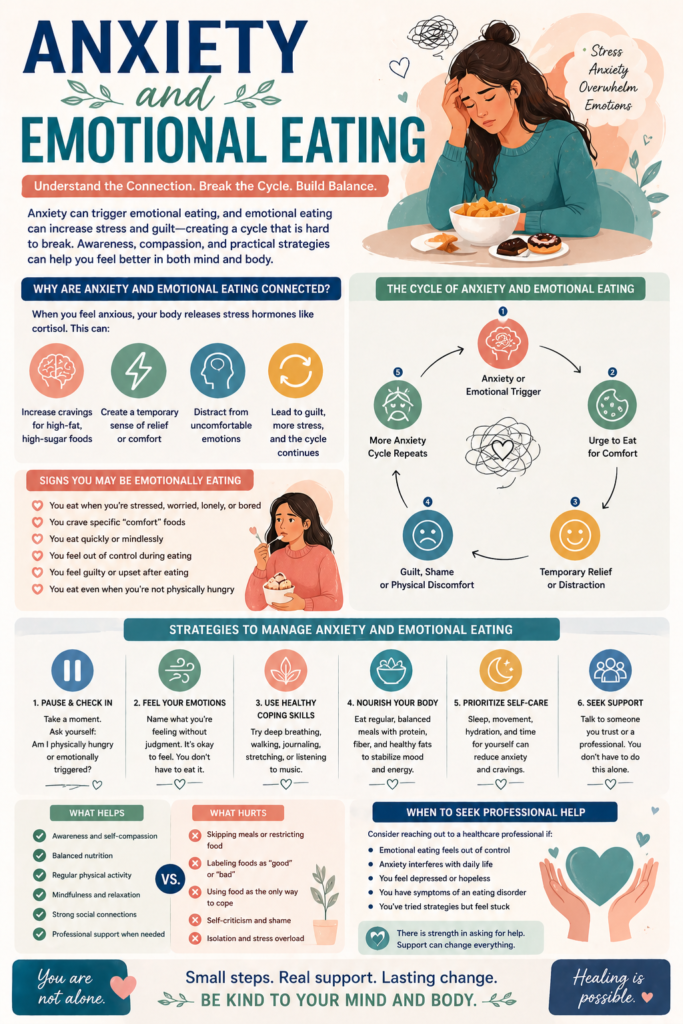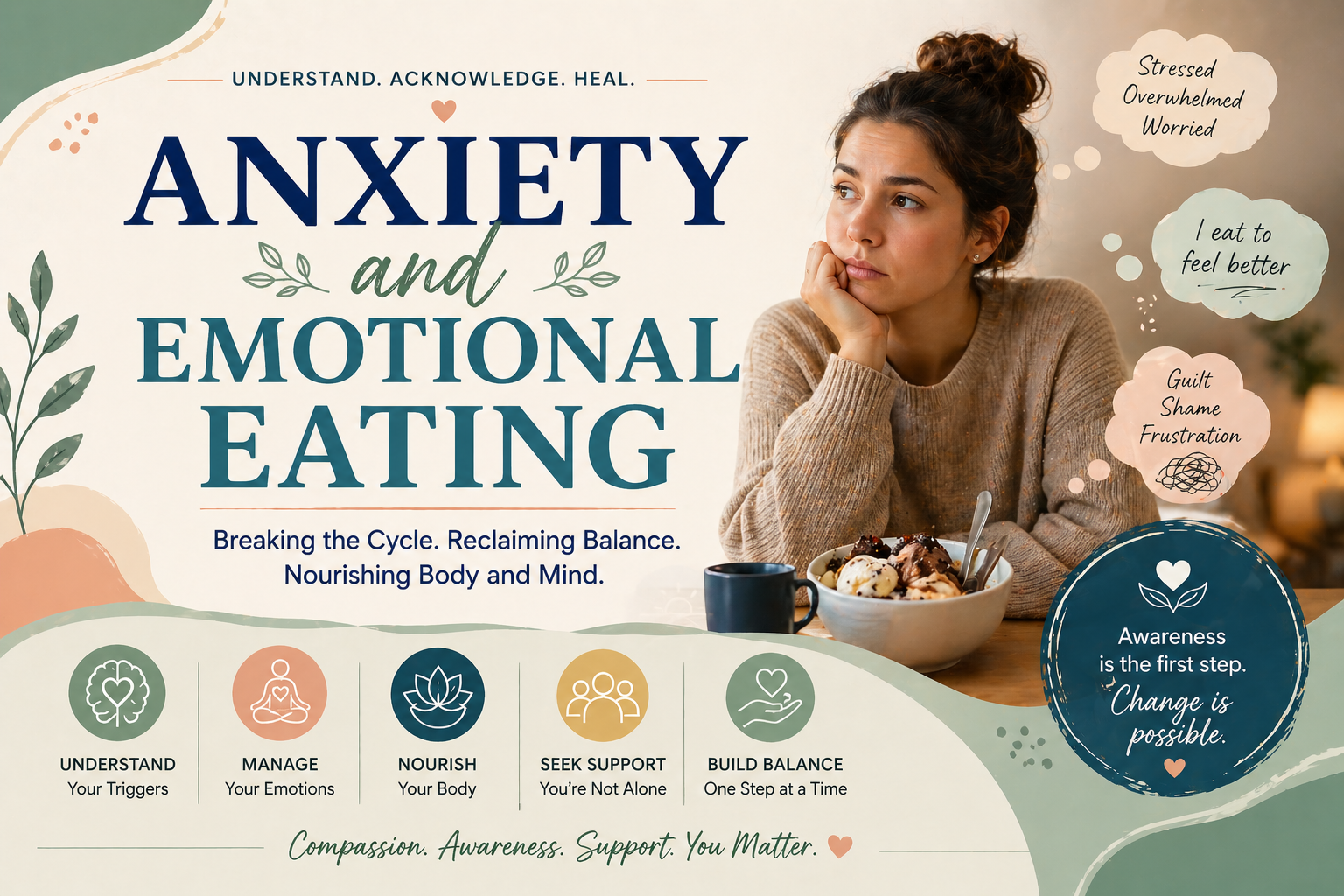
Anxiety and emotional eating are closely connected, often forming a cycle where emotions drive behavior rather than physical hunger. For individuals experiencing conditions like Generalized Anxiety Disorder, food can become a quick and accessible way to manage stress, soothe discomfort, or temporarily escape overwhelming thoughts. While this coping strategy may provide short-term relief, it can lead to longer-term patterns of guilt, frustration, and continued emotional distress. Understanding this relationship is essential for shifting from reactive habits to more intentional and supportive ways of managing both anxiety and eating behaviors.
Beyond Hunger: Understanding Anxiety and Emotional Eating
When emotions drive eating
Emotional eating is often misunderstood as a lack of control, but for many people, it is closely tied to anxiety and emotional distress. Rather than eating out of physical hunger, individuals may turn to food to cope with uncomfortable feelings, including stress, worry, or overwhelm. Conditions like Generalized Anxiety Disorder can intensify this pattern, making food feel like a quick and accessible source of relief. While it may help in the moment, the cycle often leads to frustration, guilt, and continued emotional discomfort.
🔍 What emotional eating can look like
Common signs include:
- Eating in response to stress, boredom, or anxiety rather than hunger
- Cravings for high-sugar or high-fat “comfort” foods
- Feeling out of control while eating
- Experiencing guilt or shame afterward
- Eating even when physically full
Recognizing these patterns is the first step toward understanding them.
🧠 Why anxiety fuels emotional eating
Anxiety affects both the brain and body:
- It increases stress hormones that can trigger cravings
- Food—especially sugary or high-carb foods—can temporarily boost feel-good chemicals
- Eating can act as a distraction or numbing strategy
Over time, this creates a cycle where anxiety leads to eating, and eating leads to short-term relief followed by longer-term distress.
🔄 The cycle of anxiety and emotional eating
- Anxiety or emotional discomfort
- Urge to eat for relief
- Temporary comfort or distraction
- Guilt or physical discomfort
- Increased anxiety → return to eating
Understanding this cycle helps shift the focus from blame to pattern awareness.
💡 Moving toward awareness and balance
Breaking the cycle doesn’t mean eliminating emotional eating overnight—it means understanding its purpose and gradually building alternatives:
- Pausing to ask: “Am I physically hungry or emotionally triggered?”
- Identifying emotional triggers (stress, loneliness, fatigue)
- Practicing non-food coping strategies (walking, journaling, breathing exercises)
- Creating structured eating patterns to reduce impulsive choices
🧩 When to seek additional support
If emotional eating feels overwhelming or persistent, it may be helpful to explore:
- Therapy or counseling (especially for anxiety)
- Support for conditions like Binge Eating Disorder if patterns become severe
- Nutrition guidance focused on balance rather than restriction
❤️ A compassionate perspective
Emotional eating is not a failure—it’s often a learned coping strategy. The goal isn’t to eliminate it completely, but to expand your coping toolbox so food is no longer the only option.
✍️ Conclusion
Anxiety and emotional eating are deeply connected, but they are also changeable patterns. With awareness, support, and gradual shifts in behavior, it’s possible to move from reactive eating to intentional, balanced choices—and a healthier relationship with both food and emotions.
Taking Back Control: Self-Management Strategies for Anxiety and Emotional Eating
Understanding the connection
Emotional eating is often less about food and more about managing feelings—especially anxiety. For individuals experiencing Generalized Anxiety Disorder or chronic stress, eating can become a quick way to soothe discomfort, distract the mind, or regain a sense of control. Self-management is about building awareness and creating alternatives, not perfection or restriction.
🔍 Recognizing your personal patterns
Start by observing:
- When urges to eat appear (time of day, stress levels)
- Emotional triggers (anxiety, boredom, loneliness, fatigue)
- Eating patterns (mindless snacking, cravings, late-night eating)
Awareness turns automatic habits into something you can influence.
🧠 Strategy 1: Pause and identify the trigger
Before eating, ask:
- Am I physically hungry or emotionally triggered?
- What am I feeling right now?
Even a brief pause can interrupt the cycle and give you a choice instead of a reaction.
⚖️ Strategy 2: Use the “delay and decide” approach
Instead of immediately acting on an urge:
- Wait 10–15 minutes
- Engage in a different activity (walk, stretch, drink water)
- Reassess whether you still want to eat
This helps you ride out emotional waves, which often pass.
🧩 Strategy 3: Replace the function, not just the behavior
Emotional eating serves a purpose. Identify what it does for you:
- Stress relief → try breathing exercises or movement
- Comfort → call someone or use calming routines
- Distraction → engage in a hobby or task
The goal is to meet the same need in a healthier way.
💧 Strategy 4: Support your body consistently
Skipping meals or restricting food can worsen emotional eating. Instead:
- Eat regular, balanced meals
- Stay hydrated
- Include satisfying foods to reduce intense cravings
A stable body supports a more stable mind.
🧠 Strategy 5: Build emotional regulation skills
Strengthen your ability to manage anxiety:
- Practice mindfulness or grounding techniques
- Name and rate your emotions (e.g., “anxiety 7/10”)
- Accept discomfort without immediately trying to fix it
This reduces the need to rely on food as the primary coping tool.
👥 Strategy 6: Create accountability and support
Self-management doesn’t mean isolation:
- Share your goals with someone you trust
- Join a support group or community
- Consider therapy for deeper emotional patterns
Connection helps reduce both anxiety and emotional eating.
🚨 When to seek additional help
If emotional eating feels frequent or overwhelming, consider support for:
- Binge Eating Disorder
- Persistent anxiety or mood issues
- Difficulty controlling eating despite efforts
Professional guidance can provide structured tools and support.
💡 Shifting your mindset
Self-management is not about eliminating emotional eating overnight—it’s about understanding it. Each time you pause, reflect, or choose differently, you are building new patterns.
✍️ Conclusion
Anxiety and emotional eating are deeply connected, but they are not permanent patterns. With awareness, practical strategies, and self-compassion, it’s possible to move from reactive habits to intentional, balanced choices—creating a healthier relationship with both food and emotions.
Supporting Without Shame: Family Strategies for Anxiety and Emotional Eating
Understanding the emotional roots
Emotional eating is rarely just about food—it’s often a response to anxiety, stress, or emotional overwhelm. For individuals dealing with conditions like Generalized Anxiety Disorder, food can become a quick and accessible way to cope. Families may see the behavior but miss the underlying cause. Shifting the focus from “Why are they eating like this?” to “What are they feeling?” is the first step toward meaningful support.
🔍 What families may notice
Loved ones might observe:
- Eating during times of stress, boredom, or emotional distress
- Cravings for comfort foods rather than balanced meals
- Eating in isolation or late at night
- Feelings of guilt or frustration after eating
These patterns often reflect emotional coping rather than a lack of discipline.
💬 Strategy 1: Communicate with empathy, not criticism
How families respond can either help or harm:
- Avoid comments about weight, appearance, or “self-control.”
- Use supportive language (“I’ve noticed you seem stressed—how can I help?”)
- Listen without trying to immediately fix the problem
Empathy reduces shame, which is a major driver of emotional eating.
🧠 Strategy 2: Help connect emotions to behavior
Gently encourage awareness:
- Point out patterns (“It seems like eating happens more when you’re overwhelmed”)
- Normalize emotional responses
- Encourage reflection instead of judgment
This helps shift behavior from automatic to understood and manageable.
⚖️ Strategy 3: Create a supportive food environment
Families can:
- Promote regular, balanced meals without restriction or pressure
- Avoid labeling foods as “good” or “bad.”
- Encourage mindful eating rather than emotional eating
A neutral, supportive environment reduces stress around food.
🧩 Strategy 4: Support healthier coping strategies
Since emotional eating serves a purpose, families can help expand options:
- Encourage activities like walking, journaling, or relaxation techniques
- Offer connection (talking, spending time together)
- Model healthy ways of managing stress
The goal is to add coping tools, not just remove food as one.
👥 Strategy 5: Be part of the support system
Families can:
- Check in regularly without pressure
- Celebrate small changes and efforts
- Encourage professional support when needed
Feeling supported reduces isolation and emotional distress.
🚨 Strategy 6: Recognize when additional help is needed
Consider professional support if:
- Eating patterns feel out of control
- Anxiety significantly impacts daily life
- There are signs of Binge Eating Disorder
Early support can prevent patterns from becoming more severe.
❤️ A balanced approach
Effective family support includes:
- Empathy (understanding emotional drivers)
- Patience (change takes time)
- Consistency (support without enabling harmful patterns)
This balance creates a safe space for growth.
✍️ Conclusion
Family support can play a powerful role in breaking the cycle of anxiety and emotional eating. When loved ones shift from judgment to understanding, they help create an environment where emotional needs can be addressed in healthier ways. Over time, this support can help individuals move toward greater self-awareness, balance, and emotional well-being—not just with food, but in life overall.
Stronger Together: Community Resource Strategies for Anxiety and Emotional Eating
Why community support matters
Emotional eating is often deeply connected to anxiety, stress, and environmental influences, not just individual habits. For many people, food becomes a coping tool when emotional needs are unmet. Conditions like Generalized Anxiety Disorder can intensify this cycle, making it harder to break without support. Community resources play a key role in providing education, reducing stigma, and creating accessible pathways to healthier coping strategies.
🔍 What communities are seeing
Across communities, common patterns include:
- Increased stress-related eating behaviors
- Confusion between physical hunger and emotional triggers
- Limited awareness of mental health connections to eating
- Stigma around discussing eating behaviors and anxiety
Community strategies help bring clarity and support to these challenges.
🧠 Strategy 1: Expand mental health education
Communities can:
- Provide workshops on anxiety, stress, and emotional regulation
- Teach the connection between emotions and eating behaviors
- Promote awareness that emotional eating is a coping response, not a failure
Education empowers individuals to understand their behaviors more clearly.
👥 Strategy 2: Develop peer and support networks
Support groups and community programs can:
- Offer shared experiences and validation
- Reduce isolation and shame
- Provide practical coping strategies from others with similar challenges
Peer support often makes change feel more realistic and achievable.
🥗 Strategy 3: Promote accessible nutrition and wellness resources
Communities can support healthier relationships with food by:
- Offering nutrition education without restrictive messaging
- Providing access to healthy foods and community programs
- Encouraging balanced eating habits rather than a dieting culture
A supportive environment helps reduce extremes in eating behavior.
🌐 Strategy 4: Provide access to credible information
Reliable information is key:
- Share resources from healthcare providers and public health organizations
- Address misinformation about dieting, weight, and “quick fixes.”
- Encourage critical thinking about online health content
Accurate knowledge reduces confusion and harmful patterns.
⚖️ Strategy 5: Reduce stigma around mental health and eating
Communities can:
- Normalize conversations about anxiety and emotional eating
- Use nonjudgmental language in programs and outreach
- Encourage people to seek help early
Reducing stigma makes it easier for individuals to reach out and engage in support.
🧩 Strategy 6: Integrate services across systems
Effective community care connects:
- Mental health services
- Nutrition counseling
- Primary healthcare providers
- School and workplace wellness programs
Integration ensures people receive holistic, coordinated support.
🚨 When community support should lead to professional care
Community resources are valuable, but individuals may need additional help if:
- Emotional eating feels out of control
- Anxiety significantly impacts daily functioning
- There are signs of Binge Eating Disorder
Communities should guide individuals toward appropriate professional care when needed.
✍️ Conclusion
Addressing anxiety and emotional eating is not just an individual effort—it’s a community opportunity. When communities provide education, connection, and accessible resources, they help individuals move from confusion to understanding and from isolation to support. In doing so, they create environments where healthier coping strategies can grow—and where people feel empowered to care for both their emotional well-being and their relationship with food.
Frequently Asked Questions
Here are some common questions:
1. What is emotional eating?
Emotional eating is when you eat in response to feelings rather than physical hunger. This often includes eating to cope with stress, anxiety, boredom, or sadness.
2. How is anxiety connected to emotional eating?
Conditions like Generalized Anxiety Disorder can increase stress hormones and emotional discomfort, which may trigger cravings and the urge to eat for temporary relief or distraction.
3. How can I tell if I’m emotionally eating?
Common signs include:
- Eating when you’re not physically hungry
- Craving specific “comfort foods.”
- Eating quickly or mindlessly
- Feeling guilt or regret after eating
4. Why does food help with anxiety (at least temporarily)?
Certain foods—especially high in sugar or carbohydrates—can:
- Boost feel-good brain chemicals
- Provide a sense of comfort
- Distracting from anxious thoughts
However, this relief is usually short-lived.
5. Is emotional eating the same as an eating disorder?
Not always. Emotional eating is common, but if it becomes frequent, intense, or feels out of control, it may be linked to conditions like Binge Eating Disorder.
6. What is the cycle of anxiety and emotional eating?
A common cycle includes:
- Anxiety or emotional distress
- Urge to eat for comfort
- Temporary relief
- Guilt or discomfort
- Increased anxiety → repeat
7. Can emotional eating be stopped completely?
The goal isn’t to eliminate it completely, but to:
- Understand it
- Reduce reliance on it
- Build healthier coping strategies
8. What are healthier alternatives to emotional eating?
- Deep breathing or grounding exercises
- Physical movement (walking, stretching)
- Talking to someone
- Journaling or creative activities
9. Should I avoid “trigger foods”?
Strict avoidance can sometimes increase cravings. Instead:
- Focus on balance and moderation
- Avoid labeling foods as “good” or “bad.”
10. How does stress affect appetite?
Stress can either:
- Increase appetite (leading to cravings)
- Decrease appetite
Both are normal responses depending on the person.
11. What role does routine play?
Regular meals and structure can:
- Stabilize blood sugar
- Reduce intense hunger
- Decrease impulsive emotional eating
12. When should someone seek help?
Consider professional support if:
- Eating feels out of control
- Anxiety is overwhelming
- Emotional eating happens frequently
- There are signs of Binge Eating Disorder
13. Can therapy help?
Yes. Therapy can:
- Address underlying anxiety
- Build coping strategies
- Improve emotional awareness and regulation
14. Is emotional eating a sign of weakness?
No. It is a learned coping strategy, not a personal failure. It often develops as a way to manage difficult emotions.
15. Is it possible to have a healthy relationship with food again?
Yes. With awareness, support, and practice, individuals can develop a more balanced, flexible, and compassionate relationship with food and emotions.
Conclusion
Recognizing the link between anxiety and emotional eating allows for a more compassionate and effective approach to change. Rather than focusing solely on food choices, addressing the underlying emotional triggers opens the door to healthier coping strategies and improved well-being. With increased awareness, support, and practical tools, individuals can break the cycle and develop a more balanced relationship with both their emotions and eating habits. Ultimately, lasting change comes from understanding—not controlling—the patterns that connect mind and behavior.
Video: The Guilt Cycle of Anxiety Eating #emotionaleating #awareness