Sir Anthony Hopkins is known worldwide for his extraordinary acting career, but one of the most significant stories of his life unfolded off-screen. Hopkins has spoken openly about his past struggle with alcoholism and the decision that led him toward lasting sobriety. His experience demonstrates how recognizing a problem, asking for help, accepting support, and finding meaning can become important parts of recovery.
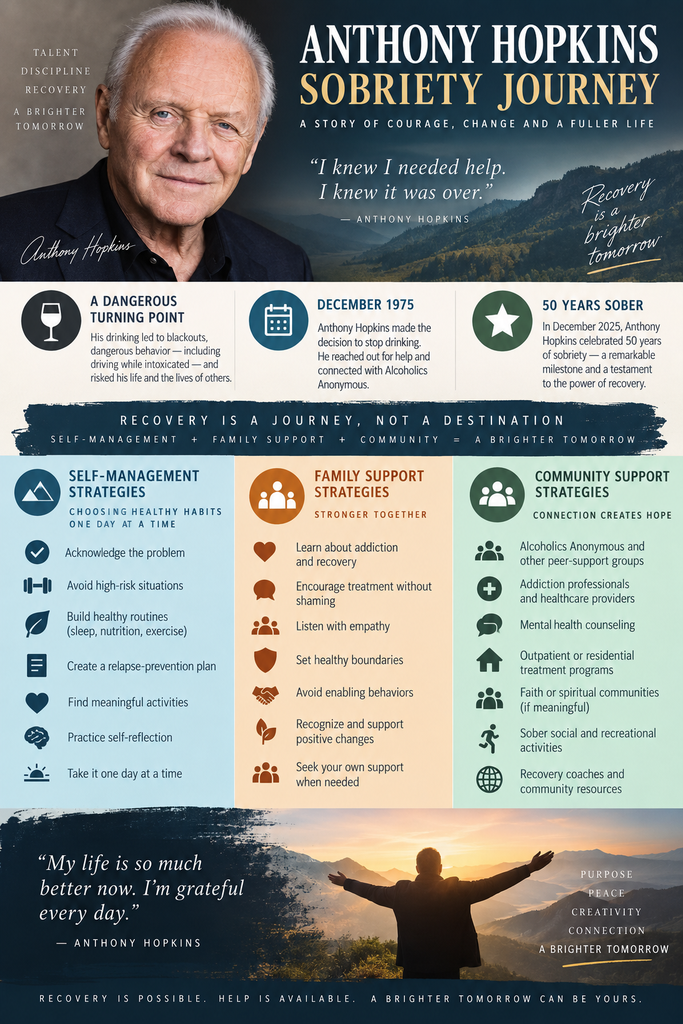
Hopkins stopped drinking in December 1975. He has described reaching a dangerous point when his alcohol use included driving during a blackout. The experience forced him to confront the possibility that his drinking could kill him or someone else. He recognized that he needed help and turned to Alcoholics Anonymous.
In December 2025, Hopkins reached 50 years of sobriety, an extraordinary milestone that reflects decades of continued commitment to recovery. His story is especially meaningful because he does not portray sobriety as a life without difficulties. He has acknowledged emotional struggles, regrets, insecurity, and the consequences his behavior had on other people.
The Turning Point: Recognizing the Problem
A major lesson from Hopkins’s story is the importance of recognizing when substance use has become dangerous. During his drinking years, alcohol affected his behavior, relationships, and professional life. Hopkins has described being hungover while working and acknowledged that his drinking placed himself and others at risk.
Recovery often begins with an uncomfortable but necessary realization: something needs to change.
For someone struggling with alcohol, warning signs may include:
- Drinking despite negative consequences
- Blackouts or inability to remember events
- Driving or engaging in other dangerous behaviors while intoxicated
- Relationship or employment problems connected to drinking
- Repeated unsuccessful attempts to control alcohol use
- Increasing isolation or secrecy
- Continuing to drink even when recognizing the harm it causes
Recognizing these warning signs does not represent weakness. It can be the first step toward seeking effective help.
Self-Management Strategies for Recovery
Hopkins’s experience highlights personal responsibility, but recovery should not be mistaken for mere willpower. Alcohol use disorder can require professional treatment, peer support, medication, behavioral therapy, or a combination of approaches.
Helpful self-management strategies can include:
- Acknowledge the problem. Honest recognition makes it possible to seek appropriate support.
- Ask for help early. Hopkins has repeatedly emphasized the importance of asking for help rather than continuing down a destructive path.
- Avoid high-risk situations. Identifying people, places, emotions, and situations associated with drinking can reduce relapse risk.
- Develop healthy routines. Regular sleep, nutritious meals, physical activity, hobbies, and structured daily activities can support stability.
- Create a relapse-prevention plan. Know your triggers and decide beforehand whom to contact when cravings or emotional difficulties appear.
- Find meaningful activities. Hopkins has remained involved with acting, painting, music, and other creative pursuits.
- Practice self-reflection. Recovery can involve examining past behavior without allowing shame to determine the future.
- Take recovery one day at a time. Long-term sobriety is ultimately built through repeated daily decisions.
Family Support Strategies
Addiction affects families as well as the individual who drinks. Family members may experience fear, anger, disappointment, mistrust, or exhaustion. Support is important, but support does not mean ignoring destructive behavior.
Families can help by:
- Learning about alcohol use disorder and recovery
- Encouraging treatment without shaming the person
- Listening without immediately criticizing or lecturing
- Establishing clear and healthy boundaries
- Avoiding behaviors that enable continued drinking
- Recognizing and supporting positive changes
- Encouraging continued participation in treatment or recovery programs
- Developing an emergency plan for dangerous situations
- Seeking counseling or peer support for themselves when needed
Hopkins has also spoken about remorse for people he hurt during his drinking years and about apologizing where possible. This illustrates another important recovery principle: sobriety may stop the substance use, but repairing damaged relationships can require additional time, accountability, and healing.
Community Support Strategies
One of the clearest community-support elements in Hopkins’s story is Alcoholics Anonymous. After recognizing that he needed help, he connected with AA, and decades later he has continued to discuss the importance of that turning point.
Community recovery resources may include:
- Alcoholics Anonymous and other peer-support groups
- Addiction medicine professionals
- Primary care providers
- Mental health professionals
- Outpatient treatment programs
- Residential treatment when clinically appropriate
- Recovery coaches and peer specialists
- Faith or spiritual communities, when meaningful to the individual
- Sober recreational and social activities
- Family recovery programs such as Al-Anon
There is no single recovery pathway that works for everyone. Hopkins’s experience with AA and spirituality is his personal story, not a requirement for recovery. Some people benefit from 12-step programs, while others use secular peer-support programs, psychotherapy, medications, professional addiction treatment, or combinations of these approaches.
Purpose Beyond Alcohol
Recovery involves more than removing alcohol. People often need to build a life in which alcohol is no longer the primary method for managing stress, insecurity, loneliness, or uncomfortable emotions.
Hopkins continued building his acting career while also pursuing interests such as music and painting. Meaningful activities can provide structure, identity, connection, and purpose during long-term recovery.
For someone rebuilding life after addiction, purpose might come from:
- Family and relationships
- Employment or education
- Art, music, or writing
- Exercise and recreation
- Volunteering
- Spirituality
- Mentoring others
- Community involvement
- Learning new skills
The goal is not simply “How do I stop drinking?” It can gradually become “What kind of life do I want to build without alcohol?”
What Families Can Learn From Anthony Hopkins
Hopkins’s story demonstrates that severe alcohol problems do not automatically determine how the rest of a person’s life will unfold. A dangerous period can become a turning point when it leads to recognition, accountability, treatment, and sustained support.
His experience also reminds families that they cannot force another person into permanent recovery. They can encourage treatment, establish boundaries, provide appropriate support, and remain hopeful while protecting their own well-being.
Final Thoughts
Anthony Hopkins’s sobriety journey is ultimately a story about recognizing danger and choosing change. After reaching a point where alcohol was threatening his life and potentially the lives of others, he acknowledged that he needed help. That decision began a recovery journey that eventually reached half a century of sobriety.
His story does not suggest that recovery is easy or that everyone will follow the same path. Instead, it offers a valuable message: a person’s most destructive period need not be the final chapter of their life.
Recovery can involve self-management, professional treatment, family boundaries, peer support, accountability, community connection, and the development of a meaningful life beyond alcohol. The first step may be as simple—and as difficult—as recognizing, “I need help.”
Frequently Asked Questions
Here are some common questions:
1. Did Anthony Hopkins struggle with alcoholism?
Yes. Anthony Hopkins has publicly described having a serious problem with alcohol earlier in his life. He has spoken about blackouts, excessive drinking, and realizing that his behavior had become dangerous.
2. When did Anthony Hopkins become sober?
Hopkins stopped drinking on December 29, 1975. He has continued to publicly mark that date as the beginning of his sobriety.
3. What motivated Anthony Hopkins to stop drinking?
Hopkins has described reaching a frightening turning point after realizing he had been driving while in an alcoholic blackout. He recognized that his drinking could seriously harm himself or another person and concluded that he needed help.
4. Did Anthony Hopkins attend Alcoholics Anonymous?
Yes. Hopkins has publicly discussed going to an Alcoholics Anonymous (AA) meeting after recognizing that he needed help. AA became an important part of the recovery story he has shared publicly.
5. How long has Anthony Hopkins been sober?
Hopkins celebrated 50 years of sobriety on December 29, 2025. His long-term recovery demonstrates that sobriety can continue across decades, although every person’s recovery experience is different.
6. Did becoming sober immediately solve all of his problems?
No. Sobriety does not automatically eliminate emotional, relationship, or behavioral difficulties. Hopkins has reflected publicly on regrets and aspects of his past behavior. Recovery can include addressing consequences and learning healthier ways of living in addition to stopping alcohol use.
7. What self-management strategies can people learn from his story?
Hopkins’s experience illustrates the importance of recognizing when alcohol has become harmful and being willing to ask for help. General recovery strategies can include identifying triggers, avoiding high-risk situations, developing healthy routines, maintaining supportive relationships, finding meaningful activities, and having a relapse-prevention plan.
8. What role can family members play in someone’s recovery?
Families can educate themselves about alcohol use disorder, encourage professional help, communicate without shaming, recognize positive changes, and maintain healthy boundaries. Supporting recovery does not mean tolerating dangerous behavior or protecting someone from every consequence of substance use.
9. Why are healthy boundaries important for families affected by alcoholism?
Boundaries help family members protect their physical and emotional well-being while clarifying expectations. They can also reduce enabling behaviors. Families may benefit from counseling or support groups designed specifically for people affected by another person’s drinking.
10. How can community support help someone maintain sobriety?
Community support can reduce isolation and provide accountability and connection. Depending on individual needs, support might include AA or another peer-support program, addiction treatment, psychotherapy, recovery coaching, primary care, outpatient treatment, or sober community activities.
11. Does everyone need to follow Anthony Hopkins’s approach to achieve sobriety?
No. His experience is one person’s recovery story. Some people benefit greatly from 12-step programs, while others use professional counseling, medications for alcohol use disorder, secular recovery groups, structured treatment programs, or combinations of these approaches.
12. Can someone recover after many years of problematic drinking?
Yes. Alcohol use disorder is treatable, and recovery can begin at different stages of life. Hopkins’s story provides a public example of someone making a major change after alcohol had already caused serious problems.
13. What can someone do if they repeatedly relapse?
Relapse does not mean that treatment options have been exhausted. A clinician or addiction specialist can reassess triggers, mental health concerns, medications, social circumstances, and the current treatment plan. Sometimes a different or more intensive level of care is appropriate.
14. What is the biggest lesson from Anthony Hopkins’s sobriety journey?
One of the strongest lessons is that recognizing the seriousness of a problem and asking for help can become a turning point. His story also demonstrates that recovery is not merely about stopping alcohol—it can involve accountability, personal growth, supportive relationships, purpose, and maintaining change over many years.
15. What message can families take from his story?
A person’s worst period does not necessarily predict the rest of their life. Families can offer encouragement and appropriate support, but they also need to protect their own well-being. Ultimately, sustainable recovery requires the individual to participate actively in change.
Video: How Anthony Hopkins Saved His Own Life in 1975 #shorts #inspiration