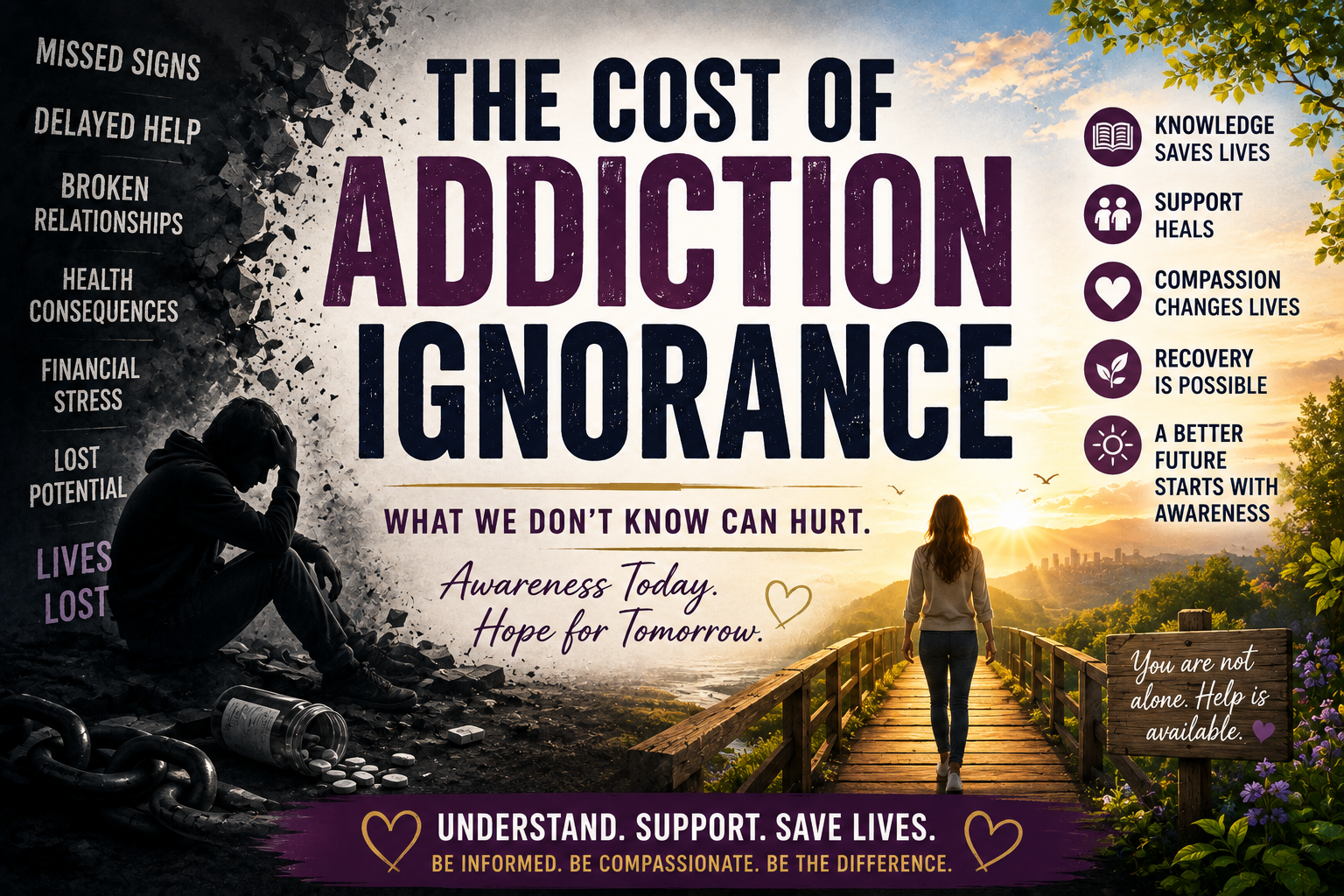
Ignorance about substance abuse can carry a much greater cost than many people realize. Misunderstanding addiction, overlooking warning signs, believing common myths, or assuming that substance use is simply a matter of willpower can delay treatment until consequences become severe. The cost may be measured not only in dollars but also in damaged health, strained relationships, lost opportunities, legal problems, overdose, and lives lost.
Substance use disorders are complex, treatable health conditions influenced by biological, psychological, environmental, and social factors. Education does not eliminate addiction, but accurate information can help individuals and families recognize problems earlier, respond more effectively, reduce stigma, and connect people with appropriate care.
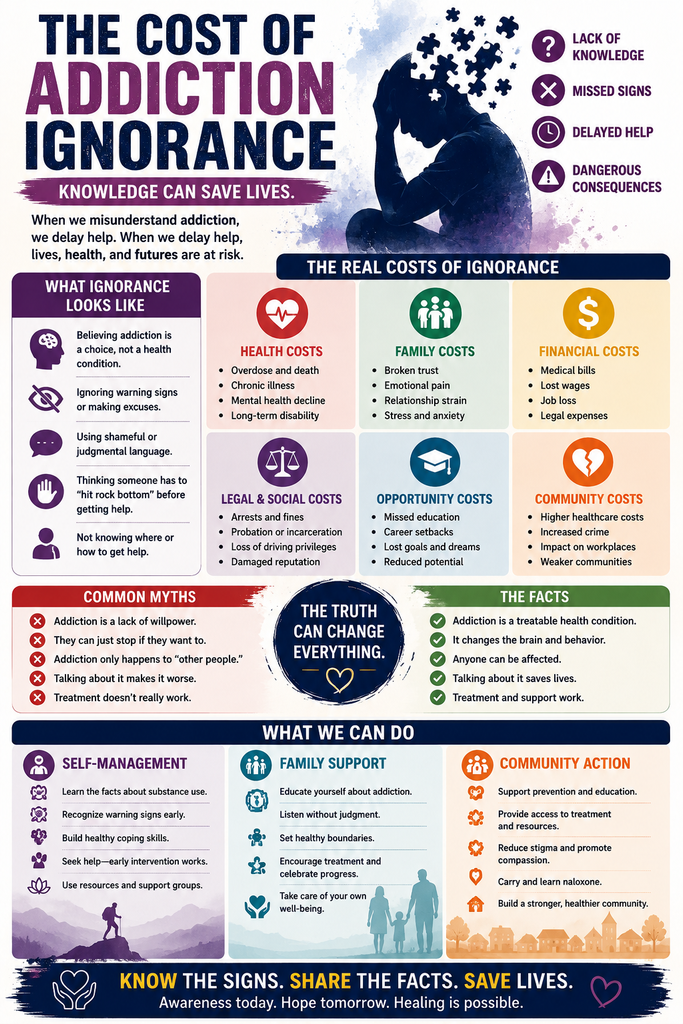
What Does Ignorance About Substance Abuse Look Like?
Ignorance does not necessarily mean someone does not care. Many people simply have never received accurate information about addiction. Others may have grown up with beliefs that substance use problems should remain secret or that someone struggling with addiction only needs greater self-control.
Common misconceptions include:
- “Addiction is just a lack of willpower.”
- “They can stop whenever they want.”
- “You cannot become addicted to prescription medication.”
- “Someone has to hit rock bottom before treatment will work.”
- “If they still have a job, they cannot have an addiction.”
- “Relapse means treatment failed.”
- “Overdose only happens to people with severe addiction.”
- “Talking about addiction will make the problem worse.”
These beliefs can create dangerous delays in recognizing and responding to substance-related problems.
The Health Cost
Repeated substance use can affect nearly every system in the body. Depending on the substance and pattern of use, consequences may include cardiovascular problems, liver disease, respiratory complications, infections, cognitive impairment, nutritional problems, mental health symptoms, accidents, and overdose.
Perhaps one of the greatest dangers of misinformation is failing to recognize an emergency.
A person experiencing an opioid overdose, for example, may become unconscious and develop slow, irregular, or stopped breathing. Recognizing overdose symptoms, calling emergency services, and administering naloxone when an opioid overdose is suspected can save a life.
Education transforms bystanders into people capable of responding.
The Emotional Cost
Substance use does not affect only physical health. Individuals may experience shame, anxiety, depression, isolation, guilt, hopelessness, or loss of self-esteem.
When addiction is misunderstood as a moral failure, these feelings may intensify.
Someone may think:
“I should be stronger.”
“My family would be ashamed of me.”
“I cannot tell anyone.”
“Nobody will understand.”
These beliefs can encourage secrecy, which may allow substance use to continue without treatment.
Knowledge helps replace shame with understanding and action.
The Cost to Families
Addiction can affect an entire family system. Loved ones may experience fear, anger, confusion, financial stress, sleep problems, broken trust, and uncertainty about what they should do.
Without education, family members may unintentionally respond in ways that make the situation more difficult.
They might constantly rescue the person from consequences, provide money that supports continued substance use, ignore dangerous behavior, issue threats they cannot enforce, or attempt to control every aspect of the person’s life.
Other families may respond with shame and rejection.
Neither extreme necessarily promotes recovery.
Families need education about communication, boundaries, treatment, overdose prevention, and their own emotional well-being.
The Financial Cost
Substance misuse can create substantial financial consequences.
Costs may result from:
- Medical treatment and emergency care
- Missed work and reduced productivity
- Job loss
- Transportation accidents
- Legal expenses
- Property damage
- Childcare disruptions
- Treatment expenses
- Housing instability
- Money spent obtaining substances
- Long-term health complications
Early identification and treatment can help prevent some problems from progressing into higher personal and societal costs.
The Cost of Waiting for “Rock Bottom”
One particularly dangerous misconception is that someone must lose everything before recovery can begin.
There is no therapeutic requirement to reach rock bottom.
A person does not need to lose a marriage, career, home, health, or freedom before receiving treatment. Earlier intervention may prevent some of these consequences entirely.
Waiting can be especially dangerous in an illicit drug supply where substances may contain unexpectedly high-potency opioids or other contaminants. A single episode of use can have devastating consequences.
Treatment should begin when a problem is recognized—not after every possible consequence has occurred.
Stigma Has a Cost
Words matter.
Calling someone an “addict,” “junkie,” “failure,” or “lost cause” can reinforce shame and discourage treatment-seeking. Person-first language such as “person with a substance use disorder” recognizes that the condition does not define the individual’s entire identity.
Reducing stigma does not mean ignoring harmful behavior.
A person can be treated with dignity while still being expected to take responsibility for choices, respect boundaries, and participate in recovery.
Compassion and accountability can coexist.
Self-Management Strategies
Education can help individuals recognize their own risk patterns and seek assistance before consequences become severe.
Helpful strategies include:
- Learn the facts about substances. Understand how alcohol, opioids, stimulants, sedatives, nicotine, cannabis, and other substances can affect physical and mental health.
- Recognize personal warning signs. Increasing tolerance, cravings, withdrawal symptoms, secrecy, loss of control, and continued use despite consequences deserve attention.
- Track patterns of use. Notice when, why, how often, and how much you use.
- Identify triggers. Stress, loneliness, trauma, certain relationships, social environments, and emotional distress can increase vulnerability.
- Develop healthier coping strategies. Exercise, hobbies, sleep, mindfulness, counseling, and supportive relationships can provide alternatives to substance use.
- Avoid mixing substances. Combining substances can significantly increase medical risks.
- Learn overdose warning signs. Knowing when to seek emergency help can save a life.
- Carry naloxone when opioid exposure is possible.
- Talk honestly with healthcare professionals. Accurate information helps clinicians recommend safer and more effective treatment.
- Seek evidence-based treatment. Addiction treatment may include behavioral therapies, medications for certain substance use disorders, recovery support, and treatment of co-occurring conditions.
Family Support Strategies
Families can become powerful sources of recovery support when they understand addiction and establish healthy boundaries.
Family members can:
- Educate themselves about substance use disorders.
- Learn the signs of intoxication, withdrawal, and overdose.
- Keep naloxone available when opioid overdose is a possibility.
- Discuss concerns when the person is sober, and the situation is calm.
- Use respectful, non-stigmatizing language.
- Encourage professional assessment and treatment.
- Avoid giving money that may support continued substance use.
- Establish clear and consistent boundaries.
- Avoid repeatedly rescuing someone from preventable consequences.
- Recognize and reinforce healthy behavior.
- Consider family counseling or support groups.
- Protect their own physical and emotional health.
Families cannot force another person to recover, but they can create an environment that supports healthier decisions.
Community Support Strategies
Addiction cannot be addressed effectively by individuals and families alone. Communities also play an important role in prevention, education, harm reduction, treatment, and long-term recovery.
Helpful community resources may include:
- Primary care professionals
- Addiction medicine specialists
- Mental health professionals
- Detoxification and withdrawal-management services
- Outpatient and residential treatment programs
- Medication treatment for opioid and alcohol use disorders
- Peer recovery specialists
- Recovery community organizations
- Naloxone education and distribution programs
- Mutual-help and peer-support groups
- School and university prevention programs
- Employee assistance programs
- Family education and support programs
- Community mental health centers
- Crisis and emergency services
Communities can also improve outcomes by treating addiction education as part of routine health education rather than something discussed only after a crisis occurs.
Knowledge Can Prevent Tragedy
Understanding substance abuse does not require becoming an addiction specialist.
Sometimes a small amount of accurate information makes an enormous difference.
Knowing that addiction is treatable may encourage someone to seek help.
Knowing the symptoms of overdose may prompt someone to call emergency services.
Knowing how naloxone works may save a life.
Knowing that relapse requires attention rather than humiliation may help someone return to treatment.
Knowing how to establish boundaries may protect an entire family.
Education creates opportunities to act before situations become irreversible.
From Ignorance to Understanding
The opposite of ignorance is not judgment—it is knowledge.
Families and communities do not need to choose between compassion and accountability. They can recognize addiction as a health condition while acknowledging that behaviors associated with substance use can have serious consequences.
Understanding addiction allows people to respond with better questions:
Instead of “Why don’t you just stop?”
Ask “What is making it difficult to stop, and what treatment could help?”
Instead of “Why should I help you again?”
Ask “What kind of support promotes recovery without enabling continued substance use?”
Instead of waiting for disaster, ask:
“What can we do now?”
Conclusion
The true cost of ignorance about substance abuse can be measured in missed warning signs, delayed treatment, damaged relationships, preventable medical complications, financial hardship, overdose, and lives lost. Misinformation and stigma can allow problems to grow quietly while individuals and families struggle, unsure where to turn.
Education changes that trajectory.
Learning about addiction, recognizing warning signs, understanding overdose response, establishing healthy boundaries, and connecting people with evidence-based treatment can turn fear and confusion into meaningful action.
We cannot prevent every consequence of substance use, but we can make sure ignorance is not the reason someone misses an opportunity for help.
Knowledge creates awareness. Awareness encourages action. And timely action can save a life.
Frequently Asked Questions
Here are some common questions:
1. What does “addiction ignorance” mean?
Addiction ignorance refers to misunderstanding or lacking accurate information about substance use disorders, their warning signs, risks, treatment, and recovery. It can include believing myths, overlooking dangerous symptoms, or viewing addiction only as a moral failure rather than a complex, treatable health condition.
2. Why can misinformation about addiction be dangerous?
Misinformation can delay intervention and treatment. Families may overlook warning signs, underestimate overdose risks, or wait for someone to “hit rock bottom” before seeking help. Delayed action can allow medical, psychological, financial, and relationship problems to become more serious.
3. Is addiction simply a lack of willpower?
No. Substance use disorders involve changes in brain function and behavior and are influenced by biological, psychological, environmental, and social factors. Personal responsibility remains important in recovery, but telling someone to simply “try harder” is not an adequate treatment strategy.
4. What are common warning signs of a substance use problem?
Possible warning signs include:
- Increasing amounts or frequency of substance use
- Strong cravings
- Difficulty reducing or controlling use
- Withdrawal symptoms
- Increased tolerance
- Secrecy about substance use
- Problems at work, school, or home
- Relationship or financial difficulties
- Continued use despite harmful consequences
- Giving up important activities because of substance use
A professional evaluation can help determine whether a substance use disorder is present.
5. Does someone need to hit rock bottom before seeking treatment?
No. Waiting for severe consequences can be dangerous. Treatment can begin as soon as problematic substance use is recognized. Earlier intervention may prevent medical complications, overdose, relationship damage, job loss, and other consequences.
6. Can someone have an addiction while still working and caring for a family?
Yes. A person may continue meeting some responsibilities while experiencing significant problems with substance use. Employment, education, income, or family responsibilities do not rule out a substance use disorder.
7. What is the financial cost of untreated addiction?
Costs may include medical bills, missed work, reduced productivity, job loss, legal expenses, transportation problems, housing instability, and money spent obtaining substances. These consequences can affect individuals, families, employers, healthcare systems, and communities.
8. How does addiction misinformation affect families?
Families may feel confused about whether to intervene, provide money, establish boundaries, or seek professional help. Without accurate information, loved ones may unintentionally enable harmful behavior or respond with shame and rejection. Education can help families make more informed decisions.
9. Why is stigma harmful?
Stigma can make people afraid to disclose substance use or seek treatment. Shame-based labels may reinforce secrecy and isolation. Treating people with dignity does not mean ignoring harmful behavior; compassion and accountability can exist together.
10. What should families learn about overdose?
Families should understand overdose warning signs and know when to call emergency services. When opioid exposure is possible, learning how to obtain and administer naloxone can be especially important. An opioid overdose can involve extreme sleepiness or unconsciousness and dangerously slow or stopped breathing.
11. Can naloxone encourage continued opioid use?
No. Naloxone is an emergency medication that rapidly reverses opioid overdose. It does not produce an opioid high. Making naloxone available provides an opportunity for someone to survive an overdose and receive further treatment.
12. Does relapse mean addiction treatment failed?
Not necessarily. A return to substance use is serious and can be especially dangerous because tolerance may have decreased, increasing overdose risk. It may indicate that the person’s treatment and recovery plan needs reassessment or additional support.
13. What can individuals do to become better informed?
People can learn about substance-related risks, recognize warning signs, identify personal triggers, understand overdose response, discuss substance use honestly with healthcare professionals, and seek information from reputable medical and public health organizations.
14. How can families support recovery without enabling substance use?
Families can encourage treatment, communicate respectfully, maintain clear boundaries, avoid providing resources that directly facilitate substance use, learn about overdose prevention, and obtain support for themselves. Family counseling may also be helpful.
15. What can communities do to reduce the cost of addiction ignorance?
Communities can provide:
- Addiction prevention and education
- Accessible evidence-based treatment
- Mental health services
- Naloxone education and availability
- Peer recovery support
- Family education programs
- Recovery community organizations
- Non-stigmatizing public health information
Making accurate information and treatment easier to access can encourage earlier intervention.
16. Where can someone find professional addiction treatment?
Primary care clinicians, addiction medicine specialists, behavioral health professionals, community mental health centers, and substance use treatment programs can help determine appropriate care. Treatment may include counseling, medications for certain substance use disorders, peer support, outpatient treatment, or more intensive services.
17. Can addiction education really save lives?
Yes. Knowing how to recognize an overdose, understanding when to seek treatment, having naloxone available when opioids are involved, and challenging dangerous misconceptions can all contribute to earlier and potentially lifesaving action.
18. What is the most important lesson about addiction ignorance?
What we do not understand can delay the help someone desperately needs. Education replaces myths with facts, stigma with understanding, and uncertainty with action.
Know the signs. Learn the facts. Encourage treatment. Support recovery. Knowledge can save lives.
Video: Addiction Knowledge Gap