Celebrity detox programs often appear glamorous, offering luxurious accommodations, private chefs, personalized therapy, spa treatments, and exclusive wellness experiences. When famous actors, musicians, athletes, and influencers seek treatment for addiction, media coverage frequently focuses on the price of rehabilitation, the facility’s amenities, and the celebrity’s personal struggles.
However, behind the expensive surroundings lies a more complicated reality. Detoxification is only the first stage of addiction treatment, and luxury does not guarantee long-term recovery.
For individuals struggling with alcohol, opioids, prescription medications, or other substances, entering a high-end detox facility may provide privacy and medical supervision. Yet the hidden costs can extend far beyond treatment bills. Emotional distress, family conflict, interrupted careers, relapse risks, and inadequate aftercare can create additional challenges.
Celebrity detox programs also raise important questions about accessibility, treatment effectiveness, and whether expensive facilities offer meaningful advantages over evidence-based community treatment.
Understanding these issues through self-management, family support, and community resources can help individuals recognize what truly contributes to successful addiction recovery.
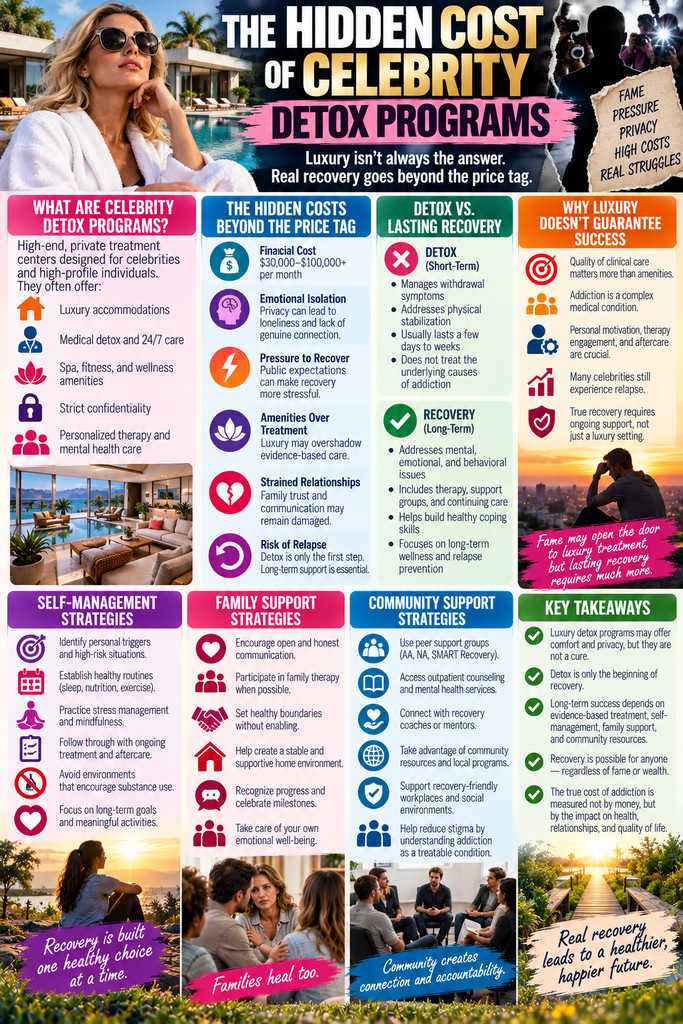
What Are Celebrity Detox Programs?
Celebrity detox programs are typically private addiction treatment services marketed toward wealthy individuals, entertainers, executives, and other high-profile clients.
These programs may offer medically supervised withdrawal, residential rehabilitation, individual counseling, and amenities designed to provide comfort and privacy.
Some facilities emphasize confidentiality and personalized clinical care, while others promote luxury accommodations and wellness experiences.
Common features include:
- Private suites and exclusive residential accommodations.
- Medically supervised withdrawal management.
- Individual psychotherapy and psychiatric evaluation.
- Personalized nutrition and fitness programs.
- Massage, meditation, yoga, and other wellness services.
- Private transportation and enhanced confidentiality procedures.
- Individualized treatment schedules.
- Continuing care and relapse-prevention planning.
These services may improve comfort, but their availability does not establish that a facility provides superior addiction treatment.
The most important consideration is whether the program delivers qualified medical care, evidence-based therapies, and appropriate continuing support.
The Financial Cost of Luxury Detox and Rehabilitation
One of the most visible differences between celebrity-oriented treatment programs and conventional addiction services is cost.
Luxury residential programs may charge tens of thousands of dollars per month, while particularly exclusive facilities can cost considerably more.
Prices vary depending on location, length of stay, clinical services, staffing, and accommodations.
Some programs include medical detoxification and residential rehabilitation in one package, while others charge separately.
Expenses that may increase the total cost
- Initial assessment: Medical and psychiatric evaluations before admission.
- Withdrawal management: Medical monitoring, medications, and specialized nursing services.
- Residential treatment: Accommodations, meals, counseling, and clinical supervision.
- Specialized therapy: Trauma treatment, family counseling, or additional psychiatric services.
- Extended treatment: Longer stays when additional stabilization is needed.
- Aftercare: Outpatient counseling, recovery housing, and follow-up appointments.
- Travel: Transportation, private arrangements, and expenses for accompanying family members.
High costs can make expensive treatment seem more effective.
However, clinical outcomes depend on factors such as treatment quality, patient engagement, appropriate medications, continuity of care, and access to ongoing support.
Hidden Cost #1: Detox Is Not the Same as Addiction Recovery
A common misconception is that completing detoxification means someone has overcome addiction.
Detoxification addresses the physical and medical challenges associated with withdrawal. It does not automatically resolve the psychological, behavioral, and social factors contributing to substance use.
For example, an individual may complete alcohol detoxification but continue experiencing cravings, depression, relationship difficulties, or exposure to previous triggers.
Without continuing treatment, the risk of returning to substance use may remain substantial.
Why detox alone is insufficient
- Cravings may continue after acute withdrawal symptoms improve.
- Emotional distress can persist beyond medical stabilization.
- Unhealthy coping patterns may remain unchanged.
- Family conflicts may continue after discharge.
- Previous social environments may trigger renewed substance use.
- Co-occurring mental health conditions may require additional treatment.
For opioid use disorder, withdrawal management without ongoing evidence-based treatment is particularly concerning because relapse can lead to overdose, especially after tolerance decreases.
Effective addiction care should include a plan for what happens after detoxification ends.
Hidden Cost #2: Emotional Isolation Behind Luxury Accommodations
Celebrity treatment facilities often emphasize privacy and separation from public attention.
For high-profile individuals, confidentiality can reduce stress and protect personal information.
However, recovery also requires meaningful emotional connection.
A private suite, exclusive retreat, or secluded environment does not automatically address loneliness, grief, trauma, or relationship problems.
Some individuals may feel isolated despite receiving expensive treatment.
Others may struggle to discuss personal experiences openly because of concerns about reputation, public judgment, or professional consequences.
Emotional challenges may include
- Shame about acknowledging addiction.
- Fear of public exposure.
- Anxiety about professional reputation.
- Difficulty trusting treatment providers.
- Loneliness during residential treatment.
- Fear of returning to previous environments.
- Pressure to demonstrate rapid recovery.
Clinical programs should address these concerns through appropriate psychotherapy, therapeutic relationships, and individualized recovery planning.
Hidden Cost #3: Fame and Public Expectations Can Complicate Recovery
Celebrities often face public scrutiny when entering addiction treatment.
Media coverage may frame rehabilitation as a scandal, personal failure, or dramatic transformation.
These narratives can create unrealistic expectations about recovery.
A celebrity may leave treatment and immediately face demands to resume touring, filming, performing, or public appearances.
The pressure to appear healthy and successful can interfere with the time needed to establish stable recovery routines.
Challenges associated with public visibility
- Constant media attention surrounding treatment.
- Fear of damaging professional opportunities.
- Public speculation about relapse.
- Pressure to return to work prematurely.
- Difficulty maintaining confidential support relationships.
- Social environments where alcohol or drugs are readily available.
Recovery requires realistic expectations, regardless of a person’s professional status.
Hidden Cost #4: Luxury Amenities Can Overshadow Evidence-Based Treatment
Some high-end facilities advertise spa services, scenic surroundings, gourmet meals, and alternative wellness experiences.
These amenities may improve comfort and reduce stress, but they should not replace clinically established addiction treatments.
Evidence-based approaches may include cognitive behavioral therapy, motivational interviewing, contingency management, and medications for addiction treatment when indicated.
For opioid use disorder, medications such as buprenorphine and methadone are especially important because they reduce overdose and mortality risks.
For alcohol use disorder, medications such as naltrexone and acamprosate may help reduce drinking or support abstinence when clinically appropriate.
Questions to ask before selecting a detox program
- Does the facility provide medically supervised withdrawal management?
- Are licensed addiction specialists and qualified medical professionals available?
- Does the program assess co-occurring psychiatric conditions?
- Are evidence-based medications offered when appropriate?
- Is the facility appropriately licensed or accredited?
- Are treatment plans individualized?
- Does the program coordinate continuing care after discharge?
- Are costs and additional fees explained clearly?
A facility’s clinical quality matters more than its luxury branding.
Hidden Cost #5: Family Relationships May Remain Strained
Addiction can affect spouses, children, parents, and other family members.
Even when someone receives expensive treatment, loved ones may continue experiencing fear, anger, mistrust, or emotional exhaustion.
Families may have experienced repeated broken promises, financial difficulties, secrecy, or unpredictable behavior before treatment began.
Completing detox does not automatically restore trust.
Common family challenges
- Difficulty believing that recovery will continue.
- Anxiety about possible relapse.
- Unresolved conflict related to previous substance use.
- Financial stress from treatment expenses.
- Emotional exhaustion among caregivers.
- Disagreements about boundaries and responsibilities.
Family counseling and ongoing communication may help address these concerns.
Recovery becomes more sustainable when families approach relationships with honesty, accountability, and realistic expectations.
Hidden Cost #6: Returning Home Without Adequate Aftercare
One of the greatest challenges following residential treatment is transitioning back into everyday life.
Inside a treatment facility, individuals may benefit from structured schedules, limited access to substances, and continuous professional support.
After discharge, they must navigate work responsibilities, relationships, stress, and familiar triggers.
Without a clear aftercare plan, these changes can become overwhelming.
Effective aftercare may include
- Regular outpatient addiction counseling.
- Psychiatric follow-up when needed.
- Medications for substance use disorders when indicated.
- Peer-support meetings.
- Recovery coaching or case management.
- Family therapy.
- Recovery housing when appropriate.
- Relapse-prevention planning.
- Emergency support contacts.
A high-quality detox program should begin discharge planning early, not on the final day of treatment.
Self-Management Strategies: Building Recovery Beyond Luxury Treatment
Self-management helps individuals maintain progress after leaving a treatment facility.
Although professional treatment is essential for many substance use disorders, daily behaviors also influence recovery.
1. Identify personal triggers
Triggers may involve stressful situations, particular relationships, emotional distress, or environments associated with previous substance use.
Helpful strategies include:
- Keeping a recovery journal.
- Recognizing cravings and emotional warning signs.
- Avoiding high-risk situations when possible.
- Practicing coping skills learned during treatment.
- Contacting supportive individuals before cravings escalate.
2. Establish consistent routines
Healthy daily routines can provide stability after the structured environment of residential treatment.
Regular sleep, nutritious meals, physical activity, and meaningful responsibilities can support emotional regulation.
For celebrities or professionals with unpredictable schedules, maintaining treatment appointments and getting enough rest may require extra planning.
3. Address co-occurring mental health conditions
Depression, anxiety, trauma-related symptoms, and other psychiatric conditions can complicate addiction recovery.
Integrated treatment helps individuals address substance use and mental health needs together.
Appropriate treatment may include psychotherapy, psychiatric medication, and ongoing clinical monitoring.
4. Develop a relapse-prevention plan
A relapse-prevention plan identifies early warning signs and establishes practical responses.
Individuals should know whom to contact, which coping strategies to use, and how to obtain additional treatment when needed.
For those at risk of opioid overdose, naloxone access and overdose education are important safety measures.
5. Measure recovery through meaningful progress
Don’t evaluate recovery solely by a treatment facility’s cost or prestige.
More meaningful indicators include improved health, reduced harmful substance use, stronger relationships, greater emotional stability, and participation in ongoing treatment.
Family Support Strategies: Helping Without Enabling
Families can play an important role in addiction recovery, but effective support requires clear boundaries and realistic expectations.
Encourage honest communication
Family members can create opportunities to discuss treatment progress, emotional difficulties, and concerns about returning home.
Helpful approaches include:
- Listening without immediately assigning blame.
- Encouraging continued professional treatment.
- Discussing expectations about substance use and recovery.
- Recognizing progress without demanding perfection.
- Respecting the individual’s privacy and autonomy.
Participate in family counseling
Family therapy can help address unresolved conflicts and improve communication.
It may also help loved ones understand addiction as a treatable medical condition while maintaining appropriate accountability.
Establish healthy boundaries
Supporting someone in recovery does not require ignoring harmful behavior.
Families may establish boundaries involving financial assistance, substance use in the home, personal safety, and treatment-related responsibilities.
Support caregivers
Family members may benefit from independent counseling, support groups, and opportunities for rest.
Caregiver well-being is an important part of family recovery.
Community Support Strategies: Recovery Should Not Depend on Wealth
One of the most important issues raised by celebrity detox programs is unequal access to addiction treatment.
While wealthy individuals can afford private residential facilities, many people face barriers related to insurance coverage, transportation, childcare, employment, and provider availability.
Effective addiction treatment should be accessible based on clinical need rather than financial status.
Expand affordable treatment services
Communities can support recovery by increasing access to outpatient counseling, medication treatment, medically supervised withdrawal services, and integrated mental healthcare.
Strengthen peer-support networks
Organizations such as Alcoholics Anonymous, Narcotics Anonymous, and SMART Recovery offer opportunities for peer connection and ongoing encouragement.
Different programs use different approaches, allowing individuals to find support consistent with their needs.
Improve public education
Communities can reduce stigma by explaining that addiction is a treatable health condition rather than a moral failure.
Educational programs should also clarify that detoxification is not equivalent to complete addiction treatment.
Support recovery-friendly workplaces
Employers can help individuals maintain recovery through appropriate medical leave, confidential employee assistance programs, and reasonable accommodations when legally required.
Provide continuing community care
Recovery community organizations, outpatient clinics, housing programs, and social services can help individuals maintain stability after residential treatment.
These resources are particularly valuable when someone lacks extensive financial or family support.
How to Recognize a High-Quality Detox Program
The best treatment program is not necessarily the most expensive.
A clinically appropriate facility should provide safe medical care, qualified professionals, and a clear pathway into continuing addiction treatment.
Essential features to evaluate
- Appropriate licensing and accreditation.
- Qualified medical and behavioral health professionals.
- Medical assessment and withdrawal monitoring.
- Evidence-based addiction treatment.
- Access to medications when clinically indicated.
- Assessment of co-occurring mental health conditions.
- Transparent financial policies.
- Individualized discharge and aftercare planning.
- Respect for patient confidentiality and informed consent.
Potential warning signs include guarantees of permanent recovery, unclear fees, exaggerated success rates, and programs that discourage evidence-based medications without a sound clinical reason.
Lessons From Celebrity Detox Programs
Celebrity detox programs highlight several important realities about addiction treatment.
Wealth does not guarantee recovery. Financial resources may improve access to certain services, but addiction remains a complex medical condition.
Detox is only the beginning. Withdrawal management addresses immediate physical needs, while long-term recovery requires continuing care.
Privacy and comfort have value. Confidentiality and a supportive environment can improve engagement in treatment, but they don’t replace clinical quality.
Families need support too. Addiction can affect entire households, making communication, boundaries, and counseling important.
Community resources matter. Peer support, affordable treatment, and recovery-friendly environments can provide stability after discharge.
Recovery is not a luxury product. Effective treatment depends on evidence-based care, sustained engagement, and individualized support.
Finding Affordable Addiction Treatment and Recovery Support
Individuals seeking addiction treatment do not need to attend an expensive residential facility to receive meaningful care.
In the United States, the Substance Abuse and Mental Health Services Administration provides treatment information and referrals through its National Helpline at 1-800-662-HELP (4357).
The website FindTreatment.gov helps individuals locate substance use and mental health treatment providers.
People experiencing a mental health crisis can call or text 988 for immediate emotional support.
Alcohol or sedative withdrawal can be medically dangerous, and individuals at risk should seek professional assessment before attempting to stop abruptly.
Conclusion: The Real Price of Celebrity Detox Programs
Celebrity detox programs may offer exceptional privacy, comfortable accommodations, and personalized services, but expensive surroundings cannot guarantee lasting recovery.
The hidden costs of addiction treatment often involve more than money. Emotional isolation, family conflict, interrupted careers, inadequate aftercare, and the continuing challenges of addiction can persist long after someone leaves a luxury facility.
Successful recovery depends on three interconnected foundations: self-management to develop healthier coping skills, family support to rebuild trust and emotional connection, and community resources to provide ongoing treatment and accountability.
Whether someone receives treatment in a private luxury retreat or a community-based program, the essential goals remain the same: safety, evidence-based care, emotional healing, and long-term stability.
The true value of addiction treatment isn’t measured by the facility’s price, but by the quality of care and the opportunities it creates for lasting recovery.
Frequently Asked Questions and Answers
1. What are celebrity detox programs?
Celebrity detox programs are private addiction treatment services often marketed toward entertainers, athletes, executives, and other high-profile individuals. These facilities may offer medically supervised withdrawal, private accommodations, personalized counseling, wellness services, and enhanced confidentiality. Although luxury amenities can improve comfort and privacy, effective addiction treatment depends primarily on qualified medical professionals, evidence-based therapies, and continuing recovery support.
2. How much do celebrity detox programs typically cost?
Luxury detox and residential rehabilitation programs may cost $30,000 to $ 100,000+ per month, though prices vary widely by facility, location, services, and length of stay. Some exclusive programs charge substantially higher rates. These are illustrative estimates, not verified industry averages. Additional expenses may include medical assessments, psychiatric treatment, specialized therapy, transportation, and aftercare.
3. Why are celebrity detox programs so expensive?
High-end facilities often charge more because they provide private accommodations, individualized services, extensive staffing, exclusive locations, and additional wellness amenities. Some programs also emphasize enhanced confidentiality and flexible scheduling. However, higher prices do not necessarily indicate better medical treatment or improved recovery outcomes.
4. Are luxury detox programs more effective than traditional rehabilitation centers?
There is insufficient evidence to conclude that luxury detox programs consistently produce better addiction treatment outcomes than conventional facilities. Treatment effectiveness depends on clinical quality, appropriate medications, individualized care, patient engagement, and continuing support. A community-based treatment center offering evidence-based services may be a better fit than an expensive, luxury-focused facility.
5. What is the difference between detoxification and addiction rehabilitation?
Detoxification focuses on managing withdrawal symptoms and stabilizing an individual’s physical condition after reducing or stopping substance use. Rehabilitation addresses the psychological, behavioral, and social factors associated with addiction. Rehabilitation may involve counseling, medications, relapse prevention, and family therapy. Detoxification alone is generally insufficient for long-term recovery.
6. What are the hidden financial costs of celebrity detox programs?
The advertised treatment price may not include every service. Potential additional expenses include:
- Initial medical and psychiatric evaluations.
- Specialized withdrawal medications and medical monitoring.
- Extended residential treatment.
- Individual or family counseling outside the standard package.
- Transportation and private travel arrangements.
- Continuing outpatient treatment.
- Recovery housing and aftercare services.
- Lost income or interrupted professional commitments.
Patients should request a detailed written explanation of fees before entering treatment.
7. Can luxury detox programs guarantee permanent sobriety?
No. No legitimate addiction treatment program can guarantee permanent sobriety or eliminate every possibility of relapse. Substance use disorders can require ongoing treatment and long-term management. Approach facilities promising guaranteed cures or permanent recovery cautiously. Ethical providers explain treatment limitations and develop individualized continuing-care plans.
8. Why do celebrities choose private detox facilities?
Celebrities may seek private treatment because of concerns about confidentiality, public attention, professional obligations, and personal safety. Some also prefer individualized schedules and greater privacy during medical care. These preferences can be reasonable, but confidentiality and luxury should not replace evidence-based treatment.
9. How can public pressure affect a celebrity’s addiction recovery?
Public scrutiny may increase stress, shame, anxiety, and concerns about professional reputation. Celebrities may feel pressured to return to work quickly or demonstrate immediate recovery. Such expectations can interfere with treatment participation and emotional well-being. Confidential counseling, realistic recovery goals, and supportive relationships can help individuals manage these pressures.
10. Can luxury accommodations create emotional isolation during treatment?
Yes, in some circumstances. Private rooms and secluded environments can protect confidentiality, but excessive isolation may limit meaningful social interaction. Recovery often benefits from therapeutic relationships, peer connection, and emotional support. High-quality treatment programs should balance privacy with appropriate opportunities for counseling and supportive engagement.
11. What happens if someone completes detox but does not receive continuing treatment?
Without continuing care, individuals may remain vulnerable to cravings, emotional distress, and a return to substance use. Detoxification addresses immediate withdrawal symptoms but does not necessarily change behaviors or circumstances contributing to addiction. For opioid use disorder, detoxification without ongoing treatment can increase overdose danger if someone returns to opioid use after losing tolerance.
12. What self-management strategies help maintain recovery after detox?
Effective self-management strategies include:
- Identifying personal triggers and high-risk situations.
- Establishing consistent sleep, nutrition, and exercise routines.
- Practicing mindfulness and stress management.
- Attending scheduled therapy and medical appointments.
- Taking prescribed addiction treatment medications as directed.
- Developing healthy hobbies and meaningful activities.
- Maintaining supportive relationships.
- Creating a written relapse-prevention plan.
Self-management should complement professional treatment, not replace it.
13. How can families support someone returning from a luxury detox program?
Families can support recovery by encouraging open communication, respecting treatment recommendations, and maintaining healthy boundaries. Family counseling may help address unresolved conflicts and rebuild trust. Loved ones should avoid assuming that expensive treatment guarantees immediate behavioral changes. Recovery often requires patience, consistency, and continuing professional support.
14. What emotional costs can families experience during addiction treatment?
Family members may experience anxiety, financial stress, resentment, exhaustion, and fear of relapse. They may also struggle with broken trust or uncertainty about the future. These challenges can continue after treatment ends. Counseling, peer-support groups, and caregiver resources can help families manage their own emotional well-being.
15. Why is family therapy important in addiction recovery?
Family therapy can help improve communication, address conflict, establish healthy boundaries, and support relationship repair. It may also educate family members about addiction and recovery. Participation should be appropriate to each family’s circumstances, particularly when relationships involve abuse, coercion, or safety concerns.
16. What community resources can support recovery after detox?
Community support may include outpatient addiction treatment, recovery community centers, peer-support groups, psychiatric services, recovery housing, and employment assistance. Organizations such as Alcoholics Anonymous, Narcotics Anonymous, and SMART Recovery provide different approaches to peer support. These resources can help individuals stay connected and accountable after residential treatment.
17. Can affordable addiction treatment be as effective as celebrity rehabilitation?
Yes. Affordable treatment can provide high-quality care when it includes appropriate medical supervision, evidence-based counseling, addiction treatment medications, and continuing support. Treatment outcomes depend more on clinical appropriateness and sustained engagement than luxury accommodations. Outpatient treatment may suit many individuals, while others need residential or inpatient services.
18. What should someone look for when choosing a detox facility?
Important considerations include:
- Appropriate state licensing and accreditation.
- Qualified medical and addiction treatment professionals.
- Safe withdrawal management.
- Evidence-based treatment methods.
- Access to medications for addiction treatment.
- Assessment of co-occurring mental health conditions.
- Transparent pricing and insurance information.
- Individualized treatment planning.
- Continuing-care and relapse-prevention services.
- Clear patient rights and confidentiality policies.
Individuals should also ask whether medical staff are available when withdrawal complications occur.
19. What are warning signs of an ineffective or unethical detox program?
Warning signs may include guarantees of permanent recovery, unclear treatment fees, misleading success rates, unqualified staff, and exaggerated claims about alternative therapies. Programs that discourage evidence-based medications without appropriate clinical justification may also raise concerns. Patients should be wary of aggressive sales tactics or pressure to commit financially right away.
20. Are spa treatments, yoga, and meditation effective addiction treatments?
Wellness activities may improve relaxation, emotional regulation, sleep, and overall quality of life. However, they should generally be considered complementary services rather than replacements for evidence-based addiction treatment. For many substance use disorders, clinical counseling, appropriate medications, and continuing care remain essential.
21. Why is medication-assisted treatment important in addiction recovery?
Medications for addiction treatment can reduce cravings, withdrawal symptoms, and other risks associated with substance use disorders. For opioid use disorder, medications such as methadone and buprenorphine reduce overdose and mortality risks. For alcohol use disorder, medications such as naltrexone and acamprosate can support recovery when appropriate. Treatment decisions should be individualized and supervised by qualified healthcare professionals.
22. How can someone prevent relapse after leaving a detox facility?
Relapse prevention involves recognizing warning signs, developing coping strategies, maintaining treatment, and building a supportive environment. Individuals may benefit from regular counseling, medications when indicated, peer-support meetings, and structured routines. A written plan should explain what to do if cravings increase or substance use resumes. Returning to use should prompt timely reassessment rather than shame.
23. What role does mental health treatment play in celebrity detox programs?
Mental health treatment is important because depression, anxiety, trauma-related disorders, bipolar disorder, and other psychiatric conditions can occur alongside addiction. Integrated care addresses both substance use and mental health symptoms. Effective programs provide psychiatric assessment and appropriate treatment rather than assuming detoxification will resolve underlying psychological difficulties.
24. Can addiction recovery succeed without residential rehabilitation?
Yes. Many individuals recover through outpatient treatment, medications, counseling, peer support, and community-based services. Residential rehabilitation is appropriate for some people, particularly when intensive structure or medical supervision is needed. The appropriate level of care depends on withdrawal risks, psychiatric symptoms, medical conditions, living environment, and individual treatment needs.
25. What is the greatest hidden cost of celebrity detox programs?
The greatest hidden cost may be the mistaken belief that expensive treatment automatically produces lasting recovery. When luxury amenities overshadow evidence-based care, individuals may leave treatment without adequate coping skills, continuing services, or supportive relationships.
Financial expenses matter, but untreated addiction can also affect physical health, emotional well-being, family relationships, employment, and quality of life.
26. How can communities make addiction treatment more accessible?
Communities can improve treatment access by expanding affordable outpatient services, supporting medications for substance use disorders, increasing mental health provider availability, and strengthening recovery support networks. Transportation assistance, recovery housing, workplace protections, and public education can also reduce barriers to care.
27. Does insurance cover luxury detox and rehabilitation programs?
Insurance coverage varies by policy, medical necessity, provider network, and the services provided. Some plans cover medically necessary withdrawal management or residential addiction treatment but do not pay for luxury accommodations and nonessential amenities. Individuals should verify benefits, prior authorization requirements, deductibles, and out-of-pocket costs before admission.
28. Where can someone find affordable addiction treatment?
In the United States, the Substance Abuse and Mental Health Services Administration provides treatment information and referrals through its National Helpline at 1-800-662-HELP (4357).
Individuals can also visit FindTreatment.gov to locate substance use and mental health treatment providers.
People experiencing emotional crises can call or text 988 for immediate support.
Alcohol and benzodiazepine withdrawal can be medically dangerous. Individuals who may be physically dependent on these substances should obtain medical advice before stopping abruptly.
29. What are the most important lessons from celebrity detox programs?
Celebrity detox programs demonstrate that addiction recovery depends on much more than financial resources.
Important lessons include:
- Luxury accommodations do not guarantee better treatment outcomes.
- Detoxification is only one component of addiction care.
- Professional treatment and appropriate medications can improve recovery outcomes.
- Family relationships may require ongoing healing.
- Community resources provide continuing support.
- Recovery plans should address mental health and relapse prevention.
- Affordable, evidence-based treatment can be effective.
- Long-term recovery requires continued attention and individualized care.
30. What is the difference between the cost of treatment and the value of recovery?
The cost of treatment refers to financial expenses such as medical services, residential accommodations, medications, and counseling.
The value of recovery is broader. It includes improvements in physical health, emotional stability, relationships, independence, and quality of life.
Evaluate a program’s value by its clinical quality, appropriateness, and ability to connect patients with ongoing care, not by price alone.
Video: This Is What Celebrity Rehab Doesn’t Show You #rehab #hollywood