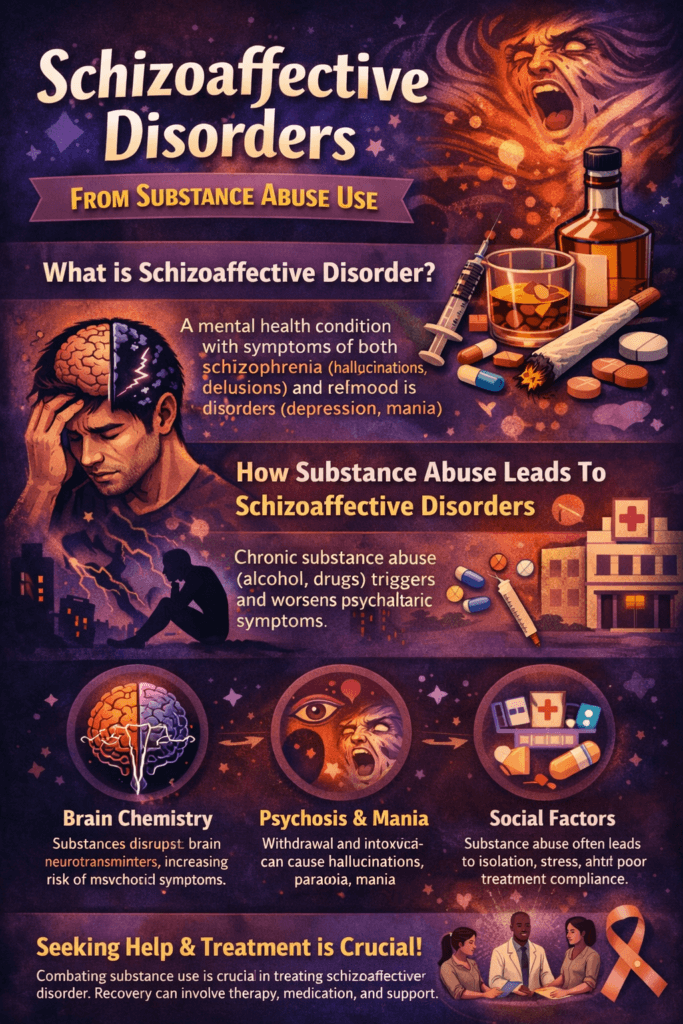
Substance abuse can disrupt brain systems that regulate mood, perception, and cognition—functions also affected in schizoaffective disorders. Drugs that alter dopamine, serotonin, and glutamate may trigger psychosis, mood instability, or both, especially in people with genetic vulnerability, trauma history, or chronic stress. While substances don’t always directly cause the disorder, they can hasten onset, worsen symptoms, or reveal underlying conditions. Recognizing this link is important because early awareness and prevention can reduce risk and improve long-term outcomes.
How Substance Abuse Can Lead to Schizoaffective Disorders: Understanding the Brain–Mood–Psychosis Link
Substance abuse can profoundly affect the brain systems that regulate mood, perception, and reality testing. In some individuals—especially those with biological or psychological vulnerability—chronic drug exposure may contribute to the development or unmasking of conditions such as schizoaffective disorder. Research highlighted by the National Institute of Mental Health and the World Health Organization shows that repeated substance use can disrupt neurotransmitter pathways tied to both psychosis and mood regulation. Understanding this connection is critical because early awareness can lead to prevention, early treatment, and improved long-term outcomes.
The Neurochemical Impact of Substance Abuse
Many substances directly alter the signaling of dopamine, serotonin, and glutamate. Dopamine dysregulation is strongly linked to psychotic symptoms such as hallucinations and delusions, while serotonin and mood-related circuits influence depressive and manic states. Repeated exposure to stimulants, cannabis, hallucinogens, or polysubstance use can destabilize these systems, potentially producing both psychotic features and mood disturbances—the defining components of schizoaffective disorder.
Substance Use as a Trigger in Vulnerable Individuals
Substances do not usually “cause” schizoaffective disorder by themselves. Instead, they often act as triggers in people who already have underlying risk factors, such as genetic predisposition, trauma history, or chronic stress. Drugs can accelerate symptom onset, intensify severity, or bring forward a disorder that might otherwise have appeared later in life. Adolescents and young adults are especially vulnerable because their brains are still developing.
Mood Instability and Psychosis: A Dangerous Combination
Schizoaffective disorder differs from schizophrenia because it includes significant mood episodes alongside psychotic symptoms. Substance abuse can destabilize emotional regulation, leading to extreme mood swings—periods of euphoria, agitation, or deep depression. When these mood disruptions occur alongside drug-induced psychotic experiences, the brain may begin to reinforce abnormal perception and emotional instability patterns, increasing risk for persistent psychiatric illness.
The Role of Sleep, Stress, and Neurotoxicity
Chronic substance use often disrupts sleep cycles and raises stress hormones such as cortisol. Severe sleep deprivation alone can cause hallucinations and paranoia. Meanwhile, some drugs have neurotoxic effects that impair brain regions responsible for decision-making, impulse control, and emotional regulation. Over time, these combined factors can weaken the brain’s resilience, making it harder to return to stable functioning.
Clinical Insight
Substance abuse can function as both a trigger and an amplifier of psychiatric illness. While it may not directly create schizoaffective disorder in every case, it can significantly increase the likelihood of onset, worsen symptom severity, and complicate recovery. The encouraging reality is that early intervention, abstinence, psychiatric care, and psychosocial support can stabilize symptoms and often prevent progression.
Self-Management Strategies to Avoid Substance Abuse That Can Lead to Schizoaffective Disorders
Substance use can destabilize brain systems involved in mood regulation, perception, and stress response—systems already vulnerable in individuals at risk for schizoaffective disorders. Prevention is therefore not just about avoiding drugs; it’s about strengthening neurological resilience, emotional regulation, and decision-making skills. Guidance from organizations such as the National Institute of Mental Health and the Substance Abuse and Mental Health Services Administration emphasizes that consistent self-management practices significantly lower both substance misuse and psychiatric symptom onset. When individuals learn to regulate their internal environment, they reduce the likelihood that substances will be used as coping tools or triggers for psychotic and mood symptoms.
Understand Personal Risk Factors
Self-awareness is a primary protective factor. Individuals with a family history of psychotic or mood disorders, trauma exposure, or chronic stress may be more sensitive to the psychiatric effects of substances. Tracking emotional patterns, stress triggers, and early warning signs—such as sleep disruption, paranoia, or mood swings—helps identify when risk is rising. Awareness allows proactive action before unhealthy coping behaviors begin.
Build Healthy Coping Mechanisms
Many people use substances to escape distress or regulate emotions. Replacing these habits with healthy coping tools reduces reliance on external chemicals. Evidence-based strategies include mindfulness, physical activity, structured routines, creative outlets, and relaxation training. These practices naturally regulate cortisol and dopamine, stabilizing mood and reducing cravings.
Protect Sleep and Brain Stability
Sleep is one of the strongest natural safeguards against both substance misuse and psychotic symptoms. Irregular sleep disrupts emotional regulation and decision-making, increasing impulsivity and vulnerability to substance use. Maintaining consistent sleep times, limiting stimulants, and creating a calming nighttime routine helps preserve neurological balance and cognitive clarity.
Strengthen Decision-Making Skills
Avoiding substance use often depends on the ability to pause, evaluate consequences, and choose long-term well-being over short-term relief. Cognitive-behavioral strategies—such as identifying distorted thoughts, challenging impulsive urges, and rehearsing refusal skills—train the brain’s executive functions. Over time, these skills increase confidence and reduce susceptibility to peer pressure or emotional triggers.
Develop a Structured Lifestyle
Routine stabilizes both mood and perception. Regular meals, exercise, social interaction, and meaningful activities create predictable rhythms that the brain relies on for regulation. Structure also reduces idle time, boredom, and isolation—common triggers for substance use. Consistency is particularly protective for individuals prone to mood fluctuations.
Build Supportive Accountability Systems
Self-management does not mean managing everything alone. Trusted friends, mentors, therapists, or peer recovery groups can provide feedback, encouragement, and early intervention if warning signs appear. Accountability strengthens commitment to healthy choices and reinforces reality-based thinking, which is especially important for individuals vulnerable to psychosis.
Clinical Perspective
Preventing substance abuse in those at risk for schizoaffective disorders is fundamentally about strengthening internal stability. Drugs destabilize neurotransmitters, but self-management stabilizes them. When individuals cultivate awareness, emotional regulation, healthy habits, and supportive networks, they build psychological resilience that protects against both addiction and psychiatric illness. Early self-management is not merely prevention—it is proactive mental health care that safeguards long-term cognitive and emotional functioning.
Family Support Strategies to Prevent Substance Abuse Linked to Schizoaffective Disorders
Families are one of the most powerful protective forces against both substance misuse and serious mental health conditions. Supportive home environments can reduce stress, strengthen emotional regulation, and help individuals develop coping skills that lower their risk of psychiatric complications. Organizations such as the National Institute of Mental Health and the Substance Abuse and Mental Health Services Administration emphasize that consistent family involvement improves prevention outcomes, especially for individuals with genetic, developmental, or psychological vulnerability. When families recognize risks early and respond with structure, education, and compassion, they can significantly reduce the likelihood that substance use will contribute to mood instability or psychotic symptoms.
Recognizing Early Warning Signs Together
Families often notice subtle behavioral or emotional changes before anyone else. Early warning signs may include sleep disruption, withdrawal from activities, irritability, suspicious thinking, or sudden mood shifts. Addressing these signs calmly and early prevents escalation. Gentle check-ins—rather than confrontations—encourage openness and reduce the likelihood that individuals will turn to substances to cope.
Creating a Stable Emotional Environment
Emotional stability at home directly affects brain stability. High-conflict environments increase stress hormones, which can intensify impulsivity, mood swings, and vulnerability to substance use. Predictable routines, respectful communication, and emotional safety help regulate nervous system responses and strengthen resilience against both addiction and psychiatric symptoms.
Modeling Healthy Coping Skills
Family members serve as behavioral models. Demonstrating healthy stress management—such as exercise, problem-solving, emotional expression, and relaxation techniques—teaches adaptive coping without substances. When families openly discuss mental health and normalize seeking help, individuals are more likely to choose constructive coping strategies.
Encouraging Healthy Structure and Routine
Consistent daily structure helps stabilize mood and thinking patterns. Families can support this by promoting regular sleep schedules, balanced meals, productive activities, and limited exposure to high-risk environments. Structure reduces boredom and emotional instability, both of which are common triggers for substance experimentation.
Supporting Professional Help When Needed
Families play a crucial role in connecting loved ones to professional support. Encouraging therapy, psychiatric evaluation, or early screening when symptoms appear can prevent substance use from becoming a coping mechanism. Offering transportation, helping schedule appointments, or attending sessions when appropriate demonstrates support without control or judgment.
Building Trust and Open Communication
Open dialogue is one of the strongest protective factors. Individuals who feel heard and respected are more likely to share struggles, cravings, or distress early. Effective communication includes listening without interrupting, validating emotions, avoiding criticism, and setting clear but compassionate boundaries. Trust creates a safe space for honesty, which allows families to intervene before substance use escalates.
Clinical Perspective
Preventing substance abuse in individuals vulnerable to schizoaffective disorders is a shared process. Families who provide stability, understanding, and early guidance help regulate stress systems and reinforce healthy decision-making pathways in the brain. Rather than acting as enforcers, supportive families function as partners in prevention—strengthening resilience, reducing risk, and promoting long-term mental wellness.
Community Resource Strategies to Prevent Substance Abuse Linked to Schizoaffective Disorders
Communities play a vital role in preventing substance misuse and reducing the risk of serious psychiatric conditions such as schizoaffective disorders. While individual and family efforts matter, population-level prevention systems create environments where early symptoms are recognized, treatment is accessible, and healthy alternatives are readily available. Public health leaders like the Substance Abuse and Mental Health Services Administration and the World Health Organization emphasize that coordinated community resources significantly reduce addiction risk and improve mental health outcomes. When communities invest in prevention infrastructure, they don’t just treat illness—they prevent it from developing.
Early Screening and Prevention Programs
Early identification is one of the strongest predictors of positive outcomes. Community-based screening programs in schools, clinics, and outreach centers can detect early signs of emotional distress, substance experimentation, or emerging psychotic symptoms. These programs allow professionals to intervene before patterns become entrenched, helping individuals receive counseling, education, or referrals at the earliest stage of risk.
Accessible Treatment and Support Services
When treatment is easily accessible, individuals are more likely to seek help early rather than wait until symptoms worsen. Communities that provide affordable counseling, substance-use treatment programs, psychiatric care, and peer support groups create a safety net that stabilizes mental health and reduces reliance on substances. Accessibility includes transportation options, flexible scheduling, culturally competent care, and reduced financial barriers.
Safe Social and Recreational Alternatives
Positive environments reduce the appeal of substance use. Youth centers, mentorship programs, sports leagues, arts initiatives, and volunteer opportunities provide structure, purpose, and a sense of belonging. These protective factors strengthen self-esteem and social connection—two key elements that lower both addiction risk and vulnerability to mood or psychotic disorders.
Crisis Response and Early Intervention Systems
Communities that establish rapid-response mental health systems can intervene when warning signs first appear. Crisis lines, mobile response teams, and psychiatric urgent care services allow individuals experiencing distress, substance misuse, or early psychotic symptoms to receive immediate support. Quick intervention often prevents escalation into severe psychiatric episodes or substance dependence.
Education and Anti-Stigma Campaigns
Public awareness campaigns that explain addiction and mental illness as treatable medical conditions reduce shame and encourage early help-seeking. Educational workshops in schools, workplaces, and community centers help people recognize warning signs, understand risk factors, and know where to find help. When stigma decreases, individuals are more willing to seek support before symptoms worsen.
Community-Level Clinical Insight
Preventing substance abuse and protecting mental health requires a systems approach. Screening programs identify risk, treatment services provide stabilization, social programs strengthen resilience, and crisis teams intervene during emergencies. Together, these resources form a coordinated network that reduces the likelihood that substance use will trigger severe psychiatric conditions such as schizoaffective disorders. Communities that prioritize prevention create environments where recovery is possible—and where many crises never occur.
Frequently Asked Questions
Here are some common questions:
1. What is schizoaffective disorder?
Schizoaffective disorder is a mental health condition involving symptoms of schizophrenia (hallucinations, delusions, disorganized thinking) along with mood disorder symptoms such as depression or mania.
2. Can substance use cause schizoaffective disorder?
Substances do not directly “create” the disorder in most cases, but they can trigger psychotic and mood symptoms that resemble or unmask schizoaffective disorder, especially in people with genetic or neurological vulnerability.
3. Which substances are most likely to trigger symptoms?
Common triggers include stimulants (methamphetamine, cocaine), hallucinogens (LSD, psilocybin), cannabis (especially high-THC strains), alcohol withdrawal, and certain synthetic drugs.
4. Is substance-induced psychosis the same as schizoaffective disorder?
No. Substance-induced psychosis occurs during or shortly after drug use and may resolve with sobriety. Schizoaffective disorder is a chronic psychiatric condition that persists beyond substance effects.
5. How can clinicians tell the difference?
Diagnosis depends on the timeline and symptom persistence. If psychotic or mood symptoms continue after the substance has cleared from the body, clinicians may consider a primary psychiatric disorder rather than a substance-induced one.
6. Can drug use worsen existing schizoaffective disorder?
Yes. Substance use can intensify hallucinations, destabilize mood episodes, reduce medication effectiveness, and increase relapse risk.
7. Are some people more vulnerable than others?
Yes. Risk factors include family history of psychotic disorders, trauma exposure, early drug use, brain injury, and preexisting anxiety or mood disorders.
8. Can symptoms go away after stopping substances?
Sometimes. Substance-induced symptoms often improve with detox and abstinence. However, if an underlying disorder exists, symptoms may persist and require psychiatric treatment.
9. What treatments help?
Treatment usually combines antipsychotic medication, mood stabilizers or antidepressants, psychotherapy, and substance use treatment such as counseling or medication-assisted therapy.
10. What is the most important step for recovery?
Sustained abstinence from triggering substances is critical. Continued use greatly increases the risk of recurrent psychosis and mood instability.
11. Is cannabis safe for people with psychotic disorders?
No. Cannabis—especially high-potency THC—has been strongly linked to worsening psychosis and earlier onset of schizophrenia-spectrum conditions.
12. Can early intervention make a difference?
Absolutely. Early treatment improves long-term functioning, reduces hospitalization risk, and increases chances of recovery stability.
Conclusion
Understanding how substance use interacts with psychiatric vulnerability highlights the importance of prevention, early intervention, and comprehensive care. Avoiding or reducing substance exposure, maintaining emotional and neurological stability, and seeking timely mental health support can significantly lower the likelihood that substance use will contribute to serious conditions such as schizoaffective disorder. When individuals, families, and communities work together to promote education, access treatment, and reduce stigma, they create protective environments that support both recovery and mental wellness. Ultimately, awareness transforms risk into opportunity—allowing people to recognize warning signs early and take steps that safeguard long-term psychological health.
Video: The Addiction-Schizophrenia Connection Your Doctor Won’t Explain #MentalWellness #Science