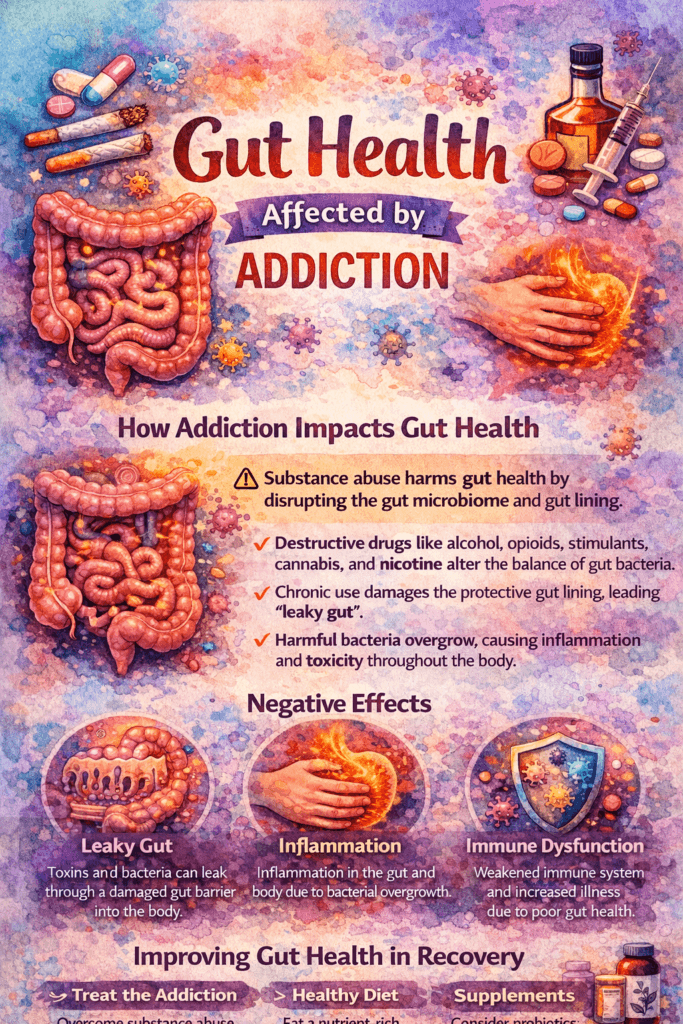
Gut health is increasingly recognized as a critical component of overall well-being, and addiction can significantly disrupt this delicate system. Substances such as alcohol, opioids, stimulants, and other drugs can alter the balance of gut bacteria, damage the intestinal lining, and interfere with nutrient absorption. Because the digestive tract communicates directly with the brain through the gut–brain axis, these physical changes can influence mood, cognition, stress response, and cravings. As a result, addiction often creates a cycle in which poor gut health worsens mental health symptoms, which in turn can increase vulnerability to continued substance use. Understanding this connection highlights why recovery must address not only behavior and brain chemistry but also digestive and metabolic health.
Gut Health Affected by Addiction: How Substance Use Disrupts the Microbiome–Brain Connection
Addiction does not only affect the brain—it also profoundly alters gut health, immune balance, and metabolism. The digestive system and nervous system communicate constantly through what scientists call the gut–brain axis, a network linking intestinal microbes, neurotransmitters, hormones, and inflammation pathways. Research highlighted by the National Institute on Drug Abuse and the World Health Organization shows that chronic substance use can damage gut lining integrity, disrupt microbiome diversity, and trigger systemic inflammation. These changes may worsen mood instability, cravings, anxiety, and cognitive function—creating a feedback loop that reinforces addiction.
How Substances Disrupt the Gut Microbiome
The gut microbiome contains trillions of microorganisms that regulate digestion, immunity, and even mental health. Alcohol, stimulants, opioids, and certain drugs can reduce beneficial bacteria while promoting harmful strains. This imbalance—called dysbiosis—can lead to inflammation, nutrient malabsorption, and weakened immune defense. Because gut bacteria help produce neurotransmitters like serotonin and dopamine, microbial disruption can directly affect mood and emotional regulation.
The Gut–Brain Axis and Mental Health
The gut and brain communicate through nerves, hormones, and immune signaling. When substances damage the intestinal lining, toxins and inflammatory molecules may enter the bloodstream and affect brain function. This can intensify anxiety, depression, irritability, and cognitive fog—symptoms that often increase relapse risk. In some cases, chronic inflammation may also heighten vulnerability to psychiatric complications.
Digestive Symptoms Linked to Addiction
People struggling with substance use frequently report gastrointestinal issues such as nausea, constipation, diarrhea, abdominal pain, acid reflux, or appetite changes. Opioids slow gut motility, alcohol irritates the stomach lining, and stimulants suppress appetite and disrupt digestion. Over time, these effects can impair nutritional status and weaken overall physical health.
Recovery and Gut Repair
Healing the gut is an important but often overlooked part of addiction recovery. Evidence suggests that restoring microbiome balance through nutrition, hydration, sleep regulation, and medical care can improve mood stability, immune function, and energy levels. Diets rich in fiber, fermented foods, lean protein, and anti-inflammatory nutrients help rebuild beneficial bacteria. Some individuals may benefit from probiotics, medical evaluation, or gastrointestinal treatment to repair long-term damage.
Clinical Perspective
Addiction is a whole-body condition, not just a behavioral or neurological one. The gut and brain function as an integrated system, so when substances disrupt digestion and microbiota balance, mental health often suffers as well. Addressing gut health alongside psychological and behavioral treatment can strengthen recovery outcomes, reduce cravings, and improve overall well-being. Recognizing this connection expands treatment from symptom control to true biological restoration.
Self-Management Strategies to Improve Gut Health Affected by Addiction
Addiction can significantly disrupt digestive function, weaken the intestinal lining, and alter the balance of beneficial gut bacteria. Because the gut and brain communicate through the gut–brain axis, these changes can worsen cravings, mood instability, fatigue, and inflammation. Health organizations such as the National Institute on Drug Abuse and the World Health Organization emphasize that recovery is most effective when both neurological and physical health are addressed. Self-management strategies aimed at restoring gut balance can strengthen overall recovery, support emotional stability, and improve long-term wellness.
Nourish the Microbiome with Healing Nutrition
Nutrition is one of the fastest ways to repair gut damage caused by substance use. Fiber-rich foods such as vegetables, fruits, legumes, and whole grains feed beneficial bacteria and promote intestinal healing. Fermented foods like yogurt, kefir, kimchi, and sauerkraut provide natural probiotics that help restore microbial diversity. Lean proteins and healthy fats support tissue repair, while reducing processed foods, excessive sugar, and artificial additives prevents further gut irritation.
Rehydrate and Restore Digestive Function
Substance use often causes dehydration, electrolyte imbalance, and slowed digestion. Drinking adequate water throughout the day helps restore intestinal motility, improve nutrient absorption, and flush toxins. Herbal teas and electrolyte-balanced fluids can further support digestive recovery, especially during early sobriety.
Repair Sleep and Circadian Rhythm
Sleep regulates both brain chemistry and gut bacteria. Irregular sleep patterns—common during substance use—can disrupt microbiome balance and increase inflammation. Establishing consistent sleep schedules, reducing screen exposure before bed, and creating a calming nighttime routine help normalize both digestive and neurological function.
Manage Stress to Protect Gut Integrity
Chronic stress weakens the intestinal barrier and promotes the growth of harmful bacteria. Stress-reduction practices such as mindfulness, breathing exercises, gentle exercise, or time in nature lower cortisol levels and improve gut resilience. These techniques also reduce relapse triggers by stabilizing emotional regulation.
Support Detoxification and Healing Habits
Avoiding alcohol, recreational drugs, and unnecessary medications allows the digestive system to repair itself. Gradual lifestyle changes—such as eating regular meals, limiting caffeine intake, and engaging in physical activity—help restore gut motility and immune balance. Some individuals may benefit from medically supervised supplements or probiotics, especially if long-term substance use has caused persistent digestive symptoms.
Clinical Perspective
Improving gut health during addiction recovery is more than a comfort measure—it is a biological strategy for stabilizing the entire body–brain system. A balanced microbiome supports neurotransmitter production, immune regulation, and the control of inflammation, all of which influence mood, cognition, and cravings. Individuals who actively manage nutrition, sleep, hydration, and stress often experience improved energy, clearer thinking, and stronger resilience against relapse. Healing the gut helps heal the mind, reinforcing recovery from the inside out.
Family Support Strategies to Improve Gut Health Affected by Addiction
Addiction can disrupt digestion, damage the intestinal lining, and alter the balance of beneficial gut bacteria, affecting both physical health and emotional stability. Because the gut and brain communicate continuously through immune, hormonal, and neural pathways, restoring digestive health is an important part of recovery. Leading public health authorities, such as the National Institute on Drug Abuse and the World Health Organization, highlight that recovery outcomes improve when families participate actively in lifestyle stabilization and health promotion. Supportive family environments can help individuals rebuild gut health by encouraging consistent nutrition, reducing stress, and reinforcing healthy daily habits.
Encouraging Nutrient-Rich Meals at Home
Families can play a major role in restoring gut health by helping prepare balanced meals rich in fiber, probiotics, and anti-inflammatory nutrients. Cooking together promotes accountability and creates a positive relationship with food. Meals that include vegetables, fruits, whole grains, fermented foods, and lean protein help replenish beneficial gut bacteria and repair digestive tissues damaged by substance use.
Supporting Hydration and Physical Recovery
Substance use often leads to dehydration and electrolyte imbalance, which can worsen digestive symptoms. Families can encourage regular hydration by keeping water accessible, offering herbal teas, and modeling healthy beverage choices. Gentle encouragement rather than pressure helps individuals build sustainable habits.
Creating a Low-Stress Environment
Stress is a major factor in gut inflammation and microbiome imbalance. A calm, predictable household environment supports both emotional and digestive healing. Families can reduce stress by maintaining consistent routines, resolving conflicts respectfully, and promoting open communication. Emotional safety allows the body’s nervous system to shift from survival mode into healing mode.
Reinforcing Healthy Daily Routines
Regular schedules for meals, sleep, exercise, and relaxation help regulate the gut microbiome and improve metabolic balance. Families can assist by encouraging structured routines and participating together in healthy activities such as walking, stretching, or preparing meals. Shared routines strengthen motivation and make healthy habits easier to maintain.
Encouraging Medical and Nutritional Support
Sometimes digestive damage from substance use requires professional care. Families can help by supporting appointments with healthcare providers, nutritionists, or therapists and by assisting with transportation or reminders. Encouraging medical evaluation for persistent digestive symptoms ensures that underlying issues are addressed early.
Clinical Perspective
Healing gut health after addiction is a collaborative process. While individuals make daily choices that affect recovery, family support strengthens those efforts by providing structure, encouragement, and emotional stability. When families promote healthy nutrition, hydration, stress reduction, and routine, they help restore microbiome balance and reduce inflammation—biological changes that can improve mood, cognition, and resilience. In this way, family involvement becomes not only emotional support but also a physiological ally in recovery.
Community Resource Strategies to Improve Gut Health Affected by Addiction
Recovery from addiction involves more than abstaining from substances—it requires restoring whole-body health, including digestive and microbiome function. Substance use can disrupt gut bacteria, damage the intestinal lining, impair nutrient absorption, and trigger inflammation that affects mood and cognition. Public health authorities such as the World Health Organization and the Substance Abuse and Mental Health Services Administration emphasize that community-based health systems significantly improve recovery outcomes when they address both medical and lifestyle factors. Community resources can provide education, access to nutrition and healthcare services, and supportive environments that help individuals repair gut health and strengthen long-term recovery.
Community Nutrition and Food Access Programs
Access to nutritious food is essential for rebuilding the microbiome and repairing digestive damage. Community gardens, food banks, meal programs, and nutrition classes help individuals obtain fiber-rich, probiotic-supporting foods that may otherwise be inaccessible. These programs not only improve physical health but also reduce stress related to food insecurity, which can worsen inflammation and relapse risk.
Integrated Medical and Behavioral Health Clinics
Integrated clinics that combine addiction treatment, primary care, and nutrition counseling allow patients to address digestive symptoms alongside recovery needs. Healthcare providers can evaluate gastrointestinal issues, monitor nutritional deficiencies, and recommend treatment plans tailored to individuals recovering from substance use. Coordinated care improves adherence and promotes faster healing.
Peer Support and Wellness Programs
Peer recovery groups and wellness initiatives promote healthy lifestyle habits that benefit gut health. Group exercise, mindfulness sessions, stress-management workshops, and recovery education classes reduce inflammation, improve digestion, and strengthen immune function. These programs also provide social connection, which supports emotional stability and reduces the risk of relapse.
Housing and Stability Resources
Stable housing is strongly linked to better health outcomes. Individuals with secure living conditions are more likely to maintain consistent meals, sleep schedules, and medical care—all of which are crucial for restoring gut function. Community housing programs, case management services, and employment assistance create structured environments that promote both digestive recovery and psychological stability.
Public Education and Prevention Initiatives
Community education campaigns about addiction, nutrition, and gut health empower individuals with practical knowledge. Workshops, outreach events, and school programs can teach how substances affect digestion, how diet influences mental health, and how lifestyle choices support recovery. When communities share accurate information, stigma decreases and help-seeking increases.
Community-Level Clinical Insight
Healing gut health after addiction is most successful when supported by a network of accessible resources. Nutrition programs rebuild microbiome balance, integrated clinics treat underlying conditions, wellness groups reinforce healthy habits, and stable housing supports routine. Together, these community systems create an environment that supports biological recovery. By addressing both social and medical determinants of health, communities help individuals restore digestive function, strengthen resilience, and sustain long-term recovery.
Frequently Asked Questions
Here are some common questions:
1. How does addiction affect gut health?
Substance use disrupts the gut microbiome, damages the intestinal lining, and alters digestion, leading to inflammation, nutrient deficiencies, and immune dysfunction.
2. What is the gut microbiome?
It’s the community of bacteria and microorganisms living in the digestive tract that regulates digestion, immunity, mood, and metabolism.
3. Which substances harm the gut most?
Alcohol, opioids, stimulants, nicotine, and certain prescription drugs commonly damage gut lining, reduce beneficial bacteria, and promote harmful microbes.
4. Can addiction cause “leaky gut”?
Yes. Chronic substance use can weaken the intestinal barrier, allowing toxins and bacteria to enter the bloodstream—often referred to as increased intestinal permeability, or “leaky gut.”
5. Why does gut health affect mental health?
The gut and brain communicate through the gut-brain axis via nerves, hormones, and immune signals. Gut imbalance can worsen anxiety, depression, and cognitive symptoms.
6. Does withdrawal affect digestion?
Yes. During withdrawal, people may experience nausea, diarrhea, cramping, appetite changes, and slowed or accelerated digestion as the nervous system recalibrates.
7. Can gut health improve after stopping substances?
Often yes. With abstinence, proper nutrition, hydration, and treatment, the microbiome can gradually rebalance, and intestinal tissue can heal.
8. What symptoms suggest addiction-related gut problems?
Common signs include chronic bloating, abdominal pain, constipation or diarrhea, reflux, malnutrition, fatigue, and frequent infections.
9. How can someone repair gut health in recovery?
Key strategies include stopping substance use, eating fiber-rich foods, consuming probiotics or fermented foods, managing stress, and getting medical care for deficiencies or inflammation.
10. Are probiotics helpful?
They can be beneficial in restoring healthy gut bacteria, but effectiveness depends on strain, dose, and individual health status, so medical guidance is recommended.
11. Does nutrition matter in recovery?
Absolutely. Substance use often causes vitamin deficiencies (especially B vitamins, magnesium, and zinc), so balanced nutrition supports both gut healing and brain recovery.
12. When should someone see a doctor?
Seek medical evaluation if there is severe abdominal pain, blood in stool, persistent vomiting, unexplained weight loss, or digestive symptoms lasting more than a few weeks.
Conclusion
Recognizing the impact of addiction on gut health expands the way we approach treatment and recovery. Healing the digestive system through proper nutrition, hydration, sleep, stress regulation, and medical support can improve both physical strength and emotional stability. When gut balance is restored, inflammation decreases, energy improves, and neurotransmitter production becomes more stable—factors that support clearer thinking and reduced relapse risk. Viewing recovery through a whole-body lens allows individuals, families, and healthcare providers to address underlying biological imbalances, promoting long-term wellness rather than short-term symptom relief.
Video: This is Why Addicts Struggle With Digestion #BrainGutAxis #RecoveryScience #WellnessRecovery