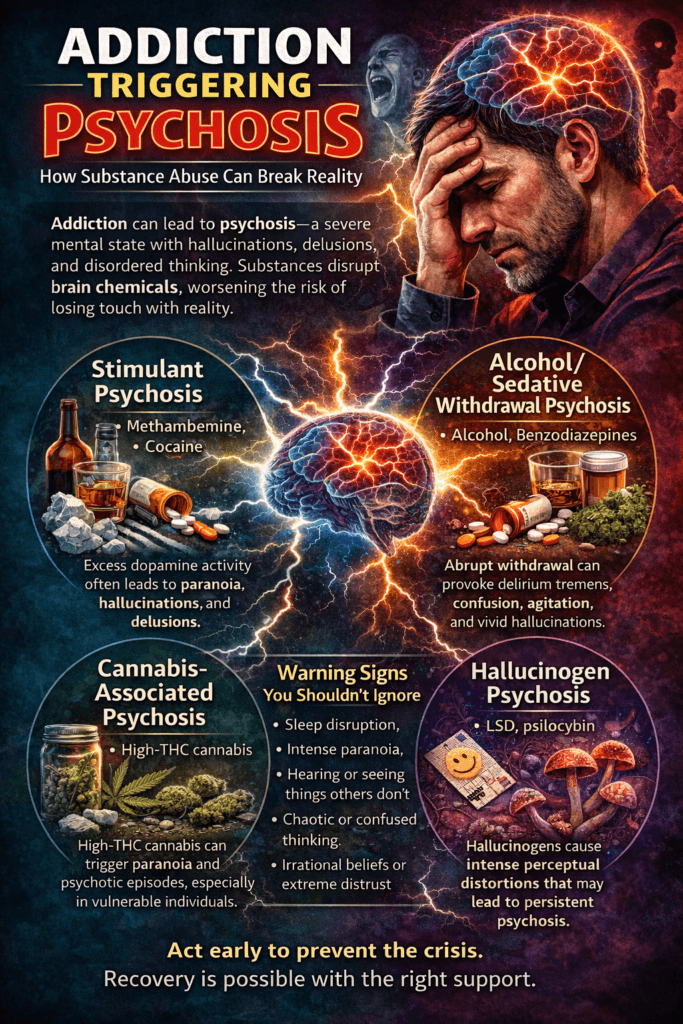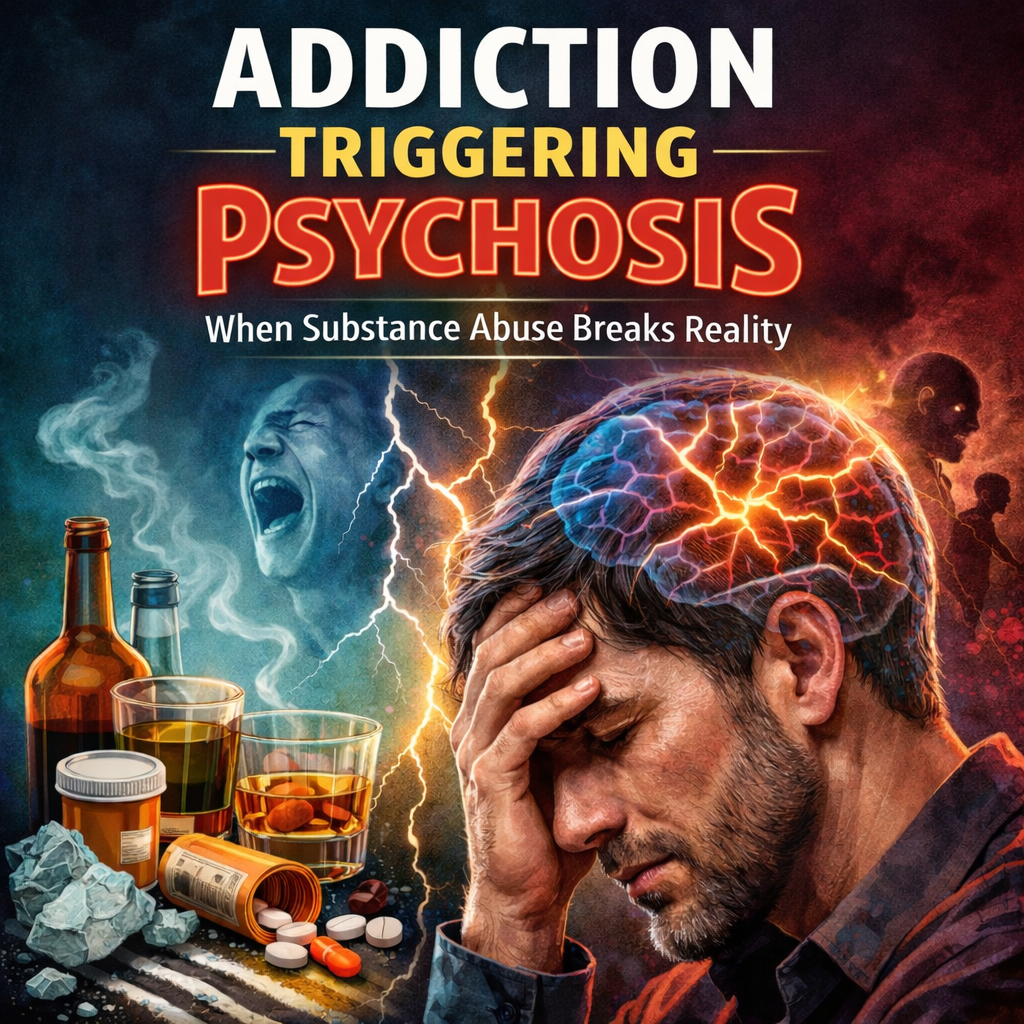
Psychosis triggered by addiction is a serious neuropsychiatric complication that occurs when substances disrupt brain systems controlling perception, reality testing, and emotion. Drugs such as stimulants, cannabis, hallucinogens, alcohol, and sedatives can alter key neurotransmitters, leading to hallucinations, paranoia, or delusions—often during intoxication, withdrawal, or prolonged use. Risk increases with factors like sleep deprivation, stress, trauma, or genetic vulnerability. Recognizing this link is important because substance-induced psychosis is often preventable and can be reversible with early treatment.
How Addiction Can Trigger Psychosis: Understanding the Brain–Substance Connection
Addiction does more than change behavior—it can profoundly alter brain chemistry, perception, and reality testing. Psychosis is a serious mental state characterized by hallucinations, delusions, and disorganized thinking, and substance use is one of its most common medical triggers. According to the National Institute on Drug Abuse and the World Health Organization, substance-induced psychosis is a well-documented clinical condition that can occur during intoxication, withdrawal, or long-term neurochemical changes caused by drugs.
Stimulants and Psychosis
Powerful stimulants such as methamphetamine, cocaine, and high-dose prescription amphetamines can overstimulate dopamine pathways in the brain. Dopamine is heavily involved in reward, motivation, and perception. Excess dopamine activity—especially in the mesolimbic system—is strongly linked to psychotic symptoms. Individuals may experience paranoia, auditory hallucinations, or fixed false beliefs, sometimes indistinguishable from primary psychotic disorders. Chronic stimulant exposure can sensitize the brain, meaning even small amounts later may rapidly trigger psychosis.
Alcohol and Sedative Withdrawal Psychosis
While some drugs cause psychosis during intoxication, others trigger it during withdrawal. Alcohol and benzodiazepines depress the central nervous system; when abruptly stopped after heavy use, the brain rebounds into hyperexcitable states. Severe withdrawal can lead to delirium tremens—a life-threatening condition involving confusion, agitation, tremors, and vivid hallucinations. This form of psychosis is medical emergency territory and requires supervised detoxification.
Cannabis and Vulnerable Brains
Cannabis-related psychosis is increasingly recognized, particularly with high-THC products. For individuals with genetic vulnerability, prior trauma, or early-onset use, cannabis may precipitate acute psychotic episodes. Research suggests repeated exposure can unmask underlying psychiatric conditions, meaning the drug doesn’t just trigger symptoms—it may accelerate their onset.
Why Addiction Raises Psychosis Risk
Several overlapping mechanisms explain the connection:
- Neurochemical overload: Drugs disrupt dopamine, glutamate, and serotonin systems involved in perception and reality testing.
- Sleep deprivation: Many substances reduce sleep, and prolonged sleep loss alone can induce hallucinations.
- Neurotoxicity: Chronic exposure damages brain circuits that regulate emotion and cognition.
- Stress sensitization: Addiction increases cortisol and stress reactivity, which can worsen psychiatric vulnerability.
Clinical Insight: Substance-Induced vs Primary Psychosis
Distinguishing between drug-induced psychosis and conditions like schizophrenia is essential. Substance-induced cases often improve after detox and stabilization, whereas primary psychotic disorders persist. However, repeated substance-induced episodes may increase long-term psychiatric risk, especially in adolescents or individuals with family histories of mental illness.
Recovery Perspective
From a recovery and clinical standpoint, psychosis linked to addiction is both a warning sign and an opportunity for intervention. Early treatment—detoxification, medication when indicated, therapy, and relapse prevention—can restore cognitive stability and reduce recurrence. Importantly, the presence of psychosis signals a need for comprehensive care, not judgment. With structured treatment and support, many individuals fully regain clarity and function.
Types of Psychosis Triggered by Addiction: Clinical Forms and Warning Signs
Substance use can provoke several distinct forms of psychosis, each tied to how different drugs affect brain chemistry, stress systems, and perception pathways. Health authorities such as the National Institute on Drug Abuse and the World Health Organization recognize substance-induced psychosis as a serious medical condition that may appear during intoxication, withdrawal, or prolonged use. Understanding the specific type helps clinicians choose safer detox strategies and tailor treatment plans.
Stimulant-Induced Psychosis
Stimulants such as methamphetamine, cocaine, and high-dose amphetamines commonly produce psychotic symptoms because they dramatically increase dopamine signaling. Excess dopamine overstimulates brain regions responsible for threat detection and meaning-making, often leading to paranoia, persecutory delusions, and auditory hallucinations. Long-term stimulant exposure can sensitize the brain so that even minimal use later triggers rapid psychotic relapse.
Alcohol or Sedative Withdrawal Psychosis
Unlike stimulants, depressants such as alcohol or benzodiazepines typically cause psychosis during withdrawal rather than intoxication. When these substances are stopped suddenly, the brain rebounds into a hyperexcitable state. Severe cases may progress to delirium tremens, characterized by confusion, agitation, vivid hallucinations, and autonomic instability. This form is life-threatening and requires urgent medical supervision.
Cannabis-Associated Psychosis
High-potency cannabis can trigger acute psychotic episodes, particularly in adolescents or individuals with genetic or psychiatric vulnerability. Symptoms may include distorted time perception, paranoia, and disorganized thinking. While some episodes resolve after the drug clears, repeated exposure increases the risk of persistent psychotic disorders, especially when use begins early in brain development.
Hallucinogen-Induced Psychosis
Hallucinogens such as LSD or psilocybin directly alter serotonin signaling, producing profound perceptual distortions. In some individuals, especially those predisposed to mental illness, these altered states can evolve into prolonged psychosis. A related condition, hallucinogen persisting perception disorder (HPPD), involves recurring visual disturbances long after drug use has stopped.
Polysubstance-Related Psychosis
Many people with substance use disorders consume multiple drugs simultaneously. Combining stimulants, depressants, cannabis, or hallucinogens increases neurochemical instability and raises psychosis risk beyond that of any single drug. Mixed intoxication can also complicate diagnosis because symptoms overlap and fluctuate.
Clinical Perspective
Substance-triggered psychosis is not simply a side effect—it is a neurological emergency signal. Episodes often indicate severe neurochemical disruption, sleep deprivation, or toxic stress levels in the brain. Early intervention, stabilization, and sustained recovery support significantly improve outcomes. Importantly, many individuals regain full cognitive stability when substance use stops and treatment begins promptly.
Self-Management Strategies to Prevent Psychosis Triggered by Addiction
Psychosis linked to substance use is often preventable when individuals learn how to stabilize brain chemistry, manage triggers, and protect mental health. Research highlighted by the National Institute on Drug Abuse and the Substance Abuse and Mental Health Services Administration shows that early self-management skills significantly reduce relapse risk, psychiatric complications, and hospitalization. Because addiction alters dopamine, stress hormones, sleep cycles, and perception pathways, prevention requires consistent habits that regulate both body and mind.
1. Monitor Early Warning Signs
Psychosis rarely appears suddenly; it is often preceded by subtle warning signs such as sleep disruption, heightened anxiety, suspicious thinking, or sensory sensitivity. Tracking mood, sleep, cravings, and stress levels helps individuals identify patterns before symptoms escalate. Daily logs or digital trackers can reveal when stress and substance urges overlap—an early signal to intervene.
2. Protect Sleep and Circadian Rhythm
Sleep deprivation alone can produce hallucinations and paranoia, even without drug use. Substances like stimulants, alcohol, and cannabis disrupt REM cycles and circadian rhythm regulation. Establishing consistent sleep schedules, limiting screens before bedtime, and avoiding substances late in the day stabilizes brain neurotransmitters and reduces psychosis vulnerability.
3. Regulate Stress Before It Escalates
Chronic stress amplifies dopamine dysregulation and increases the risk of both relapse and psychotic symptoms. Evidence-based stress-reduction practices such as mindfulness, diaphragmatic breathing, grounding exercises, and physical activity lower cortisol and restore emotional regulation. When practiced consistently, these techniques act as neurological buffers against substance-induced psychiatric instability.
4. Avoid High-Risk Substances and Situations
Preventing psychosis often requires strict avoidance of drugs most strongly associated with psychotic reactions—especially stimulants, synthetic cannabinoids, hallucinogens, and high-potency cannabis. Environmental triggers also matter. Social settings involving heavy substance use, sleep deprivation, or high stress can destabilize recovery and should be replaced with structured, supportive environments.
5. Strengthen Cognitive Reality Checks
Developing skills that reinforce reality testing can help individuals recognize when thoughts become distorted. Strategies include questioning unusual beliefs, seeking feedback from trusted supports, and grounding attention in sensory facts. Cognitive-behavioral techniques train the brain to distinguish perception from interpretation, reducing the likelihood that stress or cravings evolve into psychosis.
6. Build a Relapse-Prevention Framework
Self-management is most effective when structured. This includes:
- Identifying personal triggers
- Creating a written crisis plan
- Listing emergency contacts
- Scheduling regular therapy or peer support
- Maintaining medication adherence if prescribed
Having a prepared plan reduces impulsive decisions during vulnerable moments.
Clinical Insight
Psychosis prevention is not only about avoiding substances—it is about stabilizing the entire nervous system. Addiction affects sleep, stress, cognition, and emotional regulation simultaneously, so protective strategies must target all of these domains. Individuals who consistently practice self-management skills develop stronger neural resilience, meaning their brains become less reactive to stress and less susceptible to psychotic symptoms.
Family Support Strategies to Prevent Psychosis Triggered by Addiction
Families play a powerful protective role in reducing the risk of psychosis related to substance use. Psychosis often develops when biological vulnerability, stress, and drug exposure intersect. According to the Substance Abuse and Mental Health Services Administration and National Alliance on Mental Illness, consistent family involvement improves treatment adherence, lowers relapse rates, and helps detect psychiatric warning signs early. Supportive family environments stabilize stress hormones, reinforce healthy habits, and provide reality-checking feedback that can prevent substance-related psychotic episodes.
Recognizing Early Behavioral Changes
Psychosis rarely appears without warning. Families often notice subtle shifts first—withdrawal, suspiciousness, sleep disruption, mood swings, or unusual beliefs. Learning to identify these early signs allows loved ones to intervene before symptoms escalate. Calm observation rather than confrontation encourages openness and reduces defensiveness.
Creating a Low-Stress Home Environment
High stress is a major trigger for both relapse and psychosis. Households that maintain predictable routines, respectful communication, and emotional safety reduce neurological overload. Consistent meal times, sleep schedules, and structured daily activities help regulate brain chemistry and promote stability during recovery.
Encouraging Treatment Engagement
Families can gently support treatment participation by helping schedule appointments, offering transportation, or attending therapy sessions when appropriate. Encouragement should be collaborative rather than controlling. When individuals feel supported rather than pressured, they are more likely to remain engaged in care and to communicate honestly about symptoms.
Practicing Supportive Communication Skills
Healthy communication protects mental stability. Families can reduce the risk of psychosis by using techniques such as:
- speaking calmly and clearly
- avoiding criticism or blame
- validating emotions even when disagreeing with beliefs
- asking open-ended questions
- setting firm but respectful boundaries
These approaches reduce emotional escalation, which is known to worsen psychiatric symptoms and increase relapse risk.
Building a Safety and Crisis Plan
Every family supporting someone in recovery should have a written plan for psychiatric emergencies. This includes recognizing warning signs of psychosis, knowing whom to contact, identifying nearby treatment centers, and outlining steps for safe intervention. Planning ahead prevents panic and ensures fast, coordinated action if symptoms appear.
Clinical Perspective
Family support is not just emotional—it is neurological protection. Stable relationships reduce cortisol, improve sleep patterns, and reinforce reality-based thinking, all of which help prevent psychosis in individuals vulnerable due to substance use. Families who educate themselves about addiction and mental health become active partners in recovery rather than passive observers. With knowledge, structure, and compassion, they can significantly lower the likelihood of substance-triggered psychiatric crises.
Community Resource Strategies to Prevent Psychosis Triggered by Addiction
Preventing substance-related psychosis is not solely an individual or family responsibility—it requires coordinated community systems that reduce risk factors and intervene early. Public health authorities such as the World Health Organization and the Substance Abuse and Mental Health Services Administration emphasize that accessible services, early screening, and social support networks significantly lower the likelihood of addiction-related psychiatric crises. Communities that build strong prevention infrastructures create environments where early symptoms are recognized, treatment is available, and individuals are supported before psychosis develops.
Early Screening and Outreach Programs
Community screening initiatives identify individuals at risk before symptoms escalate. Schools, clinics, shelters, and outreach teams can provide brief mental health and substance-use assessments that detect early warning signs such as sleep disruption, paranoia, or escalating drug use. Early detection allows for timely referral to treatment, which dramatically reduces the risk of psychotic episodes.
Crisis Response and Rapid Intervention Systems
Rapid-response crisis teams are essential safeguards. When individuals show signs of severe intoxication, withdrawal, or emerging psychosis, trained responders can provide de-escalation, assessment, and safe transport to care. Communities with dedicated psychiatric crisis lines and mobile response units see fewer hospitalizations, arrests, and long-term complications because intervention occurs quickly.
Accessible Treatment and Recovery Services
Treatment availability strongly predicts psychiatric stability. Communities that provide affordable detox programs, outpatient therapy, medication-assisted treatment, and peer recovery groups reduce relapse rates and psychosis risk. When services are geographically close, financially accessible, and culturally responsive, individuals are more likely to seek help early rather than waiting until symptoms become severe.
Stable Housing and Social Support Networks
Housing instability and social isolation are major predictors of both substance relapse and psychiatric deterioration. Supportive housing programs, vocational training, and case management services provide structure, routine, and purpose—key protective factors for brain stability. When individuals feel safe and connected, stress hormones decrease, reducing vulnerability to psychosis.
Public Education and Anti-Stigma Campaigns
Community education reduces fear, misinformation, and delayed treatment. Workshops, school programs, and media campaigns that explain addiction as a medical condition encourage earlier help-seeking and compassionate responses. Reducing stigma increases the likelihood that individuals disclose symptoms before they progress into psychosis.
Community-Level Clinical Insight
Psychosis prevention is most effective when communities act as integrated care ecosystems. Screening identifies risk, crisis services stabilize emergencies, treatment programs restore neurochemical balance, and social supports maintain recovery. When these systems work together, they form a protective network that prevents addiction from escalating into severe psychiatric illness. Communities that invest in coordinated behavioral health resources don’t just treat crises—they prevent them.
Frequently Asked Questions
Here are some common questions:
What is addiction-induced psychosis?
Addiction-induced psychosis is a mental state in which substance use disrupts brain chemistry enough to cause hallucinations, delusions, paranoia, or disorganized thinking. It can occur during intoxication, withdrawal, or long-term exposure to drugs that alter dopamine and serotonin signaling.
Which substances most commonly trigger psychosis?
Substances most associated with psychosis include stimulants (methamphetamine, cocaine, amphetamines), high-potency cannabis, hallucinogens, alcohol withdrawal, and sedative withdrawal. Risk increases with high doses, frequent use, sleep deprivation, and mixing multiple drugs.
Is drug-induced psychosis permanent?
Often, it is temporary and improves once the substance leaves the body and the brain stabilizes. However, repeated episodes can increase the risk of long-term psychiatric disorders, especially in people with genetic or psychological vulnerability.
How can you tell the difference between psychosis and a bad reaction to drugs?
A bad reaction may involve anxiety or panic, but psychosis typically includes loss of reality testing—such as hearing voices, seeing things that are not present, or believing false ideas despite evidence. A medical evaluation is necessary to distinguish between them.
Can someone experience psychosis even after stopping drugs?
Yes. Withdrawal states—particularly from alcohol or sedatives—can trigger psychosis hours to days after stopping. Some individuals may also develop delayed symptoms due to lingering neurochemical imbalance.
Who is at the highest risk?
Higher-risk individuals include those with:
- a personal or family history of psychotic disorders
- early-onset substance use
- trauma exposure
- chronic stress or sleep deprivation
- heavy or long-term drug use
What should you do if someone shows signs of psychosis?
Treat it as a medical emergency. Stay calm, reduce stimulation, avoid arguing about delusions, and seek professional help immediately. Rapid treatment greatly improves outcomes and safety.
Can psychosis from addiction be prevented?
Yes, many cases are preventable. Protective factors include avoiding high-risk substances, maintaining sleep and stress balance, staying engaged in treatment, and having supportive family or community networks. Early intervention when warning signs appear is one of the most effective prevention strategies.
Why is education about this topic important?
Understanding the link between addiction and psychosis reduces stigma and encourages early help-seeking. Recognizing symptoms quickly allows treatment before complications develop, improving recovery chances and protecting long-term mental health.
Conclusion
Psychosis linked to addiction is both a warning signal and an opportunity for intervention. It indicates that the brain is under severe neurochemical strain and requires stabilization through abstinence, medical care, and psychosocial support. With timely treatment, structured recovery strategies, and supportive environments, many individuals regain full cognitive clarity and emotional stability. Prevention remains the most powerful approach—combining education, early detection, and coordinated support systems can significantly reduce risk. Recognizing psychosis as a medical consequence of substance use rather than a personal failing promotes compassionate care, encourages help-seeking, and ultimately improves long-term recovery outcomes.
Video: This Happens to Your Brain During Substance Psychosis #MentalHealth #Education