Addiction can affect people from every profession and background, including religious leaders who dedicate their lives to helping others. Clergy members may face unique challenges when dealing with substance use disorders, including public expectations, feelings of shame, professional responsibilities, and concerns about seeking confidential treatment.
Father Stephen Donnelly’s story offers an opportunity to explore the relationship between addiction, spirituality, emotional well-being, and recovery. However, reliable details about his personal addiction history have not yet been established, so it is important not to attribute specific substances, diagnoses, treatment experiences, or recovery milestones to him without supporting evidence.
Understanding addiction among clergy can nevertheless offer valuable lessons about self-management, family relationships, and community support. These principles demonstrate that recovery is not a failure of faith or character, but a process that benefits from compassionate, evidence-based treatment and meaningful human connection.
Early Life and the Roots of Addiction
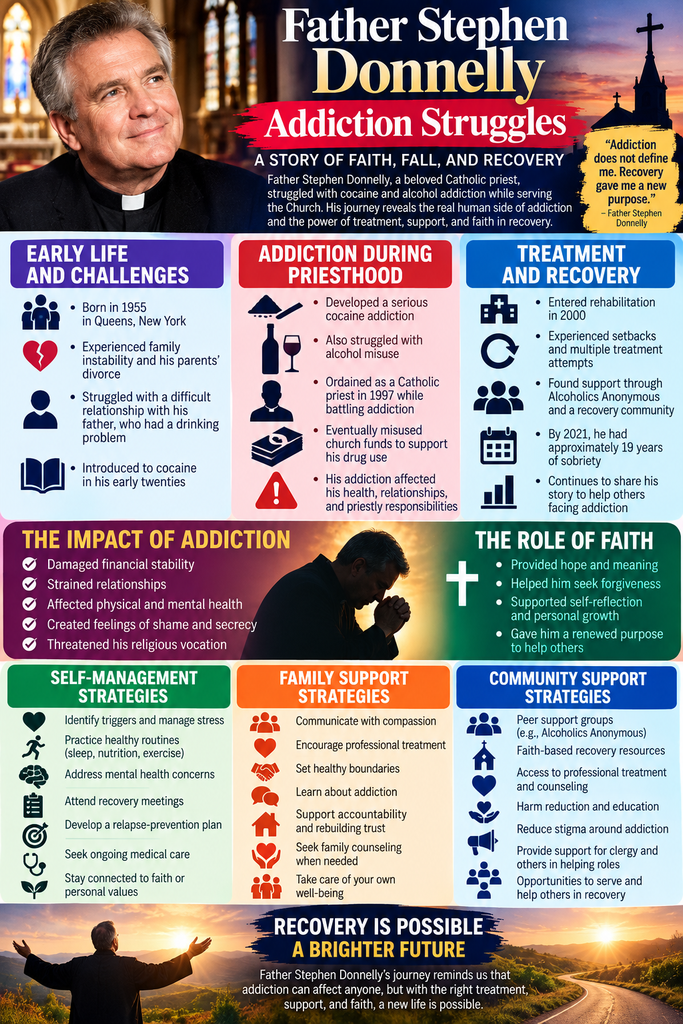
Stephen H. Donnelly was born in Queens, New York, in 1955. His childhood included family instability, particularly his parents’ divorce and a difficult relationship with his father, whose drinking affected the family.
According to his memoir, A Saint and a Sinner: The Rise and Fall of a Beloved Catholic Priest, written with Diane O’Bryan, Donnelly was introduced to cocaine in his early twenties. Substance use gradually became a serious problem that followed him into adulthood.
In 1997, at age 42, he was ordained as a Roman Catholic priest. Although he was respected for his religious dedication, he continued to struggle privately with addiction.
His experience illustrates several risk factors associated with addiction:
- Family instability: Childhood experiences involving parental conflict or problematic drinking may contribute to emotional vulnerability.
- Early exposure to substances: Experimentation can progress into compulsive use.
- Secrecy and shame: Concealing substance use may delay treatment.
- Professional pressure: Expectations surrounding religious leadership can make it difficult to admit personal struggles.
- Emotional isolation: Individuals may feel unable to discuss their difficulties openly.
These factors do not automatically cause addiction, but they can influence its development and progression.
Cocaine and Alcohol Addiction During His Priesthood
Donnelly’s addiction became increasingly serious during his early years as a priest.
While serving parishioners and fulfilling religious responsibilities, he was privately struggling with cocaine dependence and alcohol misuse.
His substance use eventually affected his financial stability, relationships, and ability to maintain the commitments associated with his religious position.
According to accounts of his memoir, Donnelly exhausted personal savings and took money from church funds to support his cocaine use. His addiction became known to fellow clergy, leading to intervention and treatment.
How addiction can affect religious leaders
- Impaired judgment and decision-making.
- Difficulty maintaining professional responsibilities.
- Increased secrecy and emotional distress.
- Financial problems related to substance use.
- Damage to personal and community trust.
- Conflicts between personal behavior and religious commitments.
Donnelly’s experience demonstrates that spiritual devotion does not eliminate the biological and psychological effects of substance dependence.
Addiction is a treatable medical condition, and religious leaders deserve access to the same evidence-based healthcare as anyone else.
Rehabilitation and the Difficult Road to Recovery
In 2000, approximately three years after his ordination, Donnelly entered rehabilitation for the first time.
His recovery was not immediate. He experienced setbacks and underwent multiple periods of treatment before establishing sustained sobriety.
In later interviews, Donnelly described the importance of confronting denial, accepting help, and developing accountability.
By September 2021, published accounts reported that he had maintained approximately 19 years of sobriety.
Lessons from his rehabilitation experience
Acknowledging addiction: Recovery often begins when individuals recognize that substance use has become harmful and difficult to control.
Accepting professional treatment: Addiction specialists can help address cravings, behavioral patterns, and co-occurring mental health conditions.
Learning from setbacks: A return to substance use signals the need to reassess treatment and support rather than abandon recovery.
Developing accountability: Honest communication with trusted people can help interrupt patterns of secrecy.
Building long-term support: Continuing care and peer recovery programs can help sustain progress after formal rehabilitation.
His experience shows why addiction recovery should be viewed as a continuing process rather than a single treatment event.
Self-Management Strategies for Addiction Recovery
Self-management involves developing practical skills that help individuals maintain recovery, manage emotional distress, and make healthier decisions.
For religious leaders, this may require balancing spiritual commitments with evidence-based medical and psychological care.
Effective self-management strategies
- Identify triggers: Recognize stress, loneliness, shame, and situations associated with previous substance use.
- Establish healthy routines: Maintain regular sleep, nutritious meals, exercise, and scheduled activities.
- Practice emotional regulation: Use counseling, mindfulness, journaling, and relaxation techniques.
- Attend recovery meetings: Participate in Alcoholics Anonymous, SMART Recovery, or other appropriate support groups.
- Develop a relapse-prevention plan: Identify warning signs and establish steps for obtaining help.
- Address financial consequences: Seek professional guidance when addiction has caused debt or financial misconduct.
- Maintain medical care: Obtain appropriate screening and treatment for substance-related health problems.
- Practice honest self-reflection: Recognize personal vulnerabilities without allowing guilt to prevent treatment.
Spiritual practices may provide additional meaning and encouragement, but prayer and religious commitment should complement, not replace, medical treatment.
The Role of Faith and Spirituality in Recovery
Faith played a significant role in Donnelly’s personal identity and recovery narrative.
Despite his struggles, he continued to describe his religious beliefs as important to his understanding of forgiveness, responsibility, and personal transformation.
His memoir explores the tensions between religious expectations, human vulnerability, and the process of making amends.
For some people, spirituality provides motivation to pursue recovery. Others find meaning through family, service, personal values, or secular communities.
How spirituality may support recovery
- Encouraging hope during difficult periods.
- Providing a sense of purpose and belonging.
- Supporting reflection and personal accountability.
- Offering opportunities for forgiveness and reconciliation.
- Creating relationships with supportive individuals.
- Encouraging service to others.
Spirituality is not a substitute for addiction treatment, and recovery does not require religious belief.
The most effective approach respects the individual’s values while incorporating appropriate medical and psychological interventions.
Family Support: Addressing Addiction With Compassion
Donnelly’s account of his childhood and family relationships highlights how family experiences can shape emotional development.
However, family difficulties should not be treated as the sole explanation for addiction.
Family members can help people recover by offering encouragement, supporting treatment, and maintaining appropriate boundaries.
Family support strategies
- Communicate without judgment: Discuss concerns respectfully rather than relying on criticism or shame.
- Encourage professional help: Help loved ones find qualified treatment providers.
- Learn about addiction: Understand the effects of substance dependence on behavior, motivation, and decision-making.
- Set healthy boundaries: Avoid enabling harmful behavior or concealing serious misconduct.
- Support accountability: Encourage individuals to take responsibility for their actions and make appropriate amends.
- Participate in family counseling: Address communication problems and unresolved conflicts when safe and appropriate.
- Protect caregiver well-being: Seek personal support through counseling or family recovery organizations.
Family support should balance compassion with responsibility.
Loved ones can encourage recovery, but they cannot control another person’s decisions or guarantee sobriety.
Community Support and the Importance of Alcoholics Anonymous
One of the defining elements of Donnelly’s recovery was his involvement with Alcoholics Anonymous.
He became known in recovery circles for discussing his experiences as a former priest who had struggled with addiction.
Following his rehabilitation, Donnelly also became involved in helping others affected by substance use disorders.
During his years at St. Patrick’s Church in Huntington, New York, he was recognized for his work with parishioners and people affected by heroin addiction.
Community recovery strategies
Peer support programs
Alcoholics Anonymous, Narcotics Anonymous, and SMART Recovery can provide encouragement and opportunities to learn from others.
Faith-based recovery services
Religious organizations can offer supportive environments, as long as they respect individual choice and encourage professional treatment.
Accessible addiction healthcare
Communities should provide screening, counseling, medication treatment when indicated, and continuing care.
Recovery mentorship
People with lived experience can help others navigate treatment and establish healthier routines.
Public education
Educational programs can challenge misconceptions about addiction and reduce barriers to seeking help.
Confidential assistance for clergy
Religious institutions should establish clear procedures allowing clergy members to seek professional addiction treatment without unnecessary public exposure or humiliation, while preserving safeguarding and accountability responsibilities.
Community involvement can help individuals rebuild social connections and develop a sense of purpose beyond their addiction history.
Rebuilding Trust After Addiction
One of the most difficult aspects of addiction recovery involves repairing relationships damaged by dishonesty, secrecy, or harmful decisions.
For Donnelly, rebuilding trust also meant meeting the expectations and responsibilities of religious leadership.
His memoir describes professional consequences and his eventual departure from active priestly ministry following events in 2018. His departure should not be confused with evidence of a substance-use relapse.
Recovery from addiction and restoration to a professional role are separate matters. Maintaining sobriety does not automatically resolve every ethical, financial, or institutional concern.
Strategies for rebuilding trust
- Accept responsibility for past behavior without making excuses.
- Demonstrate consistent behavioral change over time.
- Make appropriate financial or personal restitution.
- Respect the boundaries of those you have harmed.
- Seek counseling when relationships remain strained.
- Maintain transparency with appropriate support systems.
- Recognize that forgiveness and reconciliation may take time.
Trust is rebuilt through sustained actions, not promises alone.
Turning Personal Struggles Into Advocacy
In 2020, Donnelly published A Saint and a Sinner: The Rise and Fall of a Beloved Catholic Priest, co-written with Diane O’Bryan.
The memoir examines his experiences with addiction, religious life, rehabilitation, personal relationships, and the consequences of his decisions.
Through interviews and public discussions, he has described the challenges of living with addiction while maintaining a respected public identity.
His willingness to discuss these experiences has contributed to broader conversations about substance use disorders among clergy.
How lived experience can help others
- Reduce shame associated with seeking addiction treatment.
- Encourage honest conversations about substance dependence.
- Demonstrate the importance of professional rehabilitation.
- Help families understand the challenges of recovery.
- Promote compassion toward people with substance use disorders.
- Reinforce the importance of accountability and continuing care.
Sharing a recovery story can be meaningful, but individuals should never feel pressured to publicly disclose private medical information.
Important Lessons From Father Stephen Donnelly’s Journey
Donnelly’s experiences offer several important lessons about addiction, recovery, and personal responsibility.
- Addiction does not discriminate. Religious leaders, healthcare professionals, educators, and other respected individuals can develop substance use disorders.
- Secrecy can delay treatment. Fear of judgment may prevent people from asking for help.
- Recovery may involve multiple treatment attempts. Setbacks do not eliminate the possibility of lasting improvement.
- Faith and medical treatment can coexist. Spiritual beliefs may support recovery alongside professional healthcare.
- Accountability remains essential. Addiction helps explain certain behaviors but does not erase responsibility for harm.
- Family and community support matter. Compassionate relationships can strengthen motivation and reduce isolation.
- Helping others can provide purpose. Peer support and service may contribute to a meaningful life in recovery.
His story also emphasizes the importance of separating a person’s addiction history from their overall worth and dignity.
Where to Find Help for Addiction
People experiencing alcohol or cocaine addiction can benefit from professional assessment and individualized treatment.
Evidence-based treatment for cocaine use disorder may include contingency management and cognitive behavioral therapy. Alcohol use disorder treatment may involve counseling and medications such as naltrexone or acamprosate when clinically appropriate.
For individuals with significant alcohol dependence, abruptly stopping alcohol can cause dangerous withdrawal symptoms, including seizures. Medical supervision may be necessary.
Helpful resources include:
- SAMHSA National Helpline: 1-800-662-HELP (4357).
- FindTreatment.gov: A directory of substance use and mental health treatment services.
- Alcoholics Anonymous: Peer support for people seeking recovery from alcohol addiction.
- Narcotics Anonymous: Peer support for people recovering from drug addiction.
- SMART Recovery: Evidence-informed mutual support focused on coping skills and behavioral change.
Conclusion: Faith, Accountability, and the Possibility of Recovery
Father Stephen Donnelly’s experiences with cocaine and alcohol addiction reveal the challenges of maintaining a respected public identity while privately struggling with substance dependence.
His journey included secrecy, professional consequences, multiple rehabilitation experiences, and the gradual development of long-term recovery.
Through treatment, peer support, spiritual reflection, and personal accountability, he described rebuilding key parts of his life and finding ways to help others.
His story reinforces three interconnected approaches: self-management to build healthier behaviors, family support to encourage compassionate accountability, and community resources to sustain recovery.
For religious leaders and others facing addiction, seeking treatment should be understood as an act of responsibility rather than weakness.
Ultimately, Donnelly’s journey illustrates that recovery does not erase the past, but it can provide opportunities for meaningful change, renewed purpose, and service to others.
Frequently Asked Questions and Answers
Understanding Father Stephen Donnelly’s Addiction
1. Who is Father Stephen Donnelly?
Stephen H. Donnelly is a former Roman Catholic priest who served communities on Long Island, New York. Ordained in 1997, he became known for his pastoral work and later for publicly discussing his struggles with addiction. His memoir examines his experiences with religious life, substance use, recovery, and personal challenges.
2. What substances did Father Stephen Donnelly struggle with?
Donnelly has described struggling with cocaine addiction and alcohol misuse. His substance use affected his personal life, financial stability, relationships, and responsibilities as a priest.
3. When did Father Stephen Donnelly begin using cocaine?
According to accounts of his memoir, Donnelly was introduced to cocaine in his early twenties. His substance use subsequently developed into a serious problem that continued into his adult life and priesthood.
4. What contributed to Father Stephen Donnelly’s addiction?
Donnelly described family difficulties during childhood, including his parents’ divorce and a strained relationship with his father, whose drinking affected the family.
Although these experiences may contribute to emotional vulnerability, addiction has no single cause. Genetic predisposition, substance exposure, psychological factors, and environmental influences can all contribute to substance use disorders.
5. How did addiction affect his responsibilities as a priest?
His addiction created difficulties involving professional responsibilities, relationships, and financial decisions. Published accounts of his memoir describe his misuse of church funds to support cocaine use.
His experience demonstrates how substance dependence can interfere with judgment and responsibilities, even among individuals holding positions of public trust.
6. Why might religious leaders hide addiction?
Religious leaders may experience intense pressure to appear morally strong, emotionally stable, and dependable.
Fear of disappointing congregations, losing professional standing, or experiencing public criticism may discourage them from seeking treatment.
Confidential access to addiction care can help reduce these barriers.
Rehabilitation and Sobriety
7. When did Father Stephen Donnelly first enter rehabilitation?
Donnelly reportedly entered addiction rehabilitation in 2000, approximately three years after becoming a Catholic priest. His treatment marked an important step toward addressing substance dependence.
8. Did Father Stephen Donnelly experience setbacks during recovery?
Yes. Published accounts describe multiple treatment experiences and setbacks before he established sustained sobriety.
Such experiences illustrate why addiction recovery often requires continuing care, treatment adjustments, and ongoing support.
9. How long was Father Stephen Donnelly sober?
In September 2021, published accounts described Donnelly as having approximately 19 years of sobriety.
That historical report should not be interpreted as verification of his current sobriety status without more recent confirmation.
10. What helped Father Stephen Donnelly maintain recovery?
Donnelly has discussed the importance of rehabilitation, Alcoholics Anonymous, faith, accountability, and recovery community involvement.
His experience suggests that a combination of professional treatment, supportive relationships, and personal commitment can strengthen long-term recovery.
11. Did Father Stephen Donnelly continue helping others after rehabilitation?
Yes. Public accounts describe his involvement in addiction recovery support and his willingness to share his experiences.
His public discussions have contributed to conversations about addiction, faith, accountability, and the challenges of recovery among religious leaders.
12. What is the significance of his memoir?
A Saint and a Sinner: The Rise and Fall of a Beloved Catholic Priest, published in 2020 and co-written with Diane O’Bryan, explores Donnelly’s addiction, religious vocation, personal relationships, and professional consequences.
The memoir offers a personal account rather than a clinical evaluation of his addiction or treatment.
Self-Management Strategies for Addiction Recovery
13. What self-management strategies can individuals learn from Donnelly’s experiences?
Several evidence-informed strategies can support recovery:
- Recognize substance use triggers and warning signs.
- Seek professional addiction assessment and treatment.
- Develop regular sleep, nutrition, and exercise routines.
- Attend recovery meetings or counseling sessions.
- Address emotional distress and mental health concerns.
- Create an individualized relapse-prevention plan.
- Maintain accountability with trusted individuals.
- Develop meaningful goals beyond substance use.
These are general recovery recommendations, not necessarily a record of every strategy Donnelly personally used.
14. Why is acknowledging addiction important?
Recognizing that substance use has become harmful is an important step toward treatment.
Denial, shame, and fear of consequences may delay help-seeking. Acknowledgment allows individuals to evaluate treatment options and begin addressing the effects of addiction.
15. What are common triggers for cocaine or alcohol relapse?
Triggers vary among individuals but may include stress, loneliness, conflict, exposure to substances, familiar environments, and strong emotional distress.
Learning to identify triggers can help people prepare coping strategies and seek support before substance use resumes.
16. How can someone manage cravings during recovery?
People can often manage cravings with practical coping techniques, including changing environments, contacting a support person, practicing mindfulness, engaging in physical activity, and using skills learned in therapy.
Persistent or increasing cravings should be discussed with an addiction treatment professional.
17. Can faith and spirituality help someone recover from addiction?
Yes. For individuals who value spirituality, prayer, meditation, religious community participation, and personal reflection may provide hope, purpose, and social connection.
However, spiritual practices should complement, not replace, evidence-based treatment. Religious belief is not required for successful recovery.
18. What professional treatments are available for cocaine addiction?
Evidence-based approaches for cocaine use disorder include contingency management, cognitive behavioral therapy, and community reinforcement approaches.
There is currently no FDA-approved medication specifically for cocaine use disorder, although clinicians may treat co-occurring conditions and consider other interventions based on individual circumstances.
19. What treatments are available for alcohol use disorder?
Alcohol use disorder treatment may include behavioral therapy, counseling, peer support, and medications such as naltrexone or acamprosate.
People with significant physical alcohol dependence may require medically supervised withdrawal because abruptly stopping alcohol can cause dangerous complications, including seizures.
Family Support and Healthy Relationships
20. How can families support someone struggling with addiction?
Families can provide encouragement while respecting the individual’s responsibility for recovery.
Helpful approaches include:
- Communicating without blame or humiliation.
- Encouraging professional treatment.
- Learning about substance use disorders.
- Supporting recovery routines and appointments.
- Establishing clear and consistent boundaries.
- Participating in family counseling when appropriate.
- Recognizing and addressing caregiver stress.
21. Can childhood family experiences contribute to addiction?
Adverse childhood experiences, family conflict, and exposure to problematic substance use can increase vulnerability to later substance use disorders.
However, these experiences do not determine a person’s future, and many individuals exposed to family adversity never develop addiction.
22. Why are boundaries important when supporting a loved one?
Healthy boundaries help prevent harmful patterns and protect relationships.
For example, family members can offer transportation to treatment while declining to provide money that may be used to purchase substances.
Boundaries should be communicated respectfully and maintained consistently.
23. How can families rebuild trust after addiction?
Rebuilding trust usually requires sustained behavioral change, honest communication, accountability, and patience.
Individuals in recovery may need to acknowledge past harm, make appropriate amends, and demonstrate reliability over time.
Family members should not feel obligated to restore trust before they feel safe.
24. Should family members attend addiction counseling?
Family counseling can be beneficial when relationships have been affected by addiction.
It may improve communication, help establish boundaries, and support healthier interactions. Individual counseling and family peer-support groups can also help relatives manage emotional stress.
Community Support and Religious Institutions
25. What role did Alcoholics Anonymous play in Donnelly’s recovery?
Donnelly has publicly described Alcoholics Anonymous as an important part of his recovery experience.
AA provides peer support through meetings, shared experiences, and a structured program emphasizing personal responsibility and mutual assistance.
26. Why is community support important for maintaining sobriety?
Community support can reduce isolation, provide encouragement, and create opportunities for accountability.
Supportive relationships may also help individuals recognize early warning signs of relapse and reconnect with treatment when necessary.
27. How can churches and religious organizations support people with addiction?
Religious organizations can contribute by offering compassionate support, providing confidential referrals, hosting recovery meetings, and educating congregations about addiction.
They should also recognize the limits of pastoral counseling and encourage professional medical care when needed.
28. How can religious institutions support clergy members experiencing addiction?
Institutions can establish confidential treatment pathways, educate leadership about substance use disorders, and provide access to qualified healthcare professionals.
Support should also include appropriate accountability, financial safeguards, and protection of people affected by misconduct.
29. What community recovery resources are available?
Useful resources include:
- Alcoholics Anonymous: Mutual support for alcohol recovery.
- Narcotics Anonymous: Peer support for recovery from drug addiction.
- SMART Recovery: Evidence-informed support focused on behavioral change.
- SAMHSA National Helpline: Confidential treatment referrals at 1-800-662-HELP (4357).
- FindTreatment.gov: A directory of substance use and mental health treatment services.
- Community health centers: Medical and behavioral healthcare, often with financial assistance options.
30. How can communities reduce stigma surrounding addiction?
Communities can reduce stigma through accurate education, respectful language, accessible treatment, and recognition that substance use disorders are treatable medical conditions.
Public conversations about recovery should encourage accountability without portraying people with addiction as morally inferior.
Faith, Accountability, and Life After Addiction
31. Did addiction end Father Stephen Donnelly’s priesthood?
Donnelly’s religious career involved addiction-related difficulties and later professional and institutional controversies.
Published accounts describe his departure from active ministry following events in 2018. His departure should not automatically be interpreted as evidence of relapse or attributed solely to addiction.
32. Can someone maintain recovery after losing a professional role?
Yes. Losing a career or professional identity can create emotional stress, but individuals can maintain recovery by continuing treatment, strengthening supportive relationships, and developing new sources of purpose.
Recovery and professional reinstatement are separate matters.
33. Does addiction excuse harmful behavior?
No. Addiction can impair decision-making and contribute to harmful behavior, but it does not eliminate personal or professional responsibility.
Effective recovery may involve acknowledging harm, making appropriate restitution, respecting boundaries, and demonstrating lasting behavioral change.
34. Can sharing a personal addiction story help others?
Yes. Publicly discussing addiction and recovery can reduce stigma, encourage treatment-seeking, and help others recognize that recovery is possible.
However, people should be able to choose whether to disclose their experiences, and public recovery narratives should respect privacy and factual accuracy.
35. What is the most important lesson from Father Stephen Donnelly’s recovery journey?
His experiences highlight the importance of recognizing addiction, accepting treatment, maintaining accountability, and building meaningful support systems.
They also demonstrate that religious identity, professional status, and community respect do not eliminate vulnerability to substance use disorders.
Recovery requires more than determination. It benefits from appropriate healthcare, practical coping skills, supportive relationships, and sustained personal responsibility.
Video: