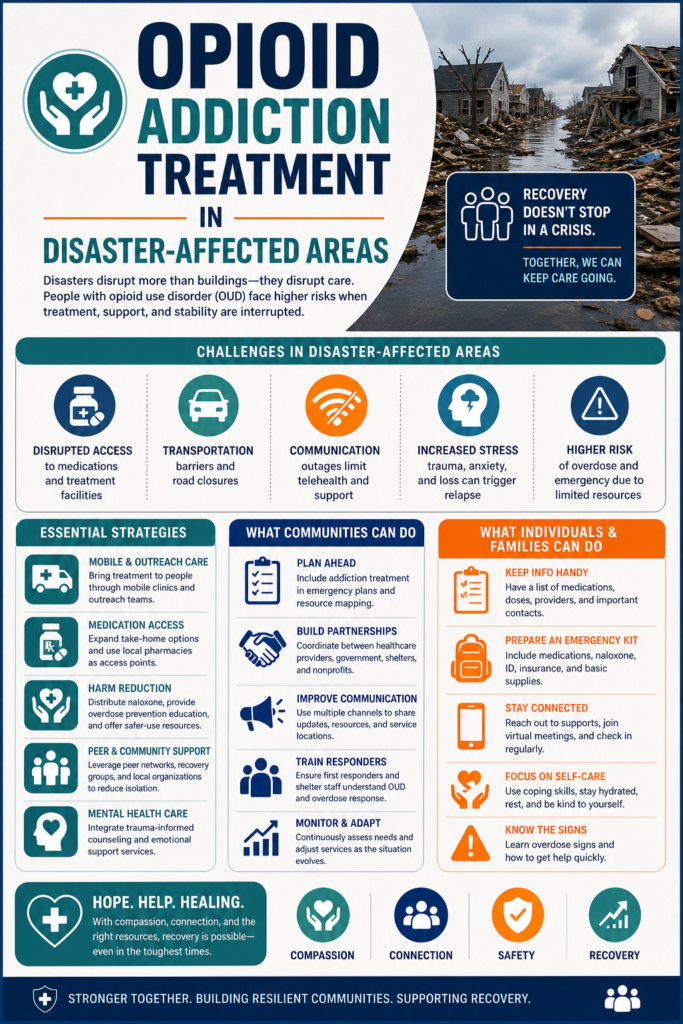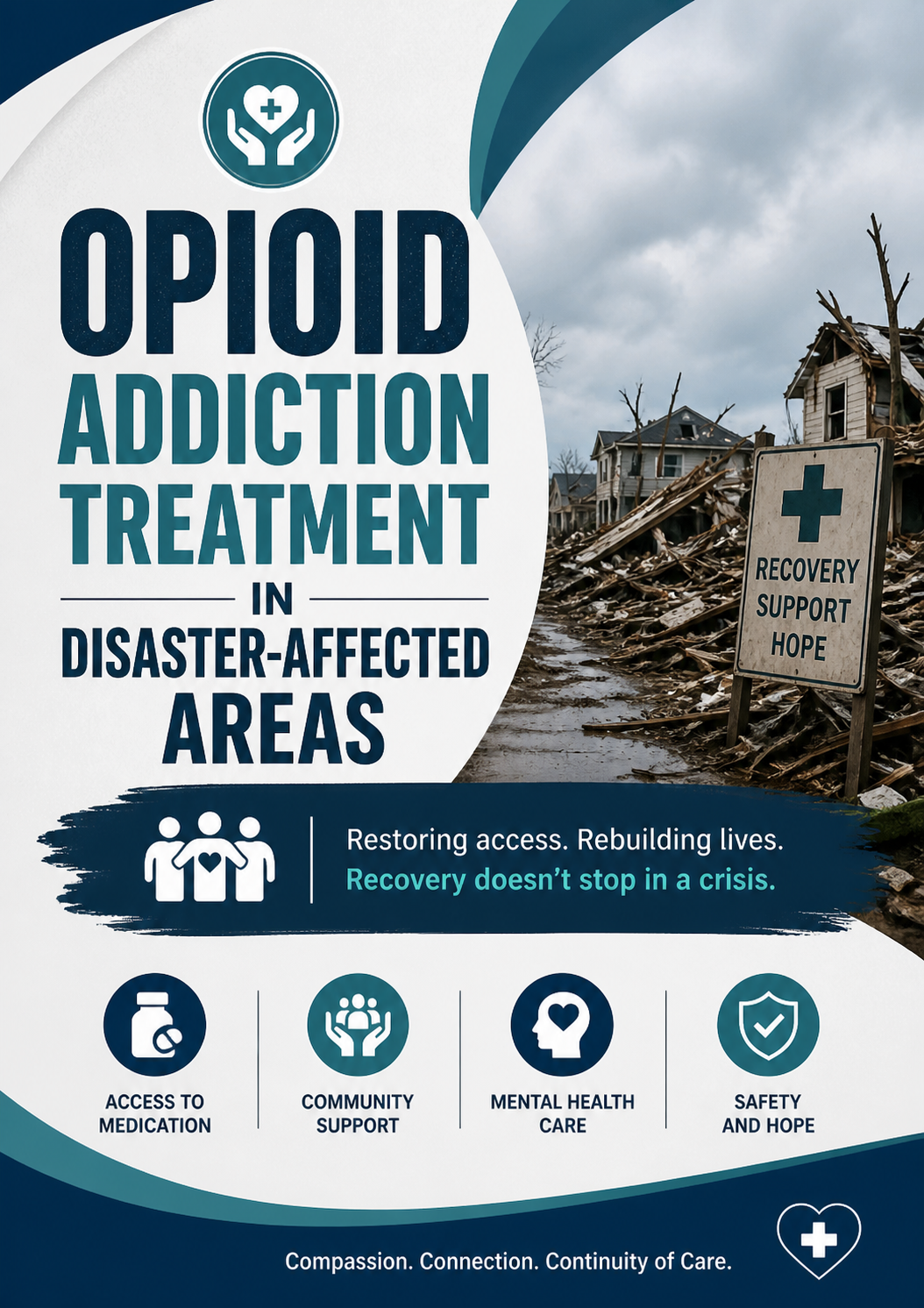
Opioid addiction treatment in disaster-affected areas presents a complex and urgent public health challenge. When natural disasters such as hurricanes, floods, or wildfires strike, they disrupt not only physical infrastructure but also the healthcare systems that individuals with opioid use disorder (OUD) rely on. Access to medications, counseling services, and support networks can be suddenly limited or completely unavailable. At the same time, heightened stress, trauma, and instability increase the risk of relapse and overdose. Understanding how treatment is impacted in these environments is essential for developing strategies that ensure continuity of care and protect vulnerable populations during times of crisis.
Crisis Within a Crisis: Opioid Addiction Treatment in Disaster-Affected Areas
Natural disasters such as hurricanes, wildfires, floods, and earthquakes disrupt entire communities—but for individuals living with opioid use disorder (OUD), the consequences can be especially severe. Treatment systems that rely on consistency—regular medication, therapy sessions, and structured support—can quickly become inaccessible. This creates a dangerous situation where individuals are at increased risk of withdrawal, relapse, and overdose. Understanding how opioid addiction treatment is impacted in disaster-affected areas is essential for improving both preparedness and response.
One of the most immediate challenges is the interruption of medication-assisted treatment (MAT). Medications like methadone and buprenorphine require consistent access and supervision. When clinics close, or transportation becomes unavailable, even short disruptions can destabilize recovery. Additionally, communication breakdowns—such as loss of internet or phone service—can limit access to telehealth and peer support, increasing isolation during an already stressful time.
Disasters also intensify emotional and psychological stress. The trauma of losing homes, jobs, or loved ones can overwhelm coping mechanisms and trigger substance use. Without proper support, individuals may turn back to opioid use as a way to manage distress. This highlights the importance of integrating mental health and trauma-informed care into disaster response strategies.
Key Challenges in Disaster-Affected Areas:
- Disrupted access to medications and treatment facilities
- Loss of routine and recovery structure
- Limited communication and telehealth availability
- Increased stress, trauma, and relapse triggers
- Delayed emergency response and overdose risk
Despite these challenges, communities and healthcare systems have developed adaptive strategies to support individuals during crises. Mobile treatment units, for example, can bring care directly to affected areas. Emergency policy changes—such as extended take-home medication doses—can help maintain continuity of care. Additionally, local pharmacies and shelters can serve as alternative access points for treatment and harm reduction services.
Harm reduction becomes even more critical in disaster settings. Widespread distribution of naloxone, education on overdose prevention, and community awareness can save lives when traditional emergency systems are strained. Peer support networks and community organizations also play a vital role in maintaining connection and trust.
Effective Response Strategies:
- Deploying mobile clinics and outreach teams
- Expanding access to take-home medications
- Utilizing pharmacies and community centers for care
- Distributing naloxone and overdose prevention resources
- Strengthening peer support and community partnerships
Preparedness is equally important. Individuals and providers can take proactive steps to reduce disruption during disasters. This includes maintaining updated medical records, identifying backup treatment options, and developing continuity-of-care plans. Communities that prioritize addiction treatment as an essential service are better equipped to protect vulnerable populations during emergencies.
Ultimately, opioid addiction treatment in disaster-affected areas requires flexibility, coordination, and a strong commitment to continuity of care. Recovery does not pause when disaster strikes—in fact, it becomes even more critical. By addressing both the clinical and social dimensions of care, communities can ensure that individuals living with OUD are supported, even in the most challenging circumstances.
In times of crisis, resilience is built through preparation, connection, and compassionate care. When these elements are in place, recovery can endure—even in the face of disruption.
Staying in Control During Crisis: Self-Management Strategies for Opioid Addiction Treatment in Disaster-Affected Areas
Natural disasters create sudden and often overwhelming disruptions to daily life. For individuals managing opioid use disorder (OUD), these disruptions can interfere with access to treatment, medication, and support systems. In these high-risk situations, self-management becomes a vital tool for maintaining stability. By developing practical strategies and staying actively engaged in their recovery, individuals can better navigate the challenges that arise when traditional care systems are temporarily unavailable.
Preparation is one of the most important aspects of self-management in disaster-prone environments. Having a clear understanding of treatment needs, medication schedules, and available resources can reduce panic and improve decision-making during emergencies. Individuals who plan ahead are more likely to maintain continuity of care, even when conditions are unpredictable.
Preparation Strategies:
- Keep an updated list of medications, dosages, and prescribing providers
- Store important documents (prescriptions, ID, insurance) in an accessible place
- Identify backup clinics, pharmacies, or telehealth options
- Maintain an emergency supply of medications when possible and appropriate
- Save key contact numbers (providers, support persons, hotlines)
Maintaining structure is another critical self-management strategy. Disasters often disrupt routines, but creating a modified daily schedule can help regulate emotions and reduce stress. Even small routines—like taking medication at the same time each day or setting regular check-ins—can provide a sense of control and stability.
Maintaining Structure:
- Set consistent times for medication, meals, and sleep
- Create a simple daily plan, even in temporary or unstable environments
- Use alarms or reminders to stay on track
- Incorporate short periods of rest and reflection
Emotional regulation is especially important during crises. Stress, fear, and uncertainty can trigger cravings or relapse. Applying coping skills learned in treatment can help individuals manage these emotions more effectively and reduce impulsive decisions.
Coping and Emotional Regulation:
- Practice deep breathing or grounding exercises
- Use mindfulness or meditation techniques
- Journal thoughts and feelings to process stress
- Engage in light physical activity when possible
- Focus on what can be controlled rather than what cannot
Staying connected to support systems is another key factor in successful self-management. Even if in-person services are unavailable, maintaining communication with others can provide accountability and reassurance. Connection helps counter isolation, which is a major risk factor for relapse.
Staying Connected:
- Reach out to sponsors, therapists, or trusted individuals
- Participate in virtual support groups when accessible
- Use recovery apps or online communities
- Establish a regular check-in routine with someone you trust
Flexibility and adaptability are essential in disaster situations. Plans may need to change quickly, and individuals must be able to adjust while still prioritizing their recovery. This might involve finding alternative care options, modifying routines, or using different coping strategies.
Finally, self-compassion is a crucial part of self-management. Managing recovery during a disaster is extremely challenging, and setbacks may occur. Recognizing effort and progress—rather than striving for perfection—helps individuals stay engaged in their recovery journey without becoming discouraged.
Mindset and Resilience:
- Accept that conditions are not ideal and focus on doing your best
- Recognize small wins and progress
- Avoid harsh self-judgment during difficult moments
- Stay committed to long-term recovery goals
Opioid addiction treatment in disaster-affected areas presents serious obstacles, but self-management strategies provide a way to navigate these challenges with greater confidence and control. By preparing in advance, maintaining structure, practicing coping skills, and staying connected, individuals can protect their recovery even in the most uncertain environments.
Recovery is not paused by crisis—it is tested and strengthened by it. With the right strategies, individuals can continue moving forward, even when everything around them feels unstable.
Holding the Line in Crisis: Family Support Strategies for Opioid Addiction Treatment in Disaster-Affected Areas
Natural disasters create chaos, uncertainty, and disruption—but for families supporting a loved one with opioid use disorder (OUD), the stakes are even higher. Treatment interruptions, emotional stress, and limited access to care can quickly threaten recovery progress. In these situations, family members often become a critical source of stability. By understanding effective support strategies, families can help protect recovery and reduce risk during even the most challenging circumstances.
One of the most important roles families play is helping maintain continuity of care. When clinics close or services are disrupted, families can help identify alternatives and ensure that treatment remains a priority. Being prepared and proactive can make a significant difference in preventing gaps in care.
Supporting Continuity of Care:
- Keep a record of medications, dosages, and prescribing providers
- Identify backup clinics, pharmacies, or telehealth services
- Assist with transportation or access to available treatment sites
- Help organize important documents (ID, prescriptions, insurance)
- Stay informed about emergency policies or temporary treatment options
Creating a sense of structure during chaos is another powerful strategy. Disasters often eliminate routines, but families can help rebuild simple daily patterns that support recovery. Even small elements of consistency can reduce stress and provide emotional grounding.
Maintaining Structure at Home:
- Encourage consistent times for medication, meals, and rest
- Help establish a basic daily routine, even in temporary settings
- Reduce unnecessary disruptions during recovery-related activities
- Promote healthy habits like sleep, hydration, and nutrition
Emotional support becomes especially critical in disaster settings. Increased stress, fear, and trauma can trigger cravings or relapse. Families who communicate with empathy and patience can help their loved one feel understood and less alone.
Providing Emotional Support:
- Listen actively without judgment or immediate criticism
- Validate feelings of fear, stress, or frustration
- Offer reassurance and encouragement during difficult moments
- Watch for warning signs such as withdrawal or mood changes
Harm reduction is another essential component of family support. In disaster-affected areas where emergency response may be delayed, families must be prepared to respond quickly to potential overdose situations.
Harm Reduction and Safety:
- Keep naloxone accessible and know how to use it
- Educate all household members on overdose signs and response
- Encourage safe practices and reduce exposure to high-risk situations
- Stay alert to changes in behavior that may signal increased risk
Maintaining healthy boundaries is just as important as offering support. Families should avoid enabling harmful behaviors while still providing care and encouragement. Clear expectations help create a balanced environment that supports accountability.
Healthy Boundaries:
- Set clear expectations around safety and behavior
- Avoid covering up or minimizing risky actions
- Encourage responsibility while offering support
- Communicate boundaries calmly and consistently
Flexibility is essential in disaster situations. Plans may change quickly, and families must adapt while keeping recovery as a priority. This may involve adjusting routines, seeking new resources, or temporarily taking on additional responsibilities.
Finally, families must also care for their own well-being. Supporting someone in recovery during a crisis can be overwhelming, and burnout can reduce the ability to provide effective support. Seeking outside help and maintaining personal resilience are not only beneficial—they are necessary.
Family Self-Care:
- Seek support through counseling or peer groups
- Take breaks when possible to avoid burnout
- Stay connected with trusted friends or support networks
- Recognize personal limits and ask for help when needed
Opioid addiction treatment in disaster-affected areas is complex and challenging, but strong family support can make a meaningful difference. By staying prepared, maintaining structure, offering emotional support, and practicing harm reduction, families can help their loved ones navigate recovery even in unstable conditions.
In times of crisis, families become a foundation of strength. With the right strategies, they can help ensure that recovery continues—not perfectly, but persistently—through even the most difficult circumstances.
Strengthening the Safety Net: Community Resource Strategies for Opioid Addiction Treatment in Disaster-Affected Areas
Natural disasters place immense strain on healthcare systems, often disrupting essential services for individuals living with opioid use disorder (OUD). In these high-risk environments, community resources become a critical lifeline. While clinical treatment remains essential, recovery during a crisis is heavily influenced by the availability, accessibility, and coordination of local support systems. Understanding how to effectively leverage community resources can help maintain continuity of care and reduce the risk of relapse and overdose.
In disaster-affected areas, traditional treatment settings such as clinics and counseling centers may be temporarily unavailable. This makes it necessary to rely on decentralized and community-based solutions. Pharmacies, shelters, mobile clinics, and outreach programs often step in to fill these gaps, providing medications, basic care, and harm reduction services. These alternative access points can help individuals stay connected to treatment even when infrastructure is compromised.
Key Community Resource Challenges:
- Closure or limited operation of treatment facilities
- Disrupted transportation and supply chains
- Reduced access to healthcare providers and medications
- Communication breakdowns (internet, phone service)
- Increased demand for limited local resources
To address these challenges, communities must adopt flexible and coordinated strategies. Mobile health units are one of the most effective tools, bringing medication-assisted treatment (MAT) and medical care directly to affected populations. Additionally, emergency policy adjustments—such as expanded take-home medication allowances—help reduce the need for frequent clinic visits.
Community-Based Response Strategies:
- Deploy mobile clinics and outreach teams
- Utilize pharmacies and community centers as treatment access points
- Expand access to take-home medications during emergencies
- Coordinate with local shelters to provide recovery support services
- Ensure availability of harm reduction tools like naloxone
Peer support networks and community organizations play a vital role in maintaining connection during disasters. Recovery groups, faith-based organizations, and local nonprofits can provide emotional support, guidance, and practical assistance. These networks often operate more flexibly than formal systems, making them especially valuable in unstable conditions.
Role of Community Support Networks:
- Offer peer-led support groups (in-person or virtual)
- Provide emotional support and reduce isolation
- Assist with basic needs like food, clothing, and shelter
- Help individuals navigate available resources
- Build trust and encourage continued engagement in recovery
When available, technology can further strengthen community resource strategies. Online directories, recovery apps, and telehealth platforms help individuals locate services and stay connected. However, it is important to have backup plans when digital access is limited, ensuring that support remains available even during outages.
Preparation and coordination are essential for effective community response. Local governments, healthcare providers, and recovery organizations must work together to develop disaster preparedness plans that prioritize addiction treatment. This includes mapping available resources, establishing communication systems, and training responders to address the needs of individuals with OUD.
Preparedness and Coordination Strategies:
- Develop community-wide emergency response plans for addiction care
- Create resource directories accessible before and during disasters
- Train emergency personnel in addiction and overdose response
- Build partnerships between healthcare, public health, and community groups
- Prioritize continuity of care in disaster planning efforts
Ultimately, opioid addiction treatment in disaster-affected areas depends on more than clinical services—it relies on the strength and coordination of the surrounding community. When resources are accessible, flexible, and well-integrated, they create a safety net that supports recovery even in times of crisis.
In the face of disruption, community becomes the foundation of care. By investing in strong, adaptable resource networks, communities can ensure that recovery remains possible, protected, and supported—no matter the circumstances.
Frequently Asked Questions
Here are some common questions:
1. How do natural disasters affect opioid addiction treatment?
Natural disasters can disrupt access to clinics, medications, counseling, and support systems. This interruption increases the risk of withdrawal, relapse, and overdose, especially when treatment continuity is broken.
2. What happens if someone cannot access their medication during a disaster?
Missing doses of medications like methadone or buprenorphine can lead to withdrawal symptoms and cravings. In emergency situations, healthcare providers may:
- Provide extended take-home doses
- Use alternative prescribing methods
- Direct patients to temporary or mobile treatment sites
3. Are addiction treatment services considered essential during disasters?
Yes. Opioid addiction treatment is increasingly recognized as an essential healthcare service, meaning efforts are made to maintain access even during emergencies.
4. What are mobile treatment units?
Mobile treatment units are clinics on wheels that travel to disaster-affected areas to provide:
- Medication-assisted treatment (MAT)
- Basic medical care
- Harm reduction services
They help bridge gaps when fixed facilities are unavailable.
5. Can telehealth be used during disasters?
Yes, if internet and power are available. Telehealth allows patients to:
- Attend therapy sessions
- Consult with providers
- Receive prescriptions
However, outages can limit this option, so backup plans are important.
6. What is the risk of overdose during disasters?
The risk increases due to:
- Interrupted treatment
- Increased stress and trauma
- Changes in drug supply or potency
- Delayed emergency response
This makes access to naloxone and education critical.
7. How can individuals prepare for treatment disruptions?
Preparation strategies include:
- Keeping a list of medications and providers
- Having an emergency medication plan
- Identifying backup clinics or pharmacies
- Storing important documents safely
8. What role do families play during disasters?
Families can:
- Help maintain routines
- Support medication adherence
- Provide emotional stability
- Be prepared to respond to overdose situations
9. How do communities support recovery during disasters?
Communities help by:
- Providing shelters and basic needs
- Offering peer support groups
- Distributing naloxone
- Coordinating healthcare and outreach services
10. What is harm reduction, and why is it important in disasters?
Harm reduction includes strategies to reduce the risks associated with drug use, such as:
- Naloxone distribution
- Safe use education
- Access to clean supplies
It becomes even more important when healthcare systems are strained.
11. Are there special policies during disasters for addiction treatment?
Yes. Governments may temporarily:
- Relax prescribing regulations
- Allow longer take-home medication supplies
- Expand telehealth access
These policies help maintain continuity of care.
12. Who is most vulnerable during disasters?
High-risk groups include:
- Individuals in early recovery
- Those without stable housing
- People with co-occurring mental health conditions
- Individuals with limited access to transportation or resources
13. What should someone do if they relapse during a disaster?
Relapse should be treated as a signal to seek support, not failure. Individuals should:
- Reach out to a provider or support person
- Access available treatment services
- Focus on safety and stabilization
14. How important is aftercare following a disaster?
Aftercare is critical to:
- Rebuild routines
- Reconnect with providers
- Address trauma and stress
- Prevent long-term setbacks in recovery
15. What is the key takeaway about treatment during disasters?
Continuity, flexibility, and connection are essential. Even in crisis conditions, recovery can continue with the right support systems and preparedness strategies.
Conclusion
Ultimately, addressing opioid addiction treatment in disaster-affected areas requires flexibility, coordination, and a commitment to treating recovery as an essential service. While disruptions are often unavoidable, proactive planning, community support, and adaptive care models can help maintain stability for individuals in recovery. By prioritizing access to treatment, integrating mental health support, and strengthening emergency response systems, communities can reduce the risks associated with these crises. Even in the face of disaster, recovery remains possible—especially when systems are designed to support individuals through both everyday challenges and extraordinary events.
Video: They’re Trapped Without Their Medication During the Storm #opioids #addiction