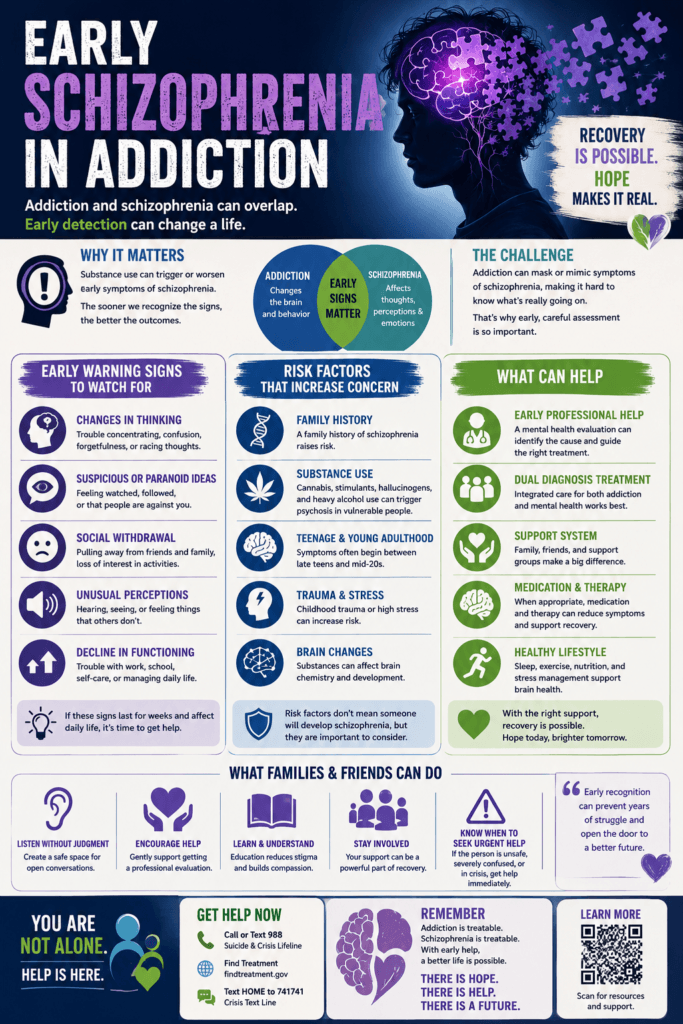
If you’re supporting someone with a substance addiction, keeping an eye out for possible signs of early schizophrenia can play a crucial role. Substance use often masks mental health symptoms or makes them tougher to spot. Knowing what to look for and how early detection works can help you, your loved one, or your clients get the appropriate support quickly.
Understanding Schizophrenia and Addiction: The Basics
Schizophrenia is a mental health condition that affects how a person thinks, feels, and behaves. For people dealing with substance use—such as alcohol, cannabis, stimulants, or opioids—schizophrenia can be particularly challenging to catch early. Many substances cause symptoms like hallucinations, paranoia, or withdrawal from others that mimic early schizophrenia signs and make things confusing for everyone involved.
Research shows that people with addictions have a higher risk of developing schizophrenia or showing symptoms earlier than those without a history of substance use. The relationship is bidirectional; some start using drugs to cope with early symptoms, while others begin to show psychotic symptoms after periods of heavy use. Either way, early detection really makes a difference as it can help improve long-term outcomes and prevent complications like increased psychosis, self-harm, or trouble with the law.
First Signs of Schizophrenia in People Who Use Substances
Spotting the first signs of schizophrenia, particularly in those battling addiction, can be tricky. These symptoms often look like side effects of drug use or withdrawal. Nevertheless, stay alert for a few important red flags:
- Subtle Changes in Thinking: Challenges with organizing thoughts, staying engaged in conversations, or recalling things may begin to appear. If someone keeps losing track of what they’re saying, stops making sense, or appears lost, it may be an early sign.
- Unusual Behaviors: Pulling away from friends and family, lacking motivation, or displaying less emotion than normal might get chalked up to drug use or being down, but these can also point to early schizophrenia.
- Greater Suspicion or Paranoia: If your loved one suddenly becomes very mistrustful of others for no good reason, this could go beyond substance-induced anxiety.
- Odd Beliefs or Sensory Experiences: Sharing strange experiences, reporting odd connections, or holding beliefs that seem detached from reality—especially if these hang around even when sober—are warning signs not to overlook.
For those struggling with addiction, these symptoms can overlap with intoxication or withdrawal. You’ll need some patience and close observation to figure out whether the signs are separate from the usual effects of substance use.
How Substance Use Complicates Diagnosis
Diagnosing schizophrenia in someone with an addiction isn’t easy. Drugs and alcohol can bring about hallucinations, mood swings, or strange thoughts. Sometimes, withdrawal causes intense feelings resembling psychosis. Substance-related symptoms make it hard to tell what’s really going on.
Medical professionals look for symptoms that linger long after the effects of drugs should have disappeared. For instance, someone who remains paranoid even after withdrawal might be experiencing more than just drug-induced psychosis.
This overlap means people with both addiction and schizophrenia (often referred to as dual diagnosis or co-occurring disorders) sometimes go without diagnosis for a while. Keeping detailed records of symptoms—when they show up, how long they last, and other circumstances—can be a big help to healthcare providers trying to sort things out.
Why Early Detection Matters
The sooner schizophrenia gets recognized and addressed, the better the person’s long-term outlook. This is especially true for individuals coping with substance use, who face extra risks for complications.
Early intervention can:
- Connect people with therapy or medications sooner, such as antipsychotics and psychosocial support
- Cut down on the stress and confusion that untreated symptoms bring
- Decrease the risk of homelessness, unemployment, or legal trouble
- Help create a recovery approach that tackles both substance use and mental health issues together
If you’re a friend or family member, knowing what to look for helps you speak up and encourage the person to seek help before things get worse.
Tips for Noticing Early Signs in Addicts
Worried about someone’s substance use and mental health? These simple strategies can help you figure out if early schizophrenia is part of the picture:
- Observe Symptoms Over Time: Keep track of changes in mood, thinking, or behavior—not just during substance use, but also when the person is sober. If confusion, paranoia, or odd thoughts persist for days or weeks, it’s probably more than just drugs.
- Look for Patterns not Directly Linked to Substance Use: Notice whether symptoms crop up only right after using, or whether they show up during stretches of sobriety as well.
- Listen Carefully and Supportively: Many people with early schizophrenia will not directly say something is wrong. They may hint that they feel “off,” gripe about people being out to get them, or tell odd stories. Take these seriously, no matter how strange they sound.
- Gather Input from Others: Since you may not always observe someone firsthand, reaching out to friends or family can help you build a fuller picture of any changes you are noticing.
Keeping a journal or notes, even casually on your phone, can help track shifts over time and offer useful documentation for professionals.
Common Challenges and Practical Solutions
Plenty of challenges get in the way of catching schizophrenia early in people with addiction. Here’s what usually trips people up and what can be done:
- Mistaking Symptoms for Drug Effects: With active substance use, it’s easy to write off new symptoms as just “side effects.” If symptoms persist long past when substances should have worn off or happen during sober periods, consider a mental health evaluation.
- Stigma: Many people worry about being labeled as having “schizophrenia” or “addiction,” so they’re less likely to be upfront about problems. Offering a nonjudgmental, encouraging ear can make it easier for them to share openly.
- Lack of Appropriate Support: Some treatment programs can’t diagnose both conditions. Finding mental health professionals with expertise in dual diagnosis can make a big difference for coordinated care.
Distinguishing Schizophrenia from Drug-Induced Psychosis
Drug-induced psychosis generally fades following detox, whereas schizophrenia symptoms may persist or even get worse. If someone continues to hear voices, experience paranoia, or believe odd things after they’ve stopped using substances, another diagnosis should be considered.
Importance of All-in-One Assessments
Getting the right diagnosis takes a team effort. Doctors often work alongside psychologists, social workers, and counselors. Assessments include discussing symptom history, ruling out other problems, and speaking with people close to the individual. Many clinics use standardized screening tools that can help spot early signs of schizophrenia, even when substance use muddies the waters.
Advanced Prevention and Support Strategies
Recognizing that someone is at risk means you can step in early and make a difference:
- Support Sobriety: Reducing or quitting substance use helps clarify which symptoms are due to drugs and which may indicate another issue. Access to support groups, counseling, and medication-assisted treatment gives a boost to recovery.
- Education: Finding out about schizophrenia—how it shows up, how it feels, the importance of early help—makes it easier to spot trouble and act quickly.
- Family Involvement: When families participate in care, outcomes improve. Supporting someone through addiction and mental health struggles keeps them connected and more likely to stick with treatment.
- Specialized Services: Seeking dual diagnosis treatment that addresses both challenges at once leads to better results and ensures nothing is missed.
FAQs: Early Schizophrenia in Addicts
Here are answers to common questions for people facing both schizophrenia risk and addiction:
Question: What should I do if I worry someone has early schizophrenia but they’re actively using drugs?
Answer: Gently encourage them to talk with a mental health professional. Even if quitting substances isn’t on the table yet, getting checked out can help sort out what’s happening beneath the surface.
Question: Can someone recover from both addiction and schizophrenia?
Answer: Absolutely. With proper support—medications, counseling, stable housing, and family help—many people manage both conditions and lead fulfilling lives.
Question: How do I know if my loved one’s behavior is from drugs or early schizophrenia?
Answer: Timing is everything. If paranoia, odd beliefs, or confusion sticks around long after the drug has left their system, seek evaluation from professionals who understand both disorders.
Key Takeaways for Detecting Early Schizophrenia in Addicts
Finding early signs of schizophrenia in people who use substances is rarely easy. Still, being aware of the symptoms, watching for patterns that last beyond drug effects, and getting connected with professionals knowledgeable about both mental health and addiction can make a life-changing difference. Stay observant, don’t hesitate to ask questions, and encourage support. The earlier someone gets the right help, the smoother the road to recovery can be, and the more manageable life becomes for everyone involved.
Video: Is It Just Drugs or Early Schizophrenia? #mentalhealth #schizophrenia #addiction