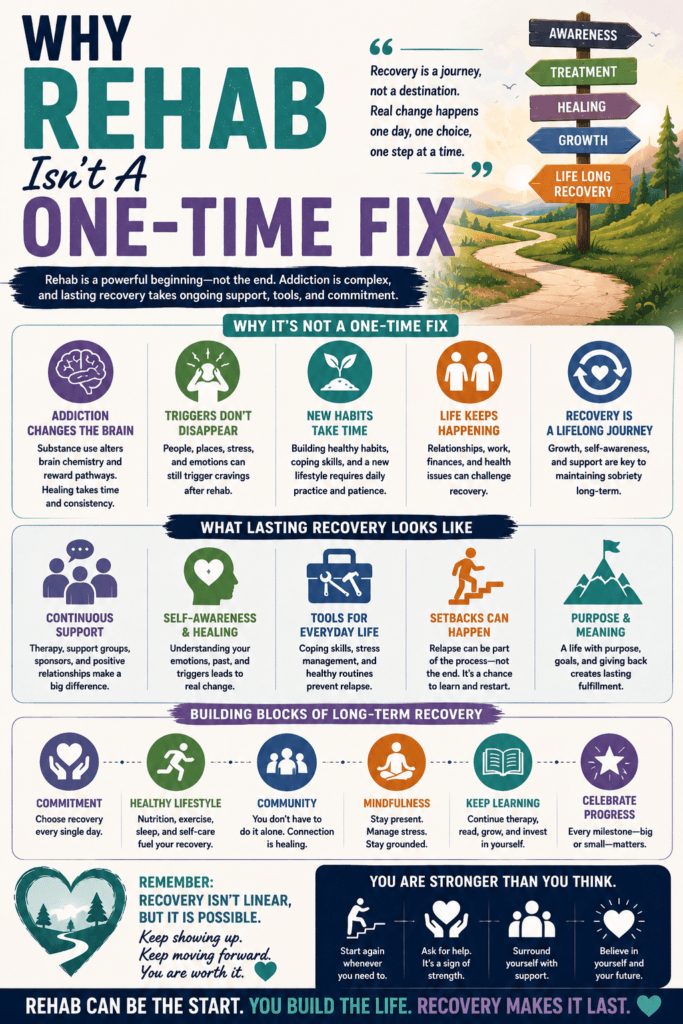
Rehab isn’t something that can be checked off a list after a single stint. The road to recovery tends to have a lot of twists and turns, and honestly, it’s different for everyone. I know a lot of people expect a one-and-done solution, but recovery takes ongoing effort, support, and learning. Rehab isn’t about a quick fix; it’s more like the start of a new chapter that requires ongoing work.
Why Recovery Is an Ongoing Process
Addiction and mental health struggles can be long-lasting battles. Rehab gives people a safe and structured space to begin healing, but life after rehab brings new challenges. The brain and body may take months, or even years, to reset old habits or undo the effects of prolonged substance use. Facing triggers, stress, and old routines outside of rehab can easily make temptation creep in.
Many folks compare addiction to a chronic illness like diabetes or asthma. Managing it is about ongoing care, not a single treatment. Relapses can happen, and setbacks don’t mean failure; they’re actually a pretty normal part of recovery for many people. Staying committed to the process and having access to support networks, therapy, or groups long after rehab makes a big difference.
Research in the field supports this. According to the National Institute on Drug Abuse (NIDA), 40-60% of people recovering from substance use will experience at least one relapse. Recovery communities often say it’s not about how you fall, but how you get up each time. Recovery often means picking yourself up, reflecting, and learning from unexpected setbacks.
Getting Started with Rehab and What to Expect
The first steps into rehab can be tough. Deciding to seek help takes courage, and the idea of putting life on pause is daunting for most people. Treatment programs come in lots of different formats, so choosing one that fits your needs is really important. Some programs are residential (where you stay at a facility), while others are outpatient (where you visit for scheduled sessions). Having options means people can find what suits them best, whether it’s full immersion or working recovery around existing commitments.
During those early days, expect to focus on detox and learning the root causes behind addiction. You’ll probably meet therapists, participate in group sessions, and start building new coping skills. Rehab is also about stumbling upon triggers and planning for life after discharge. Staff will often work with you on a personalized treatment plan, but no one expects you to have it all figured out right away.
- Detox: Physical withdrawal and early emotional support to stabilize health.
- Therapy: Working directly with counselors on mental and emotional health issues.
- Group Sessions: Building connection and support among people with similar experiences.
- Aftercare Planning: Developing a plan for what happens after you leave the program.
This phase is as much about learning new ways to handle stress as it is about getting clean. Therapists and recovery staff encourage honesty, self-reflection, and patience, reminding everyone that lasting change doesn’t happen overnight.
Key Challenges in Long-Term Recovery
Leaving rehab doesn’t mean everything clicks into place immediately. Life comes with new stress, relationship changes, and situations that can make old habits tempting. I’ve talked with people who say the transition home can be one of the toughest parts. Here are a few common challenges folks often face after finishing a program:
- Triggers in Daily Life: Seeing people or places linked with past use can crank up cravings.
- Lack of Support: Returning to family or friend circles that don’t understand recovery can feel isolating.
- Mental Health: Conditions like depression or anxiety might linger or pop up for the first time, making things harder to manage.
- Stigma: Facing judgment or misunderstanding, especially from employers or even loved ones, creates extra stress.
Triggers in Daily Life
Just running errands around town might bring back memories of substance use for some. Triggers aren’t always obvious. Sometimes a scent, song, or stressful situation is enough to test your commitment. Building awareness of these moments helps you prepare, but it’s not always simple to stay strong under pressure. Small daily victories, like making it through a tough moment without giving in, build resilience over time.
Lack of Support
Even a great rehab program can’t replace the day-to-day support needed once treatment wraps up. Finding regular meetings, connecting with understanding people, and building a network you trust is super important for keeping momentum. Many people say it’s helpful to seek out new social circles or mentors who really understand the recovery process, so they never have to go it alone.
Mental Health and Stigma
It can be discouraging when society still carries a lot of old stereotypes about addiction. People in recovery sometimes hide their efforts or feel embarrassed about relapse, but sharing honestly with others can ease the pressure. That’s why having open conversations and seeking ongoing counseling feels really helpful for a lot of people. Therapy, peer groups, and supportive family members can boost self-esteem, making it easier to keep moving forward.
Supporting Long-Term Recovery
Keeping up with a recovery plan means finding practical strategies that fit your lifestyle. Support groups like AA (Alcoholics Anonymous), SMART Recovery, or local addiction counseling centers can be good options to check out. Therapy isn’t just something for when you’re actively struggling. Ongoing counseling adds a layer of accountability and helps people process what they’re experiencing.
- Peer Support: Regularly attending meetings or peer-led groups provides ongoing encouragement.
- Therapy: One-on-one counseling or family therapy sessions help address underlying struggles.
- Healthy Habits: Exercise, hobbies, and proper sleep improve both mental and physical health.
- Accountability: Staying in touch with sponsors or recovery coaches keeps you motivated and honest.
I know a few people who say staying busy, like volunteering or joining a community class, gives them purpose and reduces temptation. A daily routine can also keep stress down and provide a sense of normalcy. Even picking up a new creative hobby introduces an outlet for stress and can foster new friendships. Building good habits is a way to replace old routines with something more meaningful.
Building Lifelong Skills After Rehab
Learning to cope with life’s ups and downs is a huge part of recovery. Rehab starts that adventure, but maintaining sobriety often means building new emotional skills. Here are a few that come up again and again as super important:
- Resilience: Bouncing back after setbacks and having the flexibility to handle unexpected change.
- Self-awareness: Noticing when you’re struggling and reaching out before things get overwhelming.
- Stress Management: Knowing how to manage anxiety, anger, and sadness in everyday life.
- Setting Boundaries: Learning to say no, avoid risky situations, and protect your recovery.
People often find it helpful to keep a journal or set small, realistic goals. Celebrating milestones, like six months or one year sober, helps build confidence and motivation, even if the path hasn’t been totally smooth. If a slip happens, it’s not a failure; it can be a learning moment to revisit goals, reach out for help, and push forward. Honest self-reflection, even after a tough moment, helps people stay grounded and true to their growth.
Common Questions About the Rehab Process
Questions about rehab and life after treatment come up a lot, and there’s no one-size-fits-all answer. Here are some that I’ve heard most often:
Question: Why do some people go to rehab more than once?
Answer: Relapse is part of many people’s stories, and going back to rehab isn’t a sign of failure. Each time, people learn new skills and get another chance to work on recovery with more experience.
Question: How long should someone stay in rehab?
Answer: Length of stay can really vary. Some programs last a few weeks, others last months. Longer programs have been shown to help many people, but what matters most is whether the person is ready to manage sobriety with support outside of treatment. Sometimes people might step down from an intense program to ongoing outpatient help as they gain confidence and stability.
Question: Can people fully “cure” addiction?
Answer: Recovery is usually a lifelong process. While some people never use again, most need to keep working on their recovery and be aware of their triggers. Thinking of addiction as something that is “cured” sets unrealistic expectations and can lead to frustration if challenges come up down the line.
Question: What helps people stay on track after rehab?
Answer: Having steady support from loved ones, getting therapy, developing routines, and finding new healthy interests all help. Being willing to ask for help and staying open to learning are two habits that get mentioned the most by people in long-term recovery.
What Rehab Means for Life Going Forward
Rehab is really just one piece of the recovery puzzle. Think of it as a launching point, an important foundation, but not the whole structure. Lasting recovery takes ongoing commitment, willingness to adapt, and plenty of support. It’s okay to need more help along the way, and it’s completely normal to face ups and downs.
If you’re considering rehab or supporting someone through recovery, remember that it’s totally normal to need support long after that first step. Staying connected, building healthy habits, and reaching out for help are all really important in building a steady, fulfilling life after rehab. Each chapter after treatment is an opportunity to grow stronger, set new goals, and embrace the possibilities that come with recovery. Progress might be slower than you hoped, but every positive step helps shape a healthier and more rewarding future.
Video: How Long Does Real Recovery Actually Take #AddictionRecovery #Sobriety #RecoveryJourney