Exercise is widely recognized for boosting physical health, increasing energy, improving mood, and creating a sense of accomplishment. However, for some individuals, suddenly stopping or significantly reducing regular exercise can trigger unexpected physical and emotional symptoms that resemble withdrawal. These reactions may include irritability, anxiety, restlessness, low mood, fatigue, and strong urges to return to exercising. Because many people are surprised that exercise can produce withdrawal-like effects, it’s helpful to understand the science behind these symptoms, why they occur, and when they may signal an unhealthy relationship with exercise rather than a normal adjustment to a change in routine.
Understanding Exercise Withdrawal: What Is It?
Exercise withdrawal refers to the mental and physical symptoms that arise when someone stops or sharply reduces their usual workouts. These symptoms can show up after just a few missed sessions, especially for those who used to exercise every day or several times a week.
Feeling “off” after skipping exercise is way more common than many people think. I’ve read stories in forums where folks describe mood swings, restlessness, and even muscle aches after cutting down. While this can feel strange at first, there’s actually some science behind why the body and mind can react this way. Even those who see themselves as recreational exercisers might experience these symptoms, sometimes catching them off guard and prompting them to question their overall well-being.
The Science Behind Why Exercise Triggers Withdrawal Symptoms
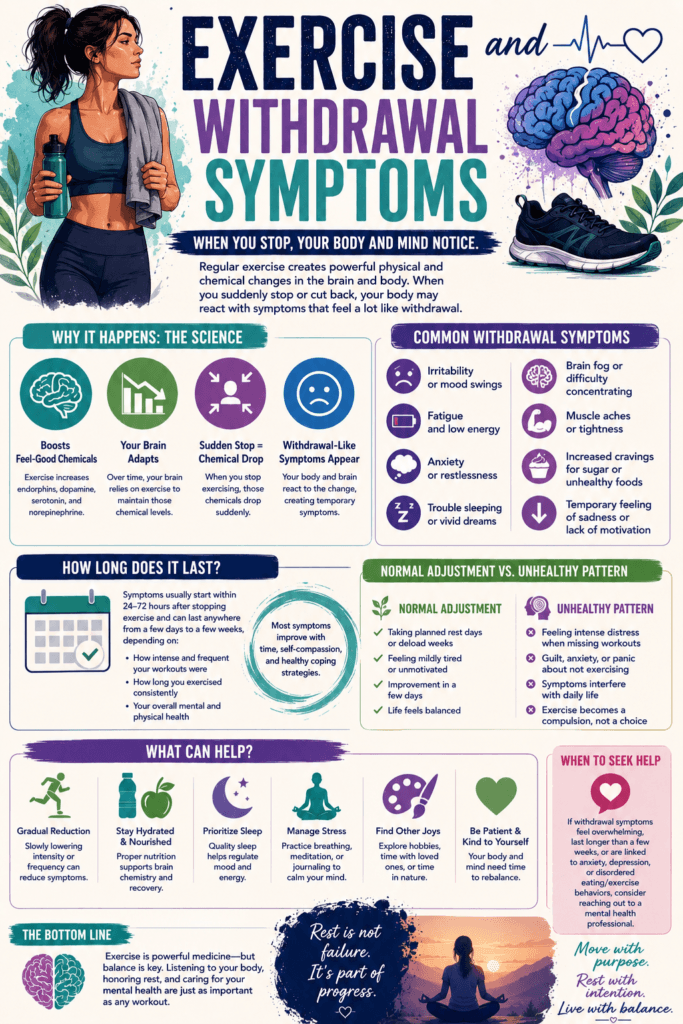
Regular exercise has a pretty direct impact on brain chemistry. When working out, the body releases neurotransmitters like dopamine, serotonin, and endorphins. These same chemicals help regulate mood and energy. Over time, the brain gets used to these regular boosts, meaning days without movement feel very different.
So, when someone suddenly stops exercising, their brain and body miss those feel-good chemicals. This can leave people feeling tired, anxious, irritable, or just “not themselves.” Here’s how it breaks down:
- Endorphin Drop: Endorphins are sometimes called the body’s natural painkillers. Lower levels can leave people feeling less motivated and more sensitive to pain.
- Dopamine Changes: Dopamine is connected to motivation and reward, and a reduction can make everyday tasks feel less satisfying.
- Serotonin Shifts: Less exercise can lower serotonin levels, often leading to mood dips and changes in sleep or appetite.
Some studies even compare regular, intense exercise, such as daily running, to the effects of habit-forming substances. Stopping suddenly can create what looks a lot like withdrawal symptoms from other activities or substances that light up the reward system in our brains (National Institutes of Health).
Common Withdrawal Symptoms After Stopping Exercise
People experience exercise withdrawal in many different ways. Some of the most common symptoms include:
- Fatigue or Low Energy: Sudden drops in activity mean the usual energy boost fades away, creating a noticeable slump.
- Mood Swings: Irritability, sadness, or anxiety can start to show up within days.
- Restlessness: A sense of “antsy-ness” or the strong urge to move more.
- Sleep Disruptions: Trouble falling asleep, staying asleep, or needing more sleep but still not feeling rested.
- Changes in Appetite: Some people notice increased cravings or a reduced appetite, depending on their body’s unique adjustments.
- Muscle Aches and Tension: Especially if exercise was a stress outlet. The body can feel stiff or sore, even without recent workouts.
- Brain Fog: Many exercisers report difficulty focusing or thinking clearly after dropping their regular workouts.
- Lowered Self-Esteem: For some, skipping workouts leads to negative self-talk or a dent in self-confidence.
How strong these symptoms are depends on how much exercise someone was used to, their personal stress levels, and other factors like diet and sleep habits. If you’ve ever cut back after a long streak, you might notice some combination of these in the first week or two. For some people, these feelings come and go, while others deal with them for a bit longer before they fade away.
Why Some People Are More Likely to Experience Withdrawal
The likelihood of feeling withdrawal after stopping exercise depends on a few things. From what I’ve learned and seen, exercise intensity and consistency are big factors. If someone were very active, thinking about hard workouts daily, their body would become more adapted to those chemical boosts. That means stopping suddenly will have a bigger impact on their mood and energy.
Personality also matters. Some people are driven by routine and get more attached to habits, so the sudden loss of structure or achievement can throw their mood for a loop. People who use exercise as a core piece of their daily routine might feel lost or restless without it. Those with a history of anxiety, depression, or high stress may also feel withdrawal symptoms more sharply if exercise was how they managed their mental health.
Genetics may play a role, too; some individuals simply have a brain chemistry that responds differently to regular physical activity, making them more susceptible to noticeable withdrawal. Social factors come into play as well—someone who exercises in a community setting may also miss the social support during a break, amplifying feelings of withdrawal.
How Exercise Changes the Brain, and What Happens When You Stop
Exercise produces beneficial changes in the brain that go beyond just burning calories or building strength. Studies show it leads to more neuroplasticity (the brain’s ability to adapt), better memory, and improved mental resilience. Regular movement also helps regulate levels of hormones like cortisol (the stress hormone) and adrenaline.
Dropping off from these routines can tip the balance. Without that regular reset, the brain may not handle stress as effectively, or may take longer to bounce back from hard days. This is a big reason why mental symptoms, like irritability or sadness, are just as common as physical ones (NIH Source).
Long-term, the lack of exercise can impact neurochemical pathways that regulate mood and motivation, leading to prolonged periods of feeling down or unmotivated. Over time, reintroducing even light movement can help restore some of these balance points. Regular exercise sort of “trains” the brain to handle life’s ups and downs more smoothly, so losing that outlet is tough for many people.
Is It Normal to Feel Bad After Skipping Workouts?
Getting withdrawal symptoms isn’t weird or a reason to worry about your overall health. It’s actually a pretty normal response, especially after a stretch of regular exercise. The body and mind both rely on those regular boosts, and it takes a while to adjust when they’re not there.
If I take a week or more off from the gym, I can really feel the difference in my mood and energy. Talking with friends confirms this; we all notice some level of sluggishness or “off” days after powering down our usual sweat sessions. Even professional athletes admit to these effects, reinforcing how universal this experience can be. For some, reflecting on these changes is a good reminder of how much movement matters to overall well-being.
Ways to Manage Withdrawal Symptoms When You Take a Break
Most exercise withdrawal symptoms get better within a week or two. For folks who have to stop because of injury or schedule changes, these tips can help smooth the transition:
- Keep Some Movement: Even walking, gentle yoga, or stretching can offer enough movement to keep your mood steadier.
- Prioritize Sleep: Since sleep can take a hit, simple routines like setting a consistent bedtime or putting your phone away an hour before bed can help a lot.
- Balance Your Diet: Healthy carbs, proteins, and fats help regulate energy and mood. Avoiding too much sugar or caffeine is a good idea as well.
- Stay Social: Chatting or spending time with friends can help make up for the emotional boost that workouts offer.
- Mindful Activities: Reading, meditation, or even listening to music can help ease anxiety or restlessness as the body adjusts.
- Get Outdoors: Spending time outside, even if you’re not moving a lot, boosts mood and helps your body reset to a healthy rhythm.
- Set Small Goals: Focusing on what you can do, like daily stretches or short walks, helps maintain a sense of progress and routine.
If symptoms stick around for more than two weeks or get worse, it’s always worth reaching out to a healthcare professional for extra advice.
When Exercise Withdrawal May Be a Red Flag
Exercise withdrawal is usually temporary, but at times it can indicate more serious concerns. For example, if someone feels compelled to exercise even when sick or injured, or if withdrawal brings on severe depression or anxiety, it could signal an unhealthy relationship with movement. This pattern is sometimes called exercise dependence or exercise addiction.
If you or someone you know is experiencing intense distress or can’t cope without exercise, support from a mental health professional can help sort things out. There are also organizations and helplines out there ready to help. Early intervention can help break unhealthy cycles and support the development of a more positive relationship with movement in the future.
Real-Life Example: How I Handled a Forced Break
Last year, I took two weeks off from exercise after an ankle sprain. The first few days were rough, not just because my routine was off, but I was way more irritable and sluggish than I expected. Keeping up with daily walks, even just to get outside, made the biggest difference. I also noticed that talking about it, instead of just bottling it up, helped me ride out the uneasy feelings until my body and mood found their rhythm again. This experience made me appreciate how closely tied my sense of well-being was to regular movement, as well as the importance of kindness during recovery. If you’ve faced something similar, know that it’s normal and you can gently find your way back at your own pace.
FAQs About Exercise Withdrawal
Here are a few questions I get about this topic:
Question: How soon do exercise withdrawal symptoms kick in?
Answer: For regular exercisers, symptoms can show up within a few days of stopping. Those who are less active might not notice much difference or might feel mild symptoms after a week or longer.
Question: Can I get withdrawal symptoms after stopping any kind of exercise?
Answer: It’s more common after intense or very frequent routines, but even stopping moderate exercise all at once can create some withdrawal-like feelings, especially mentally.
Question: Will these symptoms go away on their own?
Answer: Yes, for most people, withdrawal symptoms disappear as the body and mind adjust, usually within one to two weeks.
Question: Can gentle movement really help with withdrawal?
Answer: Yes, even light activity helps nudge your brain chemistry in a positive direction, making the transition smoother.
Key Takeaways on Exercise Withdrawal
Exercise withdrawal symptoms are a real thing and nothing to be ashamed about. Adjusting routines, being patient with yourself, and staying connected to other activities can ease the discomfort. Whenever I’ve gone through exercise withdrawal, it’s helped to remember that it’s all part of the body’s way of adjusting and that the symptoms don’t stick around forever.
If you need more info or are worried about your symptoms, chatting with a trusted doctor or mental health specialist is always a smart move. By understanding these symptoms and showing yourself some grace, you’ll get through the downtime and find your way back to movement when you’re ready.
Video: Missing Workouts Literally Changes Your Brain #fitness #science #shorts