Bipolar disorder and addiction often cross paths, making treatment really challenging. Myths and misunderstandings about bipolar disorder can seriously impact people getting the help they need for addiction. These myths shape attitudes among families, friends, and even some healthcare providers, adding confusion or hesitation to seeking support. I’m breaking down common beliefs that get in the way of effective care and sharing straightforward tips to help those facing both bipolar disorder and substance use issues.
Bipolar Disorder and Addiction: How Myths Build Barriers
Bipolar disorder is more than just mood swings. It’s a mental health condition that affects energy, activity levels, and daily functioning. According to the National Institute on Mental Health, around 2.8% of adults in the U.S. live with bipolar disorder every year. When substance use enters the picture, things can get even tougher.
Substance use disorders, like alcohol or drug addiction, are especially common for folks with bipolar disorder. The American Journal of Psychiatry estimates that about 40-60% of people with bipolar disorder experience substance use issues at some point. Myths about bipolar disorder or addiction can block people from treatment or make recovery seem impossible.
Top Bipolar Myths That Affect Addiction Treatment
Treatment for both conditions, often called dual diagnosis, hinges on understanding and managing each problem without judging. Here are some common myths that can stand in the way of progress, plus the reality behind each one.
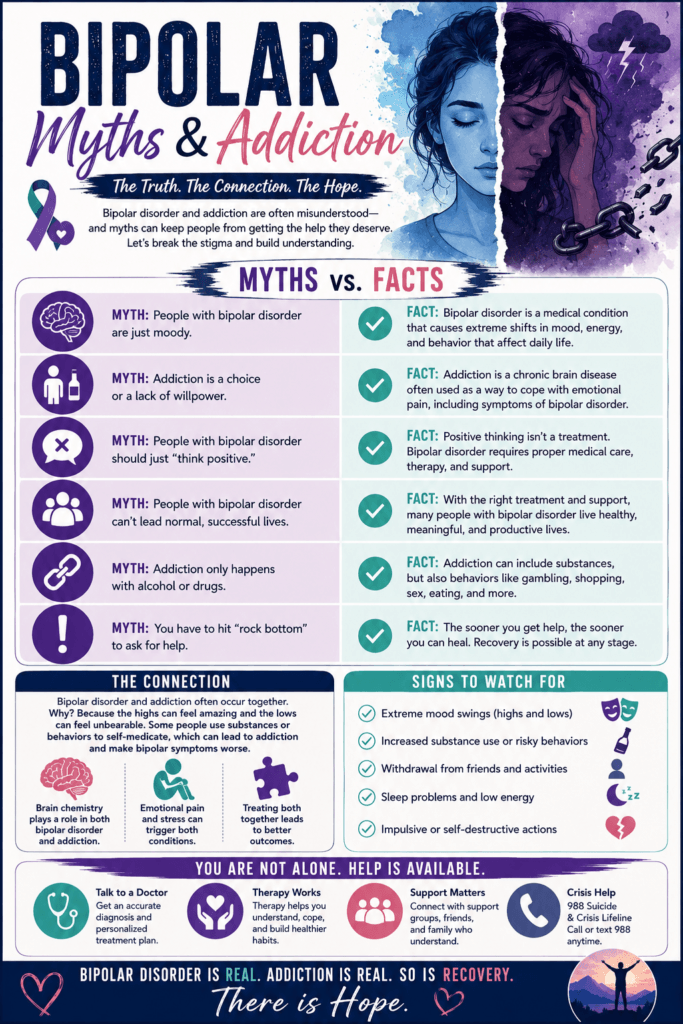
- Myth: Bipolar disorder and addiction are just signs of weakness.
This idea ignores the fact that both are actual medical conditions with roots in biology and environment. Blaming people for their symptoms just keeps them from reaching out for help. - Myth: People with bipolar disorder use substances just to “have fun” or party.
Irritability, intense sadness, racing thoughts, or impulsive behavior can drive people to self-medicate using drugs or alcohol. It’s often about coping with symptoms, not seeking pleasure. - Myth: If you treat addiction, the bipolar disorder will fix itself (or vice versa).
Treating only one part of the problem usually leaves the other issue unaddressed. Integrated treatment plans that tackle both are proven to work better. - Myth: You can “snap out of it” with more willpower.
Recovery from either condition takes time, effective treatment, and support, not just willpower. Telling someone to just try harder can make them feel hopeless.
Recognizing How Myths Affect Real-World Recovery
Bipolar disorder and addiction often feed into each other. When myths go unchecked, people can experience shame, stigma, or even be denied the support they need. Families may not know how to help, and healthcare professionals might miss the signs of one illness because they’re focused on the other.
Research from the Substance Abuse and Mental Health Services Administration (SAMHSA) points out that addressing both bipolar disorder and addiction together, known as integrated treatment, generally leads to better recovery outcomes. When myths influence how providers or loved ones approach the person, the odds of dropping out of treatment climb, and relapses can become more frequent.
Getting the Facts Straight: How Bipolar and Addiction Are Connected
People experiencing both bipolar disorder and addiction face symptoms that stack up on each other. One can trigger the other, and it’s often tough to untangle which condition came first. Here’s what makes dual diagnosis really complex:
- Symptoms Overlap: Both conditions can cause mood changes, sleep disruption, and impulsive behavior, making diagnosis trickier.
- Medication Sensitivity: Not all addiction treatments work safely for those with bipolar disorder. Specialized care helps avoid triggering manic or depressive episodes.
- High Relapse Risk: Managing both conditions together lowers the chances of relapse, but skipping care for either one increases the risk of setbacks.
Additionally, the way symptoms stack up can make everyday life stressful. Mood swings combined with addiction-related cravings can affect jobs, relationships, and physical health. Many people with both conditions say that support from mental health professionals who “get it” is a major turning point during recovery. Having reliable people and accurate advice makes staying on track much easier, even when challenges pop up.
Common Challenges When Myths Shape Treatment
Beliefs that grow out of myths can lead to real problems in getting help. Here are a few sticking points people often face on the road to recovery:
- Miseducation: People may think they don’t need medication or therapy, or that addiction counseling is useless unless the mood disorder is “fixed” first.
- Delayed Treatment: Worry about being judged or misunderstood can keep people from seeking help until things get really bad.
- Family Confusion: Families may not know when to step in or how to support loved ones, leading to stress and burnout at home.
- Limited Access: Some clinics or support groups aren’t designed for dual diagnosis, making it harder to find appropriate treatment.
On top of these, the social stigma tied to addiction and mental illness can cramp efforts to take the first step. Even if someone is ready to seek help, a lack of clear information about integrated programs can leave them stuck. Educating families, workplaces, and community groups on the realities of dual diagnosis can open new doors for support. The path to healing often starts with a better understanding at every level of the community.
Steps for Overcoming Stigma and Breaking Down Barriers
Accurate information helps increase understanding and makes it easier for people to get quality treatment that fits their needs. Here are a few practical tips to fight back against harmful myths:
- Educate Yourself and Others: Trusted sources such as NAMI (National Alliance on Mental Illness) and SAMHSA provide guidance and support for dual-diagnosis care.
- Encourage Honest Conversations: Talking openly about symptoms, struggles, and successes reduces isolation.
- Push for Integrated Care: Look for mental health and addiction treatment centers skilled in managing both conditions simultaneously.
- Lean on Peer Support: Connecting with others who’ve faced similar challenges can offer hope and practical advice.
Keep in mind that recovery is a process, and it’s normal to hit bumps along the way. Setting realistic expectations, celebrating small wins, and staying connected with a care team make things go more smoothly. Don’t forget, families can also benefit from counseling or support groups that focus on dual diagnosis—sharing tools and strategies can help everyone grow stronger together.
Busting Myths with First-Hand Experience
I’ve talked with plenty of people trying to manage bipolar disorder and addiction. Many have told me the scariest part is believing they’re the only ones dealing with both, or fearing that recovery means “picking one problem to focus on.” If you or someone you know is feeling this way, try reaching out to a dual diagnosis support group, even virtually. Hearing real stories shows recovery is tough but absolutely possible with the right help.
More people than you might expect are going through the same experience. Reaching out online or at a local group can help shake the feeling of isolation. These groups trade stories, obstacles, and ideas in a space where folks truly understand the ups and downs of dual diagnosis.
Practical Resources Worth Checking Out
Here are a few resources I point to all the time for reliable support and info:
- NAMI: National Alliance on Mental Illness: Great info for families and individuals on dual diagnosis and local support groups.
- SAMHSA: Substance Abuse and Mental Health Services Administration: A helpline and databases for treatment facilities specializing in co-occurring disorders.
- Brain & Behavior Research Foundation: Easy-to-read insights about managing both conditions at once.
If you are seeking more local support, ask your doctor or a local mental health clinic about qualified counselors experienced in dual diagnosis. Many communities now offer online workshops, forums, or helplines to shrink gaps in access and keep you connected with professionals.
Frequently Asked Questions
People new to the idea of dual diagnosis care or dealing with both conditions often wonder about these topics:
Question: Can someone recover from both bipolar disorder and addiction at the same time?
Answer: Yes. Recovery is possible with an integrated approach that treats both. Many people go on to live full and rewarding lives.
Question: Can medication for bipolar disorder help with addiction cravings?
Answer: Some medications can indirectly help by stabilizing moods, making it easier to manage triggers for substance use. However, addiction usually also needs its own treatment plan.
Question: Will telling my doctor about substance use make things worse?
Answer: Healthcare providers are there to help, not judge. Sharing information honestly helps develop a better treatment plan that considers both issues.
Question: Are there special support groups for people facing both conditions?
Answer: Yes, there are support groups and programs specifically for dual diagnosis. These groups often meet both in-person and virtually, so you can talk to people who “get it.” They’re a good way to gather tips and feel less alone in your experience.
What to Keep in Mind for Moving Forward
Working through recovery takes patience, the right support, and fact-based information. When myths about bipolar disorder and addiction fade away, barriers to real treatment also fall. The right resources, combined with a caring environment, can make all the difference.
Whether you’re seeking support for yourself or someone you care about, keep pushing for clear info and expert care. The path might be complicated, but every step forward matters, and accurate knowledge helps make each one possible.
Video: Bipolar disorder destroys more lives because of this misconception #bipolar #awareness