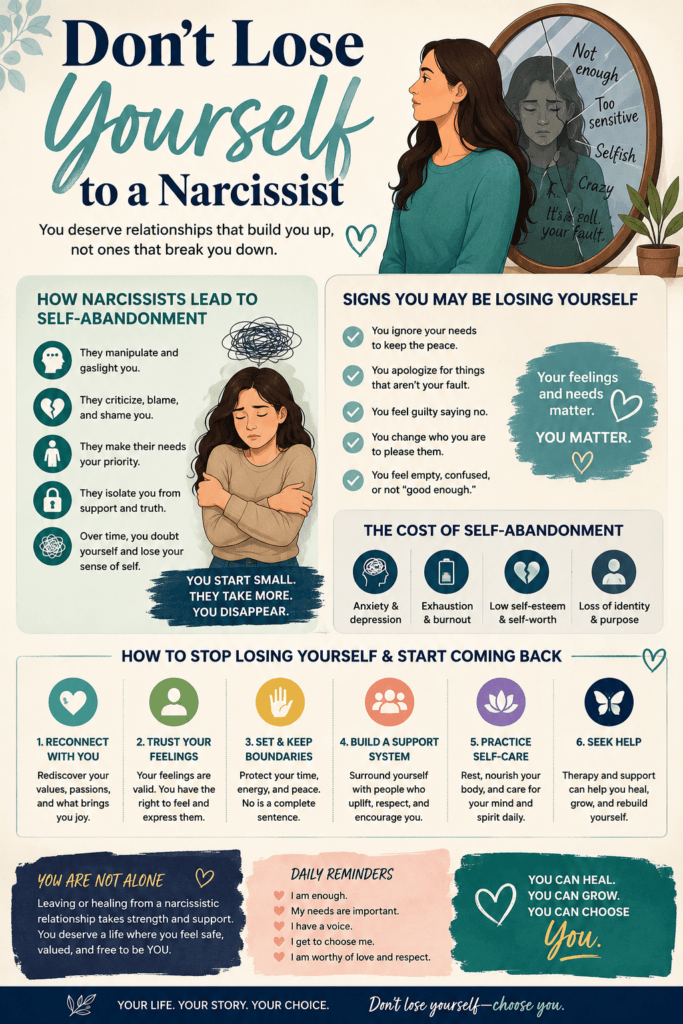
Before we realize what’s happening, a narcissistic relationship can gradually erode our confidence, identity, and sense of self. Many people find themselves putting another person’s needs, opinions, and approval ahead of their own until they no longer recognize their own values, emotions, or goals. This pattern, known as self-abandonment, often develops slowly through manipulation, criticism, and emotional control. Understanding how narcissistic relationships encourage self-abandonment is an important first step toward rebuilding healthy boundaries, restoring self-worth, and reconnecting with who you truly are.
How Narcissists Set the Stage for Self-Abandonment
Being around a narcissist often feels like you’re living in their world, with their rules. Their behavior isn’t just about bragging or demanding attention; it’s about shaping reality so that, over time, you might question yourself to the point that you quiet your own feelings or needs—just to keep the peace. This isn’t always obvious at first. It can start with small digs, guilt trips, or subtle ways they dismiss your opinions. Before you know it, you might wonder if your instincts or boundaries matter at all.
The root of this often lies in how narcissists relate to others. According to research from the Cleveland Clinic and Mayo Clinic, narcissistic personality traits can include a constant need for validation, a lack of genuine empathy, and sensitivity to criticism. They often see themselves at the center of everything and expect others to play along. The thing is, to keep the relationship running smoothly, people around them wind up shrinking themselves, sometimes without realizing it. (Source: Psychology Today)
Spotting the Ways Narcissists Lead You to Ignore Yourself
Self-abandonment doesn’t happen overnight. There are pretty clear patterns you might notice along the way. These are some of the most common ways I’ve observed when listening to people (and, honestly, sometimes in my own experiences!):
- Invalidation of Feelings: Narcissists downplay emotions or say you’re “too sensitive,” causing you to bottle things up rather than share honestly.
- Walking on Eggshells: Constantly worrying about how they’ll react makes it feel easier to ignore your needs rather than risk their anger.
- Gaslighting: They might twist reality, making you wonder if you even remember things correctly. This is a clear sign that your trust in yourself can erode.
- Turning the Tables: Arguments often get flipped, and somehow you end up feeling guilty or responsible for things you didn’t do.
- Conditional Acceptance: Approval or affection feels like it comes with strings attached, so you adapt your behavior in hopes of pleasing them.
These behaviors might be subtle, but even small examples can add up. Before long, it might seem easier to just do things their way, ignore what you want, or even question whether your needs really matter. That’s how self-abandonment creeps in.
Early Warning Signs You’re Slipping Into Self-Abandonment
There are some clear warning signals I’ve learned to look out for, both in myself and others, when someone’s at risk of abandoning their own needs:
- Often apologizing, even when you don’t think you did anything wrong
- Second-guessing most choices, expecting criticism
- Loss of interest in things you used to enjoy
- Keeping opinions to yourself out of fear of conflict
- Carrying a sense of low self-worth or “not being enough”
Spotting these signs early is really important. They can be a signal to pause, reflect, and consider if the problem might not be you but the relationship dynamic itself.
Why Narcissists Trigger Self-Abandonment in Others
Narcissists are often driven by insecurity and a need to control their environment. When someone around them pushes back or asserts their needs, narcissists sometimes react with anger, sarcasm, or withdrawal. Because of this, people learn pretty quickly to sidestep their own feelings to keep things “normal.”
A core idea from relationship psychology is that narcissists crave a sense of power and control. The easiest way to get that is to pull others into their orbit and reward them (sometimes inconsistently) for compliance. Studies from Harvard Health and Verywell Mind show that this emotional seesaw, never knowing if you’ll be tolerated, praised, or punished, keeps people focused on the narcissist, rather than checking in with their own needs. (Source: Verywell Mind)
Popular Strategies Narcissists Use
Narcissists don’t always follow the same playbook, but some of the tricks they use to nudge someone away from their true self show up a lot, like:
- Love bombing: Showering you with attention, praise, or gifts early on, then pulling away so you crave that feeling again.
- Silent treatment: Ignoring you for hours or days when you challenge them, leaving you feeling lonely or desperate for reconnection.
- Triangulation: Comparing you to others or bringing in outside relationships to stir jealousy and insecurity.
I’ve watched friends stuck in these cycles, and it takes a toll not just on self-esteem but also on decision-making skills and personal goals. Often, these actions fly under the radar at first, but as the relationship unfolds, their impact becomes painfully clear.
Breaking Free: How to Reconnect With Your True Self
Healing from self-abandonment takes patience, but it’s absolutely possible. The first step is to get honest about what’s happening in the relationship. Sometimes writing down examples you experience, however small, can make things clearer. Therapy, especially with someone familiar with narcissistic dynamics, can be really helpful here.
Some practices I often suggest and have found helpful myself include:
- Check in daily with what you’re feeling—happy, angry, bored; all of it counts.
- Write down even small opinions, preferences, or goals to remember what matters to you.
- Practice setting small boundaries, like “No, I can’t do that today,” and see how that feels.
- Connect with supportive friends or communities to get perspective.
- Read up on narcissistic abuse and self-abandonment; knowledge makes things less scary (Psychology Today resource).
It might feel tough at first, but these habits will chip away at old patterns and help rebuild self-trust. Remember that consistency really pays off, and small actions add up over time. Everyone has a right to their own feelings and interests, and reclaiming that right is the foundation of recovery.
Common Obstacles and How to Manage Them
The reality of pulling away from a narcissist (or any toxic person) can be rough at points. Some of the most common challenges include:
- Losing the sense of connection or validation you got from the narcissist, even if it was inconsistent.
- Fear that you’ll hurt their feelings or trigger a blowup by speaking up.
- Second-guessing your boundaries, especially if the narcissist tries to guilt you.
- Worrying about what others will think if you switch up or end the relationship.
A tip that works is to repeat facts to yourself (“They choose their responses, not me”), reach out to someone who understands, and celebrate any step—no matter how small—toward self-respect. It’s also helpful to keep reminding yourself that rebuilding your sense of self takes time. Support and small victories really do add up, so don’t overlook the value of steady progress.
Real-World Examples
I’ve heard so many stories (and lived through a few myself) where the moment of clarity comes quietly. Sometimes it’s realizing you agreed to something you really don’t want, staying silent in the face of an unfair accusation, or noticing you haven’t pursued your own hobbies in years. These personal “wake-up” moments might sting, but they often mark the start of reconnecting with who you are.
One friend realized she hadn’t decorated her apartment the way she wanted because her partner criticized her taste. Another decided to reconnect with family, even though her narcissistic parent discouraged it. Each story is a step away from self-abandonment and a small step closer to self-respect. Stories like these give hope and inspiration to others who may be feeling lost.
Frequently Asked Questions
Question: How do I know if I’m self-abandoning?
Answer: If you feel like you’ve lost touch with your opinions, or you’re constantly guessing what someone else wants rather than checking in with yourself, that’s a sign. Tracking your feelings and choices for a week or two can give insight.
Question: Can a narcissistic person change?
Answer: Experts say true narcissistic personality disorder is hard to treat, but behavioral changes are possible with consistent therapy. That said, it’s important to focus on restoring your boundaries and self-respect, whether or not they change.
Question: What are the first steps to recover from self-abandonment?
Answer: Start by noticing your feelings and needs, speak honestly with a trusted friend or professional, and practice setting and holding boundaries—even in small ways.
Moving Forward with Self-Trust
Regaining your sense of self after living with a narcissist feels tough at times, but it’s worth it. Small daily actions, honest reflection, and connecting with healthy support build self-trust bit by bit. Relearning that your needs matter is the foundation for any future relationship, be it romantic, family, or friendship. Real growth starts the day you stop ignoring yourself and choose to listen instead. Every small act of self-care or boundary-setting is a positive step toward a better, more authentic life. The more you practice, the easier it becomes to step into your own power and trust yourself moving forward.
Video: They’re Slowly Erasing Who You Are #emotionalabuse #toxicrelationships #recoverysupport