Feeling stuck between choices happens to everyone at some point, but for some, decision paralysis can run so deep that it starts affecting everything, including how they cope with stress. One thing I’ve noticed is that this freeze in decision-making can sometimes make people reach for substances like alcohol, drugs, or even prescription meds as a way to deal with the overwhelming pressure. I want to check out why decision paralysis and substance use connect, what makes this loop so hard to break, and offer some clear ways to handle these patterns if you or someone you know is going through it.
Getting What Decision Paralysis Really Is
Decision paralysis isn’t just about taking extra time deciding what to eat or which show to watch. It’s when a person finds themselves completely unable to make a choice, even about simple things, usually because there are too many options, fear of making mistakes, or pressure about the outcome. The brain goes into overdrive, cycling through worst-case scenarios, which only ramps up anxiety.
This state can lead to feeling out of control or stuck, and it often comes with stress, self-doubt, and tension. Some people get so overwhelmed that it starts interfering with daily routines, like paying bills, social plans, or even picking up the phone to talk to someone. When this level of stress builds, people look for ways to quickly numb out the feelings, and that’s often where substances come in.
How Decision Paralysis and Substance Use Start Connecting
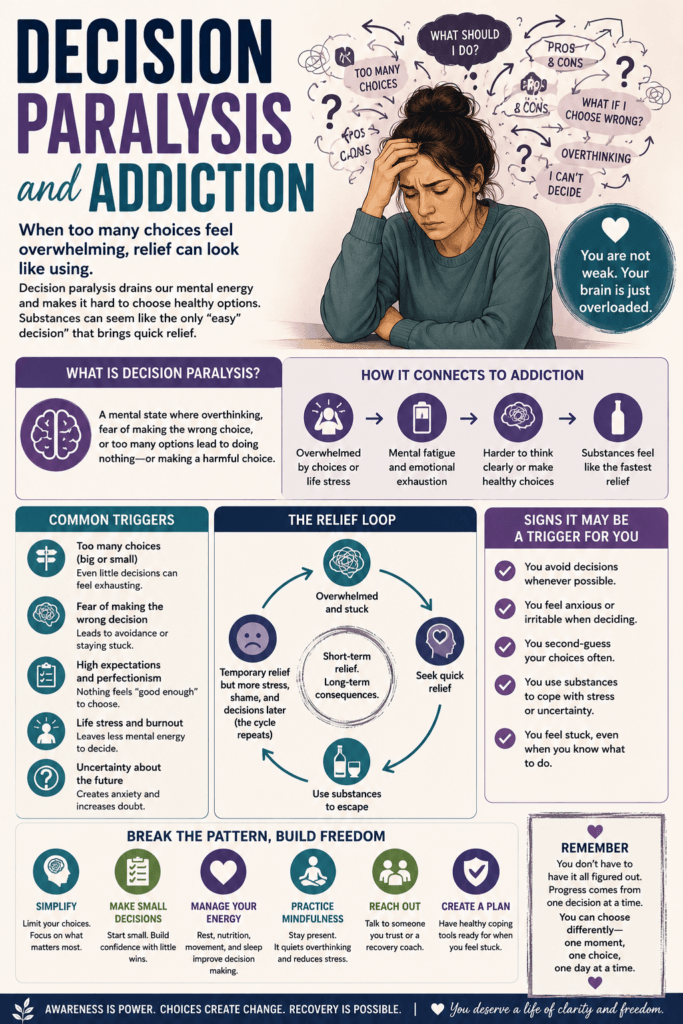
When you can’t seem to make any decisions, it gets uncomfortable really fast. The mind wants relief from the endless pressure. For some, reaching for a drink, a pill, or even something like vaping seems to offer a shortcut out of stress, even if it’s just temporary. Here’s how the cycle can build up:
- Stress From Indecision: Every moment of being stuck adds another layer of stress and frustration, making daily life feel like walking on wet cement.
- Seeking a Quick Fix: Substances can provide instant relaxation or emotional numbness, offering a brief respite from uncomfortable feelings.
- Temporary Relief: The substance use works for a little while. Anxiety lessens, the mind goes fuzzy, or the world feels more manageable.
- Avoiding Decisions: That break becomes a habit. Instead of facing tough choices, the person relies on using because it feels easier than wrestling with overwhelming decisions.
This loop can be really hard to spot at first, especially since everyone uses something to unwind now and then. But if it starts becoming the go-to move for any tricky decision or discomfort, it’s worth paying attention to.
Why Some People Are More at Risk Than Others
Not everyone who feels frozen by choices develops substance use challenges. But certain things can make it more likely. Personality, life history, and even what’s happening right now in someone’s life all play a part. Here are a few key reasons someone might be more likely to connect decision paralysis with substance use:
- High Anxiety or Perfectionism: People who are really hard on themselves or who always aim to make the “perfect” decision can get stuck more often and feel the discomfort more deeply.
- Previous Substance Use: If someone’s already turned to substances in the past to deal with stress, their brain remembers the escape route and will want to use it again.
- Big Life Changes: New jobs, relationship endings, financial problems, or moves can create situations where decisions pile up, and pressure grows.
- Lack of Support: Without friends, family, or counselors to talk things over with, feeling overwhelmed can get even heavier, making substances seem like the only relief.
How the Brain and Emotions Fuel This Cycle
The brain loves shortcuts, which is why substances can seem so appealing when decision paralysis hits. Substances like alcohol or drugs tweak the brain’s chemistry, dropping anxiety and pumping up those feel-good chemicals. For a brain hurting from the stress of too many choices, this can feel like flipping a switch from stuck to free, at least in the moment.
Over time, if someone relies on substances every time they get overwhelmed, the brain learns that relief is only a drink or a pill away. This not only builds a habit but can also change how the brain handles stress and makes decisions. Decisions may start to feel even harder, and using substances starts to feel like the only way out. It’s a loop that sneaks up fast.
Common Triggers for Decision Paralysis and Substance Use
- Too Many Choices: When the options just won’t stop, the brain can stall, making even small choices feel giant.
- Fear of Missing Out: Not wanting to make the wrong call or miss an opportunity can freeze decision-making and dial up anxiety.
- Unclear Consequences: If it’s hard to know what’ll happen after a decision, uncertainty can become overwhelming enough to check out with a substance.
- Shame and Self-Criticism: If every choice becomes a way to measure self-worth, even thinking about a decision can bring up old feelings of not being “enough.”
Personal Examples: How This Shows Up in Real Life
I’ve talked to people who described staring at an empty fridge for an hour, unable to choose what to eat, and then just giving up and ordering food with a drink because the discomfort was too much. For another person, it was a looming work deadline that felt so impossible to tackle that they numbed out with whatever substance felt accessible, pushing the decision off for another day. These stories are pretty common, and they often start with something small before growing into a regular escape pattern. In some cases, even minor day-to-day decisions, like picking out clothes or deciding what to watch, become stress points that trigger the urge to use substances as a coping method. This creeping expansion shows how the link between decision stress and substance use can grow more rigid over time if not addressed.
Handling Decision Paralysis Without Substances
It’s totally possible to break this loop, but it takes patience and a little honesty with yourself. Here are some practical ideas that can help:
- Break Down Choices: Instead of trying to tackle everything at once, break big choices into tiny steps to make them less intimidating.
- Create Routines: Building routines for common decisions helps reduce decision fatigue. Having regular meal plans or a set time for chores means fewer choices to make when stress is high.
- Use “Good Enough” Decisions: Sometimes, choosing the option that feels “good enough” is better than wrestling with perfection. This keeps things moving and helps build confidence.
- Find Safe Distractions: Taking a walk, putting on a favorite playlist, or calling a friend can provide a break without resorting to substances. These kinds of healthy distractions help reset the mind.
- Talk It Out: Sharing your thinking with someone can help untangle the mess of options in your head. Even texting a friend for their opinion can lighten the mental load.
- Mindfulness and Breathing: Short breathing exercises or grounding strategies help keep anxiety in check and support staying present.
- Celebrate Small Wins: Recognizing success in simple decisions and giving yourself credit encourages more positive behavior. Each step, even the tiny ones, reminds you that you can make choices and keep moving forward.
Things That Make Change Easier
Switching out substance use for healthier ways of coping isn’t quick or easy, but there are tools that can help:
- Therapy: Working with a counselor can help unpack why decisions feel so loaded and what drives the urge to use substances.
- Journaling: Writing down what choices come up, how you feel, and what triggers the urge to use can help reveal patterns and show progress over time.
- Accountability: Letting a trusted person in on your goals means you have backup when things get tough.
- Realistic Expectations: Not every day is going to be a win. Progress is about small steps and not beating yourself up if you slip.
- Support Groups: Some people benefit from being part of a group where sharing struggles is welcomed, and advice comes from others who really understand. These groups, whether in person or online, offer a judgment-free place to talk about both decision issues and substance use, making big problems feel more manageable.
Frequently Asked Questions
Question: Can decision paralysis really lead to addiction?
Answer: Decision paralysis isn’t a direct cause, but it can play a big part by encouraging habits that turn into dependency, especially if substances are your main coping method.
Question: What signs should I watch for?
Answer: If you notice you’re always reaching for a drink, vape, or pills whenever choices pop up, or using more often just to handle daily stress, it’s probably time to check in with yourself or talk to someone.
Question: How do I start changing these habits?
Answer: Small steps help. Try reaching for something other than a substance when decisions feel overwhelming. If things feel too tough to tackle alone, finding a therapist or support group will make it easier.
Key Ideas to Hold Onto
The stress from too many choices can trick your brain into thinking substances are the only way to cope. Recognizing this pattern makes it easier to find better ways of handling stress without numbing out. Building routines, breaking choices into steps, and talking to others are super useful moves. If decision-making mixed with substance use starts feeling like a pattern, reaching out for support can make all the difference in feeling back in control of your life.
Video: Decision Paralysis Leads to This #Psychology #Awareness