Testosterone is often discussed in conversations about overall health, but its role in addiction recovery is frequently overlooked. Misconceptions and conflicting information about hormones can make it difficult to understand how they influence the healing process after substance use. Learning what testosterone actually does—and what it doesn’t do—can help people better understand their recovery, support healthy lifestyle changes, and make informed decisions with their healthcare providers.
The Role of Testosterone in the Human Body
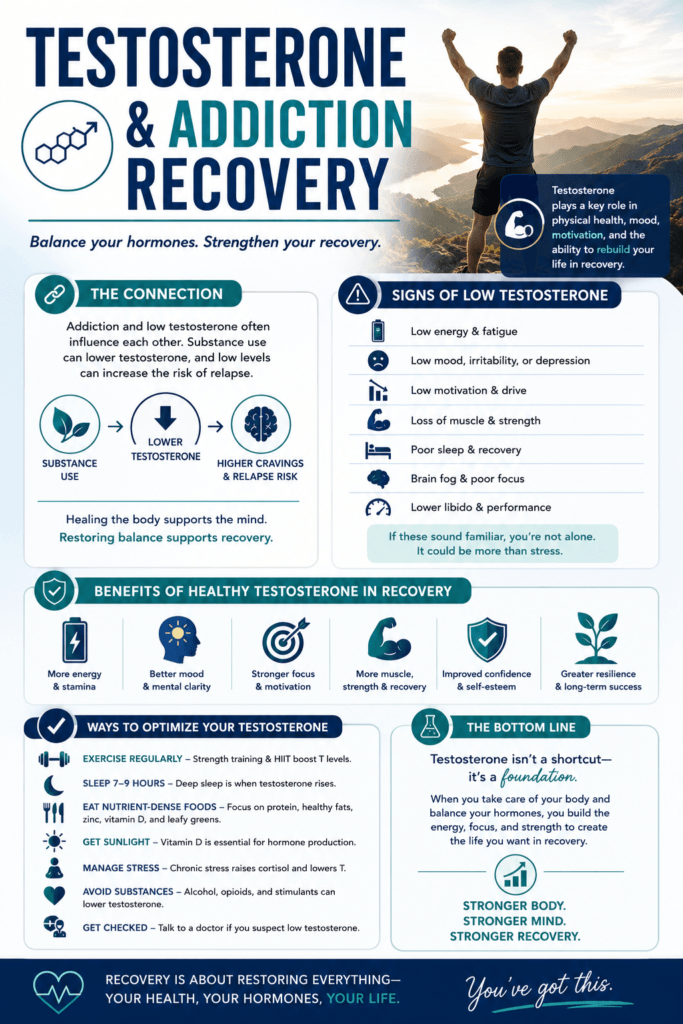
Testosterone is commonly known as the main male sex hormone, though everyone, regardless of gender, produces it. It’s responsible for a bunch of things, not just physical features like facial hair or muscle mass. It impacts mood, energy, motivation, and even the drive to take action. Low levels can make people feel tired, anxious, and even less interested in daily activities.
Testosterone levels fluctuate naturally with age, stress, sleep patterns, and even nutrition. In some cases, substance use can throw those hormone levels way off balance, creating both physical and mental health struggles during recovery. Thankfully, with some intentional steps, you can support your body’s ability to get back on track for overall well-being.
How Addiction Impacts Testosterone
Many drugs, including alcohol, opioids, and certain stimulants, can mess with the body’s hormone system. Substance use can either block the body from making testosterone or cause it to be converted into other hormones. This change might leave people feeling low, less energetic, and with poor sleep or emotional swings. None of this helps anyone in recovery.
A study from NIH points out that opioid use in particular is known to cause a dip in testosterone production. Alcohol has a similar impact, too; regular heavy use often leads to hormone issues that don’t just bounce back overnight. The longer someone uses it, the more likely these effects are to show up. Sadly, they can linger during early recovery if left unaddressed.
Why Testosterone Balance Matters in Recovery
During addiction recovery, the body and mind are both trying to heal and reset. Keeping testosterone levels steady has a big effect on these areas:
- Energy: Recovery often feels exhausting, and low testosterone can make fatigue even worse.
- Mood: Irritability, depression, or anxiety can show up if testosterone is low, sometimes getting mistaken for regular withdrawal symptoms or post-acute withdrawal syndrome (PAWS).
- Motivation: Sticking to new routines and staying involved in therapy is harder if you’re dragging through the day.
- Sleep: Hormone balance affects circadian rhythms and sleep quality, both of which are critical for healing.
- Physical health: Muscle, bone, and heart health all depend on natural testosterone levels.
Having all these things thrown off at once makes it even harder for those focused on making lasting changes or avoiding relapse. Understanding hormonal impact can be motivating and help you make sense of this difficult phase.
How Recovery Can Help Restore Testosterone
It’s not all doom and gloom. Deciding to quit and entering recovery are the first steps in letting your hormone system do some self-repair. Most people notice that after substances are out of their system, their bodies slowly start producing testosterone at healthier levels. Some basic steps support that process:
- Exercise: Even light movement, like walking, supports hormonal health, and weight training is especially useful for testosterone levels.
- Good nutrition: Eating enough protein, healthy fats, and essential vitamins (such as vitamin D) and minerals (such as zinc) supports hormone production.
- Better sleep: Gradually establishing a natural sleep routine is crucial. Poor sleep keeps testosterone low.
- Managing stress: High stress and anxiety can actually lower testosterone. Practicing mindful relaxation or breathing exercises can be surprisingly helpful.
Usually, it takes weeks or even a couple of months for hormones to rebalance, but most people notice improvement with these healthy routines. Medical support is available, and it can make a difference for those who need extra help.
Common Testosterone Myths in Addiction Recovery
I hear a lot of unhelpful, even risky, advice getting passed around regarding testosterone and recovery. Here’s what’s actually true:
- “Testosterone therapy is a quick fix.” Most people during recovery do not need prescription testosterone. Doctors only prescribe it if tests show long-lasting, genuinely low levels. Artificially boosting testosterone without a real reason can throw other hormones off balance, causing unwanted side effects.
- “Men are the only ones affected.” Testosterone is just as important for women. Low testosterone in women can cause tiredness, reduced motivation, and mood problems, too.
- “Supplements are a safe shortcut.” Many testosterone boosters and supplements are sold online, but most are untested or even illegal in some places. Always consult a healthcare provider before trying anything that claims to “fix” hormones overnight.
Practical Steps to Support Hormonal Health During Recovery
Getting back into balance during recovery can feel like an uphill climb. Here are practical tips anyone can try to support their body:
- Focus on movement: Try for at least 20–30 minutes of activity most days. Start gently and build up over time.
- Eat for hormone health: Get enough healthy fats (from foods like nuts, olive oil, or fatty fish), lean protein, and plenty of vegetables.
- Sleep basics: Go to bed and wake up at the same time daily. Reduce screen time before sleep and create a calming bedtime routine. Sleep hygiene matters for recovery and a solid hormone boost.
- Talk openly with your provider: If you feel tired all the time, have trouble with mood, or notice changes in your body during recovery, ask for a hormone panel. Many clinics can check testosterone alongside other markers for an all-in-one approach.
Common Challenges with Testosterone in Recovery
- Fatigue and Low Energy: When natural levels are still low, everything can feel like walking through mud. Prioritize rest, but do not give up on movement; any progress helps the body recover.
- Unexpected Mood Swings: Sometimes depression or anxiety is actually tied to hormones. Show some self-compassion and keep your healthcare provider updated on how you’re feeling.
- Slow Physical Progress: It can feel discouraging if muscle mass or strength doesn’t bounce back right away. Remember, recovery is a marathon, not a sprint.
Medical Guidance and When to Seek Help
If lifestyle changes aren’t improving your energy or mood after a few months, or if you’re still feeling off, testing hormone levels makes sense. Medical professionals can dig into the root of the issue, ensuring there isn’t something else interfering—like thyroid problems or other causes of low testosterone. Research shows that a personalized approach yields the best results, rather than relying on supplements or treatments without a clear reason.
The Basics: Important Facts About Testosterone for People in Recovery
- Hormones are part of the big picture: Recovery isn’t just about quitting substances; healing physically and mentally means focusing on your hormone health, too.
- Most bodies heal over time: With enough support and patience, testosterone often bounces back without medication.
- Medical advice beats online fixes: There are lots of quick fixes online, but speaking to a doctor or clinical provider sets you on a safer, more effective path.
FAQs About Testosterone and Addiction Recovery
Question: Does testosterone therapy speed up addiction recovery?
Answer: Not usually. Unless lab results show truly low levels, most people improve naturally with basic lifestyle changes. Medical testosterone has its risks and only fits certain cases.
Question: How long does it take for testosterone to recover after quitting drugs or alcohol?
Answer: It’s different for everyone, but most people see improvements within a few weeks to a few months. Major lifestyle changes—better food, exercise, and sleep—can help move things along.
Question: Are there clear signs of low testosterone during recovery?
Answer: Some signs include tiredness, sleep trouble, mood changes, low sex drive, or reduced muscle recovery. Still, these issues can have other causes. Checking with a healthcare provider helps figure out what’s going on.
Question: Do women in recovery need to care about testosterone, too?
Answer: Absolutely. Hormone balance matters for everyone, and low testosterone in women can appear as fatigue or mood changes just as much as in men.
Final Thoughts on Testosterone and Recovery
Testosterone plays an important part in anyone working toward addiction recovery, but there are no magic fixes. Healing happens step by step, and supporting your hormone balance is just one element. With healthy habits, regular medical check-ins, and plenty of patience, recovery becomes a lot more manageable and rewarding.
By staying informed and sticking to real advice, you can take an active role in your own healing. Every day becomes another building block toward a stronger, steadier recovery, helping you reach your personal goals bit by bit.
Video: He Destroyed His Testosterone With Alcohol—Then He Recovered #menshealth #recovery #transformation