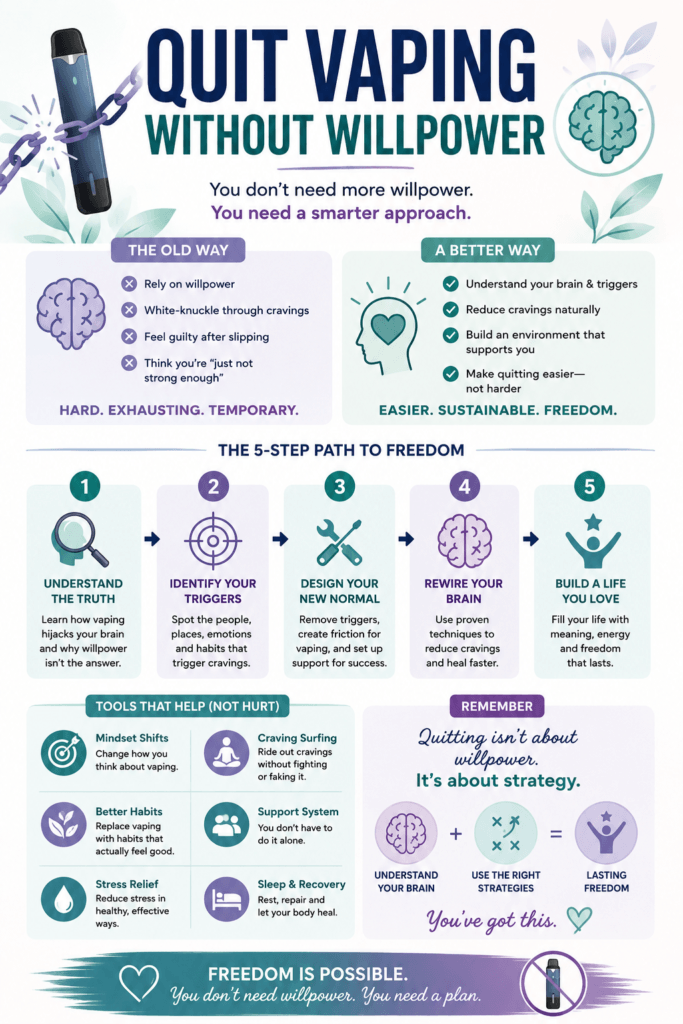
If you’re feeling tired of vaping but find the idea of quitting overwhelming, you’re definitely not alone. Willpower is often seen as the number one tool to quit, but that approach can feel impossible if cravings and habits have taken over. It’s not just about being determined; it’s about changing how you relate to vaping and creating a new routine that just doesn’t include it. I’ve pulled together some practical, no-willpower-needed steps to help you break free from vaping, even if self-control seems out of reach.
Why Quitting Vaping Feels So Hard (Without Relying on Willpower)
Vaping isn’t just about nicotine, though that’s a big part of it. There’s the ritual, the stress relief, and the comfort factor. Even if you have a genuine desire to quit, triggers and cravings stick around. Many e-cigarettes are designed to deliver nicotine in ways that are seriously habit-forming, and on top of that, you might lean on vaping as a way to manage anxiety or boredom.
Trying to quit by just “toughing it out” can backfire. Stress builds, cravings spike, and then the old habit calls your name. That’s not a personal weakness; our brains naturally crave the relief and routine vaping creates. Approaching quitting as a lifestyle switch, not a test of inner strength, takes the pressure off and makes real success more likely.
Understanding the Habit Loop
Habits, including vaping, work in loops: there’s a trigger (like stress or friendship), the action (reaching for the vape), and the reward (calm, distraction, or that familiar feeling). You’re not fighting the vape itself as much as you’re dealing with the loop your brain has built up over time.
- Trigger: A feeling, place, or social situation signals the urge to vape.
- Routine: Vaping becomes the go-to response.
- Reward: You get a little burst of relief or pleasure, even if it’s just for a moment.
Recognizing your loop helps you change it, and you don’t need stubborn self-control to make progress. Breaking or rewiring this cycle is where the real change happens.
Step-by-Step Guide to Quitting Vaping Without Willpower
- Identify Your Triggers
Start by tracking when and why you reach for your vape. Mornings? After meals? During stressful calls? Keep a little note on your phone for a few days. Once you see a pattern, the habit becomes way less mysterious. - Swap Out the Routine
Replacing the vaping action with another simple behavior can help retrain your brain. Some ideas that work for people: chewing sugar-free gum, sipping cold water, or stepping outside for fresh air. Anything that gives your hands and mouth something new to do can ease the urge without a harsh fight. - Create a Vape-Free Environment
Your environment shapes your habits. Remove vapes, chargers, and eliquids from your room, car, or workspace. Wipe down surfaces and toss accessories to break the visual and physical prompts to vape. Even tiny tweaks make a surprising difference. - Try a Slower Taper (If Cold Turkey Seems Impossible)
You don’t have to quit overnight. Reduce your vaping sessions by delaying your first vape of the day or skipping one or two regular breaks. Some people find gradually diluting their e-liquid with lower nicotine strengths helpful. This gentle tapering method lets your body adapt with less stress. - Use Nicotine Alternatives, No Shame
Nicotine replacement therapies (like patches, lozenges, or gum) get a bad rap for “replacing one thing with another,” but they’re much less addictive than vaping and help lower cravings. Using a patch or gum takes the edge off so you’re not battling withdrawal and can focus on changing your routine. - Distract, Distract, Distract
Boredom and downtime make cravings worse. Keep your schedule a little fuller, or plan easy activities for your usual vaping moments. Streaming a favorite show, going for a walk, or texting a friend offers a quick switch of attention. The craving will pass, even when it feels endless.
Things You Should Take Into Account Before Jumping In
- Withdrawal Symptoms: Some folks get headaches, irritability, or trouble sleeping. These symptoms are real and temporary. Consider talking to a doctor or checking out quitting support options, like quitlines or online chat support, for guidance along the way.
- Social Settings: Being around people who vape can be tough. Plan a few polite responses or excuses, or take a night or two off during your trickiest first days. You can always reconnect later.
- Stress Management: If stress is your main trigger, try out new coping tools: deep breathing, a stress ball, or a quick walk around the block instead of reaching for your vape. Apps like Calm or Headspace are pretty handy for learning these skills.
- Relapse: Slipping up doesn’t mean starting from square one. Loads of people need a few tries to quit for good. Treat each attempt as practice. There’s always tomorrow.
Handling Withdrawal Symptoms
Headaches, mood swings, and cravings can hit hard, especially at the beginning. These symptoms won’t last forever, but they can mess with your progress. Staying hydrated, getting extra sleep, and keeping snacks around (healthy stuff or otherwise) can really make the difference in those first few days.
Managing Social Triggers
Sometimes the biggest hurdle isn’t physical; it’s hanging out in situations that used to mean “vape break.” If you feel tempted around friends who vape, it’s totally okay to explain you’re taking a break or suggest doing something new together. Supportive friends usually get it, and sometimes even want to join in.
Helpful Tools and Support Systems
Anyone can use a little backup, no matter how independent you are. Finding resources or people that fit your style gives you daily structure and encouragement, taking the burden off “willpower.”
- Apps for Quitting: Try Smoke Free or QuitNow to track progress, journal cravings, and celebrate milestones. These are free and easy to use.
- Online Communities: Reddit’s r/QuitVaping, Quitline chat, or Facebook support groups are packed with advice, encouragement, and people dealing with the same stuff. Sometimes, just sending a quick message or reading others’ stories keeps motivation going.
- Accountability Buddy: If you have a friend trying to quit or who just wants to help you out, texting or calling each other during cravings provides instant distraction and support.
- Professional Help: Some clinics, psychotherapists, or GPs offer dedicated vaping cessation programs—even virtual appointments. There’s no shame in reaching out to experts for personalized advice.
Cool Stuff That Happens When You Quit
- Better Breathing: Within just a few weeks, your lungs start to recover. Climbing stairs or running for the bus starts to feel way easier.
- Improved Taste and Smell: Food is more flavorful, and scents seem stronger; most people forget how nice this is until it returns.
- Saving Money: Vaping adds up fast. Quitting frees up cash for new hobbies or just a few treats.
- Boost in Energy: Low-level fatigue from nicotine withdrawal fades out after a while, giving you a natural boost throughout the day.
- Clearer Skin: Some people see reduced acne and a healthier glow as their skin rebounds from the toxins in vapor.
Frequently Asked Questions
Here are some common questions about quitting vaping without leaning on willpower as your main tool:
Question: Will cravings ever go away if I don’t use willpower?
Answer: Cravings become less frequent and less intense the longer you go without vaping. Changing routines and using nicotine replacements or new habits helps curb cravings as your body and mind adjust.
Question: What if all my friends vape? Can I still quit?
Answer: Yes, but it helps to be upfront about your plan or take a break from situations that are full of vaping. Over time, cravings get weaker, and you might even inspire friends to cut down too.
Question: Does tapering down work better than quitting cold turkey?
Answer: For some, gradual reduction feels more manageable, especially if withdrawal symptoms are tough. Both methods work, so choose what feels doable for you. There’s no one right path.
Final Thoughts
You don’t have to dig deep for willpower to quit vaping. Changing your surroundings, swapping routines, using alternatives, and asking for support all work together to make quitting realistic and less stressful. Every time you skip a vape, you’re teaching your brain a new pattern. That’s real progress, and it adds up. Whatever your quitting story looks like, you’re making a positive move for your future—one easy, willpower-free step at a time.
Video: This is how to actually beat vaping for good #shorts #recovery #tips