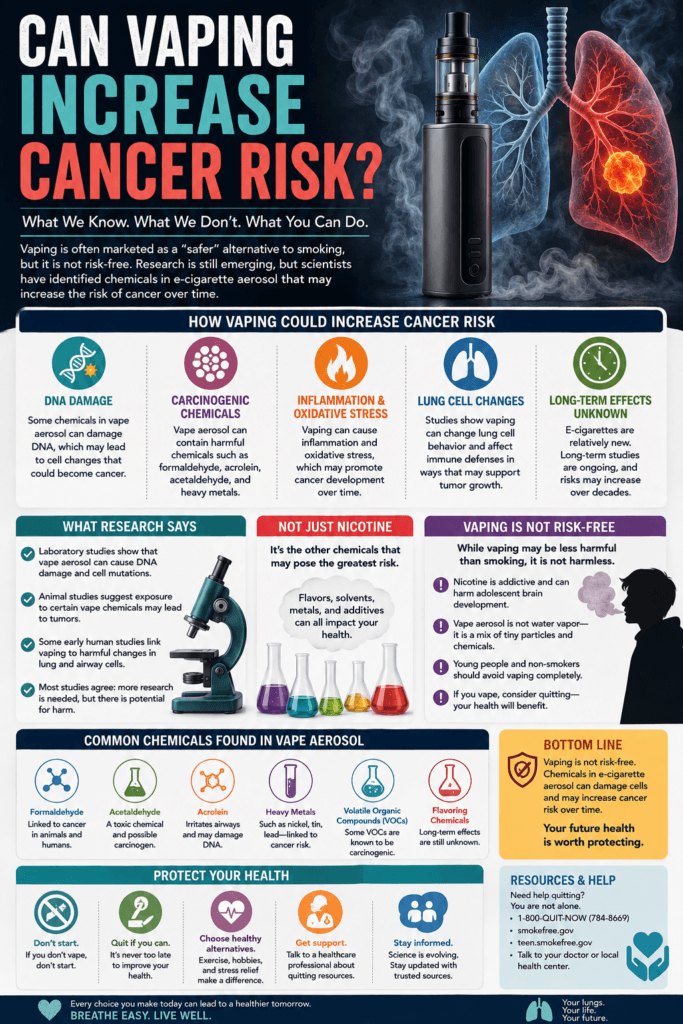
Vaping has become increasingly popular, particularly with the widespread availability of flavored e-cigarettes and vape products. Some people use vaping as an alternative to traditional cigarettes, while others are attracted to the flavors, convenience, or experience. However, vaping is not risk-free, and its potential long-term health effects continue to raise concerns. One important question is whether vaping may increase the risk of cancer. Although researchers are still studying the long-term consequences of e-cigarette use, vape aerosol can contain potentially harmful substances, including chemicals and metals that may damage cells. Understanding what current research shows—and what scientists have yet to determine—can help people make more informed decisions about vaping and their health.
Understanding What’s in Vape Products
The science behind vaping starts with what you’re actually inhaling. Most vape liquids—sometimes called eliquids or vape juice—contain nicotine, propylene glycol, vegetable glycerin, and a mixture of other chemicals or flavorings. These liquids are heated by the device and turn into vapor that you inhale. Unlike regular cigarettes, there’s no tobacco burning, so you aren’t getting the same smoke byproducts you’d find in a cigarette.
Here’s what you’ll find in a typical vape juice:
- Nicotine: The main addictive chemical that keeps people coming back for more.
- Propylene Glycol and Vegetable Glycerin: These are the main liquids that turn into vapor. Both are generally considered safe in food, but less is known about their long-term effects on the lungs when inhaled.
- Flavorings: These can taste like fruit, candy, menthol, or just about anything else—and they can contain hundreds of compounds.
- Other Compounds: When the liquid is heated, new chemicals can form, some of which are considered harsh or potentially hazardous.
Some people might be surprised to learn how many unknowns there are about the exact makeup of vape juices. The market is always changing with new brands and flavors, and some manufacturers may not fully test for every chemical produced during vaping. Even vape juices labeled as “all-natural” or nicotine-free can sometimes include ingredients that haven’t been tested for long-term safety when inhaled.
How Vaping Differs from Smoking (But Has Its Own Concerns)
The link between cigarette smoking and cancer is crystal clear. Cigarette smoke contains a mix of chemicals, like tar, carbon monoxide, and formaldehyde, that are directly linked to cancer—especially lung cancer. Because vaping doesn’t create tar, it might seem like a better choice, but that doesn’t mean there’s no risk for your lungs.
Research shows vaping delivers fewer toxins than burning tobacco, yet it still introduces chemicals into your airways. Some of the chemicals, including formaldehyde, acetaldehyde, and acrolein, have been flagged for being linked to cancer in other environments. The trouble is, the long-term effects of inhaling these substances via vaping simply aren’t understood yet. Many experts stress this point because we still need decades of data to know all the possible health effects.
Also, because temperature and device design affect which chemicals are produced when vaping, actual exposure can vary widely from session to session. That makes it hard for scientists to set exact safety guidelines or thresholds as they’ve done for traditional cigarettes.
Can Vaping Increase Your Cancer Risk?
Most research so far points to vaping being less risky than smoking regular cigarettes regarding cancer risk, but nobody’s calling it harmless. Here’s what current studies and expert reviews have to say:
- Cancer-Causing Chemicals: Lab analyses show vape clouds can have small amounts of substances flagged for causing cancer. These are present at much lower levels than those found in cigarette smoke, but even small amounts, taken in regularly, can add up over time.
- Effects on Cells: Some laboratory research has reported DNA damage and other cellular effects in cells exposed to e-cigarette vapor. These changes could start the process of cancer formation. But it’s a huge leap to say the same effects will always happen in real people using real devices.
- Flavorings and Additives: Certain flavorings, such as diacetyl (a compound once used to create a buttery popcorn flavor), have raised concerns about lung disease. While the link to cancer isn’t as clear, breathing in any extra chemicals, especially on a repeated basis, can potentially have negative long-term effects.
Keep in mind, vaping hasn’t been around nearly as long as cigarettes have. It took decades for the full effect of cigarette smoking on cancer rates to come into focus, and so we might just be waiting for the same with vaping. The potential long-term risks remain one of the big unknowns in the public health discussion.
What Science Says About Vaping and Cancer (So Far)
The American Cancer Society, Centers for Disease Control and Prevention (CDC), and Food and Drug Administration (FDA) all agree: there’s just not enough evidence to say vaping is safe—especially over the long haul. In 2023, several large studies and reviews pointed out important points of caution:
- Exposure to Carcinogens: People who vape end up with traces of harmful compounds in their bodies—less than smokers, but not none. Scientists haven’t figured out exactly what level of these substances is risky over years of use.
- Unpredictable Dangers: High-temperature vape devices, like some mods, can create more toxins. The hotter the device, the higher the chance of nasty byproducts.
- Younger Users: Teens and young adults who get into vaping may expose their still-developing lungs to these chemicals earlier in life, which could raise the risk for future health problems, including cancer.
Experts keep calling for studies that follow people over many years to truly nail down an accurate risk picture for cancer and other diseases linked to vaping. Until we have that, health organizations urge caution and encourage people to weigh the risks before picking up a vape.
Why Nicotine Still Matters
Nicotine is the central ingredient in most vape juices, but while nicotine by itself doesn’t actually cause cancer, it’s far from risk-free. Nicotine can affect your heart, blood vessels, and even how cells multiply. Recent research hints that nicotine may help tumors grow or spread. So, even though nicotine isn’t directly responsible for starting cancer, it can give existing cancer cells a boost, making quitting vaping (and smoking) even more important for those with health concerns.
Also, nicotine is highly addictive. Addiction means users are likely to keep vaping, and the continued intake of vapor can mean ongoing exposure to other potentially risky chemicals. For folks using vaping to quit a smoking habit, health professionals suggest that vaping should be a short-term measure—not a permanent swap.
What to Watch Out for in Vape Devices and Juices
Not all vape products are created equal. The actual risk from vaping depends a lot on:
- The type of device (simple vape pens or high-powered mods)
- Device temperature (higher heat can break down juice ingredients into more dangerous chemicals)
- Brand and juice quality (mainstream brands usually test more, while unregulated imports may not)
- Specific ingredients (watch for unfamiliar chemicals or wild flavor combos; not all are checked for safety when inhaled)
There have also been real-life cases of severe lung injury and hospitalizations tied to black market vape liquids, particularly those containing THC or special additives. Always stick with trusted, widely tested companies, and be wary of anything you can’t research.
Common Questions People Have About Vaping and Cancer
Vaping raises lots of questions, so here are some straight answers using what science knows right now:
Can vaping give you cancer instantly?
Cancer rarely develops instantly. There’s no evidence that vaping causes cancer right away. It’s repeated, long-term use that matters most.
If you quit vaping, does your cancer risk go back down?
Experts generally agree that the risk drops the longer you go without vaping. If you’ve only vaped for a short time, your risk could drop pretty quickly after quitting; longer use means more risk, but quitting is still the best move.
Is vaping worse than smoking cigarettes?
Vaping exposes you to fewer cancer-related chemicals than cigarettes, but there’s still exposure plus other risks for your lungs and heart. Your healthiest option is to steer clear of both.
Do nicotine-free vapes mean zero risk?
Nicotine-free vape juices lower some risk, but you’re still inhaling heated solvents and flavor additives. Some studies say there’s still risk involved, even if you leave out nicotine.
Staying Safe: Tips for Anyone Who Vapes
If you vape, you can make choices to lower the risk:
- Pick well-known, reputable brands and avoid products without clear labeling.
- Keep away from high-powered, very hot devices that increase toxin formation.
- Think twice before using offbeat flavors—sometimes they have the least-known safety data.
- If you’re thinking about quitting, look up support services—healthcare professionals can offer plans and nicotine quit tools tailored to you.
Always store vapes and juice bottles out of reach of children and pets. Even a small amount can be highly toxic if accidentally swallowed.
The Bottom Line on Vaping and Cancer
Right now, there’s no solid evidence that vaping directly causes cancer. But there are warning signs that the risks are real—especially if use is heavy or spans many years. Vaping isn’t as dangerous as cigarettes when it comes to cancer, but less risk isn’t the same as “safe.” With so much uncertainty, the safest thing for most people is to give vaping a miss, especially if you don’t already smoke or use nicotine.
If you have worries about your health or about someone in your life who vapes, talk it over with a doctor. There are resources and quit approaches available for those who want to get off nicotine and look after their long-term health. For more info on vaping and cancer risk, check out the American Cancer Society or the CDC.
Video: The Cancer Risk of Vaping: What You Need to Know