When most people think about dangerous opioids, names like fentanyl, heroin, and oxycodone usually come to mind. But there’s a hidden world of less familiar, yet extremely dangerous opioids making their way into street drugs and sometimes even being misused in the medical field. The truth is, just because you haven’t heard their names doesn’t mean they aren’t causing real harm. Here, I’ll break down some of these lesser-known opioids, how they’re entering different communities, and what makes them so risky.
Opioids: A Quick Refresher
Opioids are a group of drugs used to treat pain, but they’re also famous for their high risk of addiction. Prescription painkillers and illegal drugs like heroin are all part of this family. They work by connecting to receptors in the brain and changing how the body responds to pain. The intense feeling of pleasure some opioids create is what can get people hooked fast.
While most of the public focus is on pharmaceuticals like oxycodone or the rising wave of fentanyl overdoses, there’s a growing list of synthetic opioids and niche drugs slipping onto the scene. These drugs might not make mainstream news headlines, but their effects can be just as devastating, or even worse, because they’re less understood and not tracked as closely. Oftentimes, people aren’t even aware they’ve stumbled upon these substances, leading to unexpected health crises.
What Makes Some Opioids “More Dangerous”?
Not all opioids pack the same punch. Some are hundreds of times more powerful than morphine or heroin, and this makes them tough to dose safely. When an opioid is highly potent, even tiny amounts can stop someone’s breathing. These more dangerous opioids are usually synthetics, cooked up in underground labs with little quality control. There’s also a big risk with fake prescription pills or street powders: you never know if they’ve been mixed with one of these scary chemicals.
- High Potency: A small dose can cause an overdose.
- Unknown Mixes: You can’t always tell what you’re getting.
- Lack of Medical Oversight: These aren’t prescribed by your pharmacist; they’re often homemade or shipped illegally.
Besides their strength, another major issue is the unpredictability of these substances. Because composition can vary dramatically batch by batch, even experienced drug users are at risk of accidental overdose. The varying strength of street drugs means that one dose might do nothing, while another puts someone in immediate danger.
Hidden Threats: Lesser-Known Dangerous Opioids
Here are some of the opioids flying under the radar that I think everyone should know about. Many health professionals, law enforcement officers, and educators worry about these because they are hard to detect and can cause problems quickly.
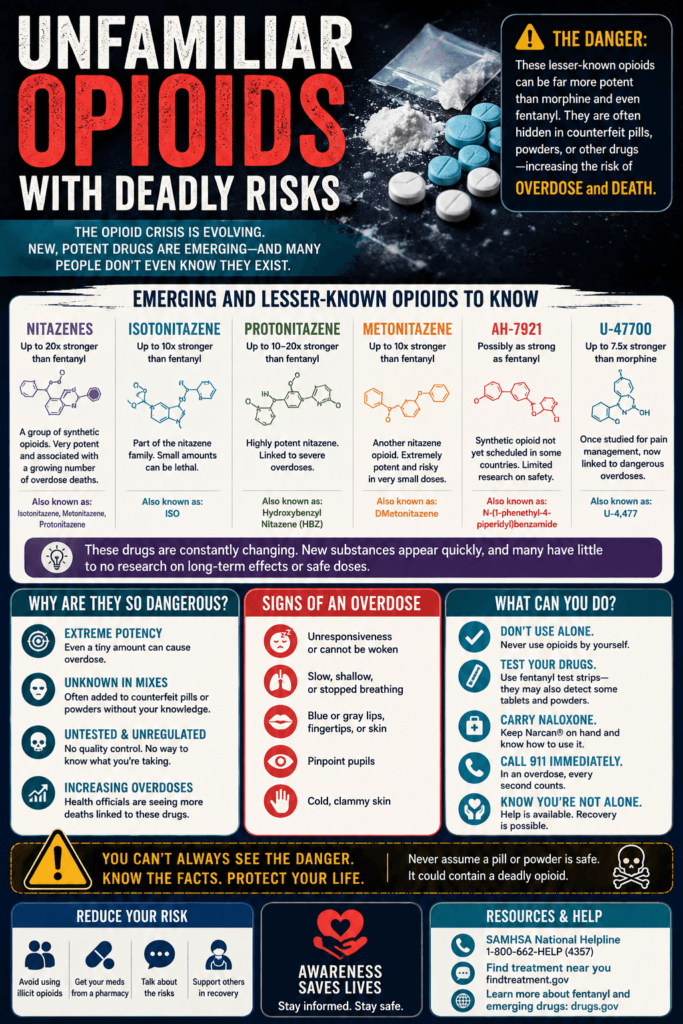
- Isotonitazene: Often nicknamed “iso” on the street, this synthetic opioid is many times more potent than fentanyl. It’s shown up in overdose cases in the US and Europe since about 2019. What makes it especially worrisome is that it comes as a white or yellow powder and often isn’t picked up by regular drug screens. Some studies show it can be up to 500 times stronger than morphine, making even a tiny dose fatal.
- Etonitazene: Developed in the 1950s, it was never approved for human use because it was too potent and risky. It’s showing up now on the black market and is known for being 60 times stronger than morphine. Since it isn’t hotly discussed in the media, users often don’t realize what’s in the drugs they buy.
- U-47700 (“Pink”): This synthetic opioid is about 7 times more powerful than morphine. It has been found pressed into counterfeit pills or blended with other drugs. Overdose deaths have led some places to make it illegal, but it can still be ordered online. Pink was originally made as a research chemical, not for human consumption.
- Brorphine: A newer synthetic opioid, brorphine has started appearing in drug busts since 2019. At first, there wasn’t much known about how strong or dangerous it was, but recent reports show links to multiple overdose deaths.
- MT-45: This chemical is similar to morphine in pain relief but causes nasty side effects, like hearing loss and skin reactions. Since it looks like other white powders, some people have unknowingly taken it and gotten very sick. Long-term use has also been linked to vision problems.
- Butyrfentanyl and FIBF: Related to fentanyl, butyrfentanyl and furanylfentanyl (FIBF) are sometimes used to stretch batches of heroin or counterfeit pills. They’re much more potent than heroin, making dosing unpredictable and dangerous, and often evade detection by basic drug screens.
There are dozens of other synthetic opioids being produced and circulated at any given time, each with slightly different chemical structures but all sharing similar risks: high potency and unpredictable side effects.
How Are These Opioids Getting Out There?
Most of these chemicals originate in labs overseas, often in China or India, where regulations may be weaker. Shipments are sent to street dealers or even small-time chemists who further break down, mix, or press them into pills. Because these drugs aren’t as well known, they can sometimes sneak past law enforcement efforts focused on popular names.
Online black market sites and even the dark web have played a big part in spreading less familiar opioids. Many of these substances were developed as research chemicals for scientific purposes, not for human use. But as soon as one substance gets banned, chemists tweak the molecule just enough to make a new, technically legal drug that hasn’t been outlawed yet. This cat-and-mouse game makes tracking and banning them very challenging for authorities.
Warning Signs and Why These Drugs Slip Under the Radar
Many synthetic opioids look just like other powders and pills, so people using street drugs might not realize they’re about to take something far riskier. A pill might look like a normal painkiller or Xanax bar, but it could contain one of these hidden opioids. There aren’t always obvious clues, and that unpredictability can turn a routine dose into a deadly one.
- No Taste, No Smell: Powders mixed together can make it really tough to tell what’s inside, and taste or smell rarely help.
- Hard to Test: Most drug test strips only pick up the “big name” drugs, so someone might falsely believe what they’ve got is safe.
- Fast Acting: These strong opioids can cause an overdose within a few minutes, and that leaves little time for help to arrive.
Even experienced users have been caught off guard by the potency of these synthetics. Additionally, street-level dealers often aren’t aware of the exact mix of drugs they’re selling, which raises the risk for everyone involved. Because these unfamiliar opioids aren’t well recognized, users may not seek help until it’s too late or tell medical professionals exactly what they’ve taken, hampering treatment efforts.
Staying Safer: Harm Reduction Tips
You can’t always rely on appearances or word of mouth to know what’s in street drugs. Harm reduction tools can help, especially if you or someone you know is at risk:
- Test Strips: Fentanyl test strips are becoming more common, and some organizations are developing strips to detect other synthetic opioids. While they aren’t perfect, they can warn of hidden risks.
- Never Use Alone: Overdoses happen quickly. Having someone nearby with naloxone (Narcan) can be lifesaving. This way, timely action can prevent tragedy.
- Start Low, Go Slow: If someone uses street drugs, starting with a very small amount and waiting increases the chance they’ll spot a problem before using more.
- Carry Naloxone: This medication reverses opioid overdoses. Many pharmacies offer it without a prescription, and training is easy to find online—taking a few minutes to learn could save a life.
Naloxone: Lifesaving, But Has Its Limits
Naloxone works by quickly blocking opioid receptors, so it can pull someone out of an overdose in minutes. But with newer, super-strong opioids, people sometimes need two or more doses. Staying with the person after the overdose is really important, since symptoms can come back once the naloxone wears off. If you’re in a group that regularly encounters these drugs, consider always having naloxone on hand and teaching others how to use it correctly.
Challenges Facing First Responders and Health Care Workers
Emergency room staff and paramedics are running into more cases where someone has taken a dangerous opioid they’ve never seen before. Standard drug tests can miss these new chemicals entirely, making diagnosis and treatment tougher. Some batches mix multiple opioids together, raising the risk that naloxone alone won’t be enough.
Education and up-to-date information are super important. Groups like the CDC and DEA constantly update their lists of new and emerging threats, and it’s worth checking those sites for the latest info. Health professionals also benefit from staying plugged into local and state alerts, which can warn them of spikes in certain substances.
Side Effects and Long-Term Risks
Regular opioid use is linked to a long list of side effects—constipation, nausea, drowsiness, confusion, and breathing problems. The synthetic, super-potent ones mentioned here can also cause muscle stiffness, heart palpitations, and dangerous drops in blood pressure. Long-term, the risk of addiction and withdrawal is almost a guarantee, and mental health problems often get worse too.
- Serious Overdose Risk: Stopping breathing is the main risk; brain injury or death can happen in minutes without help.
- Organ Damage: Oxygen deprivation from even a single overdose can leave lasting problems.
- Mental Health Effects: Anxiety, depression, and paranoia can get much worse with ongoing opioid use.
For users who survive an overdose, recovery can be long and challenging. Addiction to synthetic opioids may require specialized treatment, and even after recovery, the effects on physical and mental health might linger. For families, watching someone struggle with these issues can be incredibly hard.
Frequently Asked Questions
Here are some questions people often ask when learning about these lesser-known opioids.
Question: How do these “new” opioids end up in street drugs?
Answer: They’re often mixed into other drugs because they’re cheap, easy to transport in small amounts, and really strong. Dealers may not even know exactly what’s in their supply.
Question: Are regular drug tests able to spot these opioids?
Answer: Most standard drug tests only look for more common opioids. Some new tests are being developed, but many of these dangerous ones may go undetected for now.
Question: Is there a way to really avoid these opioids?
Answer: The only way to guarantee safety is to avoid non-prescribed drugs entirely. If that’s not possible, harm reduction steps, like using test strips and not using alone, can help reduce risk.
What to Watch for as the Drug Scene Keeps Changing
The danger from lesser-known synthetic opioids isn’t slowing down. More new drugs pop up each year, and changes happen quickly. Clinics, first responders, and community groups do their best to keep everyone informed. Staying curious and up to date with the latest news is really important. If you want to help, share info with friends and family, and keep the conversation going. Knowing what’s out there can be the first step in staying safer. Staying aware could save a life, so keep talking, learning, and sharing what you know.
Video: The Dangers of Nitazines: What You Need to Know