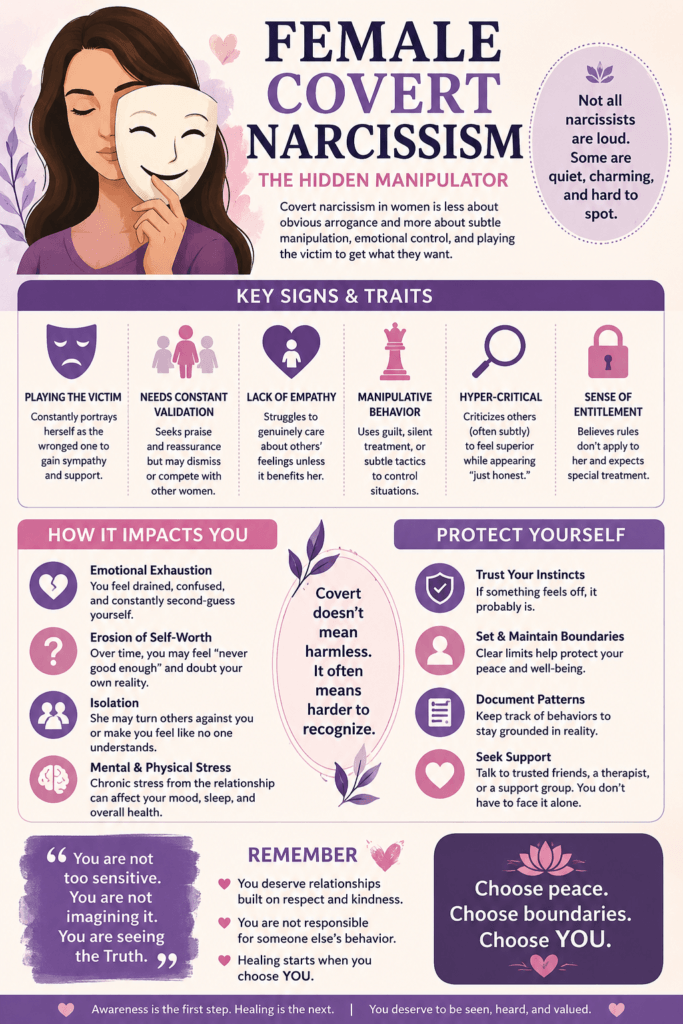
Understanding female covert narcissism can be a real challenge because the signs often fly under the radar. While the term “narcissism” might bring to mind someone loud, arrogant, or clearly self-absorbed, covert narcissism operates differently, with layers of subtlety. Female covert narcissism specifically tends to get overlooked, partly because cultural expectations often paint women as nurturing and empathetic by default. If you’ve ever dealt with confusing emotional dynamics, manipulative behavior that’s hard to pin down, or relationships that leave you guessing, this topic is definitely worth checking out.
What Is Female Covert Narcissism?
Covert narcissism, sometimes called vulnerable or shy narcissism, doesn’t look like the attention-seeking behavior you might expect from more stereotypical forms of narcissism. Instead, it pops up as insecurity, quiet manipulation, and hidden entitlement. While this applies to all genders, the way it shows up in women can look especially subtle.
Female covert narcissists may not crave the spotlight in obvious ways but might seek validation and control through behind-the-scenes tactics. The “covert” aspect means their tactics can be harder to recognize. While grandiose narcissists demand attention, covert narcissists present themselves as reserved or sensitive, sometimes even as victims.
Culturally, women are often expected to be agreeable, self-sacrificing, or emotionally attuned, which makes covert narcissistic traits feel even sneakier in female relationships. The point here isn’t to label or shame; it’s about understanding what might be happening if something in a relationship or friendship feels off, but you can’t quite put your finger on why.
Key Signs of Female Covert Narcissism
Spotting covert narcissism takes some practice because, on the surface, everything might look pretty normal or even overly agreeable. Some signs I’ve learned to look for include:
- Constant Victimhood: There’s always a reason things aren’t working out, and it’s never their fault. You might notice a steady stream of complaints or dramatic stories where the covert narcissist always ends up as the misunderstood or mistreated person.
- Passive Aggressiveness: Instead of direct confrontation, female covert narcissists might use silent treatment, backhanded compliments, or guilt-tripping to get what they want without appearing demanding.
- Chronic Envy: Jealousy toward others’ achievements, happiness, or relationships often comes up, but it might be expressed in subtle, even self-pitying ways, like saying, “She just always gets everything handed to her.”
- Over-sensitivity to Criticism: Even gentle feedback can be met with hurt feelings, withdrawal, or long-held grudges, often accompanied by emotional stories about how they’ve been wronged.
- Emotional Manipulation: Playing the martyr, guilt-tripping, or using emotional outbursts to steer situations in their favor, even if it’s wrapped in seeming helplessness.
- Lack of Genuine Empathy: Conversations might always circle back to their own struggles, or your problems might be minimized, dismissed, or used to highlight their own traumas.
These behaviors on their own aren’t unique to covert narcissism, but the pattern and the way they’re used for emotional currency can be a giveaway.
Common Relationship Dynamics
Female covert narcissists often build relationships that look supportive or close-knit at first, but over time, things feel lopsided. Here’s how those dynamics typically play out:
- Triangulation: Bringing a third person into relationship issues, such as referencing how a friend agrees with them or comparing you to someone else, to create insecurity or competition.
- Silent Control: Withholding affection, going quiet for long stretches, or using moody silences to signal displeasure and get others to fall in line.
- Guilt and Obligation: Making you feel like you owe them because “after all I’ve done for you,” or acting wounded to avoid accountability.
- Mirroring: Early on, they might seem to share your values, hobbies, or stories, almost as if you’ve found a soulmate friend or partner, but later it feels surface-level or manipulative.
Over time, these patterns can leave people walking on eggshells or doubting their own experiences. I’ve seen this in friendships, family settings, and even at work, anywhere emotional invisibility can be used to maintain control or avoid taking responsibility.
Why Female Covert Narcissism Is Overlooked
There are a few reasons this kind of narcissism gets swept under the rug, especially for women. Traditional ideas about femininity, like being nurturing, putting others first, and not rocking the boat, can mask manipulative behavior. People might excuse chronic victimhood or emotional needs as just being sensitive, rather than considering there’s a pattern of manipulation underneath.
Even professionals sometimes miss the signs. Covert narcissists are often skilled at presenting themselves as especially empathetic or even misunderstood by others. If you’ve noticed repeated situations where you end up feeling like the “bad guy” with someone who never takes responsibility, it’s worth considering these subtler forms of narcissism.
Challenges When Dealing With Female Covert Narcissists
Finding your way through a relationship with a female covert narcissist can be really tough, especially if you value harmony or have been taught to overlook your own needs. Here are some experiences many people share:
- Feeling Drained: Interactions often leave you feeling tired, confused, or guilty, even if nothing clearly bad happened.
- Self-Doubt: Gaslighting is common; questioning your version of events or making you feel oversensitive or forgetful.
- Lopsided Emotional Labor: You’re the one expected to smooth things over, apologize, or fix misunderstandings, while the covert narcissist doesn’t take the same emotional responsibility in return.
- Fear of Backlash: Saying “no” or setting boundaries can spark dramatic reactions or prolonged silent treatment, making assertiveness feel risky.
Protecting Yourself and Setting Boundaries
Figuring out how to find your way through these relationships can take some trial and error, but here are steps that consistently help:
- Clear Boundaries: Focus on your own needs and limits. Set boundaries around your time, attention, and emotional availability, and enforce them calmly but firmly.
- No JADE (Justify, Argue, Defend, Explain): When setting boundaries, avoid explaining yourself excessively; it often just gives more material for manipulation.
- Limit Emotional Investment: Don’t rely on the narcissist for emotional support or honest feedback. Look for those needs to be met outside the relationship.
- Consistent True. Self-doubt is easier to manage when you have a reality check in place, like talking to a trusted friend or therapist.
Where to Find Support and Reliable Information
If you’re looking for more resources, there are plenty of books and websites that do a great job breaking down covert narcissism and how it affects relationships. I find myself out of the fog. The website and Dr. Ramani Durvasula’s YouTube channel are both pretty handy for practical advice and real-world examples. Local counseling services and online support groups also offer tons of insight from people who’ve dealt with similar situations.
In addition to those, forums such as Reddit’s r/raisedbynarcissists and support communities on Facebook provide spaces for sharing experiences. Many of these communities offer practical tips, boundary scripts, and validation—something that’s essential for anyone trying to make sense of complex or emotionally exhausting dynamics.
Real-World Impact
Female covert narcissism doesn’t just affect romantic relationships; it shows up in friendships, workplace dynamics, and family roles. For example, a covertly narcissistic mother might use guilt or a constant sense of martyrdom to manipulate her children, while a friend might constantly need reassurance and turn every gathering into a rundown of their own grievances.
One pattern that stands out in my own experience is the “supportive” friend who always needs to be helped, rescued, or cheered up, but isn’t able to return the favor when you need support. Over time, this dynamic wears people down and can leave you questioning whether the relationship actually has two sides.
In the workplace, covert narcissism can slow down teamwork and make collaborative projects more stressful, especially if the narcissist positions themselves as the quiet victim or the underappreciated contributor. It’s not always easy to spot, but noticing patterns over time can help you avoid getting caught up in drama or unfair expectations.
Frequently Asked Questions
If this topic feels familiar, you’re not alone. Here are some common questions people have about female covert narcissism:
Question: Can covert narcissism be treated or changed?
Answer: Covert narcissism is a personality pattern, not just a phase or attitude. While awareness and therapy can help, true change takes ongoing commitment and is rare without real motivation coming from the narcissist themselves.
Question: How is female covert narcissism different from just being shy or anxious?
Answer: Shyness and anxiety don’t come with a need to manipulate or control others. The difference is in the pattern of seeking validation by making others feel responsible for their feelings or by never taking accountability for their actions.
Question: Is it possible to have a healthy relationship with a covert narcissist?
Answer: Mutual respect usually suffers in these dynamics. Healthy relationships require accountability, honest communication, and boundaries—all things that don’t come easily to covert narcissists. Some people manage surface-level relationships with low expectations and strong boundaries, but deep, supportive connections are tough to achieve.
Final Thoughts: Building Awareness and Moving Forward
Bringing covert narcissism out of the shadows doesn’t mean labeling everyone with a tough personality as a narcissist. The goal is to understand the patterns so you can protect your energy, trust your experiences, and build healthier boundaries. Whether you’re dealing with a partner, a friend, or a family member who fits this profile, having information and support makes things a lot clearer.
Getting a handle on covert narcissism means you’re less likely to internalize unfair blame or lose sight of your own needs. Staying curious, watching out for patterns (not just one-off behaviors), and connecting with trusted support are really important steps if this topic hits close to home. Remember, making sense of subtle dynamics is the first step toward building healthier relationships for yourself and those around you.
Video: Passive Aggression is Their Weapon #covertnarcissism #manipulation #psychology