Liver health is something most people don’t think much about until problems pop up. If you spend weekends with drinks in hand or unwind after work with alcohol, it’s worth tuning into what your liver goes through. Picking up on early signs of liver damage from drinking can help you make smart decisions for your health and avoid bigger headaches down the road. I’m here to break down what to watch for, how to spot possible red flags, and what actions actually make a difference if you catch them early enough.
Why Liver Health Can Be Easily Overlooked
Your liver handles hundreds of jobs every day, from filtering toxins from your blood to storing energy and aiding digestion. It’s a pretty tough organ and doesn’t complain much at first. That’s why a lot of people can drink regularly and not notice anything off right away. The tricky part is that liver damage usually creeps up slowly, and by the time serious symptoms show up, things might already be far along. Regular alcohol use is one of the most common reasons people develop liver problems, even in folks who look and feel healthy most days.
According to stats from the World Health Organization and the CDC, millions of people deal with alcohol-related liver issues every year. What’s really important to know is that liver disease from alcohol can move through stages, starting with fatty liver and sometimes leading to hepatitis or cirrhosis. Catching any changes early can help reverse or slow the problem.
What Happens to the Liver When You Drink?
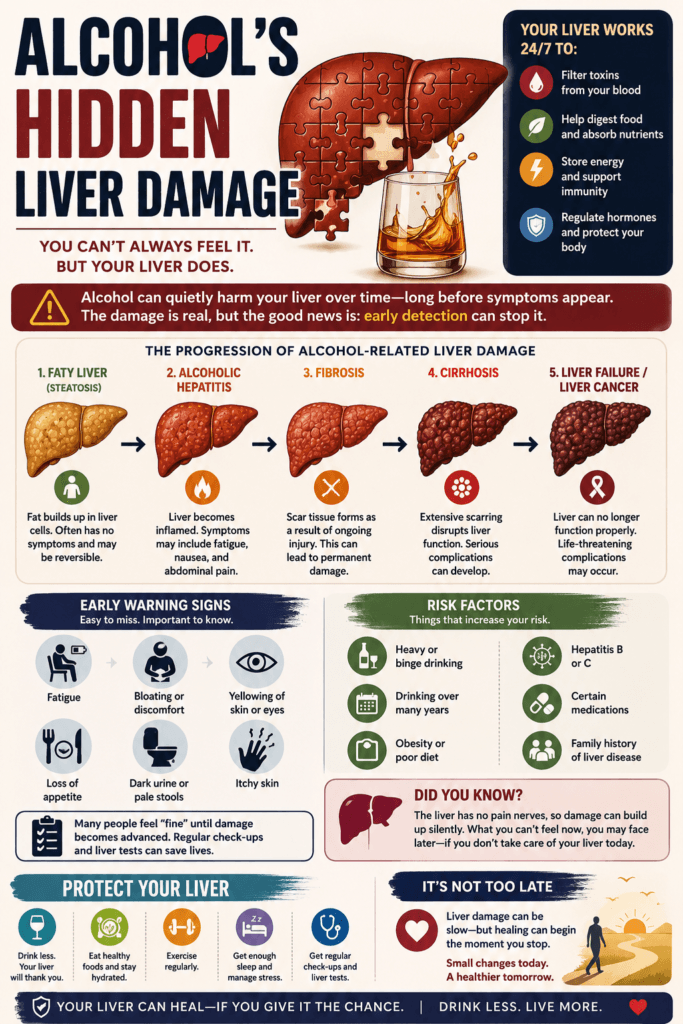
When alcohol enters your system, your liver jumps into action to break it down. But alcohol is tough for your liver to process, especially in larger amounts. Over time, heavy or regular drinking overwhelms the body’s ability to cope, leading to fat buildup, inflammation, and eventually scarring. This process doesn’t happen overnight, but here are the common stages:
- Fatty Liver (Steatosis): The first sign. Fat builds up inside liver cells, sometimes after just a few days of heavy drinking.
- Alcoholic Hepatitis: Inflammation and swelling start happening. This stage can still be reversed if you cut out alcohol and follow medical advice.
- Cirrhosis: Years of inflammation lead to scar tissue, which sticks around permanently. Cirrhosis can lead to liver failure.
The really surprising thing is that even folks who aren’t heavy daily drinkers can end up with early liver changes if they drink enough over time.
Early Warning Signs of Liver Damage from Drinking
The tough part about liver problems is that you probably won’t notice much at first. But there are a few subtle changes that might pop up, especially if you’re drinking regularly. Here’s what I look for:
- Fatigue: Feeling unusually tired or rundown can be related to your liver working overtime.
- Mild Discomfort in the Upper Right Abdomen: Achiness or pressure under your right ribcage sometimes suggests that your liver is swollen.
- Loss of Appetite or Nausea: Not wanting to eat as much, or feeling a bit queasy off and on, is another signal.
- Unexplained Weight Loss: Dropping pounds without trying can be a clue that something isn’t right.
- Itchy Skin: Liver changes sometimes release substances that irritate your skin.
Everybody’s body is a little different, but these early symptoms are worth noting, especially if they stick around. Most of these can easily be mistaken for other common conditions, so checking in with a healthcare provider is a good move if you’re at all unsure. Take note if your energy fades unexpectedly, or if you notice you’re battling a queasy stomach more often than not. Over weeks or months, keeping an eye out for patterns helps you know when to check in.
How to Check for Liver Damage
You won’t get a clear picture of liver damage by guessing. The only real way to know what’s going on is to talk to your healthcare provider and get a liver check-up. Here’s what these check-ups might involve:
- Blood Tests (Liver Function Tests): These show how well your liver is functioning and whether there are any signs of inflammation or injury. Doctors often order tests for ALT, AST, alkaline phosphatase, and bilirubin.
- Ultrasound or Imaging: Noninvasive scans can check for changes in liver size or fatty buildup.
- Questionnaires/History: You might be asked how often and how much you drink, as well as about your general health.
The CDC and Mayo Clinic have great resources if you want more details on these specific tests. If you’re nervous about the process, remember that these screenings are usually quick and not too complicated, plus they can give you real peace of mind.
Smart Habits for Protecting Your Liver
Once you know your stats, making a few changes is a pretty practical way to help your liver bounce back—especially if you catch things early. The liver has a surprising ability to heal itself if you give it a break. Here are my top tips for everyday liver care if drinking is part of your routine:
- Cut Back or Take Breaks from Alcohol: Even taking a week or a month off can give your liver time to recover.
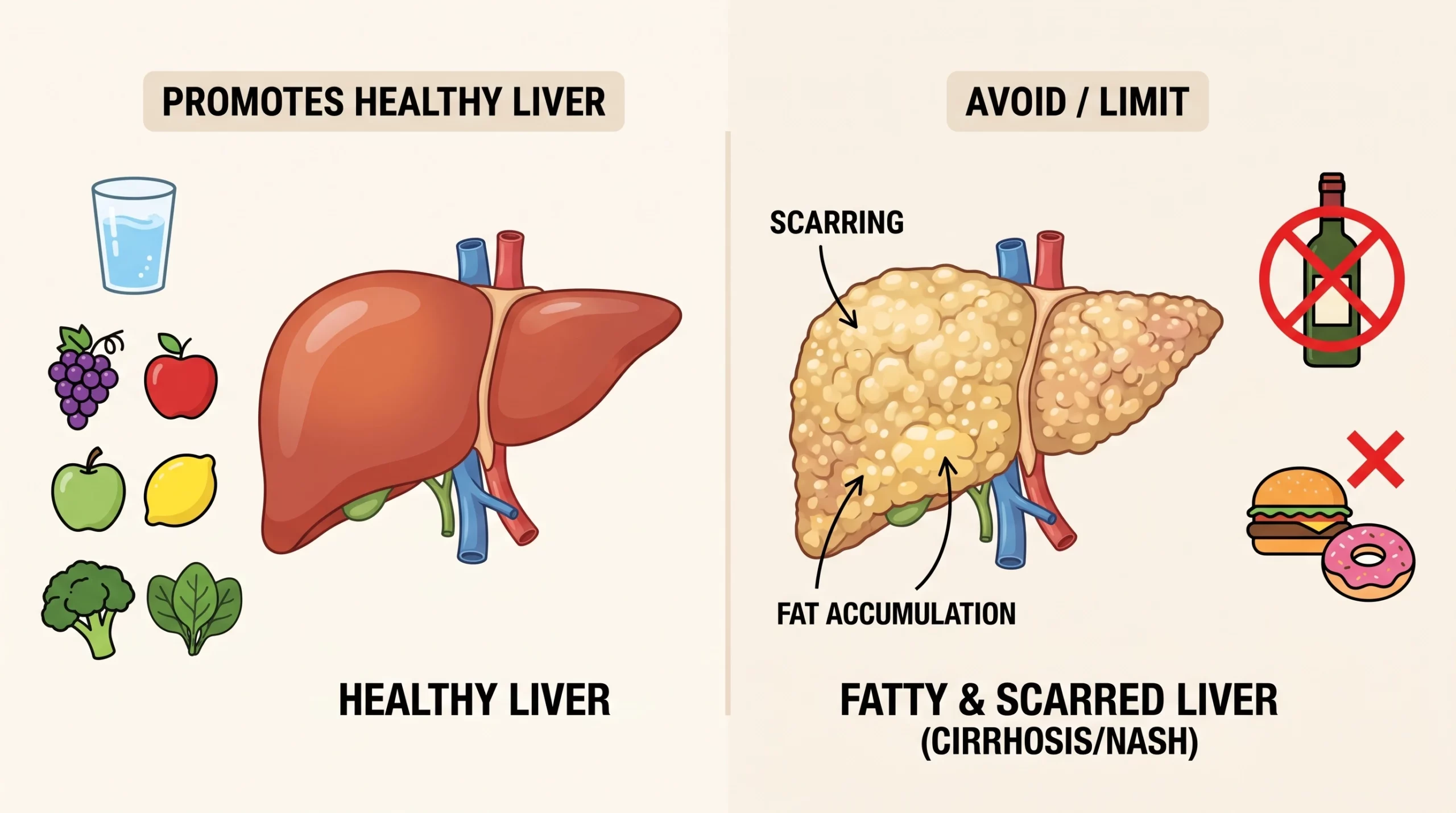
- Eat a Balanced Diet: More fruits, vegetables, lean proteins, and less fatty or fried food means less work for your liver.
- Stay Hydrated: Water helps your liver flush out toxins more efficiently.
- Exercise Regularly: Moving your body helps reduce fat buildup in your liver and boosts your overall health.
- Be Mindful with Medications: Some painkillers and other meds can stress your liver. Double-check with your doctor if you’re taking anything with alcohol.
Combining these steps isn’t just about stopping further damage; it’s about giving yourself the best shot at staying healthy for the long haul. Even simple daily swaps, like drinking water instead of that extra cocktail or choosing grilled chicken instead of fried, set your body up for a win. It’s also helpful to set a small, reachable goal: try having alcohol-free days each week, and see how your energy changes.
Challenges and Mistakes People Make
There’s a lot of confusion out there about liver health and drinking. These are a few mix-ups I see over and over:
- Thinking You Have to Be a “Heavy Drinker” to Worry: Regular moderate drinking can still lead to early liver changes in some people, depending on genetics and health.
- Being Fooled by “Healthy” Lab Results: Standard liver tests can sometimes look okay even when early damage is starting. Checking in regularly, especially if you drink, is really important.
- Ignoring Mild Symptoms: It’s easy to blow off being tired or having an upset stomach. If patterns stick around or get worse, don’t wait to ask for help.
- Believing “Detoxes” Will Fix Everything: There’s no magic cleanse or supplement that repairs liver damage after heavy drinking. The biggest difference comes from cutting back or stopping alcohol and eating well.
If you’re not sure whether alcohol is taking a toll on your liver, honest conversations with your healthcare provider make all the difference. They can help you figure out when it’s time to take action and how serious things really are. Keep in mind, liver damage can creep up even if drinking never feels excessive to you.
When to See a Doctor
If any symptoms stick around for more than a few weeks, or if you have a history of regular alcohol use, it’s a good idea to schedule a check-up. Certain warning signs need prompt attention, such as yellowing of your skin or eyes (jaundice), dark urine, swelling in your belly or legs, or vomiting blood. These can indicate more serious liver problems and should never be ignored.
Liver-Friendly Nutrition Tips
Eating right works hand in hand with lowering alcohol intake when it comes to protecting your liver. Here’s what I keep in mind:
- Choose Fiber: Oats, fruits, and veggies help with digestion and take a load off your liver.
- Limit Processed Foods: Too much sugar, salt, or fat makes your liver’s job harder.
- Watch Out for Hidden Alcohol in Food: Even small amounts in desserts or sauces can add up.
- Don’t Forget Healthy Fats: Olive oil, nuts, and fish are good sources and a better choice than fried foods.
It’s never about a “perfect diet” but about making choices that are gentle on your liver. If cutting back on drinking is tough, talking with a nutritionist or primary care provider can give you an extra leg up. It can also be useful to track meals and drinks in a journal for a week to get a sense of your true intake and where you might want to make easy tweaks.
Common Questions about Early Liver Damage and Drinking
There are a bunch of questions that come up again and again, so I’ll cover the ones I get the most:
Question: Can an occasional binge cause liver damage?
Answer: Even one episode of really heavy drinking can trigger temporary inflammation or fatty changes, especially if repeated over time. Your liver might bounce back, but if it happens often, the risk increases. It’s like giving your liver a heavier workload than usual, and repeated overload adds up over months and years.
Question: Are some people more at risk for liver damage from drinking?
Answer: Genetics, body size, age, gender, and other health conditions can make some folks more likely to develop liver trouble even with less alcohol. There’s no one-size-fits-all answer, so regular check-ups are really important. If you notice your tolerance dropping or you’re more sensitive to alcohol than before, bring it up at your next doctor’s appointment.
Question: Do all symptoms show up at once?
Answer: No. Early symptoms are usually subtle, and you might notice just one or two at first. That’s why paying attention to your body is super important. Write down any new or odd symptoms so you and your doctor can track them easily over time.
Key Takeaways for a Healthier Liver
Spotting early liver damage from drinking depends a lot on knowing what to look for and being honest about your habits. By recognizing small changes and acting sooner rather than later, you give your liver more power to recover. Regular check-ups, smart nutrition, and even brief breaks from alcohol can make a world of difference.
Keeping your liver healthy doesn’t require a complete lifestyle makeover all at once. The sooner you start listening to your body and checking in with your healthcare team, the better your odds of avoiding trouble down the line. I always find it’s easier sticking to changes when you focus on what you’re gaining—energy, peace of mind, and long-term wellness—rather than just what you’re cutting out. Remember, small steps today can protect your liver in the future, making the journey of healthy living much more rewarding.
Video: This happens to your liver long before yellow skin #health #warning #shorts