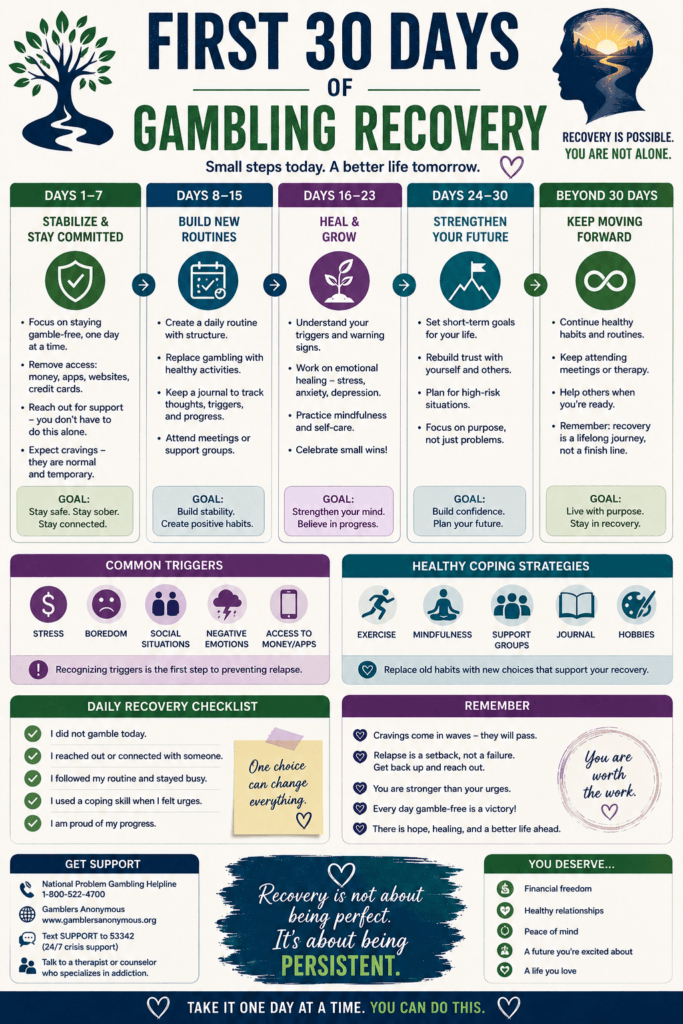
Getting through the first 30 days of recovering from gambling can feel overwhelming. This is where major changes really begin to happen. Most people I know start out with a mix of hope, worry, and questions about how to manage life without gambling in the picture. Your brain, your routines, and even your relationships need a reset. Personally, these first few weeks were packed with new habits, emotional ups and downs, and a lot of self-discovery. I’ll share what the first month often looks like, what helps, and the challenges you might run into along the way.
Understanding Early Gambling Recovery
The first month of quitting gambling is usually more intense than folks expect. After months or years of addictive patterns, your brain is wired for that next gamble, so suddenly stopping messes with both your mind and your body. It’s normal to feel strong urges, mood swings, and even guilt or regret—all while figuring out totally new ways of coping.
Some things you’ll probably notice right away:
- Cravings: Random moments when you feel the pull to gamble can show up at any time, sometimes triggered by boredom, stress, or reminders of past wins or losses.
- Mood changes: Anxiety, sadness, or restlessness might be more common right now. It’s a rollercoaster, but it’s also totally normal during withdrawal.
- Sleep patterns: Early recovery can mess with your sleep. For me, racing thoughts about the past or future were tricky at bedtime, but this gets better over time.
A big part of this first month is knowing that all these symptoms do start to fade. With each week, urges usually become less frequent and way easier to manage.
My Practical Guide: What Helps During the First 30 Days?
Building a toolkit of healthy habits and support systems gives you a huge advantage during this stage. Here are some reliable steps that worked for me and others:
- Admit to yourself (and others) that you need help: Saying it out loud can lift some of the weight off your shoulders and open the door to real change.
- Create barriers to gambling: This could be self-exclusion from casinos or online sites, asking banks to block transactions to gambling vendors, or simply removing quick-access gambling apps from your devices.
- Pick up new routines: Swapping out gambling with other activities is a great way to fill both time and space in your head. Exercise, getting outside, or simple hobbies can make a big difference.
- Join a support group: Programs like Gamblers Anonymous or online forums have been super useful for many people, including me, because you can talk with others who truly understand what you’re experiencing.
- Be honest with trusted friends and family: Opening up means you’re less likely to isolate and more likely to get support when things get tough.
Mixing these steps into your daily life doesn’t magically erase cravings. It makes them a whole lot easier to manage, though, and you’ll start to see small victories add up quickly.
What Triggers Setbacks in Early Recovery?
The first 30 days aren’t always smooth. Understanding your own triggers is super important. When I slipped back into old habits, it was usually because I didn’t spot the warning signs. Here are common triggers to keep on your radar:
- Stressful situations: Arguments, job issues, or even good stress (like a promotion) can trigger urges.
- Boredom and loneliness: When you’re feeling empty or alone, the urge to gamble to pass the time can creep in.
- Access to cash or credit: Easy access to money makes slipping up way more tempting.
- Celebratory moments: It sounds odd, but after a small win in life, some folks instinctively lean into old patterns as a reward or a way to keep a good streak going.
- Gambling ads and reminders: Whether online or in your everyday routine, these can bring up pretty strong cravings.
Recognizing these tricky situations and planning ahead really helps get through the first month. It can be helpful to write out your own list of triggers and consider how you might handle each one before it happens.
Problem-Solving Early Recovery Hurdles
Most setbacks in early recovery happen because old habits are simply easier. Here are some ways I (and others) have sidestepped the usual pitfalls:
Handling Cravings
Cravings come in waves and will pass, even if it feels impossible in the moment. When one hits, changing your environment, like going outside or calling a friend, can help break the pattern. Distracting yourself with a walk or a quick chore might sound simple, but it can truly be effective.
Money Management
If you’re struggling not to tap into savings or cash for gambling, put a trusted person in charge of your finances or use banking tools to set spending limits. Some people freeze their cards or only keep small amounts of cash on hand. It’s not forever; it’s about getting through a tough stage where temptation is high.
Staying Accountable
Setting daily or weekly goals and then checking in with a friend, group, or counselor keeps you honest and focused. Even writing down how many days you’ve been gamble-free somewhere you can see it every day helps you track progress and builds confidence.
Mental Health Support
Therapy, peer support, or even self-help resources online play a huge role, especially if you’re feeling anxious or down. It’s also worth remembering that managing another mental health condition, like depression or anxiety, at the same time is pretty common. It’s totally valid to get support for both.
Healthy Habits That Make a Real Difference
A few key habits speed up the process and make recovery way less stressful:
- Keep a routine: Putting structure into your days is surprisingly helpful. Waking up, eating, and sleeping at regular times give you a sense of control and predictability.
- Stay physically active: Movement helps manage stress and boosts your mood. This doesn’t mean you need to run a marathon; short walks or stretching are enough to make a difference.
- Healthy distractions: Get into things like music, puzzles, or crafts. Anything that keeps your hands and mind busy is worth trying. Cooking, journaling, or even gardening can be great alternatives.
- Self-care: Taking care of basic needs, like eating well, sleeping, and drinking water, is honestly underrated but super important while healing. Try to be gentle with yourself, and pace your days in a manageable way.
Creating new traditions, such as Friday movie nights, coffee with a friend, or trying out a new hobby, helps fill gaps once occupied by gambling and brings positive experiences back into your life. Building up a calendar with simple joys helps the mind associate recovery with new rewards.
When to Reach Out for More Help
Some days are just plain tough. If you find it really hard to stay away from gambling, or if you’re dealing with overwhelming stress, anxiety, or depression, professional support is worth checking out. A therapist who knows about addiction or a local support group offers guidance and understanding when you feel stuck.
There’s also a growing number of online communities, chat services, and helplines, which are especially handy if you want support without leaving home. The National Council on Problem Gambling (ncpgambling.org) offers a helpline and numerous resources. Don’t be afraid to ask for assistance. People who specialize in this kind of support can suggest helpful tools or just lend an understanding ear.
RealWorld Examples and Stories
I’ve found a lot of hope in hearing from others who’ve made it past those first 30 days. For example, one friend noticed that every time he felt the urge to gamble, he’d start a checklist of small things he could do immediately—like calling his sponsor, drinking a glass of water, or cleaning part of his room. Over time, those options became automatic, and the urges lost their grip.
Another person joined a group that played board games weekly, which filled the space gambling had taken without any triggers. Sharing struggles and small wins with others made staying quiet much easier.
Online forums are packed with stories like these, and lots of people there are happy to share tips or even just listen when you need a boost. Recovery isn’t identical for everyone, but building your own set of tricks based on real people’s experiences really helps. If you’re ever feeling alone, reading about someone who’s handled a similar problem can spark new ideas and give you hope for tomorrow.
Frequently Asked Questions About Early Gambling Recovery
What do I do if I slip up and gamble during my first month?
If you slip up, don’t beat yourself up. It’s common and doesn’t mean you’ve failed. Reach out to someone you trust and get back to your plan right away. Every moment without gambling still counts as progress. Remember, recovery is built day by day; a setback is just a moment, not your whole story.
How long do cravings usually last?
Cravings in the first month can feel long and strong, but most pass within 15 to 30 minutes. As you build new habits, the cravings become shorter and less frequent. Each time you get past a craving, it gets that much easier to get past the next one.
Is professional help necessary?
For some, counseling is super helpful, especially if you’re struggling alone. There’s no shame in needing extra support, and it can speed up the healing process. Talking to someone who understands can make all the difference.
What if I have other addictions or mental health struggles?
Lots of people do. Make sure to let your mental health provider know about all your concerns, because addressing them together can improve overall recovery. Getting support for everything you’re facing can smooth the path ahead.
Building Momentum for the Next 30 Days
Those first 30 days of gambling recovery challenge your habits, mindset, and support networks, but it’s a stretch where real, lasting change gets started. Staying honest with yourself, connecting with others, and filling your days with healthy routines can help you keep moving forward.
Feeling hopeful isn’t always natural right away, but each gamble-free day is a win. With the right mix of support, planning, and small daily victories, recovery starts to feel a lot more possible. One day at a time, you are making real progress—don’t forget to celebrate the small steps as well as the big ones.
Video: Day 1-30 of Stopping Gambling Is Harder Than You Think #recovery #hope #sobriety