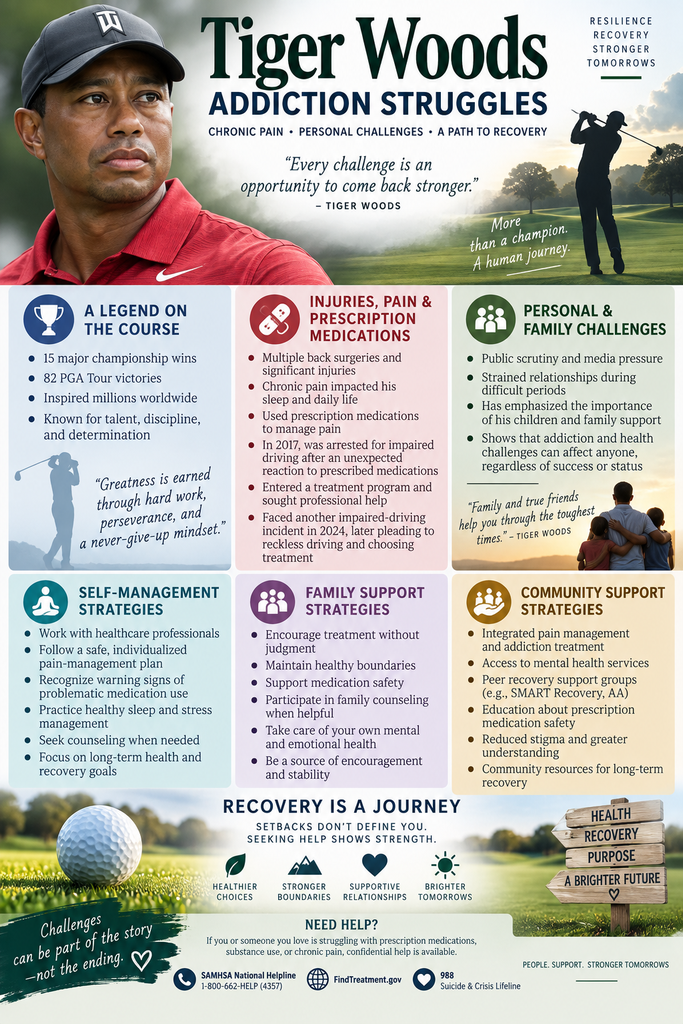
Tiger Woods is one of the world’s most recognizable athletes, celebrated for his extraordinary achievements in professional golf. Behind his success, however, he has experienced serious injuries, chronic pain, prescription medication-related difficulties, and personal challenges that have affected his career and family life.
Woods’ experiences illustrate the complicated relationship between chronic pain, medication safety, emotional stress, and addiction-related concerns. His history includes seeking professional treatment to manage prescription medications and addressing the consequences of impaired driving.
His journey provides an opportunity to explore how self-management, family involvement, and community support can help individuals facing chronic pain, problematic substance use, and the challenges of long-term recovery.
Understanding his story requires distinguishing documented events from assumptions about his medical diagnoses. Although Woods has publicly acknowledged difficulties managing medications and seeking treatment, the details of his clinical diagnoses and treatment plans remain private.
Tiger Woods: From Athletic Success to Personal Challenges
Tiger Woods became a professional golfer in 1996 and quickly became one of the sport’s most accomplished competitors.
His career includes 15 major championship victories and 82 PGA Tour wins.
However, years of competitive golf, physical injuries, and repeated surgeries have contributed to significant medical challenges.
Woods has undergone multiple back procedures and experienced serious leg injuries following a February 2021 automobile accident.
His medical history demonstrates how chronic pain can affect physical functioning, sleep, emotional well-being, and daily activities.
For individuals managing persistent pain, prescription medications may become an important component of treatment. However, certain medications can also produce sedation, physical dependence, and potentially dangerous interactions with other substances.
The 2017 Prescription Medication Incident
In May 2017, Woods was arrested in Florida on suspicion of driving under the influence after police found him asleep behind the wheel of his vehicle.
Breath testing did not detect alcohol.
Woods subsequently stated that he had experienced an unexpected reaction involving prescribed medications.
In June 2017, he publicly announced that he was receiving professional help to manage his medications, chronic back pain, and sleep difficulties.
The following month, he reported completing an intensive treatment program and stated that he would continue addressing these issues with his physicians, family, and friends.
An important distinction: A medication-related impairment incident does not, by itself, establish a diagnosis of opioid use disorder or another substance use disorder.
Nevertheless, Woods’ experience demonstrates why prescription medication safety, coordinated medical care, and professional assessment are essential.
Tiger Woods’ 2026 Accident and Renewed Focus on Treatment
In March 2026, Woods was involved in another vehicle accident in Florida.
Following the incident, he faced charges related to impaired driving. Authorities reported finding prescription pain medication in his possession.
Woods subsequently announced that he was stepping away from professional responsibilities to seek treatment and focus on his health.
In September 2026, he entered a no-contest plea to reckless driving and refusing a urine test, resolving the impaired-driving charge through an agreement that included driver’s license restrictions and financial penalties.
His decision to seek treatment brought renewed public attention to the challenges of managing chronic pain and medication-related impairment.
Why Chronic Pain and Medication Safety Matter
Chronic pain can affect multiple aspects of a person’s life, including:
- Physical functioning: Persistent pain may limit mobility, exercise, employment, and recreational activities.
- Sleep quality: Pain can interfere with sleep, contributing to fatigue and reduced concentration.
- Emotional health: Ongoing physical discomfort may contribute to frustration, anxiety, or depressive symptoms.
- Medication safety: Opioids, sedatives, and certain other medications can impair alertness and coordination.
- Substance use risk: Some individuals develop problematic patterns of medication use, particularly when multiple risk factors are present.
Opioids and benzodiazepines can produce additive central nervous system depression when taken together, increasing the risk of excessive sedation, respiratory depression, and overdose.
Patients should discuss medication combinations with their healthcare professionals and avoid driving when their medications impair alertness or coordination.
Self-Management Strategies: Managing Pain and Reducing Addiction Risks
Woods’ experiences highlight the importance of developing a comprehensive approach to chronic pain management and medication safety.
Self-management involves actively participating in healthcare decisions, recognizing potential risks, and establishing routines that support physical and emotional well-being.
These strategies can benefit individuals managing chronic pain, prescription medication difficulties, or a diagnosed substance use disorder.
1. Develop an Individualized Pain-Management Plan
Chronic pain treatment should address the underlying medical condition while considering the patient’s functional goals and quality of life.
Helpful strategies include:
- Working with healthcare professionals to identify the source of pain.
- Establishing realistic goals for mobility, sleep, and daily functioning.
- Considering physical therapy and rehabilitation when medically appropriate.
- Discussing nonopioid medications and nonpharmacological treatments.
- Regularly reviewing medication effectiveness and adverse effects.
- Consulting a pain management specialist when necessary.
Patients should not abruptly discontinue prescribed opioids or benzodiazepines without medical guidance because withdrawal can be medically significant and, in some circumstances, dangerous.
2. Recognize Warning Signs of Problematic Medication Use
Individuals taking prescription medications should understand the difference between physical dependence and addiction.
Physical dependence can occur during appropriate medical treatment.
A substance use disorder involves a problematic pattern of substance use that causes clinically significant impairment or distress.
Potential warning signs include:
- Taking larger medication doses than prescribed.
- Repeatedly attempting to reduce medication use without success.
- Experiencing strong cravings or persistent urges to use a substance.
- Continuing substance use despite significant health or relationship problems.
- Obtaining medications from unauthorized sources.
- Using medications in situations where impairment creates serious safety risks.
These signs warrant a professional assessment rather than an automatic assumption that someone has an addiction.
3. Address Sleep Difficulties
Chronic pain and sleep disturbances frequently occur together.
Poor sleep can increase pain sensitivity, reduce emotional resilience, and complicate medication management.
Helpful sleep strategies include:
- Maintaining consistent sleep and wake times.
- Creating a comfortable sleeping environment.
- Limiting caffeine late in the day.
- Avoiding alcohol as a sleep aid.
- Practicing relaxation techniques before bedtime.
- Seeking evaluation for persistent insomnia or possible sleep apnea.
Cognitive behavioral therapy for insomnia (CBT-I) is an evidence-based treatment that may reduce reliance on sedative medications.
4. Develop Healthy Emotional Coping Strategies
Chronic pain, career disruptions, and public scrutiny can create substantial stress.
Although media reports cannot reveal Woods’ private emotional experiences, individuals facing similar circumstances may benefit from developing healthy coping strategies.
These include:
- Practicing mindfulness and stress-reduction techniques.
- Participating in counseling when emotional difficulties arise.
- Maintaining social relationships outside professional responsibilities.
- Engaging in enjoyable activities within physical limitations.
- Developing realistic expectations about physical recovery.
- Seeking professional help when substance use becomes difficult to manage.
Self-management does not mean attempting to handle every problem independently. Recognizing when professional assistance is necessary is an important component of responsible healthcare.
Family Support Strategies: Building a Foundation for Recovery
Family relationships can play an important role in helping individuals navigate chronic illness, substance use disorders, and recovery.
Woods has publicly emphasized the importance of his children and family relationships.
Following his 2017 treatment program, he specifically acknowledged the support of his doctors, family, and friends.
Family support can provide emotional stability, practical assistance, and encouragement during treatment.
However, relatives cannot control another person’s recovery, and they should not be expected to assume responsibility for managing every aspect of a loved one’s health.
1. Encourage Professional Treatment Without Judgment
Families can encourage individuals experiencing medication-related difficulties to seek an appropriate medical assessment.
Helpful approaches include:
- Expressing concern using respectful, nonjudgmental language.
- Encouraging open discussions about pain, medications, and treatment needs.
- Offering transportation to medical appointments when appropriate.
- Supporting participation in counseling or rehabilitation programs.
- Recognizing that treatment plans may require adjustments over time.
2. Establish Healthy Boundaries
Supporting someone experiencing addiction does not require accepting behavior that compromises personal or family safety.
Healthy boundaries may include:
- Refusing to ride with someone who may be impaired.
- Establishing expectations regarding substance use within the home.
- Avoiding financial assistance that may contribute to harmful substance use.
- Encouraging personal accountability while maintaining compassionate communication.
- Seeking outside assistance when safety concerns arise.
Boundaries should focus on protecting health and relationships rather than punishment or humiliation.
3. Support Medication Safety
Family members may help individuals manage complex medication regimens when the patient welcomes their involvement.
Practical strategies include:
- Encouraging medication reviews with healthcare professionals.
- Helping maintain an accurate medication list.
- Recognizing symptoms of excessive sedation or confusion.
- Encouraging safe storage of prescription medications.
- Learning how to recognize an opioid overdose.
For individuals prescribed opioids, access to naloxone may be appropriate based on individual risk factors.
Naloxone can reverse an opioid overdose and should be administered promptly when an overdose is suspected, along with contacting emergency services.
4. Protect Family Members’ Emotional Well-Being
Supporting someone experiencing chronic pain or substance use problems can create emotional and practical challenges.
Family members should maintain their own healthcare routines, social connections, and emotional support systems.
Family counseling may help address communication difficulties, rebuild trust, and establish realistic expectations.
Children and adolescents should receive age-appropriate explanations of family health challenges without being placed in the role of caregiver or treatment supervisor.
Community Support Strategies: The Importance of Comprehensive Care
Woods’ decision to seek professional treatment illustrates the importance of accessing appropriate healthcare resources when medication-related problems arise.
For individuals experiencing addiction or chronic pain, community support can help address medical, psychological, and social needs.
Effective treatment often requires coordination among several healthcare disciplines.
1. Integrated Pain Management and Addiction Treatment
Patients with both chronic pain and a substance use disorder benefit from coordinated treatment rather than having one condition addressed at the expense of the other.
An integrated care team may include:
- Primary care providers.
- Addiction medicine specialists.
- Pain management clinicians.
- Physical therapists.
- Mental health professionals.
- Pharmacists.
- Peer recovery specialists.
For patients diagnosed with opioid use disorder, medications such as buprenorphine or methadone can reduce withdrawal symptoms, cravings, and overdose risk.
Buprenorphine may also provide analgesic benefits for some patients.
Treatment should be individualized according to the patient’s medical history, clinical diagnosis, and personal goals.
2. Peer Recovery Support
Peer recovery programs connect individuals with others who have lived experience of substance use disorders and recovery.
These programs can provide encouragement, practical guidance, and opportunities to develop healthier coping strategies.
Community resources include:
- SMART Recovery.
- Narcotics Anonymous.
- Alcoholics Anonymous.
- Local peer recovery organizations.
- Community-based addiction treatment programs.
Participation in a particular recovery organization is not required for successful treatment. Encourage individuals to choose approaches that align with their needs and preferences.
3. Mental Health and Behavioral Support
Chronic pain and substance use disorders can coexist with depression, anxiety, insomnia, and other mental health conditions.
Integrated behavioral healthcare can help individuals address these concerns at the same time.
Evidence-based approaches may include cognitive behavioral therapy, motivational interviewing, and other treatments selected according to the patient’s clinical needs.
4. Community Education About Prescription Medication Safety
Public education can reduce misconceptions surrounding chronic pain and addiction.
Important messages include:
- Prescription medications can cause impairment even when taken for legitimate medical reasons.
- Physical dependence does not automatically indicate addiction.
- Combining opioids with alcohol or sedatives can increase overdose risk.
- Driving while impaired by prescription medications is dangerous.
- Effective pain treatment and addiction treatment can be provided together.
- Encourage seeking professional help rather than stigmatizing it.
Community education should emphasize patient safety while recognizing that individuals with legitimate pain deserve appropriate medical treatment.
Understanding the Difference Between Chronic Pain, Dependence, and Addiction
One of the most important lessons from Woods’ experiences is that prescription medication use, physical dependence, and addiction are not interchangeable terms.
Confusing these concepts can contribute to stigma and discourage individuals from seeking necessary medical care.
Physical Dependence
Physical dependence occurs when the body adapts to repeated exposure to a medication.
Abrupt discontinuation may produce withdrawal symptoms.
Physical dependence can develop during appropriate medical treatment and does not necessarily indicate a substance use disorder.
Tolerance
Tolerance occurs when repeated exposure to a medication reduces its effects, potentially requiring a different dose to achieve the same response.
Tolerance may develop during legitimate treatment and does not independently establish addiction.
Addiction
Addiction involves a problematic pattern of substance use associated with impaired control, continued use despite significant harm, and other clinically relevant symptoms.
A diagnosis of substance use disorder requires a comprehensive clinical assessment.
Medication-Related Impairment
A person may experience sedation, confusion, or impaired coordination after taking prescription medications without meeting diagnostic criteria for addiction.
This distinction is particularly important when discussing Woods’ publicly documented medication-related incidents.
Medication safety concerns deserve medical attention regardless of whether a person has a diagnosed substance use disorder.
Lessons From Tiger Woods’ Journey
Woods’ experiences demonstrate how chronic pain, prescription medication management, professional responsibilities, and personal challenges can intersect.
His decision to seek treatment provides an opportunity to discuss several important principles relevant to addiction prevention and recovery.
Key Takeaways
1. Athletic success does not eliminate health risks.
Professional athletes may experience chronic pain, injuries, sleep difficulties, and medication-related complications despite their physical conditioning and access to healthcare.
2. Chronic pain requires comprehensive treatment.
Effective care should address physical functioning, sleep, emotional well-being, medication safety, and quality of life.
3. Prescription medications require careful monitoring.
Medications can cause dangerous impairment or interactions even when they are prescribed for legitimate medical conditions.
4. Seeking professional help is an important step.
Individuals experiencing medication-related difficulties benefit from timely assessment and an individualized treatment plan.
5. Family support can strengthen treatment engagement.
Supportive relationships may encourage communication, treatment participation, and healthier daily routines.
6. Recovery requires ongoing attention.
For individuals diagnosed with a substance use disorder, continuing care, relapse prevention strategies, and periodic treatment adjustments may support long-term recovery.
7. Public incidents do not establish a medical diagnosis.
A person’s substance use disorder diagnosis cannot be determined solely from an arrest, accident, media report, or decision to enter rehabilitation.
Conclusion
Tiger Woods’ experiences demonstrate the complicated relationship between chronic pain, prescription medication safety, personal challenges, and professional responsibilities.
His publicly documented medication-related incidents and decisions to seek treatment highlight the importance of recognizing health concerns, accepting professional assistance, and developing strategies to reduce future risks.
Although the details of his medical diagnoses and ongoing treatment remain private, his experiences provide valuable lessons for individuals and families facing similar challenges.
Recovery and improved health are supported by comprehensive medical care, healthy self-management strategies, compassionate family involvement, and accessible community resources.
For individuals experiencing chronic pain alongside problematic substance use, effective treatment should address both conditions while preserving dignity, promoting safety, and supporting long-term well-being.
The goal is not simply to manage medication use but to help individuals build healthier, safer, and more fulfilling lives.
Frequently Asked Questions
Here are some common questions:
1. Did Tiger Woods struggle with addiction?
Tiger Woods has publicly acknowledged difficulties managing prescription medications associated with chronic pain and sleep problems. In 2017, he sought professional treatment following a medication-related impaired-driving incident. His experiences highlight the risks associated with prescription medications and the importance of appropriate medical supervision. However, his complete medical history and any formal substance use disorder diagnoses have not been publicly established.
2. What prescription medications were involved in Tiger Woods’ 2017 arrest?
Following his May 2017 arrest, toxicology testing identified several substances in Woods’ system, including hydrocodone, hydromorphone, alprazolam (Xanax), zolpidem (Ambien), and THC. Woods stated that he had experienced an unexpected reaction to prescribed medications. Combining opioids with benzodiazepines or other sedatives can increase the risk of excessive sedation, impaired coordination, respiratory depression, and overdose.
3. How did chronic pain contribute to Tiger Woods’ medication-related challenges?
Woods has experienced significant back injuries and undergone multiple surgical procedures throughout his professional golf career. Chronic pain can interfere with mobility, sleep, emotional well-being, and daily functioning. Prescription medications may provide necessary symptom relief, but certain medications also carry risks of sedation, physical dependence, and dangerous interactions. His experiences demonstrate the importance of comprehensive pain management and medication monitoring.
4. Did Tiger Woods attend rehabilitation for prescription medication problems?
Yes. In June 2017, Woods publicly announced that he was receiving professional help to manage his medications, chronic back pain, and sleep difficulties. He subsequently reported completing an intensive treatment program and continuing to work with his physicians. His decision to seek treatment demonstrates the importance of professional assessment when medication-related concerns arise.
5. What is the difference between prescription medication dependence and addiction?
Physical dependence occurs when the body adapts to repeated medication exposure, potentially causing withdrawal symptoms if the medication is abruptly discontinued.
Addiction, clinically diagnosed as a substance use disorder, involves a problematic pattern of substance use associated with impaired control, continued use despite harmful consequences, and clinically significant impairment or distress.
A person may develop physical dependence while taking prescribed medications appropriately without developing an addiction.
6. Can prescription pain medications cause addiction?
Yes. Certain prescription pain medications, particularly opioids, carry a risk of developing opioid use disorder. However, not everyone who receives opioid therapy develops an addiction.
Risk depends on multiple factors, including medication exposure, individual susceptibility, medical history, mental health conditions, and patterns of use.
Healthcare professionals can reduce risks through individualized treatment planning, appropriate prescribing, medication monitoring, and consideration of nonopioid pain-management strategies.
7. How can chronic pain increase the risk of problematic substance use?
Chronic pain may contribute to sleep disturbances, emotional distress, reduced physical functioning, and difficulties maintaining daily routines.
Some individuals may begin using medications in ways that differ from prescribed instructions while attempting to manage persistent symptoms.
However, chronic pain does not automatically lead to addiction.
Comprehensive treatment that addresses physical pain, sleep difficulties, emotional well-being, and medication safety can help reduce the risk of problematic substance use.
8. How can individuals manage chronic pain without becoming dependent on opioids?
Chronic pain management should be individualized according to the underlying medical condition, pain severity, functional limitations, and treatment goals.
Depending on the condition, strategies may include:
- Physical therapy and rehabilitation.
- Nonopioid medications when medically appropriate.
- Cognitive behavioral therapy for chronic pain.
- Gentle exercise and stretching within physical limitations.
- Sleep improvement and stress-management techniques.
- Interventional pain procedures when indicated.
- Regular follow-up with healthcare professionals.
Opioids may still be appropriate for selected patients. Individuals receiving long-term opioid therapy should not abruptly discontinue their medications without medical guidance.
9. How can families support someone experiencing prescription medication problems?
Families can provide emotional encouragement, promote medication safety, and help individuals access appropriate healthcare.
Helpful strategies include:
- Encouraging honest communication about medication use and side effects.
- Supporting appointments with healthcare professionals.
- Avoiding judgmental or stigmatizing language.
- Establishing healthy boundaries regarding unsafe behavior.
- Learning to recognize excessive sedation and possible overdose symptoms.
- Participating in family counseling when appropriate.
- Maintaining their own emotional and physical well-being.
Family support can strengthen treatment engagement, but relatives cannot control another person’s recovery.
10. What role does mental health play in addiction and chronic pain?
Chronic pain, substance use disorders, anxiety, depression, and sleep disturbances can occur together.
Persistent pain may contribute to emotional distress, while psychological stress can increase pain sensitivity and interfere with sleep.
For individuals experiencing both chronic pain and a substance use disorder, integrated medical and behavioral healthcare can help address these interconnected concerns.
Treatment may include counseling, appropriate medications, physical rehabilitation, and ongoing support.
Woods’ private mental health history should not be inferred from his public medical or legal experiences.
11. Can prescription medications impair driving even when taken as directed?
Yes. Prescription medications can impair alertness, judgment, reaction time, and coordination, even when taken as directed.
Opioids, benzodiazepines, sleep medications, and certain muscle relaxants may affect driving ability.
Combining medications that cause sedation can increase impairment and the risk of serious accidents.
Patients should discuss medication-related driving restrictions with their healthcare professionals and avoid driving when they feel drowsy, confused, or have impaired coordination.
12. What are the warning signs of prescription opioid misuse?
Potential warning signs include:
- Taking larger doses than prescribed.
- Using medication more frequently than directed.
- Repeatedly running out of medication earlier than expected.
- Experiencing strong cravings or urges to use opioids.
- Obtaining medications from unauthorized sources.
- Continuing opioid use despite significant health or relationship problems.
- Using opioids in dangerous situations, such as driving while impaired.
These behaviors may indicate problematic substance use and warrant a professional assessment. However, no single behavior automatically establishes a diagnosis of opioid use disorder.
13. What treatment options are available for prescription opioid addiction?
Evidence-based treatment for opioid use disorder may include medications, behavioral therapies, and ongoing recovery support.
Medication treatment: Buprenorphine and methadone can reduce opioid cravings, withdrawal symptoms, and overdose risk. Extended-release naltrexone is another option for appropriately selected patients who have completed opioid withdrawal.
Behavioral therapy: Counseling can help individuals develop coping strategies, address emotional difficulties, and improve engagement in treatment.
Integrated pain management: Patients experiencing both chronic pain and opioid use disorder benefit from coordinated treatment that addresses both conditions.
Peer recovery support: Recovery organizations and peer specialists can provide encouragement, education, and assistance with long-term recovery goals.
Treatment should be individualized according to the patient’s clinical diagnosis, medical history, and preferences.
14. How can individuals prevent relapse after receiving addiction treatment?
For individuals diagnosed with a substance use disorder, relapse prevention involves identifying risk factors, developing coping strategies, and maintaining access to appropriate treatment.
Helpful strategies include:
- Following an individualized treatment plan.
- Attending regular medical and behavioral health appointments.
- Continuing medications for addiction treatment when prescribed.
- Recognizing emotional and environmental triggers.
- Developing healthy sleep and stress-management routines.
- Maintaining supportive relationships.
- Creating a plan for responding to cravings or a return to substance use.
A return to substance use does not mean treatment has failed. It may indicate that the treatment plan needs reassessment or additional support.
15. What community resources are available for people struggling with prescription medication addiction?
Several organizations provide addiction treatment referrals, education, and recovery support.
SAMHSA National Helpline: 1-800-662-HELP (4357) provides confidential treatment referrals and information.
FindTreatment.gov: Helps individuals locate substance use and mental health treatment services.
SMART Recovery: Provides evidence-informed recovery support and practical coping strategies.
Narcotics Anonymous: Offers peer support for individuals seeking recovery from substance use.
988 Suicide & Crisis Lifeline: Provides immediate support for individuals experiencing emotional distress, mental health crises, or substance-related crises.
For a suspected opioid overdose, administer naloxone if available and call 911 immediately.
16. What can Tiger Woods’ experiences teach us about addiction and recovery?
Woods’ publicly documented experiences illustrate the importance of medication safety, professional healthcare, and recognizing when additional treatment is necessary.
His history also demonstrates that chronic pain and medication-related difficulties can affect individuals regardless of professional success, financial resources, or public recognition.
Important lessons include the need to distinguish physical dependence from addiction, avoid dangerous medication combinations, and seek comprehensive treatment when health or safety concerns arise.
17. What is the most important lesson from Tiger Woods’ addiction-related challenges?
Chronic pain, prescription medication difficulties, and substance use disorders require individualized medical care rather than judgment or assumptions.
Woods’ experiences highlight the importance of recognizing medication-related risks, seeking professional assistance, and developing a comprehensive approach to physical and emotional health.
For individuals experiencing a diagnosed substance use disorder, recovery can be supported through evidence-based treatment, healthy self-management strategies, family involvement, and accessible community resources.
Seeking treatment is an important step toward improving health, reducing risks, and building a safer future.
Video: Why Tiger Woods almost lost it all #tigerwoods #sports #shorts