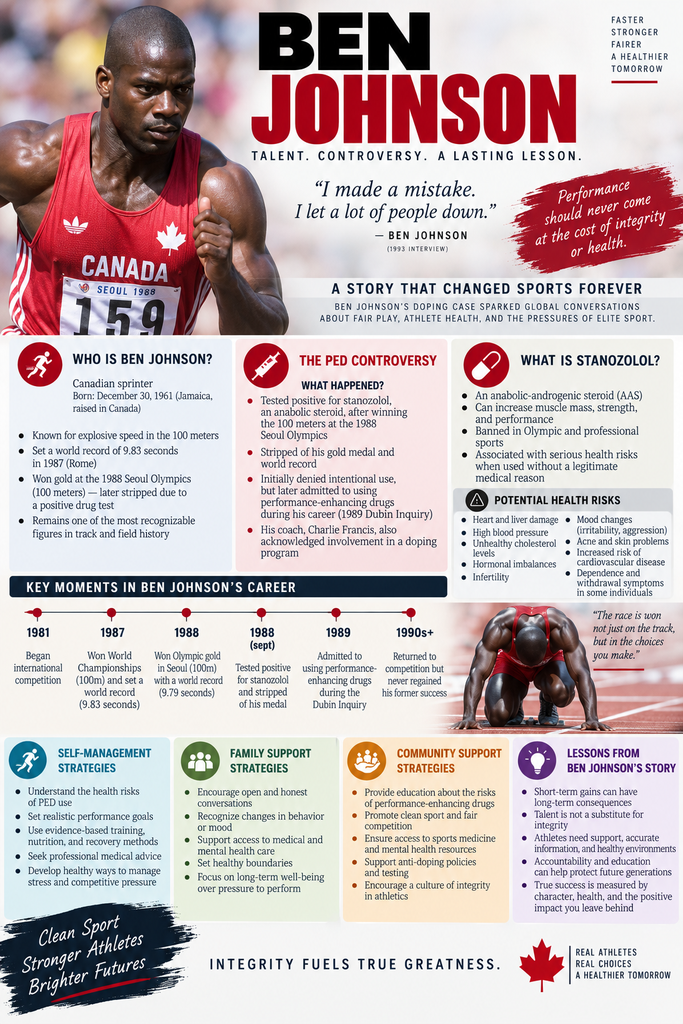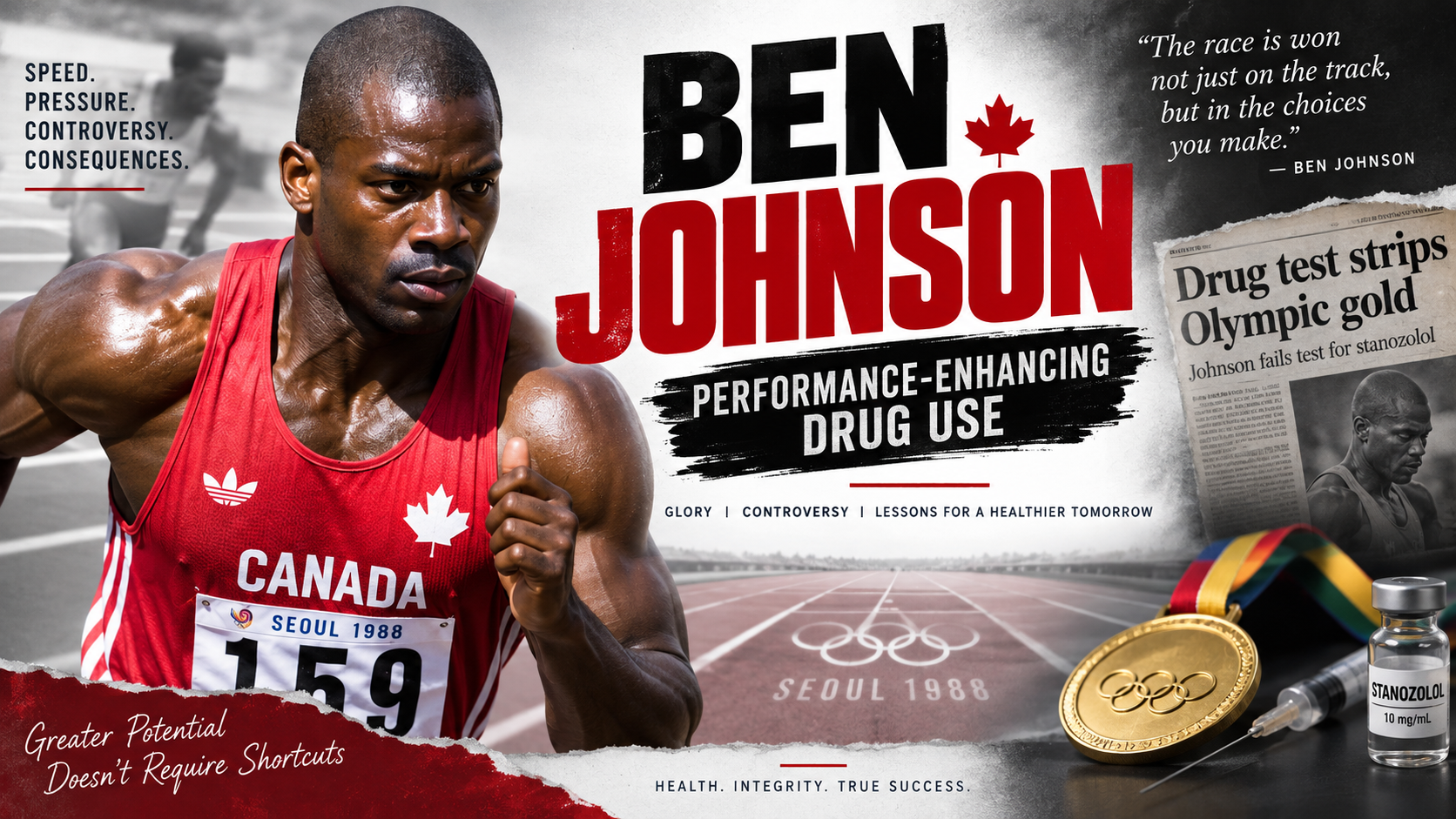
Ben Johnson, once one of the world’s fastest sprinters, became the center of a major Olympic doping scandal after testing positive for the anabolic steroid stanozolol at the 1988 Seoul Olympics. The positive test cost him his 100-meter gold medal and world record.
Johnson later acknowledged using steroids, raising important questions about PEDs, competitive pressure, athlete health, and accountability. Although his steroid use is documented, a clinical diagnosis of addiction has not been publicly established. His story highlights the risks of PED misuse and the importance of healthy choices, family support, and community education in protecting athletes’ physical and emotional well-being.
1. Ben Johnson: From Olympic Champion to Doping Controversy
Ben Johnson was born in Jamaica in 1961 and moved to Canada as a child. He developed into an internationally recognized sprinter under the guidance of coach Charlie Francis.
During the 1980s, Johnson became known for his explosive starts and exceptional acceleration in the 100-meter event.
At the 1987 World Championships in Rome, he defeated American sprinter Carl Lewis and established a world record of 9.83 seconds.
The following year, Johnson competed at the 1988 Seoul Olympics, where he won the men’s 100-meter final in a world-record time of 9.79 seconds.
However, his Olympic victory was short-lived.
The 1988 Olympic Doping Scandal
Following the race, Johnson tested positive for stanozolol, an anabolic-androgenic steroid prohibited under Olympic anti-doping regulations.
The International Olympic Committee disqualified him, stripped him of his gold medal, and invalidated his Olympic record.
Carl Lewis was subsequently awarded the gold medal.
Johnson initially disputed the positive test result. During Canada’s 1989 Dubin Inquiry into drug use in sport, he acknowledged using performance-enhancing substances during his athletic career.
His coach, Charlie Francis, also testified about the use of performance-enhancing drugs within the training environment.
The scandal became a major turning point in public discussions about doping, athletic competition, and the responsibilities of coaches and sports organizations.
What Can We Learn From Johnson’s Experience?
His experience illustrates several important issues:
- Performance-enhancing substances can create serious medical risks.
- Competitive pressure may influence decisions about drug use.
- Coaches and training environments can affect athletes’ attitudes toward doping.
- Substance-related decisions can have lasting professional consequences.
- Athletes need access to accurate medical information and independent healthcare guidance.
- Accountability and supportive intervention can coexist.
Johnson’s experience also demonstrates why athletes should understand the long-term consequences of using prohibited substances before making decisions that may affect their health and careers.
2. Understanding Ben Johnson’s Performance-Enhancing Drug Use
Anabolic-androgenic steroids are synthetic substances related to testosterone.
They have legitimate medical applications for selected conditions, but nonmedical use to improve athletic performance or physical appearance can expose individuals to significant health risks.
Johnson’s documented steroid use occurred in the context of elite athletic competition.
His case should not automatically be described as a substance addiction because doping violations and substance use disorders are distinct clinical concepts.
What Is Stanozolol?
Stanozolol is a synthetic anabolic-androgenic steroid.
It can increase protein synthesis and support muscle development, potentially improving certain aspects of strength and athletic performance.
However, nonmedical use may produce adverse effects involving the cardiovascular, endocrine, reproductive, and psychological systems.
Potential health complications include:
- Unfavorable changes in cholesterol levels.
- Increased blood pressure.
- Suppression of natural testosterone production.
- Reduced fertility and testicular atrophy.
- Liver injury, particularly with oral formulations.
- Acne and other dermatological effects.
- Mood changes and irritability.
- Increased cardiovascular risk.
The severity of these complications depends on factors such as the substance used, dose, duration of exposure, and individual health characteristics.
Can Anabolic Steroids Cause Addiction?
Yes. Some individuals develop problematic patterns of anabolic steroid use that meet clinical criteria for a substance use disorder.
Potential symptoms include:
- Continued use despite significant health complications.
- Repeated unsuccessful attempts to stop.
- Strong urges to resume steroid use.
- Using increasingly large amounts.
- Prioritizing steroid use over important responsibilities.
- Experiencing withdrawal symptoms after discontinuation.
Anabolic steroid withdrawal may involve fatigue, depressed mood, sleep disturbances, reduced libido, and symptoms associated with suppressed testosterone production.
However, not everyone who uses anabolic steroids develops addiction.
Johnson’s documented doping history does not, by itself, establish that he experienced anabolic steroid use disorder.
3. Self-Management Strategies: Preventing PED Misuse and Supporting Recovery
Johnson’s experience highlights the importance of informed decision-making, personal accountability, and appropriate medical guidance.
For individuals who have used anabolic steroids or other performance-enhancing substances, self-management involves recognizing potential health risks, seeking professional assessment, and developing healthier approaches to physical performance.
1. Recognize the Warning Signs of Problematic PED Use
Athletes may initially use performance-enhancing substances to improve strength, endurance, or physical appearance.
Over time, some individuals develop patterns of use that interfere with their health or daily functioning.
Warning signs may include:
- Increasing doses despite adverse effects.
- Feeling unable to train without performance-enhancing substances.
- Continuing use despite medical complications.
- Experiencing persistent anxiety about losing muscle mass.
- Concealing substance use from healthcare professionals.
- Repeatedly attempting to stop without success.
Individuals experiencing these concerns should seek an evaluation from a healthcare professional experienced in substance use disorders or sports medicine.
2. Establish Healthy Performance Goals
Athletes can reduce unhealthy performance-related pressures by developing goals that emphasize sustainable training and long-term health.
Helpful strategies include:
- Working with qualified coaches.
- Establishing realistic performance expectations.
- Following individualized training programs.
- Allowing adequate recovery between workouts.
- Maintaining balanced nutrition.
- Prioritizing consistent sleep.
- Avoiding comparisons with unrealistic body images or athletic expectations.
Athletic success should not require sacrificing long-term physical or emotional health.
3. Seek Professional Medical Assessment
Individuals who have used anabolic steroids should discuss their exposure with a qualified healthcare professional.
Depending on the substances involved and the patient’s symptoms, evaluation may include:
- Blood pressure monitoring.
- Cardiovascular risk assessment.
- Lipid and metabolic testing.
- Liver function testing.
- Assessment of testosterone and other hormone levels.
- Evaluation of reproductive health.
- Screening for depression, anxiety, and other mental health concerns.
Medical assessment is particularly important for individuals experiencing symptoms after discontinuing anabolic steroids.
4. Develop Healthy Coping Strategies
Competitive pressure, body image concerns, and fear of declining performance may contribute to problematic PED use in some individuals.
Helpful coping strategies include:
- Practicing mindfulness and stress-management techniques.
- Participating in counseling when appropriate.
- Developing interests outside athletic competition.
- Maintaining supportive relationships.
- Establishing realistic expectations about physical performance.
- Seeking professional assistance when substance use becomes difficult to control.
Self-management should complement professional treatment rather than replace it.
4. Family Support Strategies: Helping Athletes Experiencing PED Misuse
Family members can provide meaningful support when someone experiences problems related to performance-enhancing substances.
Although the private details of Johnson’s family relationships during his doping controversy are not fully established, his experience illustrates how substance-related decisions can affect professional opportunities, relationships, and emotional well-being.
Families can encourage healthier decisions while maintaining appropriate boundaries.
1. Encourage Open Communication
Family members should approach concerns about PED use without humiliation or judgment.
Helpful strategies include:
- Asking about changes in training routines or medication use.
- Expressing concern about physical and emotional health.
- Encouraging honest discussions with healthcare professionals.
- Avoiding criticism focused exclusively on appearance or athletic performance.
- Recognizing that competitive pressure may influence substance-related decisions.
2. Recognize Potential Behavioral Changes
Some individuals experiencing problematic anabolic steroid use may develop changes in mood, sleep, or behavior.
Family members may notice:
- Increased irritability.
- Excessive concern about muscle size.
- Social withdrawal.
- Secrecy surrounding medications or supplements.
- Changes in sleep patterns.
- Depressive symptoms after discontinuing steroids.
These changes are not specific to anabolic steroid use and should not be considered proof of addiction.
A professional assessment is necessary to determine whether a substance use disorder or another medical condition is present.
3. Support Professional Treatment
Family members can encourage individuals to seek medical care from professionals experienced in addiction medicine, endocrinology, or sports medicine.
Treatment may address:
- Hormonal complications.
- Cardiovascular risk factors.
- Psychological dependence.
- Body image concerns.
- Depression or anxiety.
- Co-occurring substance use disorders.
Families may also offer practical assistance with transportation, scheduling appointments, or locating treatment resources.
4. Establish Healthy Boundaries
Supporting someone experiencing problematic substance use does not require participating in unsafe behavior.
Healthy boundaries may include:
- Refusing to purchase or supply nonprescribed anabolic steroids.
- Encouraging medical supervision.
- Avoiding financial support that directly facilitates harmful substance use.
- Maintaining respectful communication.
- Seeking family counseling when relationships become strained.
Families should focus on promoting safety and treatment rather than punishment or shame.
5. Community Support Strategies: Preventing Doping and Promoting Athlete Health
Johnson’s doping controversy demonstrated that performance-enhancing drug use can involve broader athletic systems, including coaches, training environments, and competition-related pressures.
Prevention efforts should therefore extend beyond individual athletes.
Sports organizations, healthcare professionals, educational institutions, and community programs can help reduce PED misuse through education, accessible healthcare, and appropriate oversight.
1. Improve Education About Performance-Enhancing Drugs
Athletes should receive accurate information about the potential benefits, risks, and consequences of prohibited substances.
Educational programs can address:
- Cardiovascular and hormonal complications.
- Potential psychological dependence.
- Withdrawal symptoms associated with anabolic steroids.
- Risks involving unregulated supplements.
- Anti-doping regulations.
- Long-term reproductive health concerns.
- Available treatment resources.
Education should emphasize informed decision-making rather than relying exclusively on fear or punishment.
2. Provide Independent Medical Support
Athletes benefit from access to healthcare professionals who can provide medical advice independently of coaches, sponsors, or competitive organizations.
A multidisciplinary team may include:
- Sports medicine physicians.
- Addiction medicine specialists.
- Endocrinologists.
- Sports psychologists.
- Registered dietitians.
- Physical therapists.
- Mental health counselors.
Independent healthcare can help athletes address injuries, performance concerns, and medical complications without unnecessary pressure to prioritize competition over health.
3. Encourage Healthy Coaching Practices
Coaches influence athletes’ training routines, performance expectations, and attitudes toward substance use.
Healthy coaching environments should:
- Establish clear expectations regarding prohibited substances.
- Encourage appropriate rest and injury recovery.
- Avoid pressuring athletes to use medications or supplements.
- Provide accurate information about anti-doping regulations.
- Support athletes who report health concerns.
- Encourage medical assessment when performance or health problems arise.
4. Expand Access to Recovery Resources
Individuals experiencing problematic PED use may benefit from medical monitoring, psychological counseling, and peer support.
Community treatment programs should recognize that anabolic steroid use can involve different medical and psychological concerns than alcohol or opioid use disorders.
Treatment should address the specific substances involved, associated health complications, and individual recovery goals.
6. Understanding the Psychological Effects of PED Use
Performance-enhancing drug use may involve more than a desire to improve athletic performance.
Some individuals experience psychological difficulties related to body image, competitive expectations, self-esteem, or fear of losing physical abilities.
However, these factors should not automatically be attributed to Ben Johnson without supporting evidence.
Body Image and Muscle Dysmorphia
Muscle dysmorphia is a form of body dysmorphic disorder characterized by persistent concerns that one’s body is insufficiently muscular or lean.
Some individuals experiencing muscle dysmorphia engage in excessive exercise, restrictive eating, or anabolic steroid use.
Potential warning signs include:
- Persistent dissatisfaction with muscle size.
- Excessive time spent exercising.
- Avoiding social activities because of appearance concerns.
- Continuing training despite injuries.
- Using performance-enhancing substances despite health consequences.
Treatment may include cognitive behavioral therapy and assessment for co-occurring mental health conditions.
Emotional Challenges After Discontinuing Steroids
Stopping anabolic steroids can result in hormonal changes and psychological symptoms.
Some individuals experience fatigue, low mood, reduced motivation, sleep disturbances, or decreased libido.
In severe cases, depressive symptoms may require urgent medical evaluation.
Healthcare professionals should assess both physical and psychological symptoms when developing a treatment plan.
7. Lessons From Ben Johnson’s Journey
Ben Johnson’s experience remains an important example of how performance-enhancing drug use can affect athletic achievement, professional opportunities, and public trust.
His documented steroid use and subsequent doping sanctions also demonstrate why prevention, medical education, and appropriate treatment resources are essential.
Key Takeaways
1. Performance-enhancing drugs can carry significant health risks.
Anabolic steroids may affect cardiovascular, hormonal, reproductive, and psychological health.
2. Doping and addiction are different concepts.
An athlete may violate anti-doping regulations without meeting the diagnostic criteria for a substance use disorder.
3. Competitive pressure can influence substance-related decisions.
Athletes benefit from environments that support long-term health and informed decision-making.
4. Professional medical care is important.
Individuals who have used anabolic steroids may require assessment for hormonal, cardiovascular, and psychological complications.
5. Family support can encourage healthier choices.
Compassionate communication, appropriate boundaries, and assistance with treatment can help individuals experiencing problematic substance use.
6. Communities share responsibility for prevention.
Coaches, athletic organizations, healthcare professionals, and educational institutions can provide resources that reduce substance-related harm.
7. Recovery requires individualized support.
For individuals who develop anabolic steroid use disorder, treatment should address medical complications, psychological concerns, and the factors contributing to continued substance use.
Conclusion
Ben Johnson’s journey from Olympic champion to the center of an international doping scandal demonstrates the consequences of performance-enhancing drug use in elite athletics.
His positive test for stanozolol at the 1988 Seoul Olympics resulted in the loss of his gold medal and world record, while his subsequent admissions revealed broader patterns of doping during his athletic career.
Although Johnson’s steroid use is documented, it is important not to assume that he experienced a clinically diagnosed substance use disorder.
His experience provides valuable lessons about the importance of responsible athletic training, accurate medical information, and the health risks associated with nonmedical PED use.
For individuals experiencing problematic performance-enhancing drug use, comprehensive care may include medical assessment, psychological support, healthy self-management strategies, family involvement, and accessible community resources.
Athletes should pursue achievement alongside long-term physical and emotional well-being. Prevention, education, and compassionate treatment can help individuals make informed decisions and seek assistance when needed.
Frequently Asked Questions
Here are some common questions:
1. Who is Ben Johnson, and why is he associated with performance-enhancing drugs?
Ben Johnson is a Jamaican-born Canadian sprinter who became internationally recognized for his 100-meter performances in the 1980s. At the 1988 Seoul Olympics, he won the men’s 100-meter final in a world-record time of 9.79 seconds. However, he was subsequently disqualified after testing positive for the anabolic steroid stanozolol. His gold medal was revoked, and his Olympic record was invalidated. The incident became one of the most widely publicized doping scandals in Olympic history.
2. What performance-enhancing drug did Ben Johnson test positive for?
Johnson tested positive for stanozolol, a synthetic anabolic-androgenic steroid derived from testosterone. Stanozolol can increase muscle mass and strength but is prohibited in competitive athletics because of its performance-enhancing effects. Nonmedical use can also cause cardiovascular, hormonal, reproductive, and liver-related complications.
3. Did Ben Johnson admit to using performance-enhancing drugs?
Yes. Although Johnson initially disputed his positive drug test, he later acknowledged using performance-enhancing substances during his athletic career. During Canada’s 1989 Dubin Inquiry, he admitted knowingly using anabolic steroids. His testimony contributed to broader discussions about doping practices, coaching responsibilities, and the pressures associated with elite athletic competition.
4. Why did Ben Johnson use performance-enhancing drugs?
Johnson’s documented steroid use occurred within the highly competitive environment of international sprinting. His coach, Charlie Francis, acknowledged involvement in a training program that included performance-enhancing substances.
Competitive pressure, the desire to improve athletic performance, and the influence of training environments can contribute to PED use among athletes. However, Johnson’s personal motivations should not be reduced to a single explanation without supporting evidence.
5. What happened to Ben Johnson after his positive drug test?
After testing positive at the 1988 Seoul Olympics, Johnson was disqualified from the men’s 100-meter event and stripped of his gold medal. His 9.79-second performance was invalidated, and he was suspended from competitive athletics. He later returned to competition but received a lifetime ban in 1993 following another doping violation.
6. Did Ben Johnson develop an addiction to anabolic steroids?
Johnson’s use of anabolic steroids is documented, but a formal diagnosis of anabolic steroid use disorder has not been publicly established.
Although some individuals develop dependence or addiction associated with anabolic steroid use, not every athlete who uses performance-enhancing drugs meets the clinical criteria for a substance use disorder.
A diagnosis requires a comprehensive assessment of substance use patterns, impaired control, continued use despite harmful consequences, and other clinically relevant symptoms.
7. Can anabolic steroids cause addiction?
Yes. Some individuals develop anabolic steroid use disorder, characterized by continued use despite significant health, psychological, or social consequences.
Potential warning signs include:
- Repeated unsuccessful attempts to stop using steroids.
- Continuing use despite medical complications.
- Experiencing strong urges to resume steroid use.
- Increasing doses to achieve desired effects.
- Prioritizing steroid use over important responsibilities.
- Experiencing withdrawal symptoms after discontinuation.
Anabolic steroid dependence differs from opioid or alcohol dependence in its underlying mechanisms and clinical presentation.
8. What are the health risks associated with stanozolol?
Stanozolol and other anabolic-androgenic steroids can produce significant adverse effects, particularly when used in high doses or without appropriate medical supervision.
Potential complications include:
- Increased blood pressure.
- Unfavorable changes in cholesterol levels.
- Increased risk of cardiovascular disease.
- Liver injury, particularly with oral stanozolol.
- Suppression of natural testosterone production.
- Infertility and testicular atrophy.
- Acne and other dermatological changes.
- Mood disturbances and irritability.
The severity of these effects depends on the dose, duration of exposure, individual susceptibility, and other medical risk factors.
9. Can anabolic steroid use increase the risk of heart attack or stroke?
Yes. Nonmedical anabolic steroid use has been associated with cardiovascular complications, including hypertension, unfavorable cholesterol changes, cardiac dysfunction, heart attack, and stroke.
These substances may contribute to vascular injury, abnormal blood clotting, and changes in cardiac structure and function.
Risk varies with the substances used, duration of exposure, and individual health characteristics.
Individuals with a history of anabolic steroid use should discuss cardiovascular risk assessment with a qualified healthcare professional.
10. What happens when someone stops using anabolic steroids?
Discontinuing anabolic steroids can produce hormonal and psychological symptoms, particularly after prolonged or high-dose use.
Potential symptoms include:
- Fatigue and reduced energy.
- Depressed mood or anxiety.
- Sleep disturbances.
- Reduced libido.
- Decreased motivation.
- Loss of muscle mass.
- Symptoms associated with suppressed testosterone production.
Some individuals experience prolonged hormonal suppression after discontinuing anabolic steroids.
Medical assessment is recommended for individuals experiencing persistent symptoms. Severe depression or suicidal thoughts require immediate professional attention.
11. How can athletes prevent performance-enhancing drug misuse?
Athletes can reduce the risk of PED misuse by developing training strategies that prioritize long-term health and sustainable performance.
Helpful approaches include:
- Working with qualified coaches and sports medicine professionals.
- Following evidence-based training programs.
- Maintaining adequate nutrition and hydration.
- Allowing sufficient recovery between training sessions.
- Establishing realistic performance goals.
- Learning about prohibited substances and supplement contamination.
- Seeking professional support for body image concerns or performance-related stress.
Athletes should also discuss medications and supplements with qualified healthcare professionals familiar with applicable anti-doping regulations.
12. How can families support someone struggling with PED misuse?
Family members can provide emotional encouragement and help individuals access appropriate medical and psychological care.
Helpful strategies include:
- Encouraging honest communication about substance use.
- Expressing concern without humiliation or judgment.
- Supporting appointments with healthcare professionals.
- Recognizing possible mood or behavioral changes.
- Establishing boundaries regarding unsafe substance use.
- Encouraging healthy training and recovery practices.
- Participating in family counseling when appropriate.
Families should also maintain their own emotional well-being while supporting a loved one.
13. What treatment options are available for anabolic steroid addiction?
Treatment for problematic anabolic steroid use should address both the medical complications of steroid exposure and the psychological factors contributing to continued use.
Depending on the individual’s needs, treatment may include:
Medical evaluation: Assessment of cardiovascular health, hormonal function, liver health, and reproductive concerns.
Endocrinology consultation: Evaluation and management of testosterone suppression or other hormonal complications.
Behavioral therapy: Counseling to address problematic substance use, body image concerns, and performance-related pressures.
Mental health treatment: Assessment and treatment of depression, anxiety, or other co-occurring conditions.
Continuing care: Ongoing medical monitoring and support to reduce the likelihood of returning to harmful substance use.
There is no universally established medication specifically approved for anabolic steroid use disorder. Treatment should be individualized and guided by qualified healthcare professionals.
14. What role do coaches and athletic organizations play in preventing PED use?
Coaches and athletic organizations can influence athletes’ attitudes toward performance-enhancing substances and help establish healthier training environments.
Important prevention strategies include:
- Providing accurate education about PED-related health risks.
- Establishing clear anti-doping expectations.
- Encouraging appropriate injury management and recovery.
- Avoiding pressure to use prohibited substances.
- Providing access to independent medical professionals.
- Supporting athletes who report concerns about doping.
- Promoting fair competition and athlete safety.
Johnson’s doping controversy highlighted the importance of examining both individual decisions and the broader athletic environments in which they occur.
15. How did Ben Johnson’s doping scandal affect professional sports?
Johnson’s disqualification at the 1988 Seoul Olympics brought international attention to performance-enhancing drug use in elite athletics.
The controversy fueled public discussion about anti-doping testing, athlete accountability, coaching practices, and the credibility of competitive results.
His case remains a prominent historical example of how doping violations can affect athletic achievements, professional opportunities, and public trust.
16. What is the difference between PED use and substance addiction?
Performance-enhancing drug use involves taking substances to improve physical performance, muscle development, endurance, or appearance.
Substance addiction involves a problematic pattern of substance use associated with impaired control, continued use despite significant harm, and clinically meaningful impairment or distress.
An athlete may use a prohibited substance without developing an addiction.
Conversely, some individuals who use anabolic steroids develop a substance use disorder that requires professional treatment.
Doping violations and clinical addiction diagnoses should not be treated as interchangeable.
17. What can Ben Johnson’s experience teach us about performance-enhancing drug use?
Johnson’s experience demonstrates that performance-enhancing drug use can have consequences extending beyond an individual competition.
His positive drug test resulted in the loss of his Olympic gold medal and world record, while subsequent doping violations affected his ability to continue competing professionally.
His story also highlights the importance of accurate medical information, appropriate coaching practices, athlete accountability, and access to healthcare.
For individuals experiencing problematic PED use, professional assessment and supportive treatment can help address physical and psychological complications.
18. What is the most important lesson from Ben Johnson’s PED controversy?
Performance-enhancing drug use can affect athletic careers, physical health, relationships, and long-term well-being.
Johnson’s experience illustrates why athletes benefit from accurate education about prohibited substances, independent medical guidance, and training environments that prioritize health and safety.
For individuals who develop problematic anabolic steroid use, comprehensive treatment may include medical monitoring, behavioral therapy, family support, and continuing care.
Recognizing the difference between doping and addiction is essential for providing appropriate treatment without unnecessary stigma.
Video: