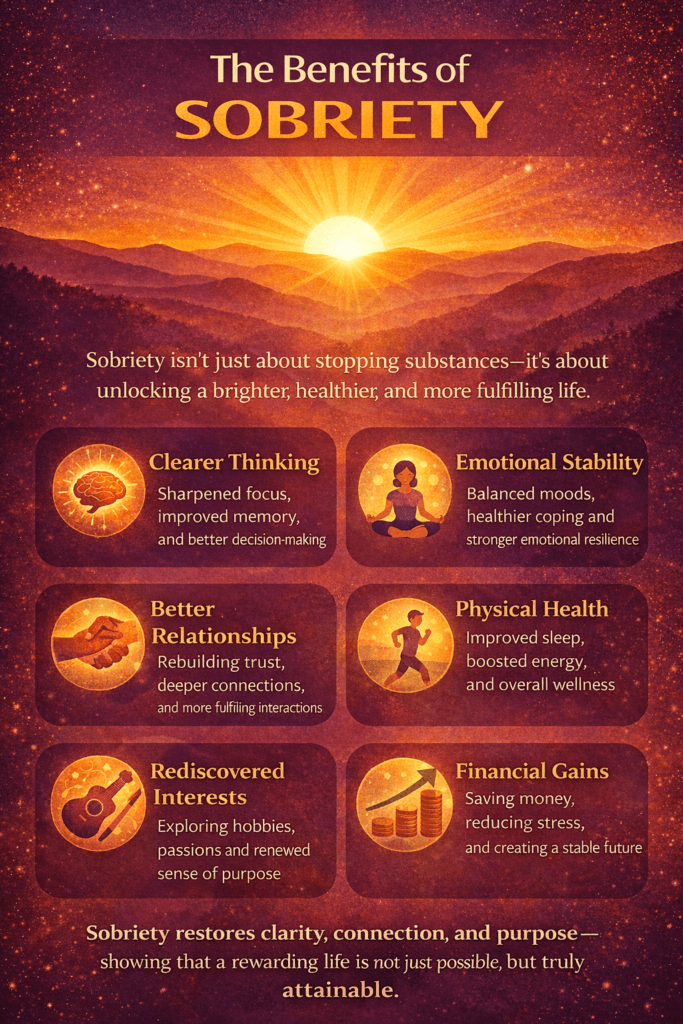
The benefits of sobriety reach far beyond simply stopping substance use—they often mark a profound transformation in physical health, mental clarity, emotional stability, and overall quality of life. While many people initially approach sobriety with a sense of loss or limitation, those who experience it frequently discover unexpected gains such as sharper focus, improved memory, more restful sleep, stronger relationships, and renewed motivation to pursue personal goals. These positive changes occur because the body and brain begin to heal once substances are removed, restoring natural systems responsible for reward, stress regulation, mood balance, and decision-making. Over time, energy levels stabilize, thinking becomes clearer, and emotional responses become more manageable, allowing individuals to engage more fully in daily life. Recognizing these benefits helps shift the perspective on recovery—from something restrictive or punitive to something empowering and restorative. Instead of feeling like something is being taken away, sobriety increasingly feels like something valuable is being returned: health, stability, purpose, and the ability to live more intentionally and authentically.
The Surprising Benefits of Sobriety: What Most People Don’t Expect
Sobriety is often framed as something people have to do—usually associated with loss, restriction, or sacrifice. But many individuals discover that sobriety brings unexpected gains that reach far beyond simply avoiding substances. In reality, sobriety can unlock improvements in physical health, mental clarity, emotional stability, relationships, and overall life satisfaction. These benefits often emerge gradually, surprising people who initially expected recovery to feel limiting rather than empowering. Understanding these positive changes can shift the narrative around sobriety from deprivation to transformation.
Clearer Thinking and Sharper Focus
One of the first unexpected benefits people notice is improved cognitive clarity. Without substances affecting brain chemistry, attention, memory, and decision-making often become sharper. Tasks feel easier to manage, conversations are more meaningful, and problem-solving improves. Many individuals describe this as “getting their mind back,” realizing they had adapted to mental fog without recognizing it.
Emotional Stability and Resilience
Substances can temporarily numb difficult emotions, but they often intensify mood swings over time. Sobriety allows the brain’s emotional regulation systems to stabilize, leading to fewer extreme highs and lows. As emotional awareness increases, individuals often develop healthier coping skills and greater resilience. Instead of escaping feelings, they learn to understand and manage them.
Stronger Relationships and Trust
Sobriety frequently improves relationships in surprising ways. Communication becomes more honest, reliability increases, and trust can gradually be rebuilt. People often discover that genuine connection feels more fulfilling than substance-driven social experiences. Over time, relationships tend to shift from conflict and unpredictability to stability and mutual support.
Physical Health Improvements
The body begins repairing itself once substances are removed. Many people notice better sleep, improved energy, clearer skin, stronger immunity, and a more consistent appetite. These physical improvements often reinforce motivation to remain sober because individuals can feel the difference in their daily functioning.
Rediscovering Interests and Purpose
A surprising aspect of sobriety is how much time, energy, and creativity return. Without substance use occupying attention, individuals often rediscover hobbies, passions, and goals that had been neglected. Activities like art, fitness, learning, or volunteering can become meaningful sources of joy and identity. This renewed sense of purpose is one of the strongest protective factors for long-term recovery.
Financial and Practical Gains
Sobriety can also bring practical benefits that people don’t always anticipate. Money previously spent on substances may be saved or invested in personal growth. Daily routines become more organized, responsibilities are easier to manage, and long-term planning becomes realistic. These changes create stability that supports confidence and independence.
Why These Benefits Feel “Surprising”
Many people enter recovery expecting hardship rather than reward. Cultural stereotypes often portray sobriety as boring, restrictive, or joyless. In reality, those who maintain sobriety frequently report the opposite: increased freedom, deeper fulfillment, and greater life satisfaction. The surprise comes from realizing that what seemed like giving something up was actually gaining something far more valuable.
Final Insight
Sobriety is not just the absence of substances—it is the presence of clarity, stability, connection, and growth. While the journey can be challenging, the benefits often extend into every area of life in ways people never predicted. Recognizing these unexpected rewards can change how sobriety is viewed, transforming it from a burden into an opportunity. For many, the greatest surprise is not that sobriety is possible—it’s how much better life can feel once it begins.
Self-Management Strategies to Achieve the Benefits of Sobriety
Sobriety brings powerful rewards—clearer thinking, emotional stability, stronger relationships, improved health, and renewed purpose—but these benefits rarely happen by accident. They emerge through consistent self-management skills that support daily decisions, emotional balance, and long-term resilience. Self-management in recovery means actively guiding your thoughts, behaviors, environment, and routines to reinforce healthy choices. Rather than relying solely on willpower, effective strategies create structure, awareness, and support systems that make sobriety sustainable and fulfilling. When practiced regularly, these habits transform recovery from a struggle into a lifestyle grounded in growth and stability.
1. Build Daily Awareness Habits
Self-awareness is the foundation of lasting sobriety. Tracking moods, triggers, cravings, and stress levels helps individuals recognize patterns before they escalate. Journaling or brief daily check-ins can reveal connections between emotions and urges. Awareness creates choice; when you can identify what you’re feeling, you can respond intentionally rather than react automatically.
2. Develop Healthy Coping Alternatives
Sobriety is easier when healthier coping tools are readily available. Exercise, creative activities, deep breathing, music, prayer, or structured problem-solving can replace substance-based coping. The goal is substitution—having positive options prepared so that when stress arises, the brain already knows where to turn.
3. Create Structure and Routine
Predictable routines reduce impulsive decisions. Scheduling sleep, meals, work, recreation, and relaxation builds stability and lowers vulnerability to cravings. Structure also strengthens discipline and self-confidence because daily success reinforces motivation.
4. Practice the Pause Strategy
One of the most effective self-management techniques is learning to pause when urges arise. Waiting even a few minutes before acting allows the rational brain to reengage. During the pause, individuals can ask:
- What am I feeling right now?
- What will happen if I act on this urge?
- What’s a healthier alternative?
This brief reflection interrupts automatic behavior and strengthens self-control over time.
5. Strengthen Support Accountability
Self-management does not mean managing everything alone. Sharing goals with trusted friends, mentors, therapists, or support groups increases motivation and accountability. External encouragement often helps individuals stay consistent, especially during stressful periods.
6. Reinforce Progress and Celebrate Wins
Recognizing small successes builds momentum. Tracking sober days, improved sleep, better relationships, or increased energy reinforces motivation. Celebrating progress reminds individuals that sobriety is producing real benefits, making it easier to continue.
7. Prepare for Challenges in Advance
Relapse prevention is strongest when people plan ahead. Identifying high-risk situations and deciding in advance how to respond reduces uncertainty. Preparation might include leaving triggering environments early, having a support contact ready, or carrying reminders of personal goals.
Why Self-Management Works
Addiction often disrupts decision-making, emotional regulation, and impulse control. Self-management strategies directly strengthen these systems. Repeated practice builds new neural pathways that support healthier habits, making positive choices feel more natural over time. Instead of relying solely on motivation, individuals build skills that sustain progress even when motivation fluctuates.
Final Insight
The benefits of sobriety are real—but they are cultivated through consistent, intentional action. Self-management transforms recovery from a passive process into an active skill set that supports clarity, stability, and growth. By developing awareness, routines, coping tools, and support systems, individuals create an environment where sobriety can thrive. Over time, these strategies do more than maintain recovery—they unlock the deeper rewards of a balanced, purposeful, and fulfilling life.
Family Support Strategies to Achieve the Benefits of Sobriety
Families play a powerful role in helping loved ones experience the full benefits of sobriety. While recovery is ultimately an individual journey, supportive family environments can significantly strengthen motivation, stability, and long-term success. The positive outcomes of sobriety—clear thinking, emotional balance, improved health, and stronger relationships—are more likely to develop when families create conditions that encourage growth rather than stress. Effective family support is not about control or pressure; it is about providing consistency, understanding, and encouragement that helps individuals build confidence and resilience throughout recovery.
Encourage Consistent Structure and Stability
Predictable routines help reinforce sobriety by reducing stress and impulsive decision-making. Families can support this by maintaining regular meal times, sleep schedules, and shared responsibilities. Stability creates a sense of safety, which allows individuals to focus on healing rather than coping with chaos or uncertainty.
Communicate With Compassion and Respect
Healthy communication is essential for recovery. Families who listen without judgment and speak calmly foster trust and openness. Encouraging honest conversations about emotions, stress, and challenges helps individuals feel understood rather than criticized. This emotional safety reduces shame and strengthens motivation to stay sober.
Reinforce Positive Progress
Acknowledging improvements—no matter how small—can significantly boost confidence. Recognizing effort, consistency, or responsible choices reinforces positive behavior and reminds individuals that their progress is meaningful. Encouragement is a powerful motivator that helps maintain long-term commitment to sobriety.
Set Healthy Boundaries
Support does not mean enabling. Families can help most by setting clear, consistent boundaries that protect both the individual and the household. Healthy boundaries clarify expectations, reduce confusion, and promote accountability. When boundaries are communicated calmly and consistently, they strengthen trust and stability.
Participate in Recovery-Oriented Activities
Families can support sobriety by engaging in healthy shared activities such as exercise, cooking, volunteering, or attending educational programs together. These activities replace old habits with positive experiences and reinforce connection, purpose, and enjoyment without substances.
Learn About Addiction Together
Education helps families understand that addiction is a health condition influenced by brain chemistry, environment, and coping systems—not simply a matter of willpower. When families learn about recovery science, triggers, and relapse prevention, they are better prepared to respond supportively and constructively.
Offer Encouragement During Difficult Moments
Recovery includes challenges, and setbacks can occur. Families who respond with patience rather than panic help individuals regain stability more quickly. Calm reassurance communicates belief in the person’s ability to recover and reduces feelings of failure or shame.
Why Family Support Matters
Supportive families strengthen protective factors such as emotional regulation, motivation, and self-confidence. Research consistently shows that individuals with positive family involvement are more likely to remain engaged in treatment and sustain recovery. Family environments that emphasize respect, structure, and encouragement create fertile ground for the benefits of sobriety to grow.
Final Insight
Sobriety is not only a personal transformation—it is often a relational one. When families provide steady encouragement, clear boundaries, and compassionate understanding, they become partners in the recovery process. Over time, this collaborative support helps individuals experience the true rewards of sobriety: clarity, stability, connection, and renewed purpose. In many cases, the greatest benefit is not just sobriety itself, but the stronger, healthier relationships that develop along the way.
Community Resource Strategies to Achieve the Benefits of Sobriety
Communities play a vital role in helping individuals not only achieve sobriety but also experience its full benefits—clear thinking, emotional stability, improved health, stronger relationships, and renewed purpose. While personal motivation is important, recovery outcomes are strongly influenced by the availability of supportive environments, accessible services, and social opportunities. Community resource strategies create systems that reinforce healthy behaviors, reduce relapse risk, and help individuals build meaningful lives beyond substance use. When communities invest in recovery-oriented supports, sobriety becomes more sustainable and rewarding, not just for individuals but for society as a whole.
Access to Recovery Support Networks
Peer support groups, recovery centers, and community meetings provide connection, accountability, and shared understanding. These environments reduce isolation—one of the biggest relapse risk factors—and allow individuals to learn practical coping strategies from others with lived experience. Social belonging strengthens motivation and reinforces the benefits of sober living.
Education and Skill-Building Programs
Educational resources help individuals rebuild confidence and independence. Programs that teach job skills, financial literacy, stress management, or communication skills empower people to navigate life challenges without relying on substances. These skills support long-term stability, which enhances the rewards of sobriety.
Health and Wellness Resources
Physical and mental health services are essential for maintaining sobriety. Access to counseling, medical care, nutrition support, and wellness programs helps individuals restore balance and energy. When communities provide affordable, accessible health resources, it becomes easier for individuals to sustain positive changes.
Safe and Supportive Environments
Stable environments reduce exposure to triggers and high-risk situations. Recovery housing, community centers, and structured recreational spaces offer safe alternatives to environments associated with substance use. These settings promote routine, stability, and social engagement.
Opportunities for Purpose and Contribution
Communities that offer volunteer programs, mentorship opportunities, and civic engagement activities help individuals rediscover meaning and self-worth. Purpose is one of the strongest predictors of sustained recovery. When people feel valued and useful, they are more likely to remain committed to sobriety.
Early Intervention and Outreach
Community outreach teams, crisis services, and screening programs can identify individuals at risk and connect them with help before problems escalate. Early intervention reduces harm and increases the likelihood that individuals will experience the positive benefits of recovery sooner.
Why Community Strategies Work
Addiction recovery is influenced by social determinants such as housing, employment, healthcare access, and social connections. Community resources address these broader factors, strengthening protective systems that support long-term well-being. When communities coordinate services and reduce barriers, individuals are more likely to maintain recovery and enjoy its rewards.
Final Insight
Sobriety thrives in supportive environments. Communities that provide accessible resources, meaningful opportunities, and inclusive support systems make it easier for individuals to achieve and sustain recovery. These strategies do more than reduce substance use—they help people rebuild confidence, purpose, and connection. In this way, community investment in recovery is not just a public health effort; it is a commitment to helping individuals experience the full, life-changing benefits of sobriety.
Frequently Asked Questions
Here are some common questions:
1. What are the main benefits of sobriety?
Sobriety can improve mental clarity, emotional stability, physical health, relationships, sleep quality, motivation, and financial stability. Many people also experience increased self-confidence and a stronger sense of purpose.
2. How quickly do the benefits of sobriety begin?
Some benefits, like improved sleep and clearer thinking, can begin within days or weeks. Others—such as emotional balance and restored relationships—develop gradually over months as the brain and body heal.
3. Does sobriety improve mental health?
Yes. Removing substances allows brain chemistry to stabilize, which often reduces anxiety, mood swings, irritability, and depression symptoms. Many individuals feel more emotionally grounded over time.
4. Will I have more energy if I stay sober?
Most people experience increased energy because sobriety improves sleep quality, hydration, nutrition, and overall physical functioning. Energy often becomes more consistent rather than fluctuating.
5. Can sobriety improve relationships?
Yes. Sobriety often restores trust, improves communication, and strengthens emotional connection. Being more present and reliable can transform relationships with family, friends, and coworkers.
6. Is it normal for benefits to take time?
Absolutely. Recovery is a gradual process. While some improvements happen quickly, others require patience as the brain, body, and lifestyle adjust. Consistency is key.
7. Does sobriety help with focus and productivity?
Yes. Without substances affecting cognition, many people notice sharper concentration, better memory, improved decision-making, and increased motivation to complete tasks.
8. Can sobriety improve physical health even after long-term use?
In many cases, yes. The body has a remarkable healing capacity. Improvements may include better liver function, cardiovascular health, immune response, skin appearance, and sleep cycles, depending on individual factors.
9. What emotional benefits do people report?
Common emotional benefits include greater self-awareness, improved mood stability, reduced stress, increased resilience, and a stronger sense of inner peace.
10. Are financial benefits really noticeable?
Often, yes. Eliminating spending on substances can free up money for savings, hobbies, travel, education, or other meaningful goals. Many people are surprised at how much they save.
11. What is the most unexpected benefit of sobriety?
Many people report that the most surprising benefit is a renewed sense of purpose and joy in everyday life. Activities that once seemed boring can become meaningful and fulfilling.
12. Why is understanding these benefits important?
Knowing the positive outcomes of sobriety can strengthen motivation, reduce fear of change, and provide hope. Understanding the rewards helps people stay committed during challenging moments.
Conclusion
Sobriety is not merely the absence of substances—it is the presence of growth, stability, and possibility. Over time, individuals who maintain sobriety often find that they gain more than they ever expected: clearer thinking, deeper connections, improved health, and a stronger sense of purpose. These benefits reinforce motivation and create a positive cycle that supports long-term recovery. Recognizing the advantages of sobriety can inspire hope for those considering change and encourage those already in recovery to continue moving forward. Ultimately, sobriety is less about giving something up and more about gaining the freedom to live fully, intentionally, and authentically.
Video: What Sobriety Actually Gave Me #addictionrecovery #soberlife #transformation