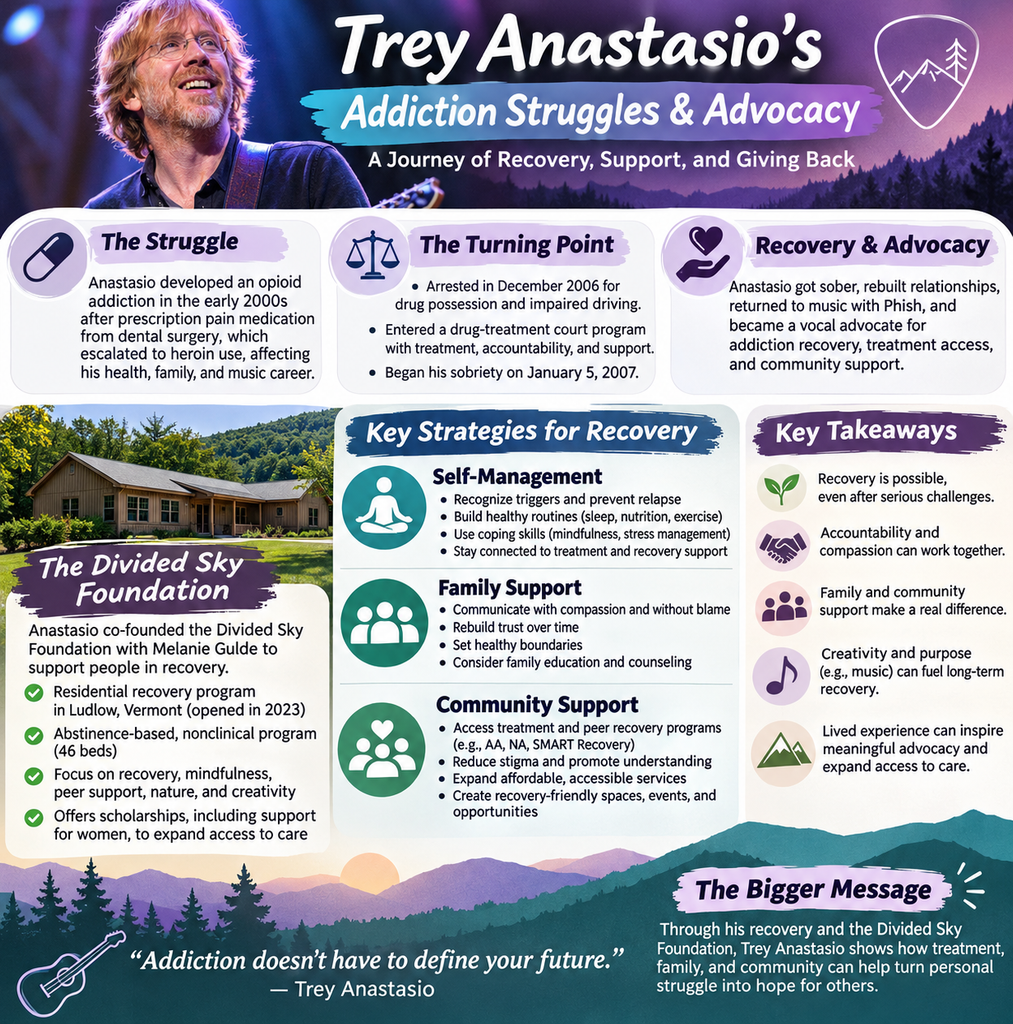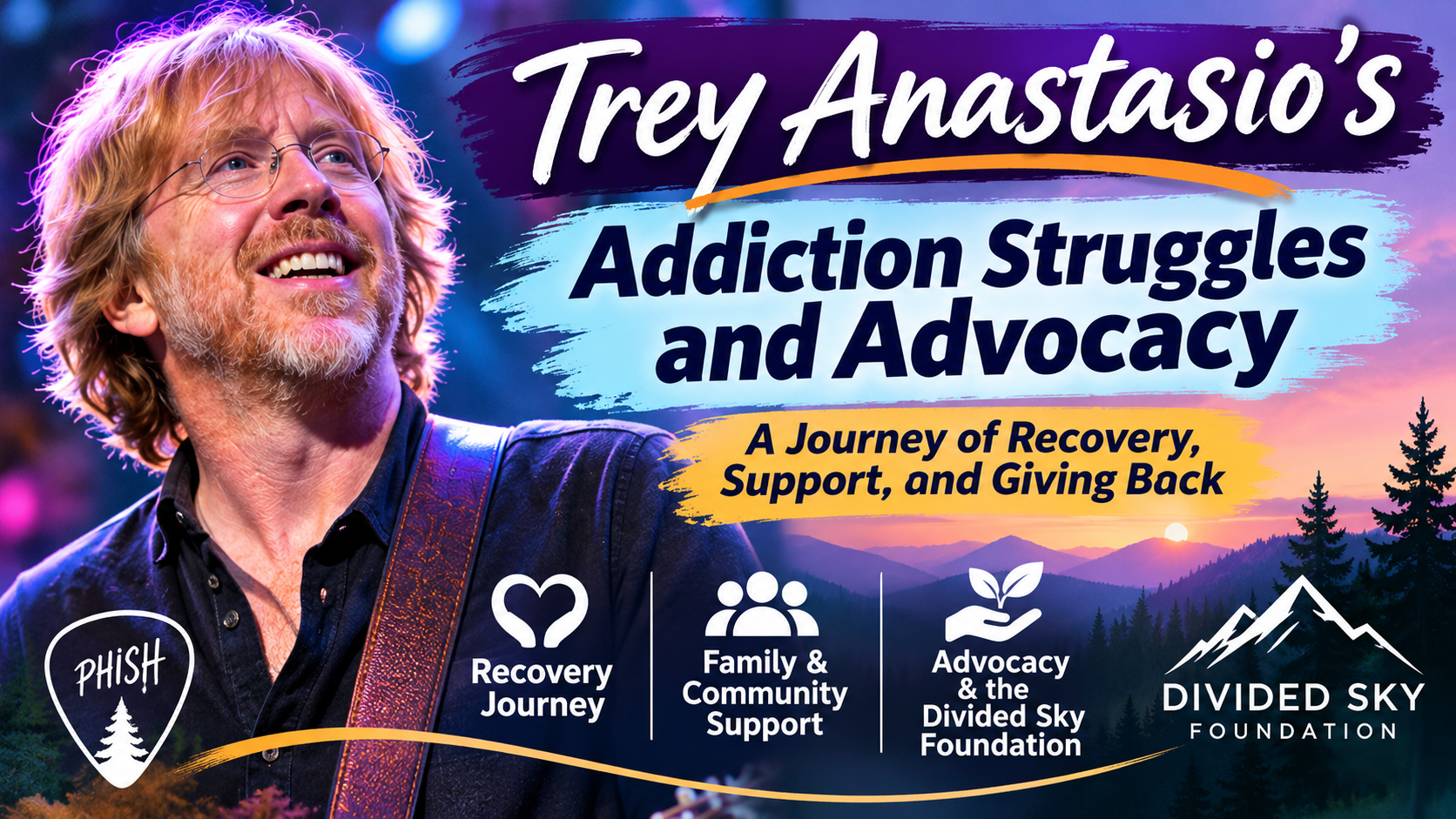
Can someone overcome addiction, rebuild their life, and use their experiences to inspire others struggling with substance use disorders?
For Trey Anastasio, the celebrated guitarist, songwriter, and founding member of the rock band Phish, recovery has become an important part of his personal journey and public advocacy.
Despite achieving extraordinary success in the music industry, Anastasio experienced serious struggles with alcohol and drug addiction, including opioid misuse. His substance use affected his health, relationships, and career, eventually resulting in legal consequences that became a turning point in his life.
Rather than allowing addiction to define his future, Anastasio pursued treatment, embraced sobriety, and became an outspoken supporter of addiction recovery and community-based treatment services.
His story illustrates how self-management, family encouragement, professional treatment, and community support can work together to create meaningful, sustainable recovery.
Understanding his journey also highlights an important message: addiction is a treatable medical condition, and recovery can open the door to renewed purpose, creativity, and connection.
Understanding Trey Anastasio’s Addiction Struggles
How Prescription Opioids Led to Addiction
Anastasio’s struggles with opioid addiction began around 2000, following dental surgery for which he received prescription pain medication. What initially provided pain relief developed into dependence on OxyContin, eventually progressing to heroin use.
As his substance use escalated, Anastasio experienced increasing difficulties in his personal and professional life.
- Physical dependence: Continued opioid use contributed to a cycle of dependence and addiction.
- Emotional isolation: Substance use increasingly interfered with meaningful relationships.
- Family strain: His addiction placed significant pressure on his marriage and family life.
- Professional consequences: Substance use contributed to instability within Phish, which disbanded in 2004 before eventually reuniting.
- Loss of control: Addiction increasingly influenced his decisions despite serious consequences.
In interviews, Anastasio has described addiction as a period of isolation, disconnection, and declining well-being. People.com+1
His experience demonstrates how opioid use disorder can develop following exposure to prescription medications, although most patients prescribed opioids do not develop addiction.
The Turning Point: Arrest, Treatment, and Recovery
In December 2006, Anastasio was arrested in Whitehall, New York, for offenses involving drug possession and impaired driving.
The arrest became a defining moment in his recovery journey.
He subsequently participated in a drug-treatment court program involving substance use treatment, accountability, community service, and recovery support.
During the approximately 14-month program, Anastasio worked with case manager Melanie Gulde, who later became an important partner in his addiction recovery advocacy.
Anastasio has publicly identified January 5, 2007, as the beginning of his sobriety. JamBase+2
Important Lessons From His Turning Point
- Accountability can encourage change: Structured treatment programs may help individuals recognize the consequences of continued substance use.
- Professional guidance matters: Counselors, healthcare professionals, and recovery specialists provide education, support, and treatment coordination.
- Recovery requires commitment: Maintaining sobriety involves developing coping strategies, rebuilding relationships, and participating in ongoing support.
- Compassion reduces shame: Individuals experiencing addiction benefit from treatment approaches that recognize substance use disorder as a medical condition.
- Second chances are possible: Legal difficulties and addiction do not have to determine someone’s future.
Anastasio’s experience also demonstrates the potential benefits of treatment-oriented drug courts, although recovery pathways should be individualized and access to care should not depend on involvement with the criminal justice system.
Self-Management Strategies: Building Long-Term Recovery
Self-management involves recognizing personal triggers, developing emotional regulation skills, establishing healthy routines, and seeking help when necessary.
Anastasio has spoken publicly about attending recovery meetings, working with a sponsor, and reconnecting with relationships and activities that supported his sobriety.
His experiences provide several lessons for individuals navigating addiction recovery.
Recognizing Triggers and Preventing Relapse
People recovering from substance use disorders may experience cravings triggered by emotional stress, certain environments, social pressure, or exposure to substances.
Helpful strategies include:
- Identify emotional and environmental triggers associated with previous substance use.
- Develop a personalized relapse prevention plan.
- Practice mindfulness, breathing exercises, and stress-management techniques.
- Establish regular sleep, nutrition, and physical activity routines.
- Maintain contact with counselors, sponsors, or trusted recovery partners.
- Seek professional support when cravings become difficult to manage.
Rebuilding Identity Beyond Addiction
One of the challenges of recovery is learning to experience satisfaction, confidence, and personal achievement without relying on substances.
For Anastasio, music continued to provide an opportunity for creativity, emotional expression, and connection.
Individuals in recovery can explore similar sources of purpose:
- Rediscover hobbies and interests.
- Set realistic personal and professional goals.
- Participate in meaningful creative activities.
- Celebrate recovery milestones.
- Develop relationships that support healthier behaviors.
- Practice self-compassion during difficult periods.
Using Evidence-Based Treatment
Recovery strategies should reflect each person’s medical and psychological needs.
For opioid use disorder, medications such as buprenorphine and methadone are evidence-based treatments that reduce overdose risk and mortality. Extended-release naltrexone may also be appropriate for selected patients.
Counseling, peer support, and recovery activities can complement medication treatment.
Important distinction: Anastasio’s publicly described abstinence-based recovery approach is one successful personal pathway. It should not be interpreted as evidence that medication treatment is unnecessary or less effective for others.
Family Support Strategies: Rebuilding Trust and Relationships
Addiction rarely affects only the individual experiencing the disorder. Families may experience anxiety, emotional exhaustion, financial difficulties, communication problems, and uncertainty about how to help.
Anastasio has acknowledged the strain addiction placed on his marriage and relationships with his children.
During his recovery, reconnecting with his wife, children, and parents became an important part of rebuilding his life. People.com+1
How Families Can Support Recovery
Encourage compassionate communication
Family members can express concern without blaming or shaming the person experiencing addiction.
Helpful approaches include:
- Listen without immediately criticizing or offering solutions.
- Discuss concerns when everyone is calm.
- Use supportive statements that encourage treatment.
- Recognize progress while maintaining realistic expectations.
- Avoid defining someone solely by their substance use history.
Establish healthy boundaries
Supporting recovery does not mean accepting harmful behaviors or ignoring personal needs.
Families can:
- Establish clear expectations regarding safety and respectful communication.
- Avoid providing money that may directly support substance use.
- Encourage accountability without using threats or humiliation.
- Protect children from unsafe situations.
- Seek professional guidance when relationships become emotionally overwhelming.
Participate in family education and counseling
Family therapy can help address communication difficulties, rebuild trust, and establish healthier relationship patterns.
Educational programs can also help relatives understand:
- How addiction affects brain function and behavior.
- Why cravings and relapse can occur.
- The role of medication and behavioral treatment.
- How to recognize overdose risks.
- How to support recovery while maintaining personal well-being.
Rebuilding Trust Takes Time
Trust damaged during active addiction may not return immediately.
Consistent behavior, honest communication, respect for boundaries, and participation in recovery activities can gradually strengthen relationships.
Anastasio’s experience illustrates that recovery can create opportunities for family healing, even after significant emotional hardship.
Community Support and Addiction Recovery Advocacy
Anastasio’s advocacy extends beyond discussing his personal experience. He has used his public platform and musical career to support recovery initiatives, increase awareness, and help create resources for individuals experiencing substance use disorders.
The Divided Sky Foundation
One of his most significant contributions is the Divided Sky Foundation, which he developed with Melanie Gulde.
The foundation’s residential recovery program opened in Ludlow, Vermont, on November 13, 2023.
The program emphasizes a supportive recovery environment that incorporates:
- Twelve-step recovery principles.
- Mindfulness and emotional regulation.
- Peer support and community connection.
- Personalized therapeutic activities.
- Nature-based activities and wellness practices.
- Music, creativity, and opportunities for personal growth.
The 46-bed program is nonclinical and abstinence-based. It does not provide medical detoxification on-site, making appropriate clinical assessment and referral essential for people who require withdrawal management or medical treatment. Divided Sky Foundation+1
Expanding Access to Recovery Services
Anastasio has supported fundraising and community partnerships to make recovery services more accessible.
His 2020 Beacon Jams livestream concert series helped raise funds for the Divided Sky initiative.
In 2026, reporting also highlighted the foundation’s scholarship efforts, including support intended to reduce financial barriers for women seeking recovery services. Trey+1
These initiatives demonstrate how public figures can use their influence to support individuals who may otherwise struggle to access recovery resources.
Advocating for Drug Treatment Courts
Anastasio has also spoken publicly about the importance of drug courts.
In 2016, he addressed drug court graduates in New York, discussing how structured treatment and accountability helped change his life.
His advocacy supports the broader principle that treatment and rehabilitation can offer meaningful alternatives to incarceration for eligible individuals with substance use disorders. Jambands
How Communities Can Strengthen Addiction Recovery
Successful recovery often requires more than individual motivation. Communities play an essential role by creating accessible treatment options, reducing stigma, and supporting long-term wellness.
Community-Based Support Strategies
- Expand treatment access: Increase availability of evidence-based addiction treatment, including medications for opioid use disorder.
- Support peer recovery programs: Encourage participation in Alcoholics Anonymous, Narcotics Anonymous, SMART Recovery, and other appropriate support networks.
- Provide affordable services: Develop scholarships, sliding-scale treatment programs, and transportation assistance.
- Promote family education: Offer workshops and support groups for relatives affected by addiction.
- Reduce stigma: Use respectful, person-first language and promote accurate information about substance use disorders.
- Support recovery-friendly workplaces: Encourage employment opportunities and reasonable accommodations when applicable.
- Increase overdose prevention: Expand naloxone distribution, overdose education, and access to emergency services.
- Build recovery communities: Support sober social events, creative activities, mentorship, and community wellness programs.
Anastasio’s advocacy illustrates how people with lived experience can help strengthen community resources and encourage others to seek treatment.
Challenges and Barriers to Long-Term Recovery
Despite the availability of effective treatment, many individuals encounter obstacles that make recovery difficult.
| Challenge | Potential support strategy |
|---|---|
| Stigma and shame | Compassionate education and peer support |
| Persistent cravings | Clinical treatment and relapse prevention planning |
| Family conflict | Family counseling and healthy boundaries |
| Financial barriers | Scholarships, insurance navigation, and community programs |
| Social isolation | Recovery meetings and supportive relationships |
| Co-occurring mental health conditions | Integrated mental health and addiction treatment |
| Limited treatment availability | Telehealth, outpatient programs, and community referrals |
Anastasio’s story demonstrates the importance of having opportunities to access treatment and rebuild a supportive environment.
However, not everyone has the same financial resources, family support, or access to specialized programs. Addressing these disparities is essential to improving recovery outcomes.
The Role of Music, Creativity, and Emotional Healing
Music has remained central to Anastasio’s life throughout his recovery.
His continued performances with Phish and other musical projects demonstrate that sobriety and creative expression can coexist.
Music and creative activities may provide several recovery benefits:
- Encourage emotional expression.
- Support stress reduction.
- Promote social connection.
- Strengthen personal identity.
- Provide meaningful goals and daily structure.
- Create opportunities for positive experiences without substance use.
Music therapy, when provided by qualified professionals, may also complement established addiction treatment approaches.
However, creative activities should be viewed as supportive tools rather than replacements for evidence-based medical care.
Key Lessons From Trey Anastasio’s Recovery Journey
Anastasio’s experience provides important insights for individuals, families, healthcare professionals, and communities affected by addiction.
Recovery is possible, even after serious consequences. His journey demonstrates that people can rebuild meaningful lives following addiction, legal difficulties, and damaged relationships.
Compassion and accountability can work together. Effective recovery support combines understanding with appropriate structure and personal responsibility.
Family relationships can become sources of strength. Healthy communication, boundaries, and consistent support can help rebuild trust.
Professional treatment and peer connection matter. Access to qualified professionals and supportive recovery communities can improve the likelihood of sustained recovery.
Lived experience can inspire advocacy. Anastasio transformed his experiences into efforts to help others access recovery services.
Recovery is not one-size-fits-all. Individuals may benefit from different combinations of medication, counseling, peer support, family involvement, and residential or outpatient care.
Resources for Individuals and Families
People seeking addiction treatment or recovery support can explore the following organizations:
- SAMHSA — Treatment information, referral resources, and the National Helpline at 1-800-662-HELP (4357).
- FindTreatment.gov — Search for substance use and mental health treatment providers.
- Narcotics Anonymous — Peer-led recovery meetings and support.
- SMART Recovery — Evidence-informed mutual support and self-management tools.
- Nar-Anon Family Groups — Support for families and friends affected by another person’s addiction.
- Divided Sky Foundation — Information about Anastasio’s recovery advocacy and residential recovery program.
Conclusion: Turning Personal Struggles Into Hope for Others
Trey Anastasio’s journey from opioid addiction to long-term recovery and advocacy demonstrates the potential for meaningful transformation.
His experiences reveal how addiction can affect health, family relationships, professional success, and personal identity. They also show how treatment, accountability, compassion, and community connection can support lasting change.
Through the Divided Sky Foundation, Anastasio has expanded his recovery journey into a broader mission to help others find treatment, connection, and renewed hope.
His story reinforces a powerful message: addiction does not have to define a person’s future.
Recovery is not simply about stopping substance use. It is about rebuilding relationships, restoring emotional well-being, developing healthier coping strategies, and discovering renewed purpose.
With accessible treatment, supportive families, and compassionate communities, more individuals can create healthier, more fulfilling lives.
Understanding addiction can save lives. Recovery is possible, and everyone deserves the opportunity to heal.
Frequently Asked Questions and Answers
Understanding Trey Anastasio’s Addiction
1. Who is Trey Anastasio?
Trey Anastasio is an American guitarist, singer, songwriter, and founding member of the rock band Phish. Known for his improvisational guitar performances and musical creativity, he has also become an advocate for addiction recovery.
His public discussions about addiction and sobriety have helped raise awareness about substance use disorders and the importance of recovery support.
2. What substances did Trey Anastasio struggle with?
Anastasio has publicly discussed addiction involving prescription opioids, including OxyContin, and heroin. He has also described problematic alcohol and other drug use during his years of active addiction.
His experiences demonstrate how substance use disorders can develop and progressively interfere with health, relationships, and daily functioning.
3. How did Trey Anastasio’s opioid addiction begin?
Anastasio has explained that his opioid use began after he received prescription pain medication following dental surgery around 2000.
Over time, his use escalated, eventually involving heroin.
His experience highlights the importance of appropriate opioid prescribing, patient education, and monitoring for signs of misuse or dependence.
4. How did addiction affect Trey Anastasio’s career?
His addiction contributed to personal difficulties and instability during Phish’s early-2000s career.
Phish disbanded in 2004, during a period when Anastasio was struggling with substance use and other challenges. The band reunited in 2009, after he had entered recovery.
His return to performing demonstrates how recovery can help individuals rebuild their professional lives.
5. What event became a turning point in his recovery?
In December 2006, Anastasio was arrested in New York for offenses involving drug possession and impaired driving.
Following his arrest, he participated in a drug-treatment court program that combined addiction treatment, supervision, and accountability.
He has described this experience as an important turning point in his life.
6. When did Trey Anastasio become sober?
Anastasio has publicly identified January 5, 2007, as his sobriety date.
He has spoken about maintaining his recovery through ongoing personal commitment, supportive relationships, and participation in recovery activities.
His experience illustrates that long-term recovery is possible, even following serious addiction-related consequences.
7. What helped Trey Anastasio maintain his sobriety?
Anastasio has credited several important influences, including:
- Participation in recovery meetings.
- Support from a sponsor and recovery peers.
- Professional treatment and accountability.
- Reconnecting with family relationships.
- Developing a healthier daily routine.
- Finding renewed purpose through music and service.
These strategies demonstrate the importance of addressing addiction through multiple forms of support.
Trey Anastasio’s Recovery Advocacy
8. What is the Divided Sky Foundation?
The Divided Sky Foundation is a nonprofit recovery organization co-founded by Anastasio and Melanie Gulde, his former drug-court case manager.
Its mission is to help people affected by alcohol and drug addiction by providing a supportive environment for recovery.
The organization emphasizes connection, personal growth, mindfulness, and recovery education. Divided Sky Foundation
9. Where is the Divided Sky Residential Recovery Program located?
‘You can get off drugs and alcohol’: Trey Anastasio of Phish opens Vermont recovery center
The program is located in Ludlow, Vermont, and opened in November 2023.
It is a 46-bed, nonclinical residential recovery program designed for individuals who are medically stable and seeking support for substance use recovery.
Its approach includes structured recovery activities, peer connections, mindfulness, and 12-step principles. Seven Days+1
10. Does the Divided Sky program provide medical detoxification?
No. Divided Sky is not a medical detoxification facility.
Individuals requiring medically supervised withdrawal, particularly from alcohol or benzodiazepines, need an appropriate medical assessment and potentially inpatient or outpatient withdrawal management before entering a nonclinical program.
People receiving medication for addiction treatment should discuss program compatibility and continuity of care directly with the facility.
11. How does Trey Anastasio advocate for addiction recovery?
Anastasio supports recovery advocacy through several activities:
- Publicly discussing his experiences with addiction.
- Supporting drug-treatment court programs.
- Raising funds for recovery services.
- Promoting compassion and reducing stigma.
- Helping establish the Divided Sky residential program.
- Encouraging community involvement in addiction recovery.
His 2020 Beacon Jams livestream concerts helped raise money for the Divided Sky initiative. Relix
12. Why is Trey Anastasio’s advocacy important?
His advocacy demonstrates that addiction can affect people regardless of their fame, professional achievements, or financial success.
By sharing his experiences, Anastasio helps challenge the misconception that addiction represents a lack of willpower or moral character.
His work also demonstrates how individuals with lived recovery experience can contribute to meaningful community services.
Self-Management and Relapse Prevention
13. What self-management strategies can individuals learn from his recovery?
Although every recovery journey is different, individuals may benefit from:
- Identifying triggers and developing coping strategies.
- Maintaining consistent daily routines.
- Participating in counseling or peer recovery meetings.
- Building relationships with supportive individuals.
- Managing stress through exercise, mindfulness, and creative activities.
- Developing a written relapse prevention plan.
- Seeking appropriate medication treatment when clinically indicated.
Recovery generally requires ongoing attention to emotional, physical, and social well-being.
14. How can individuals manage opioid cravings during recovery?
Cravings can occur because substance use affects brain systems involved in reward, motivation, learning, and stress.
Helpful approaches include recognizing triggers, delaying impulsive responses, contacting supportive individuals, and using behavioral coping strategies.
For opioid use disorder, medications such as buprenorphine and methadone are particularly important because they reduce illicit opioid use and overdose mortality.
Behavioral strategies can complement these medications but should not be considered equivalent substitutes.
15. What role does music play in Trey Anastasio’s recovery?
Music remains an important source of creativity, purpose, and connection in Anastasio’s life.
He has described rediscovering the joy of songwriting and performing after becoming sober. Guitar World
For others, creative activities may help with:
- Emotional expression and stress management.
- Establishing meaningful goals.
- Developing healthy leisure activities.
- Strengthening social relationships.
- Rebuilding confidence and personal identity.
Music and other creative outlets can support recovery, although they do not replace professional treatment.
16. Can someone recover from addiction without attending residential rehabilitation?
Yes. Many individuals recover through outpatient treatment, medication management, counseling, and community support.
Residential treatment may be appropriate for people requiring a more structured environment, but it is not necessary for everyone.
The appropriate level of care depends on factors such as substance use severity, withdrawal risk, co-occurring medical conditions, psychiatric needs, and home environment.
Family Support and Relationships
17. How did addiction affect Trey Anastasio’s family?
Anastasio has publicly acknowledged that his addiction placed significant strain on his marriage and family relationships.
He has discussed how his substance use created isolation and threatened important personal connections.
His recovery allowed him to focus on rebuilding relationships with his wife, children, and loved ones. People.com
18. How can families help someone struggling with addiction?
Families can provide meaningful support by:
- Communicating with empathy rather than blame.
- Encouraging professional addiction treatment.
- Learning about substance use disorders.
- Establishing healthy personal boundaries.
- Recognizing and supporting recovery progress.
- Participating in family counseling when appropriate.
- Preparing for emergencies, including learning how to administer naloxone when opioid exposure is a concern.
Family involvement can strengthen recovery, but relatives should not be expected to manage addiction alone.
19. What should families do when someone refuses addiction treatment?
Families should prioritize safety, maintain respectful communication, and avoid escalating confrontations.
They can continue expressing concern, offer information about treatment options, and establish appropriate boundaries.
Family members may also benefit from counseling or programs such as CRAFT (Community Reinforcement and Family Training), which teaches strategies to improve communication and encourage treatment engagement.
20. Can trust be rebuilt after addiction?
Yes, although rebuilding trust often takes time.
Consistent behavior, honest communication, accountability, and respect for boundaries can help repair damaged relationships.
Family counseling may provide additional support when relatives experience unresolved resentment, fear, or emotional distress.
Recovery can create opportunities for reconciliation, but each family member’s emotional needs and boundaries deserve respect.
Community Support and Public Awareness
21. Why are community recovery programs important?
Community programs help reduce isolation and provide opportunities for ongoing support.
They may offer:
- Peer recovery meetings and mentorship.
- Access to counseling and treatment referrals.
- Recovery-friendly social activities.
- Family education and support groups.
- Employment and housing assistance.
- Overdose prevention education.
- Financial assistance for treatment.
Community resources can be especially important for individuals experiencing financial hardship or limited access to healthcare.
22. How do drug-treatment courts support addiction recovery?
Drug-treatment courts are specialized court programs that may provide eligible individuals with supervised treatment and alternatives to conventional criminal sentencing.
These programs often combine clinical services, regular monitoring, judicial supervision, and case management.
Anastasio has advocated for treatment-oriented approaches based on his own experiences.
However, outcomes vary across programs, and effective treatment should remain voluntary whenever possible, medically appropriate, and accessible outside the criminal justice system.
23. What are the biggest barriers to addiction recovery?
Common barriers include:
- Financial difficulties and inadequate insurance coverage.
- Stigma and fear of judgment.
- Limited availability of treatment providers.
- Transportation and housing instability.
- Co-occurring mental health conditions.
- Family conflict and social isolation.
- Difficulty accessing medications for substance use disorders.
Addressing these challenges requires cooperation among healthcare professionals, families, policymakers, and community organizations.
24. How can communities reduce the stigma surrounding addiction?
Communities can reduce stigma by treating addiction as a medical condition rather than a personal failure.
Practical approaches include using person-first language, sharing accurate educational information, supporting evidence-based treatment, and encouraging respectful conversations about recovery.
Stories such as Anastasio’s can help illustrate that people experiencing addiction are capable of change and meaningful contributions to society.
Recovery Lessons and Inspiration
25. What makes Trey Anastasio’s recovery journey inspiring?
His story illustrates how someone experiencing severe addiction can pursue treatment, rebuild important relationships, return to meaningful work, and eventually help others.
His collaboration with Melanie Gulde is especially significant because their relationship evolved from court-supervised treatment to a partnership supporting community recovery services.
It demonstrates how compassionate accountability and continued support can contribute to long-term change.
26. Does Trey Anastasio believe recovery is possible for everyone?
Anastasio has repeatedly expressed hope for individuals and families affected by addiction.
He has emphasized human resilience and the possibility of meaningful recovery, even after severe substance use problems.
His message encourages people to seek help rather than assume their circumstances cannot improve. People.com
27. What should someone do after experiencing a relapse?
A return to substance use should be addressed promptly without shame or unnecessary delay.
Recommended actions include:
- Contacting a healthcare professional or addiction treatment provider.
- Reviewing medication treatment and overdose prevention needs.
- Identifying circumstances that contributed to the return to use.
- Reconnecting with supportive individuals.
- Updating the treatment and relapse prevention plan.
- Seeking emergency care when overdose or severe withdrawal symptoms occur.
Following abstinence, opioid tolerance can decrease substantially, increasing overdose risk if a person returns to a previously tolerated dose.
Relapse is not inevitable, and it does not erase previous recovery progress.
28. What is the most important lesson from Trey Anastasio’s addiction and advocacy?
One of the most meaningful lessons is that recovery can extend beyond personal sobriety.
Anastasio’s journey demonstrates how individuals can use their experiences to support others, strengthen community resources, and encourage greater understanding of addiction.
His advocacy also emphasizes that people experiencing substance use disorders deserve access to compassionate and effective treatment.
Addiction Recovery Resources
29. Where can individuals and families find addiction treatment and support?
Several organizations provide information, referrals, and recovery resources.
- FindTreatment.gov — Locate substance use and mental health treatment providers.
- SAMHSA — National substance use treatment information and referral resources.
- Alcoholics Anonymous — Peer recovery meetings for alcohol-related problems.
- Narcotics Anonymous — Peer support for individuals recovering from drug addiction.
- SMART Recovery — Evidence-informed mutual support focused on self-management.
- Divided Sky Foundation — Information about the residential recovery program associated with Anastasio’s advocacy.
In the United States, individuals can also call 1-800-662-HELP (4357) for substance use treatment referrals.
30. What final message does Trey Anastasio’s recovery story offer?
Trey Anastasio’s journey demonstrates that addiction does not have to determine someone’s future.
His experiences show the potential value of professional treatment, supportive relationships, community connection, and opportunities to rediscover personal purpose.
Through the Divided Sky Foundation, he has transformed his lived experience into efforts to help others access recovery support.
His story reinforces an essential message:
Recovery is possible. Families can heal. Communities can make a difference. And every individual deserves the opportunity for a healthier future.
Video: