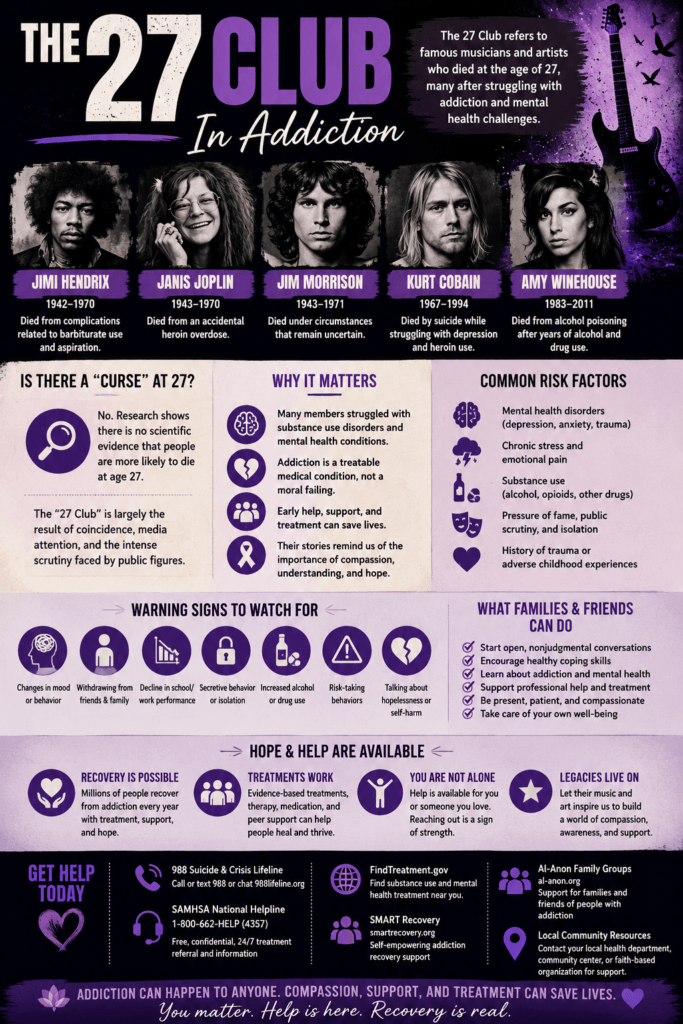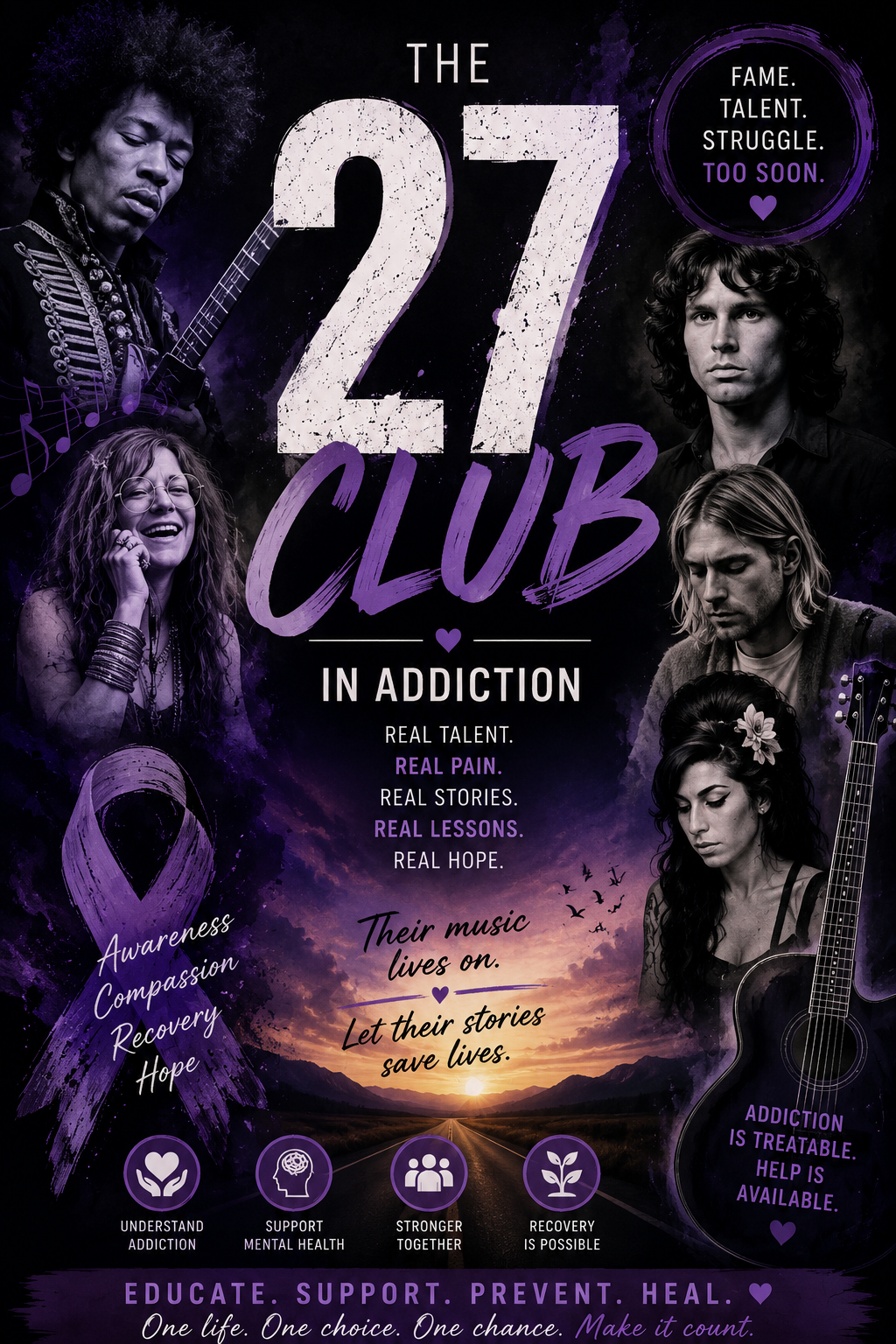
The 27 Club is an informal term used to describe a number of famous musicians, artists, and entertainers who died at the age of 27, many after struggling with substance use disorders, mental health conditions, or both. Although the deaths of well-known figures such as Jimi Hendrix, Janis Joplin, Jim Morrison, Kurt Cobain, and Amy Winehouse have contributed to the legend surrounding the 27 Club, research has found no scientific evidence that age 27 itself is associated with a higher risk of death. Instead, these tragedies highlight the devastating effects of untreated addiction, co-occurring mental illness, and the pressures that can accompany fame and personal struggles. Understanding the 27 Club provides an opportunity to discuss addiction as a treatable medical condition and emphasizes the importance of prevention, early intervention, and access to evidence-based care.
What Is the “27 Club” in Addiction?
The 27 Club is an informal term for a group of well-known musicians, artists, and entertainers who died at 27. Although the club is not a real organization, it has become a cultural phenomenon because several famous performers died at that age, many of whom struggled with substance use disorders, mental health conditions, or both.
It is important to understand that there is no scientific evidence that people are at a greater risk of dying at age 27 than at other ages. Researchers have found that the “27 Club” is largely the result of public attention and coincidence rather than a true increase in mortality at that age.
Why Is the 27 Club Associated with Addiction?
Many members commonly associated with the 27 Club experienced challenges related to:
- Alcohol use disorder
- Opioid or other drug misuse
- Mental health disorders
- High levels of stress and public pressure
- Risk-taking behaviors
These factors can increase the risk of accidental overdose, injuries, suicide, and other health complications.
Well-Known Members of the 27 Club
Some of the most recognized individuals include:
- Jimi Hendrix – Died in 1970 after complications related to barbiturate use and aspiration.
- Janis Joplin – Died in 1970 from an accidental heroin overdose.
- Jim Morrison – Died in 1971 under circumstances that remain uncertain.
- Kurt Cobain – Died by suicide in 1994 while struggling with depression and heroin use.
- Amy Winehouse – Died in 2011 from alcohol poisoning following years of alcohol and drug use.
What Can We Learn?
The stories of many 27 Club members highlight several important lessons:
- Addiction can affect anyone, regardless of talent, fame, or financial success.
- Mental health and substance use disorders often occur together and should both be addressed.
- Early intervention saves lives. Seeking treatment before substance use becomes severe improves outcomes.
- Recovery is possible. Millions of people recover from substance use disorders through evidence-based treatment, counseling, medication when appropriate, and ongoing support.
Common Risk Factors
Several factors may contribute to substance use disorders among entertainers and the general population, including:
- Chronic stress
- Trauma or adverse childhood experiences
- Depression or anxiety
- Easy access to drugs or alcohol
- Social pressure
- Lack of adequate support systems
These are not unique to celebrities and can affect people from all backgrounds.
Why the 27 Club Matters
The 27 Club should not be viewed as a mystery or curse. Instead, it serves as a reminder of the devastating impact that untreated addiction and mental illness can have. These stories also help reduce stigma by emphasizing that substance use disorders are treatable medical conditions, not moral failures.
Conclusion
The 27 Club is a cultural term referring to several famous artists who died at age 27, many of whom experienced addiction, mental illness, or both. While there is no evidence that age 27 itself carries a special risk, these tragedies underscore the importance of recognizing warning signs, encouraging early treatment, supporting mental health, and promoting evidence-based care. Their legacies continue to inspire millions, while their stories remind us that timely support and compassionate treatment can save lives.
Self-Management Strategies to Understand the “27 Club” in Addiction
The 27 Club is an informal term used to describe a group of famous musicians, artists, and entertainers who died at the age of 27, many after struggling with substance use disorders, mental health conditions, or both. While the 27 Club is a well-known cultural phenomenon, research has found no scientific evidence that people are at greater risk of dying specifically at age 27. Instead, these stories highlight the importance of recognizing addiction as a treatable medical condition and taking steps to protect physical and mental health. Self-management strategies can help individuals reduce their risk of substance misuse and build resilience.
Learn the Facts About Addiction
Educate yourself about substance use disorders using reliable medical and scientific sources. Understanding how addiction affects the brain, behavior, and decision-making helps reduce stigma and encourages early recognition of warning signs.
Recognize Personal Risk Factors
Take time to identify factors that may increase your vulnerability to substance misuse, such as chronic stress, trauma, anxiety, depression, family history of addiction, chronic pain, or exposure to substance use. Recognizing these risks allows you to develop healthier coping strategies before problems develop.
Develop Healthy Stress Management Skills
Many people turn to alcohol or drugs to cope with stress or emotional pain. Instead, practice healthy stress-management techniques such as regular exercise, mindfulness meditation, deep breathing, journaling, spending time in nature, listening to music, or engaging in creative hobbies. These activities support emotional well-being without the risks associated with substance use.
Prioritize Mental Health
Depression, anxiety, and other mental health conditions often occur alongside substance use disorders. If you experience persistent sadness, excessive worry, mood changes, or thoughts of self-harm, seek professional help early. Treating mental health conditions can reduce the risk of developing substance use problems.
Build a Strong Support System
Surround yourself with supportive family members, trusted friends, mentors, or peer support groups. Healthy relationships provide encouragement, accountability, and emotional support during difficult times, reducing feelings of isolation.
Avoid Using Substances to Cope
Learn to recognize when you are tempted to use alcohol or drugs to manage stress, grief, loneliness, or emotional discomfort. Replacing substance use with healthier coping strategies helps reduce the risk of dependence and promotes long-term resilience.
Establish Healthy Daily Habits
Consistent sleep, balanced nutrition, regular physical activity, and structured daily routines support both physical and mental health. These habits improve mood, reduce stress, and strengthen the body’s ability to cope with life’s challenges.
Recognize Early Warning Signs
Be aware of behaviors that may signal developing substance misuse, including increasing alcohol or drug use, cravings, neglecting responsibilities, withdrawing from family and friends, mood changes, or continuing to use despite negative consequences. Early recognition allows for timely intervention.
Set Personal Goals and Healthy Boundaries
Create meaningful short-term and long-term goals related to education, career, relationships, and personal growth. Establish boundaries that protect your well-being, including avoiding environments or situations that encourage excessive substance use or other risky behaviors.
Seek Professional Help Without Delay
If you notice signs of addiction or mental health concerns, consult a healthcare provider, mental health professional, or addiction specialist. Early treatment improves recovery outcomes and can prevent more serious health consequences.
Continue Learning from Others’ Experiences
The stories associated with the 27 Club should not be viewed as myths or inevitable outcomes but as reminders of the importance of prevention, treatment, and hope. Learning from these experiences can inspire healthier choices and encourage compassion for those living with addiction.
Conclusion
The 27 Club reminds us that addiction and mental health challenges can affect anyone, regardless of talent, fame, or success. Rather than focusing on the age of those who died, individuals can use these stories as motivation to prioritize their own well-being. Through education, healthy coping skills, emotional awareness, supportive relationships, and early access to professional care, people can reduce their risk of substance misuse and build a healthier, more resilient future. Recovery is possible, and seeking help is a sign of strength, not weakness.
Family Support Strategies to Understand the “27 Club” in Addiction
The 27 Club is an informal term used to describe several well-known musicians, artists, and entertainers who died at the age of 27, many after struggling with substance use disorders, mental health conditions, or both. Although there is no scientific evidence that age 27 itself carries a greater risk of death, these stories highlight the devastating impact that untreated addiction and mental illness can have. Families play a vital role in recognizing warning signs, promoting healthy coping skills, and encouraging early treatment. Strong family support can reduce stigma and help loved ones seek the care they need.
Learn About Addiction Together
Families should educate themselves about addiction as a chronic but treatable medical condition. Understanding how alcohol and drugs affect the brain helps replace blame and misconceptions with empathy and informed support. Learning together also encourages productive conversations about prevention and recovery.
Encourage Open Communication
Create a home environment where family members feel safe discussing stress, anxiety, depression, substance use, and other personal struggles without fear of judgment. Honest conversations build trust and make it more likely that someone will ask for help when they need it.
Recognize Early Warning Signs
Family members should become familiar with signs that may indicate developing substance use or mental health problems, including:
- Sudden changes in mood or personality
- Withdrawing from family and friends
- Declining school or work performance
- Secretive behavior
- Loss of interest in hobbies
- Changes in sleep or eating habits
- Increased alcohol or drug use
- Risk-taking behaviors
Recognizing these signs early allows families to seek professional support before problems become more serious.
Reduce Stigma Around Mental Health
Many individuals avoid seeking help because they fear being judged. Families can normalize conversations about depression, anxiety, trauma, and addiction by treating these conditions as medical issues rather than personal weaknesses. Reducing stigma encourages earlier intervention and better outcomes.
Encourage Healthy Coping Skills
Support family members in developing positive ways to manage stress, grief, disappointment, and emotional challenges. Healthy coping strategies include regular exercise, hobbies, creative activities, mindfulness, adequate sleep, balanced nutrition, and spending time with supportive friends and family.
Support Professional Treatment
If a loved one is struggling with substance use or mental health concerns, encourage them to seek evaluation from a healthcare provider, mental health professional, or addiction specialist. Families can assist by helping schedule appointments, providing transportation, and offering encouragement throughout treatment.
Promote Healthy Family Relationships
Strong family connections provide emotional security and resilience. Spend quality time together through family meals, recreational activities, celebrations, and meaningful conversations. Positive relationships can serve as protective factors against substance misuse.
Set Healthy Boundaries
Supporting a loved one does not mean enabling harmful behaviors. Families should establish clear, consistent boundaries regarding substance use while continuing to express love, concern, and encouragement. Healthy boundaries promote accountability while preserving family well-being.
Encourage Positive Peer Relationships
Help young adults and adolescents build friendships with peers who support healthy lifestyles and positive decision-making. Strong social support outside the family can reinforce recovery and reduce exposure to high-risk environments.
Develop a Family Safety Plan
Know how to respond if a substance-related crisis occurs. Families should recognize signs of overdose, understand when to call emergency services, know where naloxone is available if opioids are involved, and keep emergency contact information readily accessible.
Take Care of the Whole Family
Addiction affects every member of the household. Family counseling, support groups, stress-management strategies, and self-care can help caregivers maintain their own physical and emotional health while supporting a loved one through recovery.
Focus on Hope and Recovery
The stories associated with the 27 Club are tragic, but they should also remind families that addiction is treatable and that many people recover with timely, evidence-based care. Encouraging hope, resilience, and perseverance can motivate loved ones to seek treatment and continue their recovery journey.
Conclusion
The 27 Club serves as a powerful reminder that addiction and mental health challenges can affect anyone, regardless of talent, fame, or success. Families can make a meaningful difference by promoting open communication, recognizing early warning signs, reducing stigma, encouraging healthy coping skills, and supporting professional treatment. Through compassion, education, healthy boundaries, and ongoing encouragement, families can help protect their loved ones, strengthen resilience, and support long-term recovery and emotional well-being.
Community Resource Strategies to Understand the “27 Club” in Addiction
The 27 Club is an informal term used to describe several famous musicians, artists, and entertainers who died at the age of 27, many after experiencing substance use disorders, mental health conditions, or both. While there is no scientific evidence that age 27 itself increases the risk of death, the stories associated with the 27 Club highlight the importance of addiction prevention, mental health awareness, and early intervention. Communities play a critical role in educating the public, reducing stigma, and connecting individuals with evidence-based resources that promote recovery and well-being.
Promote Public Education
Community organizations, schools, healthcare systems, and public health departments can provide educational programs about addiction, mental health, and overdose prevention. These programs help people understand that addiction is a chronic, treatable medical condition rather than a personal failure.
Increase Mental Health Awareness
Many individuals associated with the 27 Club struggled with mental health challenges in addition to substance use. Community mental health campaigns can encourage people to recognize symptoms of depression, anxiety, trauma, and other mental illnesses while promoting early access to counseling and treatment.
Support Substance Use Prevention Programs
Schools, colleges, youth organizations, and community centers can offer prevention programs that teach healthy decision-making, emotional resilience, stress management, and the risks associated with alcohol and drug use. Early education can reduce the likelihood of substance misuse later in life.
Improve Access to Addiction Treatment
Communities should ensure that individuals have access to evidence-based treatment services, including addiction medicine specialists, outpatient counseling, residential treatment programs, medication for opioid use disorder (MOUD) when appropriate, and recovery support services. Removing barriers to treatment increases opportunities for recovery.
Encourage Peer Recovery Support
Peer recovery organizations and mutual support groups provide individuals with opportunities to connect with others who have lived experience with addiction. These supportive relationships reduce isolation, strengthen motivation, and help individuals maintain long-term recovery.
Expand Crisis Intervention Services
Communities benefit from having accessible crisis intervention resources, including mobile crisis teams, crisis stabilization centers, emergency mental health services, and suicide prevention programs. Prompt intervention during emotional or substance-related crises can save lives.
Promote Overdose Prevention
Public health agencies and community organizations can provide education on recognizing overdose symptoms, distributing naloxone where appropriate, and encouraging individuals to call emergency services immediately when an overdose is suspected. Overdose prevention initiatives have saved countless lives and provide opportunities to connect individuals with treatment after an overdose.
Partner with Schools and Colleges
Educational institutions can offer counseling services, wellness programs, stress-management workshops, and substance-use education to help students develop healthy coping skills. Faculty and staff can also be trained to recognize early warning signs and connect students with appropriate resources.
Collaborate with Healthcare Providers
Healthcare professionals, behavioral health specialists, pharmacists, and community clinics can work together to screen for substance use disorders, provide education, and refer individuals to appropriate treatment. Integrated care improves health outcomes and ensures that both mental and physical health needs are addressed.
Support Families Through Community Programs
Family education classes, caregiver support groups, and family counseling services help loved ones better understand addiction and mental health. These programs teach communication skills, healthy boundaries, relapse prevention strategies, and ways to support recovery without enabling harmful behaviors.
Encourage Positive Youth Engagement
Community recreation centers, sports programs, arts organizations, volunteer opportunities, and mentoring programs provide young people with healthy alternatives to substance use. Participation in positive activities promotes self-esteem, builds resilience, and strengthens supportive social connections.
Reduce Stigma Through Public Awareness Campaigns
Community leaders, healthcare organizations, and advocacy groups can use media campaigns to challenge myths about addiction and mental illness. Sharing stories of recovery and emphasizing that treatment works encourages more people to seek help without fear of shame or discrimination.
Conclusion
The 27 Club should be viewed not as a mysterious phenomenon but as a reminder of the serious consequences that can result from untreated addiction and mental health conditions. Communities have the power to change these outcomes by providing education, expanding access to evidence-based treatment, supporting mental health services, promoting overdose prevention, and reducing stigma. Through collaboration among healthcare providers, schools, families, public health agencies, and recovery organizations, communities can create environments where individuals receive the support they need to prevent substance misuse, seek help early, and achieve lasting recovery.
Frequently Asked Questions
Here are some common questions:
1. What is the 27 Club?
The 27 Club is an informal term for several well-known musicians, artists, and entertainers who died at age 27. Many of these individuals experienced substance use disorders, mental health conditions, or both during their lives.
2. Is the 27 Club a real medical or scientific phenomenon?
No. There is no scientific evidence that people are more likely to die at age 27 than at other ages. Researchers consider the 27 Club a cultural phenomenon rather than a medical condition or statistical pattern.
3. Why is the 27 Club associated with addiction?
Many individuals commonly linked to the 27 Club struggled with alcohol or drug use, which contributed to or complicated their deaths. Their stories have drawn public attention to the dangers of untreated addiction and co-occurring mental health disorders.
4. Who are some well-known members of the 27 Club?
Some of the most recognized individuals include Jimi Hendrix, Janis Joplin, Jim Morrison, Kurt Cobain, and Amy Winehouse. Although their causes of death differed, several involved substance use, while others involved mental health challenges or uncertain circumstances.
5. Does fame increase the risk of addiction?
Fame itself does not cause addiction, but public pressure, stress, isolation, demanding schedules, easy access to substances, and lack of privacy may increase vulnerability for some individuals. Addiction can affect people from every background, regardless of success or social status.
6. What role does mental illness play?
Mental health disorders such as depression, anxiety, trauma-related conditions, and bipolar disorder often occur alongside substance use disorders. Treating both conditions together generally leads to better recovery outcomes.
7. Can addiction affect anyone?
Yes. Addiction is a chronic but treatable medical condition that can affect people of any age, occupation, income level, or level of success. No one is immune to developing a substance use disorder.
8. What are common warning signs of addiction?
Warning signs may include:
- Increasing alcohol or drug use
- Strong cravings
- Mood or personality changes
- Withdrawing from family and friends
- Declining work or school performance
- Neglecting responsibilities
- Continuing substance use despite harmful consequences
- Secretive or risky behaviors
9. Why is early treatment so important?
Early treatment can reduce the risk of overdose, serious medical complications, mental health crises, relationship problems, and long-term disability. The sooner someone receives evidence-based care, the greater the chance of sustained recovery.
10. What treatments are available for addiction?
Evidence-based treatments may include:
- Individual counseling
- Cognitive behavioral therapy (CBT)
- Medication for opioid or alcohol use disorders when appropriate
- Residential or outpatient treatment
- Peer recovery support groups
- Family therapy
- Ongoing relapse prevention planning
Treatment is individualized based on each person’s needs.
11. How can families help someone with addiction?
Families can:
- Encourage honest, nonjudgmental conversations
- Learn about addiction and mental health
- Support professional treatment
- Set healthy boundaries
- Avoid enabling harmful behaviors
- Celebrate recovery milestones
- Take care of their own well-being through support groups or counseling
12. What can communities do to prevent tragedies like those associated with the 27 Club?
Communities can expand access to mental health services, addiction treatment, overdose prevention programs, youth education, peer recovery services, crisis intervention, and public awareness campaigns that reduce stigma and encourage people to seek help early.
13. What is the biggest lesson from the 27 Club?
The greatest lesson is that talent, creativity, wealth, and fame do not protect people from addiction or mental illness. These stories remind us of the importance of compassion, early intervention, evidence-based treatment, and ongoing support.
14. Is recovery from addiction possible?
Yes. Millions of people recover from substance use disorders every year. With evidence-based treatment, supportive relationships, healthy coping strategies, and continued follow-up care, long-term recovery is achievable.
15. What message should people take away from the 27 Club?
The 27 Club should not be viewed as a myth, curse, or inevitability. Instead, it should serve as a reminder that addiction and mental health conditions deserve understanding, early intervention, and effective treatment. By reducing stigma, encouraging open conversations, and increasing access to care, individuals, families, and communities can help prevent future tragedies and support lasting recovery.
Conclusion
The stories associated with the 27 Club serve as powerful reminders that addiction and mental health disorders can affect anyone, regardless of talent, success, or social status. Rather than focusing on the age at which these individuals died, we should focus on the lessons their lives can teach about recognizing warning signs, reducing stigma, encouraging open conversations, and seeking professional help early. Today, effective treatments for substance use disorders and mental health conditions are more accessible than ever, offering hope to individuals and families facing similar challenges. By promoting education, compassion, and evidence-based treatment, we can honor the legacies of these artists while working to prevent future tragedies and support long-term recovery.
Video: Why 27 is a dangerous age #shorts #27Club #OverdosePrevention