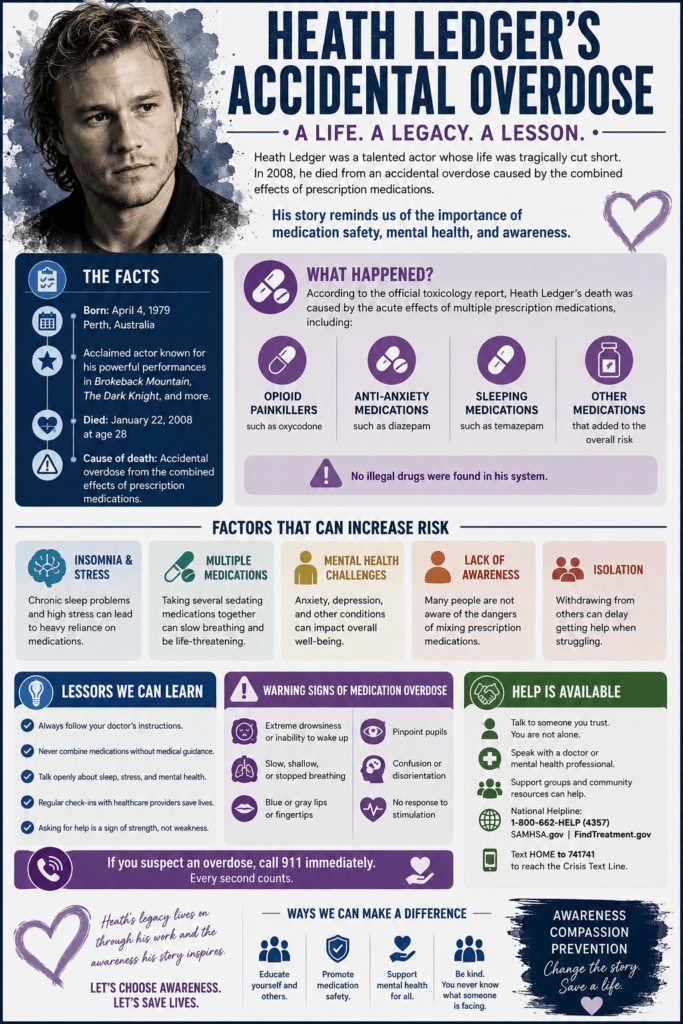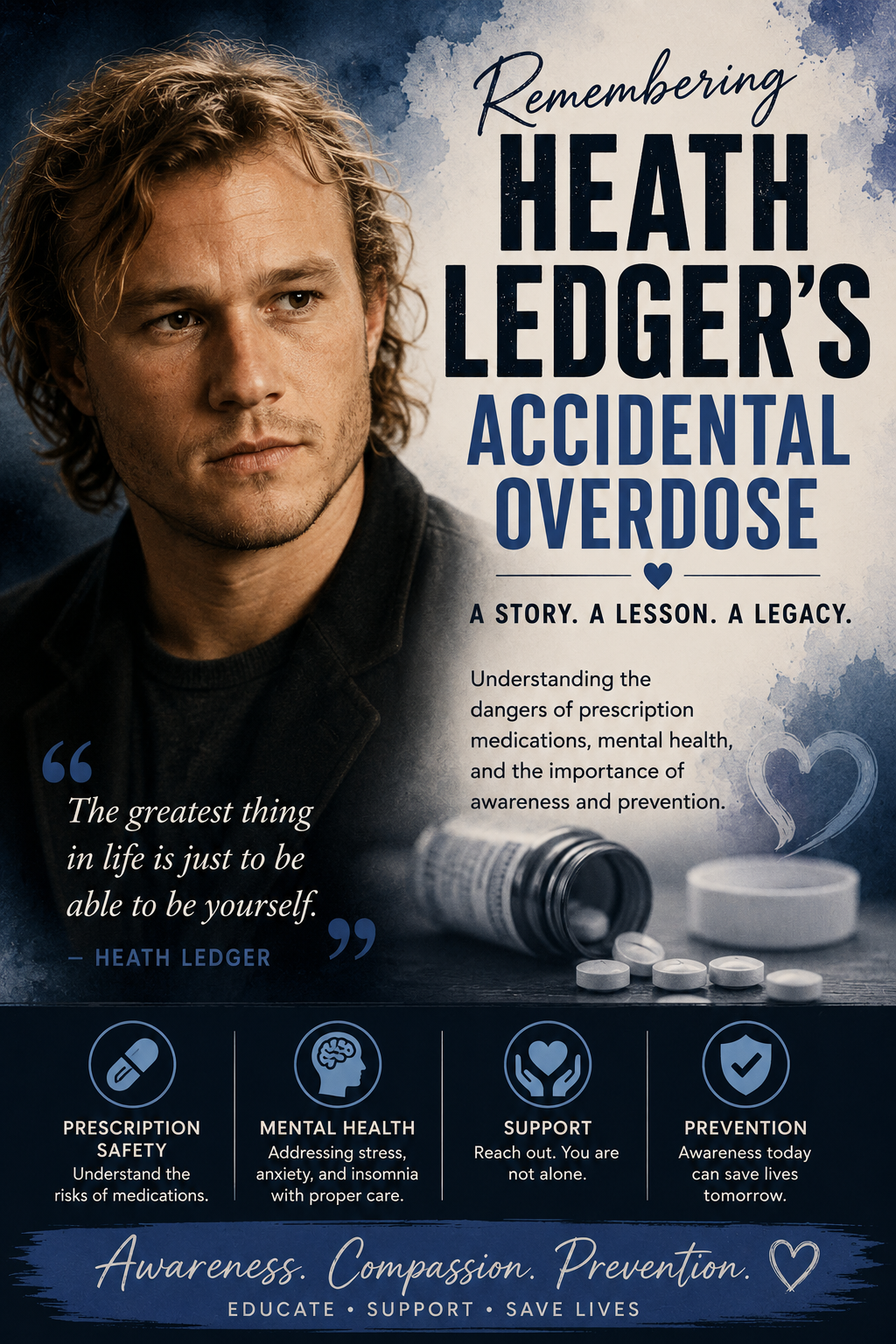
Heath Ledger was a gifted Australian actor whose remarkable performances earned international acclaim, including a posthumous Academy Award for his role as the Joker in The Dark Knight. His unexpected death in 2008 at the age of 28 drew worldwide attention to the dangers of prescription medication interactions. Although his death is often discussed alongside addiction-related tragedies, there is no confirmed evidence that Heath Ledger had a diagnosed substance use disorder (addiction). The official cause of death was ruled an accidental overdose resulting from the combined effects of several prescribed medications, including opioid pain relievers, anti-anxiety medications, and sleeping medications. His story highlights the importance of medication safety, careful prescribing, treatment of insomnia and mental health concerns, and open communication between patients and healthcare providers.
Heath Ledger’s Accidental Overdose: Lessons in Prescription Medication Safety
Heath Ledger was an award-winning Australian actor best known for his unforgettable performances, including his Academy Award-winning role as the Joker in The Dark Knight. His unexpected death in 2008 at the age of 28 brought worldwide attention to the dangers of combining multiple prescription medications. While Heath Ledger’s death is often discussed alongside addiction-related tragedies, it is important to understand that there is no conclusive evidence that he had a diagnosed substance use disorder (addiction). The official investigation determined that he died from an accidental overdose caused by the combined effects of several prescribed medications.
What Happened?
The New York City medical examiner ruled Heath Ledger’s death an accidental intoxication resulting from the combined effects of several prescription medications. These included opioid pain medications, anti-anxiety medications, and sleeping medications, all of which can slow brain activity and breathing.
The medications found included:
- Opioid pain relievers
- Anti-anxiety medications (benzodiazepines)
- Sleeping medications (sedative-hypnotics)
Although each medication may have been prescribed for legitimate medical reasons, taking several central nervous system depressants together can significantly increase the risk of overdose.
Did Heath Ledger Have Addiction?
There is no confirmed medical evidence that Heath Ledger had a diagnosed substance use disorder.
Important points include:
- No official diagnosis of addiction was publicly documented.
- His death was ruled an accidental prescription medication overdose.
- Reports suggested he had been experiencing severe insomnia, exhaustion, and stress.
- He reportedly sought treatment for difficulty sleeping.
- His case demonstrates that accidental overdoses can occur even when medications are prescribed.
For these reasons, it is more accurate to describe Heath Ledger’s death as an accidental medication overdose rather than attributing it directly to addiction.
Risk Factors That May Have Contributed
Several factors may have increased his risk.
- Severe insomnia
- Physical and emotional exhaustion
- High levels of occupational stress
- Multiple prescription medications
- Combining medications that slow breathing
- Possible lack of awareness regarding medication interactions
These factors can increase overdose risk even without substance addiction.
Lessons About Medication Safety
Heath Ledger’s death highlights several important healthcare lessons.
- Always take medications exactly as prescribed.
- Inform every healthcare provider about all medications being taken.
- Avoid combining opioids, benzodiazepines, and sleep medications unless specifically directed and closely monitored.
- Never increase medication doses without medical supervision.
- Discuss non-medication treatments for insomnia when appropriate.
- Review medication interactions with a pharmacist or physician.
- Seek immediate medical attention if excessive drowsiness, slowed breathing, or confusion develops.
Addiction vs. Physical Dependence vs. Accidental Overdose
Understanding the differences is important.
Addiction
- A chronic medical condition characterized by compulsive substance use despite harmful consequences.
- Not confirmed in Heath Ledger’s case.
Physical Dependence
- The body adapts to certain medications after prolonged use.
- Can occur with many prescription medications even when used correctly.
Accidental Overdose
- Occurs when medications suppress breathing or heart function to dangerous levels.
- May result from combining medications, incorrect dosing, or unexpected drug interactions.
- This was the official cause of Heath Ledger’s death.
Warning Signs of Medication Overdose
Individuals taking sedating medications should seek emergency medical care if they experience:
- Extreme sleepiness
- Difficulty waking up
- Slow or stopped breathing
- Blue lips or fingertips
- Pinpoint pupils (with opioids)
- Unresponsiveness
- Loss of consciousness
These symptoms require immediate emergency treatment.
Prevention Strategies
Healthcare providers and patients can reduce overdose risk by:
- Keeping an updated medication list.
- Using one pharmacy whenever possible.
- Avoiding alcohol while taking sedating medications.
- Never sharing prescription medications.
- Scheduling regular medication reviews.
- Treating insomnia with evidence-based approaches, including cognitive behavioral therapy for insomnia (CBT-I) when appropriate.
- Asking questions whenever medication instructions are unclear.
Legacy
Although Heath Ledger’s death is frequently mentioned in discussions about addiction, his story is more accurately viewed as a reminder of the dangers of prescription medication interactions. His tragic loss demonstrates that even medications prescribed for legitimate medical conditions can become life-threatening when combined improperly.
Conclusion
Heath Ledger’s accidental overdose serves as an important public health lesson about medication safety rather than a confirmed case of addiction. His death underscores the need for careful prescribing, patient education, and open communication among healthcare providers. By understanding the risks of combining sedating medications, recognizing overdose warning signs, and seeking help for insomnia, stress, pain, or mental health concerns, individuals and families can reduce the risk of similar tragedies. His legacy continues to encourage greater awareness of medication safety, compassionate healthcare, and the
Self-Management Strategies to Understand Heath Ledger’s Accidental Overdose
Heath Ledger’s death is often discussed in conversations about addiction and medication safety. However, it is important to recognize that there is no confirmed evidence that he had a diagnosed substance use disorder (addiction). The official cause of death was an accidental overdose from the combined effects of multiple prescription medications, including opioid pain relievers, anti-anxiety medications, and sleeping medications. His story serves as a powerful reminder of the importance of medication safety, mental health care, and seeking professional guidance when dealing with stress, insomnia, or pain.
Learn About Medication Safety
Understanding how prescription medications work is one of the most effective ways to prevent accidental overdose.
- Learn the purpose and possible side effects of every medication you take.
- Read medication labels carefully.
- Ask your healthcare provider or pharmacist about potential drug interactions.
- Understand that combining sedating medications can increase the risk of overdose.
Take Medications Exactly as Prescribed
Prescription medications should only be used according to your healthcare provider’s instructions.
- Never increase your dose without medical approval.
- Do not take medications more often than prescribed.
- Avoid taking someone else’s prescription medication.
- Follow directions regarding food, alcohol, and timing.
Keep an Updated Medication List
Maintaining an accurate medication list helps prevent dangerous interactions.
- Include prescription medications.
- List over-the-counter medicines.
- Include vitamins and herbal supplements.
- Share the list with every healthcare provider you see.
Use One Pharmacy Whenever Possible
Filling prescriptions at one pharmacy allows pharmacists to identify potentially dangerous medication combinations.
- Ask your pharmacist to review all medications for interactions.
- Inform them about any new prescriptions or supplements.
Seek Help for Sleep Problems Early
Persistent insomnia should be evaluated by a healthcare professional rather than managed by combining multiple sedating medications.
Healthy sleep habits include:
- Maintaining a consistent bedtime.
- Limiting caffeine late in the day.
- Reducing screen time before bed.
- Creating a quiet, dark sleeping environment.
- Asking about cognitive behavioral therapy for insomnia (CBT-I), an evidence-based treatment for chronic insomnia.
Manage Stress in Healthy Ways
Stress can affect both physical and emotional health.
Healthy coping strategies include:
- Regular physical activity.
- Deep breathing exercises.
- Mindfulness or meditation.
- Journaling.
- Spending time with supportive family and friends.
- Pursuing enjoyable hobbies.
- Practicing relaxation techniques.
Prioritize Mental Health
Emotional well-being is closely connected to physical health.
- Recognize symptoms of anxiety or depression.
- Seek counseling if emotional distress becomes overwhelming.
- Attend regular mental health appointments if recommended.
- Remember that asking for help is a sign of strength.
Avoid Mixing Alcohol with Sedating Medications
Alcohol increases the effects of many medications that slow the brain and breathing.
Avoid combining alcohol with:
- Opioid pain medications.
- Benzodiazepines.
- Sleeping medications.
- Other sedative medications unless specifically approved by your healthcare provider.
Recognize Warning Signs of Overdose
Knowing the symptoms of an overdose can save lives.
Seek emergency medical help immediately if someone experiences:
- Extreme drowsiness.
- Difficulty waking up.
- Slow or stopped breathing.
- Blue lips or fingertips.
- Pinpoint pupils (with opioids).
- Loss of consciousness.
- Unresponsiveness.
Attend Regular Medical Follow-Up
Routine medical visits allow healthcare providers to monitor medication effectiveness and safety.
During appointments:
- Discuss new symptoms.
- Report side effects promptly.
- Ask whether medications are still necessary.
- Review safer treatment alternatives when appropriate.
Build a Healthy Support Network
Supportive relationships encourage healthier decision-making.
Consider:
- Talking openly with trusted family members.
- Maintaining close friendships.
- Joining support groups when appropriate.
- Seeking guidance from healthcare professionals during stressful periods.
Understand the Difference Between Addiction and Accidental Overdose
Understanding these terms helps reduce misconceptions.
- Addiction is a chronic medical condition characterized by compulsive substance use despite harmful consequences.
- Physical dependence can occur with some medications even when taken correctly.
- Accidental overdose can happen when medications interact in ways that dangerously suppress breathing or consciousness, even without a diagnosis of addiction.
Recognizing these differences promotes accurate understanding and reduces stigma.
Focus on Prevention Rather Than Stigma
Heath Ledger’s death highlights the importance of prevention, education, and safe medication practices rather than assumptions about addiction.
- Learn about medication interactions.
- Ask questions before starting new medications.
- Seek professional help for sleep disorders, pain, or emotional distress.
- Encourage open conversations about mental health and medication safety.
Conclusion
Heath Ledger’s tragic death reminds us that prescription medications, while beneficial when used appropriately, can become dangerous when combined or taken improperly. Although his death was officially ruled an accidental overdose rather than a confirmed case of addiction, his story emphasizes the importance of medication safety, early treatment for insomnia and mental health concerns, and open communication with healthcare providers. Through education, responsible medication use, healthy coping strategies, and regular medical follow-up, individuals can reduce the risk of accidental overdose and protect both their physical and emotional well-being.
Family Support Strategies to Understand Heath Ledger’s Accidental Overdose
Heath Ledger’s death is frequently discussed in conversations about addiction and prescription medication safety. However, it is important to recognize that there is no confirmed evidence that he had a diagnosed substance use disorder (addiction). The official cause of death was an accidental overdose resulting from the combined effects of multiple prescription medications, including opioid pain relievers, anti-anxiety medications, and sleeping medications. His story reminds families that medication safety, mental health support, and open communication are essential in preventing accidental overdoses and promoting overall well-being.
Learn About Prescription Medication Safety
Families should educate themselves about the benefits and risks of prescription medications.
- Understand how opioids, benzodiazepines, and sleep medications affect the brain and breathing.
- Learn about possible drug interactions and side effects.
- Encourage loved ones to follow medication instructions exactly as prescribed.
- Recognize that combining certain medications can increase the risk of accidental overdose.
Encourage Open and Honest Communication
A supportive home environment makes it easier for loved ones to discuss health concerns.
- Talk openly about stress, insomnia, chronic pain, anxiety, or depression.
- Encourage honest conversations about medication use without judgment.
- Listen with empathy and avoid criticism or blame.
- Help loved ones feel comfortable asking for help when they are struggling.
Recognize Early Warning Signs
Families can often identify changes before a crisis develops.
Watch for signs such as:
- Persistent insomnia
- Extreme fatigue
- Increased stress or emotional distress
- Confusion or excessive drowsiness
- Taking medications differently than prescribed
- Mood or personality changes
- Withdrawal from family or friends
- Difficulty managing daily responsibilities
Recognizing these warning signs early allows families to encourage timely medical evaluation.
Support Professional Medical Care
Families can play an important role in helping loved ones receive appropriate treatment.
- Encourage regular appointments with healthcare providers.
- Assist with scheduling medical visits when needed.
- Encourage medication reviews to identify potentially dangerous combinations.
- Support referrals to mental health professionals for stress, anxiety, or sleep disorders.
Promote Healthy Sleep Habits
Since insomnia was reportedly one of Heath Ledger’s health concerns, families can encourage healthy sleep practices.
Support healthy sleep by:
- Encouraging consistent bedtime routines.
- Limiting caffeine and alcohol before bedtime.
- Reducing evening screen time.
- Creating a quiet, comfortable sleep environment.
- Encouraging medical evaluation if sleep problems persist.
Encourage Healthy Stress Management
Chronic stress can affect both physical and emotional health.
Families can encourage:
- Regular exercise
- Relaxation techniques
- Mindfulness or meditation
- Spending time outdoors
- Creative hobbies
- Family activities that reduce stress
- Maintaining a healthy work-life balance
Help Organize Medications Safely
Medication management can reduce the risk of accidental overdose.
Families can:
- Encourage using one pharmacy whenever possible.
- Help maintain an updated medication list.
- Remind loved ones to inform all healthcare providers about every medication they take.
- Encourage safe storage of medications.
- Avoid sharing prescription medications with others.
Know the Signs of Overdose
Family members should recognize symptoms that require immediate emergency care.
Seek emergency medical assistance if someone experiences:
- Difficulty waking up
- Slow or stopped breathing
- Blue lips or fingertips
- Extreme sleepiness
- Loss of consciousness
- Unresponsiveness
- Pinpoint pupils (with opioid involvement)
Prompt recognition and emergency response can save lives.
Reduce Stigma Around Mental Health
Families should understand that seeking help for emotional struggles is a sign of strength.
- Normalize conversations about anxiety, depression, and insomnia.
- Encourage counseling when emotional stress becomes overwhelming.
- Support treatment plans without judgment.
- Promote emotional well-being as part of overall health.
Build a Strong Support Network
Recovery and wellness improve when individuals feel supported.
Families can encourage connections with:
- Trusted friends
- Extended family
- Healthcare providers
- Mental health professionals
- Faith communities when appropriate
- Peer support organizations
A strong support system reduces isolation and encourages healthier coping strategies.
Understand the Difference Between Addiction and Accidental Overdose
Understanding these differences helps reduce misconceptions.
- Addiction involves compulsive substance use despite harmful consequences.
- Physical dependence may occur with certain medications even when they are taken correctly.
- Accidental overdose can result from combining medications that suppress breathing or consciousness, even in the absence of a diagnosed addiction.
Recognizing these distinctions encourages compassionate, evidence-based discussions.
Focus on Prevention
The most important lesson from Heath Ledger’s death is the importance of preventing medication-related harm.
Families can help by:
- Encouraging medication safety.
- Supporting treatment for insomnia, pain, or mental health concerns.
- Asking healthcare providers questions about medication interactions.
- Promoting healthy coping skills instead of self-managing symptoms with multiple sedating medications.
- Encouraging regular follow-up with healthcare professionals.
Conclusion
Heath Ledger’s death serves as a powerful reminder of the importance of medication safety, mental health care, and family support. While his death was officially ruled an accidental overdose rather than a confirmed case of addiction, his story highlights how multiple prescription medications, combined with stress and sleep difficulties, can create life-threatening risks. Families can help protect their loved ones by encouraging open communication, recognizing early warning signs, supporting professional medical care, promoting healthy coping strategies, and understanding the dangers of combining sedating medications. Through education, compassion, and proactive support, families can play a vital role in preventing accidental overdoses and fostering long-term health and well-being.
Community Resource Strategies to Understand Heath Ledger’s Accidental Overdose
Heath Ledger’s death is often referenced in discussions about addiction, prescription medication safety, and mental health. However, it is important to understand that there is no confirmed evidence that Heath Ledger had a diagnosed substance use disorder (addiction). The official cause of death was an accidental overdose due to the combined effects of multiple prescription medications, including opioid pain relievers, anti-anxiety medications, and sleeping medications. His death highlights the need for greater public awareness of medication safety, mental health care, and overdose prevention. Communities play a critical role in providing education, healthcare resources, and support services that help prevent similar tragedies.
Increase Public Education on Medication Safety
Community organizations can provide educational programs about the safe use of prescription medications.
These programs should teach:
- The risks of combining opioids, benzodiazepines, and sleeping medications.
- The importance of following prescription instructions.
- How medication interactions can increase overdose risk.
- Safe medication storage and disposal practices.
Educated communities are better prepared to prevent accidental overdoses.
Expand Access to Mental Health Services
Untreated mental health conditions and chronic insomnia can increase the risk of medication misuse and accidental overdose.
Communities should support access to:
- Licensed mental health counselors.
- Psychologists and psychiatrists.
- Sleep medicine specialists.
- Crisis intervention services.
- Integrated behavioral health programs within primary care clinics.
Early treatment can reduce reliance on multiple sedating medications.
Improve Access to Healthcare Providers
Routine medical care allows healthcare professionals to monitor medication safety.
Communities should promote:
- Primary care services.
- Pain management clinics.
- Behavioral health specialists.
- Medication management programs.
- Regular medication reviews by physicians and pharmacists.
These services help identify potentially dangerous medication combinations before problems occur.
Promote Pharmacist Medication Reviews
Pharmacists are valuable members of the healthcare team.
Community pharmacies can:
- Review all prescription medications for interactions.
- Educate patients about side effects.
- Explain proper medication use.
- Encourage patients to ask questions before taking new medications.
- Identify duplicate therapies or unsafe medication combinations.
Medication counseling can prevent many accidental overdoses.
Support Sleep Health Programs
Because insomnia was reportedly one of Heath Ledger’s health concerns, communities can expand resources that promote healthy sleep.
Examples include:
- Sleep education workshops.
- Cognitive behavioral therapy for insomnia (CBT-I) programs.
- Sleep disorder screening clinics.
- Public education on healthy sleep habits.
- Referrals to sleep medicine specialists when needed.
Treating insomnia safely may reduce dependence on sedating medications.
Promote Stress Management Resources
Chronic stress affects both physical and emotional health.
Communities can provide:
- Wellness programs.
- Mindfulness and meditation classes.
- Exercise programs.
- Recreation centers.
- Arts and creative therapy opportunities.
- Employee assistance programs.
- Community support groups.
Healthy coping strategies improve overall well-being and reduce reliance on medications.
Increase Overdose Prevention Education
Although Heath Ledger’s death involved prescription medications, overdose prevention education remains essential.
Communities should teach:
- Warning signs of overdose.
- When to call emergency services.
- The importance of prompt medical intervention.
- Safe medication practices.
- Responsible prescribing and medication monitoring.
Knowledge saves lives.
Encourage Responsible Prescribing Practices
Healthcare systems can strengthen patient safety by promoting evidence-based prescribing.
Strategies include:
- Regular medication reconciliation.
- Reviewing all medications before adding new prescriptions.
- Prescribing the lowest effective dose when appropriate.
- Monitoring patients taking multiple sedating medications.
- Coordinating care among healthcare providers.
These practices reduce medication-related risks.
Support Family Education Programs
Families often recognize changes before healthcare professionals do.
Community programs can teach families:
- Medication safety.
- Signs of emotional distress.
- Healthy communication skills.
- How to encourage professional care.
- Recognition of overdose symptoms.
- Available mental health resources.
Well-informed families are better equipped to support loved ones.
Reduce Stigma Around Mental Health
Communities should promote open conversations about emotional health and treatment.
Public awareness campaigns can:
- Normalize seeking help for anxiety, depression, and insomnia.
- Reduce misconceptions about prescription medication use.
- Encourage early treatment.
- Highlight stories of recovery and resilience.
- Promote compassion rather than judgment.
Reducing stigma encourages individuals to seek help before crises occur.
Strengthen Collaboration Among Healthcare Professionals
Patient safety improves when healthcare providers communicate effectively.
Communities should encourage collaboration among:
- Physicians.
- Pharmacists.
- Mental health professionals.
- Sleep specialists.
- Pain management providers.
- Emergency medical services.
Team-based care improves medication safety and overall health outcomes.
Promote Community Wellness Programs
Healthy communities support healthy lifestyles.
Examples include:
- Fitness and recreation programs.
- Nutrition education.
- Volunteer opportunities.
- Social support groups.
- Community events that reduce isolation.
- Workplace wellness initiatives.
Strong social connections improve resilience and emotional well-being.
Conclusion
Heath Ledger’s tragic death serves as an important reminder of the dangers associated with combining multiple sedating prescription medications. While his death was officially ruled an accidental overdose rather than a confirmed case of addiction, it underscores the need for greater public education about medication safety, mental health, and overdose prevention. Communities can help prevent similar tragedies by expanding access to healthcare, supporting pharmacist-led medication reviews, promoting responsible prescribing, increasing mental health and sleep resources, reducing stigma, and educating families about overdose risks. Through collaboration among healthcare providers, public health organizations, schools, workplaces, and community leaders, we can create safer environments that promote wellness, prevent medication-related harm, and support individuals in leading healthier lives.
How Heath Ledger’s Story Could Be Managed Using Today’s Treatment Strategies
Heath Ledger is often discussed in conversations about addiction, mental health, and medication safety. However, it is important to note that there is no confirmed evidence that Heath Ledger had a diagnosed substance use disorder (addiction). His death was officially ruled an accidental overdose caused by the combined effects of several prescribed medications, including opioid pain relievers, anti-anxiety medications, and sleeping medications. Therefore, it is more accurate to discuss how today’s comprehensive healthcare strategies might help prevent a similar tragedy rather than assuming a confirmed addiction diagnosis.
Comprehensive Medical Evaluation
Modern care would begin with a thorough assessment by a multidisciplinary healthcare team.
The evaluation would include:
- Complete medical history
- Review of all prescription and over-the-counter medications
- Assessment of sleep problems
- Screening for anxiety, depression, and other mental health conditions
- Evaluation for chronic pain
- Screening for substance misuse if concerns were identified
- Review of lifestyle factors, stress, and occupational demands
Treating the whole person allows clinicians to identify risks before they become life-threatening.
Medication Review and Safety
One of the greatest advances in healthcare is improved medication management.
Today’s healthcare providers would:
- Review every medication for possible interactions.
- Avoid prescribing multiple sedating medications unless absolutely necessary.
- Use the lowest effective doses.
- Monitor for excessive sedation or side effects.
- Reassess whether medications remain necessary over time.
Pharmacists would also play an important role by reviewing prescriptions and identifying potentially dangerous medication combinations.
Treatment for Insomnia
Heath Ledger reportedly struggled with significant insomnia before his death.
Today, treatment would likely emphasize:
- Cognitive Behavioral Therapy for Insomnia (CBT-I)
- Sleep hygiene education
- Stress reduction techniques
- Relaxation therapy
- Evaluation for sleep disorders such as sleep apnea
- Careful, short-term use of sleep medications only when appropriate
Behavioral treatments are often recommended before long-term use of sedative medications.
Mental Health Care
Modern healthcare recognizes the close relationship between emotional well-being and physical health.
Treatment might include:
- Psychological evaluation
- Individual counseling
- Cognitive Behavioral Therapy (CBT)
- Stress management techniques
- Mindfulness-based therapies
- Treatment for anxiety or depression if diagnosed
Addressing emotional health early may reduce the need for multiple sedating medications.
Stress Management
Actors and other public figures often experience significant occupational stress.
Healthy stress-management strategies include:
- Regular exercise
- Meditation
- Yoga
- Deep breathing exercises
- Journaling
- Scheduled time away from work
- Healthy work-life balance
- Building supportive personal relationships
These strategies improve resilience and overall well-being.
Careful Pain Management
If chronic pain were present, today’s treatment would emphasize a multimodal approach.
Options might include:
- Physical therapy
- Non-opioid medications when appropriate
- Exercise therapy
- Heat or cold therapy
- Behavioral approaches to pain management
- Interventional pain procedures when indicated
Reducing reliance on opioids lowers the risk of medication-related complications.
Screening for Substance Use
Although Heath Ledger was not confirmed to have a substance use disorder, modern healthcare routinely screens patients for unhealthy substance use.
If concerns were identified, clinicians could provide:
- Brief intervention
- Addiction medicine consultation
- Individual counseling
- Recovery support services
- Ongoing monitoring
Early identification improves outcomes.
Coordinated Team-Based Care
Today’s healthcare often involves collaboration among multiple professionals.
A care team might include:
- Primary care physician
- Psychiatrist
- Psychologist or therapist
- Sleep medicine specialist
- Pain management specialist
- Pharmacist
- Addiction medicine specialist if indicated
Team-based care improves communication and medication safety.
Family and Social Support
Family involvement can strengthen treatment.
Supportive strategies include:
- Encouraging medical follow-up
- Attending appointments when appropriate
- Learning about medication safety
- Supporting healthy sleep routines
- Helping reduce stress
- Recognizing warning signs of medication complications
Strong social support contributes to better health outcomes.
Overdose Prevention
Modern healthcare places a strong emphasis on preventing medication-related overdoses.
Important strategies include:
- Reviewing all medications at each visit.
- Avoiding unnecessary combinations of sedating drugs.
- Educating patients about medication risks.
- Using prescription drug monitoring programs where appropriate.
- Encouraging patients to promptly report new symptoms or side effects.
These practices have significantly improved medication safety.
Healthy Lifestyle Habits
Overall health influences both physical and emotional well-being.
Modern recommendations include:
- Regular exercise
- Balanced nutrition
- Adequate hydration
- Consistent sleep schedules
- Stress reduction
- Routine preventive healthcare
- Avoiding alcohol or other substances that may interact with prescribed medications
Healthy habits complement medical treatment.
Public Health Lessons
Heath Ledger’s story continues to highlight important healthcare principles:
- Medication interactions can be dangerous, even with prescribed medications.
- Persistent insomnia deserves comprehensive evaluation and treatment.
- Mental health care should be integrated into routine medical care.
- Coordinated communication among healthcare providers improves patient safety.
- Medication safety education can prevent accidental overdoses.
- Seeking help early for sleep problems, stress, or emotional concerns can improve long-term outcomes.
Conclusion
Although Heath Ledger’s death was not officially attributed to a diagnosed addiction, his story provides important lessons about prescription medication safety, mental health, and comprehensive healthcare. If similar circumstances occurred today, evidence-based treatment strategies—including careful medication management, behavioral treatment for insomnia, integrated mental health care, multidisciplinary collaboration, and patient education—might reduce the risk of accidental overdose. While no one can know with certainty what the outcome would have been, Heath Ledger’s legacy underscores the importance of treating the whole person, promoting medication safety, and ensuring that individuals experiencing stress, sleep disturbances, or other health concerns have access to compassionate, coordinated, evidence-based care.
Frequently Asked Questions
Here are some common questions:
1. Who was Heath Ledger?
Heath Ledger was an Australian actor best known for his performances in 10 Things I Hate About You, Brokeback Mountain, and The Dark Knight. He received a posthumous Academy Award for his portrayal of the Joker.
2. What was the official cause of Heath Ledger’s death?
The New York City medical examiner ruled Heath Ledger’s death an accidental overdose caused by the combined effects of several prescription medications. The medications included opioid pain relievers, anti-anxiety medications (benzodiazepines), and sleeping medications, which together can dangerously suppress breathing and central nervous system function.
3. Did Heath Ledger die from addiction?
There is no confirmed evidence that Heath Ledger had a diagnosed substance use disorder (addiction). His death was officially classified as an accidental prescription medication overdose rather than a death directly attributed to addiction.
4. Which medications were involved?
According to the medical examiner, several prescribed medications contributed to his death, including:
- Opioid pain medications
- Benzodiazepines (anti-anxiety medications)
- Sedative-hypnotic sleeping medications
The combination of these medications increased the risk of respiratory depression.
5. Why can combining these medications be dangerous?
Opioids, benzodiazepines, and certain sleep medications all slow activity in the brain and breathing. When taken together, their effects can combine, greatly increasing the risk of excessive sedation, respiratory depression, coma, and accidental overdose.
6. Did Heath Ledger have insomnia?
Reports indicated that Heath Ledger had been experiencing significant insomnia and fatigue before his death. Although insomnia itself is not life-threatening, it should be evaluated and treated safely because it can affect overall health and increase the risk of medication-related complications.
7. Can someone overdose on prescription medications even without addiction?
Yes. An accidental overdose can occur when prescription medications interact in dangerous ways, even if the individual does not have a diagnosed substance use disorder. This is why following prescribing instructions and reviewing medication interactions are so important.
8. What is the difference between addiction and physical dependence?
- Addiction is a chronic medical condition involving compulsive substance use despite harmful consequences.
- Physical dependence occurs when the body adapts to a medication after regular use and may experience withdrawal symptoms if it is stopped abruptly.
- A person may develop physical dependence without having addiction.
9. What are the warning signs of a medication overdose?
Warning signs include:
- Extreme sleepiness
- Difficulty waking up
- Slow or stopped breathing
- Blue lips or fingertips
- Pinpoint pupils (with opioids)
- Confusion
- Loss of consciousness
- Unresponsiveness
These symptoms require immediate emergency medical attention.
10. How can medication-related overdoses be prevented?
Helpful prevention strategies include:
- Taking medications exactly as prescribed.
- Avoiding alcohol while taking sedating medications.
- Never combining medications without medical approval.
- Informing healthcare providers of every medication being taken.
- Using one pharmacy whenever possible.
- Asking a pharmacist to review medication interactions.
11. What should someone do if they have chronic insomnia?
Persistent insomnia should be evaluated by a healthcare professional. Treatment may include:
- Improving sleep habits.
- Treating underlying medical or mental health conditions.
- Cognitive behavioral therapy for insomnia (CBT-I).
- Carefully supervised use of medications when appropriate.
12. How can families help prevent medication-related tragedies?
Families can:
- Encourage open communication about health concerns.
- Learn about medication safety.
- Recognize warning signs of overdose.
- Support regular medical follow-up.
- Encourage healthy stress-management strategies.
- Help loved ones organize and review medications with healthcare professionals.
13. What is the biggest lesson from Heath Ledger’s death?
His death highlights the importance of medication safety, careful prescribing, awareness of drug interactions, and early treatment for sleep disorders and mental health concerns. It also reminds us not to assume every accidental overdose is the result of addiction.
14. Does seeking help for insomnia, stress, or mental health concerns reduce risk?
Yes. Early evaluation and treatment of insomnia, anxiety, depression, chronic pain, and emotional stress can reduce reliance on multiple sedating medications and improve overall health and safety.
15. What message should people take away from Heath Ledger’s story?
Heath Ledger’s legacy is not only his extraordinary talent but also the public health lessons learned from his tragic death. His story reminds us that prescription medications must be used carefully, that mental health and sleep disorders deserve prompt attention, and that open communication with healthcare providers can help prevent accidental overdoses. Through education, medication safety, compassionate support, and evidence-based care, individuals, families, and communities can reduce the risk of similar tragedies and promote healthier lives.
Conclusion
Heath Ledger’s tragic death serves as a powerful reminder that prescription medications, while beneficial when used appropriately, can become life-threatening when combined improperly. Rather than viewing his death solely through the lens of addiction, it is more accurate to recognize it as a medication safety tragedy involving multiple central nervous system depressants. His story emphasizes the need for careful medication management, regular medical follow-up, and early treatment for sleep disorders, stress, and emotional health concerns. By increasing public awareness, promoting responsible prescribing, reducing stigma around seeking help, and encouraging collaboration among patients, families, pharmacists, and healthcare providers, similar accidental overdoses may be prevented. Heath Ledger’s legacy continues to underscore the importance of education, compassion, and evidence-based healthcare in protecting lives.
Video: Heath Ledger’s Overdose: What You Need to Know #heathledger #awareness