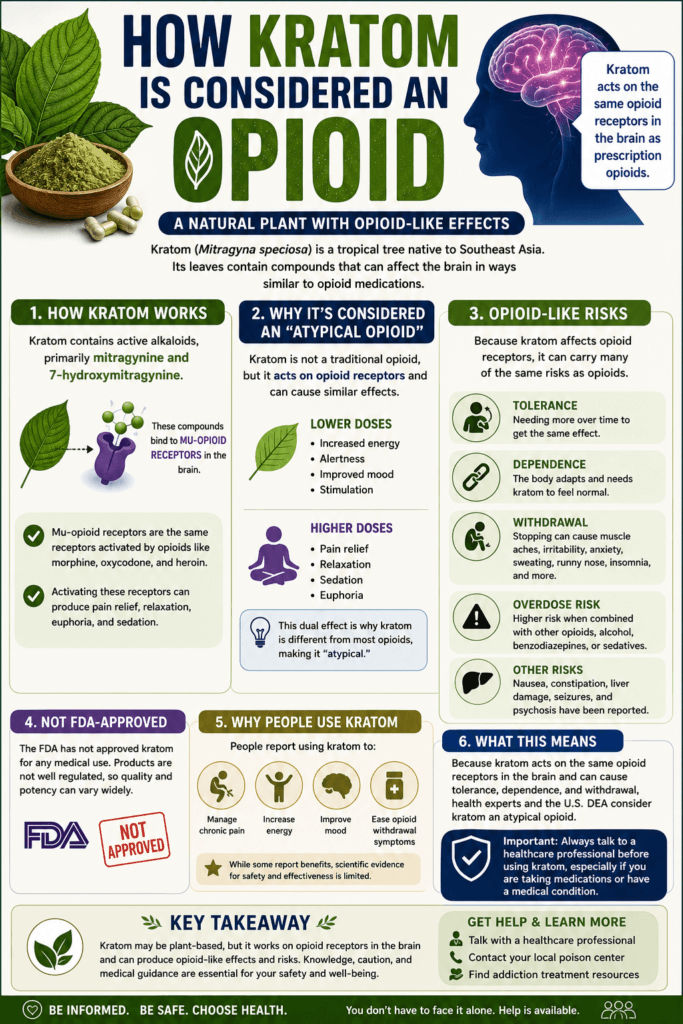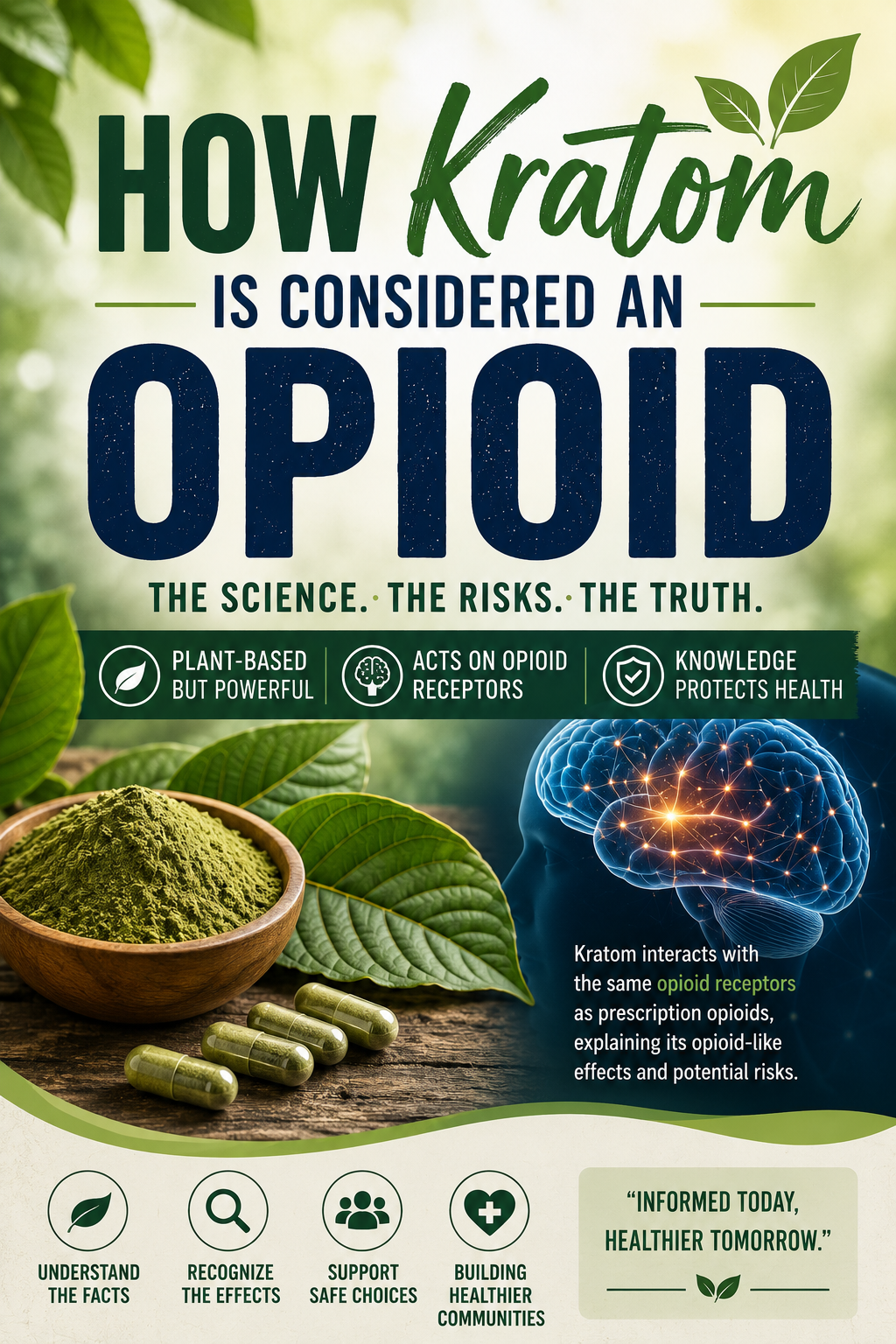
Kratom (Mitragyna speciosa) is a tropical tree native to Southeast Asia whose leaves have traditionally been used for their stimulant and pain-relieving properties. In recent years, kratom has gained popularity in the United States as an herbal product marketed for pain relief, increased energy, and self-management of opioid withdrawal symptoms. Although kratom is not chemically classified as a traditional opioid, its primary active compounds, mitragynine and 7-hydroxymitragynine, activate the brain’s mu-opioid receptors—the same receptors targeted by medications such as morphine and oxycodone. Because of these opioid-like effects, including pain relief, tolerance, dependence, and withdrawal, many addiction medicine specialists consider kratom an atypical opioid. Understanding how kratom works, its potential benefits, and its risks is essential for making informed healthcare decisions and promoting safe, evidence-based treatment.
How Kratom Is Considered an Opioid
Kratom is a tropical tree (Mitragyna speciosa) native to Southeast Asia. Its leaves have traditionally been used for their stimulant and pain-relieving effects. In recent years, kratom has become widely available in the United States as powders, capsules, extracts, and beverages. Although kratom is not chemically classified as a traditional opioid like morphine or heroin, many experts consider it an atypical opioid because its primary active compounds act on the same opioid receptors in the brain.
How Kratom Works
Kratom contains dozens of naturally occurring alkaloids, but the two most studied are mitragynine and 7-hydroxymitragynine. These compounds bind primarily to the mu-opioid receptors, the same receptors activated by prescription opioids such as oxycodone, hydrocodone, and morphine. Activation of these receptors can produce:
- Pain relief (analgesia)
- Relaxation
- Euphoria
- Sedation at higher doses
Because kratom activates opioid receptors, it can produce effects that resemble opioids, although its pharmacology differs from that of traditional opioid medications.
Why It Is Called an “Atypical Opioid”
Researchers often describe kratom as an atypical opioid because it does not behave exactly like conventional opioids. At lower doses, kratom may produce stimulant-like effects, including:
- Increased energy
- Improved alertness
- Greater sociability
At higher doses, however, its effects become more opioid-like, causing:
- Drowsiness
- Pain relief
- Calmness
- Slowed reaction time
This combination of stimulant and opioid-like properties makes kratom unique among psychoactive substances.
Can Kratom Cause Dependence?
Yes. Repeated use of kratom can lead to physical dependence and substance use disorder in some individuals. As tolerance develops, users may need larger amounts to achieve the same effects. When someone stops using kratom after regular use, withdrawal symptoms may occur, including:
- Muscle aches
- Anxiety
- Irritability
- Insomnia
- Sweating
- Nausea
- Restlessness
- Runny nose
Although withdrawal is often described as milder than withdrawal from heroin or prescription opioids, it can still be distressing and may require medical support.
Overdose and Safety Concerns
Kratom has been associated with serious adverse effects, particularly when used in large amounts or combined with other substances such as opioids, alcohol, benzodiazepines, or other sedatives. Potential risks include:
- Excessive sedation
- Respiratory depression (especially with other depressants)
- Seizures
- Liver injury
- Irregular heart rhythms
- Confusion or psychosis in rare cases
Many reported deaths involving kratom have involved multiple substances, making it difficult to determine kratom’s exact role. However, combining kratom with other central nervous system depressants significantly increases the risk of serious harm.
Is Kratom Approved as a Medication?
No. The U.S. Food and Drug Administration has not approved kratom for treating pain, opioid withdrawal, anxiety, or any other medical condition. The agency has also expressed concerns about contamination, inconsistent potency, and unproven medical claims. Because kratom products are largely unregulated, different products may contain varying amounts of active compounds or contaminants.
Why Some People Use Kratom
Some individuals report using kratom to:
- Relieve chronic pain
- Reduce opioid withdrawal symptoms
- Manage anxiety
- Increase energy
- Improve mood
While some people describe perceived benefits, current scientific evidence is insufficient to establish kratom as a safe or effective treatment for these conditions. More high-quality clinical research is needed.
Current Medical Perspective
Most addiction medicine specialists recognize that kratom has opioid-like pharmacologic effects because it activates mu-opioid receptors. Although it differs from traditional opioids in several ways, its ability to produce tolerance, dependence, withdrawal, and opioid-like effects supports its classification as an atypical opioid. Healthcare professionals recommend discussing kratom use openly with patients, especially before surgery or when prescribing medications, because of its potential interactions and health risks.
Conclusion
Kratom occupies a unique position among psychoactive substances. It is not a traditional opioid by chemical structure, but it behaves like an opioid by activating the brain’s opioid receptors. For this reason, many researchers and clinicians describe it as an atypical opioid. While some people use kratom in an attempt to manage pain or opioid withdrawal, it carries important risks, including dependence, withdrawal, adverse effects, and unpredictable product quality. Anyone considering kratom for medical reasons should consult a qualified healthcare professional and rely on evidence-based treatment options whenever possible.
Self-Management Strategies to Understand How Kratom Is Considered an Opioid
Kratom is often marketed as a natural herbal supplement, leading many people to believe it is completely safe. However, research shows that kratom’s primary active compounds—mitragynine and 7-hydroxymitragynine—activate the brain’s mu-opioid receptors, the same receptors targeted by prescription opioids. Although kratom has a different chemical structure than traditional opioids, many addiction specialists consider it an atypical opioid because of its opioid-like effects, including pain relief, tolerance, dependence, and withdrawal. Learning how to manage your own health and make informed decisions is an important part of preventing misuse and maintaining recovery.
Learn the Facts About Kratom
Educate yourself using reliable sources rather than relying on advertisements or social media. Understanding how kratom affects opioid receptors, its potential risks, and the lack of FDA-approved medical uses can help you make informed healthcare decisions.
Recognize That “Natural” Does Not Always Mean Safe
Many natural substances can have powerful effects on the body. Kratom may cause side effects, interact with medications, and lead to physical dependence. Avoid assuming that a product is harmless simply because it comes from a plant.
Use Medications Only Under Medical Guidance
If you are experiencing chronic pain, anxiety, or symptoms of opioid withdrawal, speak with a healthcare professional instead of self-treating with kratom. Evidence-based treatments have been studied for safety and effectiveness and can provide more reliable care.
Monitor Your Reasons for Using Kratom
If you are using or considering kratom, ask yourself why. Are you trying to relieve pain, reduce stress, improve mood, or avoid opioid withdrawal? Identifying the underlying problem allows you and your healthcare provider to develop a safer, more effective treatment plan.
Watch for Signs of Dependence
Be aware of warning signs such as needing larger amounts to achieve the same effect, experiencing cravings, spending excessive time obtaining or using kratom, or developing withdrawal symptoms when stopping. Recognizing these signs early allows you to seek help before the problem becomes more severe.
Avoid Combining Kratom with Other Substances
Using kratom together with opioids, alcohol, benzodiazepines, or other sedating medications can increase the risk of excessive sedation, breathing problems, overdose, and other serious complications. Always tell your healthcare providers about all substances and supplements you use.
Develop Healthy Pain and Stress Management Skills
Instead of relying solely on substances, build healthy coping strategies such as regular exercise, stretching, mindfulness meditation, deep breathing, adequate sleep, balanced nutrition, physical therapy when appropriate, counseling, and relaxation techniques. These approaches can improve both physical and emotional well-being.
Follow an Individualized Recovery Plan
If you have a history of opioid use disorder or another substance use disorder, work closely with your treatment team to follow your recovery plan. Attend counseling, take prescribed medications as directed, participate in peer support groups if appropriate, and communicate openly about cravings or relapse risks.
Keep an Updated Medication List
Maintain a current list of all prescription medications, over-the-counter products, supplements, and herbal remedies, including kratom if you use it. Sharing this information with healthcare providers helps prevent harmful drug interactions and improves the safety of your medical care.
Seek Help Early
If you find it difficult to reduce or stop using kratom, do not wait until the problem worsens. Addiction is a treatable medical condition. Healthcare professionals specializing in addiction medicine can provide assessment, withdrawal management, counseling, and evidence-based treatment options tailored to your needs.
Continue Learning
Research on kratom continues to evolve. Staying informed through trusted medical organizations and discussing new information with your healthcare provider can help you make safe decisions as scientific knowledge grows.
Conclusion
Understanding why kratom is considered an atypical opioid empowers individuals to make informed decisions about their health. Although it is a plant-derived product, kratom acts on the same opioid receptors involved in pain relief and dependence, which means it carries many of the same risks as other opioids. Through education, self-awareness, healthy coping strategies, open communication with healthcare providers, and early intervention when concerns arise, individuals can reduce harm, support recovery, and make choices that promote long-term physical and mental well-being.
Family Support Strategies to Understand How Kratom Is Considered an Opioid
Kratom is often marketed as a natural herbal product, which can lead families to believe it is a safe alternative to prescription opioids. However, its primary active compounds—mitragynine and 7-hydroxymitragynine—activate the brain’s mu-opioid receptors, producing opioid-like effects. Because of its ability to cause tolerance, dependence, and withdrawal, many addiction medicine experts consider kratom an atypical opioid. Families play an important role in helping loved ones understand these risks while providing support without judgment.
Learn About Kratom Together
Family members should educate themselves using reliable medical sources. Understanding how kratom affects the brain, why it is considered an atypical opioid, and its potential health risks helps families make informed decisions and have productive conversations with loved ones.
Encourage Open and Honest Communication
Create a safe environment where family members can discuss kratom use without fear of criticism or punishment. Ask open-ended questions, listen carefully, and focus on understanding why a loved one may be using kratom, whether for pain relief, stress, anxiety, or opioid withdrawal.
Avoid Stigma and Judgment
Treat kratom use as a health concern rather than a moral failing. People may begin using kratom for a variety of reasons, including chronic pain or attempts to manage opioid withdrawal. Compassion and understanding encourage individuals to seek help more readily than blame or shame.
Recognize the Signs of Dependence
Families should learn to recognize warning signs that may indicate problematic kratom use, including:
- Needing larger amounts to achieve the same effects
- Frequent cravings
- Withdrawal symptoms when not using
- Mood changes or irritability
- Declining work or school performance
- Social withdrawal
- Financial or relationship problems related to use
Early recognition allows families to encourage treatment before problems become more severe.
Encourage Professional Medical Care
If a loved one is using kratom regularly or experiencing withdrawal symptoms, encourage an evaluation by a healthcare professional, particularly one experienced in addiction medicine. Evidence-based treatments are available for substance use disorders and can address both physical dependence and underlying medical or mental health conditions.
Support Healthy Pain Management
If chronic pain is the reason for kratom use, families can encourage safer alternatives recommended by healthcare professionals, such as physical therapy, appropriate medications, exercise, cognitive behavioral therapy, relaxation techniques, or other evidence-based pain management strategies.
Promote Healthy Coping Skills
Encourage healthy ways to manage stress and emotional challenges through regular exercise, nutritious meals, quality sleep, mindfulness practices, hobbies, counseling, and supportive social relationships. Healthy coping strategies reduce the likelihood of relying on substances for relief.
Help Reduce Triggers
Families can support recovery by creating a stable and supportive home environment. Reducing unnecessary stress, encouraging healthy routines, and avoiding exposure to substances that may trigger cravings can strengthen long-term recovery.
Participate in Family Counseling
When substance use affects communication or relationships, family therapy can improve understanding, rebuild trust, and teach effective communication and problem-solving skills. Counseling also helps family members learn how to provide support while maintaining healthy boundaries.
Encourage Recovery Support
Support participation in counseling, peer recovery groups, or other recovery programs when appropriate. Families can offer transportation, attend educational sessions, celebrate recovery milestones, and encourage continued engagement in treatment.
Be Prepared for Emergencies
If a loved one uses kratom along with opioids or other sedating substances, the risk of overdose increases. Families should learn the signs of opioid overdose, know when to call emergency services, and understand how naloxone may help reverse opioid overdoses involving opioids, though its effectiveness for kratom-only toxicity is less certain and depends on the situation.
Take Care of Yourself
Supporting someone with a substance use disorder can be emotionally demanding. Family members should also prioritize their own well-being by seeking support groups, counseling, maintaining healthy boundaries, and practicing regular self-care. Healthy caregivers are better equipped to provide consistent support.
Conclusion
Families play a critical role in helping loved ones understand that, although kratom is derived from a plant, it acts on the same opioid receptors as traditional opioids and carries risks of dependence, withdrawal, and other adverse effects. Through education, open communication, compassionate support, healthy boundaries, and timely access to professional care, families can help reduce stigma, encourage informed decision-making, and support long-term recovery and overall well-being.
Community Resource Strategies to Understand How Kratom Is Considered an Opioid
Kratom (Mitragyna speciosa) is a plant that has gained popularity as a natural product for pain relief, increased energy, and self-treatment of opioid withdrawal. However, its primary active compounds—mitragynine and 7-hydroxymitragynine—activate the brain’s mu-opioid receptors, producing opioid-like effects. Because kratom can cause tolerance, dependence, and withdrawal, many addiction medicine professionals consider it an atypical opioid. Community resources can play an essential role in educating the public, promoting safe practices, and connecting individuals with evidence-based treatment when needed.
Utilize Healthcare Professionals
Primary care providers, addiction medicine specialists, pharmacists, and behavioral health professionals can educate individuals about how kratom affects the brain, its potential risks, possible drug interactions, and safer evidence-based treatment options for pain or opioid use disorder. Seeking medical advice before using kratom can help prevent harmful outcomes.
Attend Community Education Programs
Hospitals, health departments, universities, and nonprofit organizations often offer educational seminars on substance use, opioid safety, and overdose prevention. These programs help individuals understand why kratom is considered an atypical opioid and provide accurate, science-based information that counters misinformation.
Access Substance Use Treatment Services
Community addiction treatment programs provide comprehensive evaluations, counseling, medication for opioid use disorder (MOUD) when appropriate, relapse prevention, and recovery support. Individuals experiencing kratom dependence or withdrawal can benefit from professional assessment and individualized treatment planning.
Participate in Peer Support Groups
Peer recovery organizations provide opportunities to connect with others who have experienced substance use challenges. Sharing experiences, learning healthy coping strategies, and building supportive relationships can strengthen long-term recovery and reduce feelings of isolation.
Use Poison Centers for Immediate Guidance
If someone experiences unexpected reactions, overdose symptoms, or accidental ingestion of kratom, poison centers can provide immediate expert guidance while helping determine whether emergency medical care is needed. Prompt consultation may improve outcomes in potentially serious situations.
Learn About Overdose Prevention
Community organizations frequently provide education on recognizing opioid overdose symptoms, responding to emergencies, and obtaining naloxone. Although naloxone is primarily used to reverse opioid overdoses, it may be administered when opioid toxicity is suspected, especially if kratom has been taken with other opioids or central nervous system depressants. Emergency medical services should always be contacted when an overdose is suspected.
Utilize Mental Health Services
Many individuals use kratom to cope with anxiety, depression, trauma, or chronic stress. Community mental health centers, licensed counselors, psychologists, and psychiatrists can provide evidence-based therapies and treatment plans that address the underlying causes of substance use.
Encourage Responsible Medication Education
Pharmacists are valuable community resources for reviewing medications, supplements, and herbal products. They can identify potential interactions between kratom and prescription medications, explain possible side effects, and encourage safe medication practices.
Support Workplace and School Wellness Programs
Employers, colleges, and universities often provide employee assistance programs (EAPs), student counseling centers, wellness workshops, and substance use education. These services help individuals manage stress, improve mental health, and access treatment before problems become more severe.
Promote Public Health Awareness
Community organizations can reduce misinformation by distributing evidence-based educational materials about kratom, emphasizing that “natural” does not always mean safe. Public awareness campaigns encourage informed decision-making and reduce stigma surrounding substance use disorders.
Strengthen Community Partnerships
Healthcare providers, schools, law enforcement, recovery organizations, faith-based groups, and public health agencies can collaborate to improve education, prevention, and treatment efforts. Working together creates a stronger support system for individuals and families affected by substance use.
Encourage Ongoing Research and Education
Because research on kratom continues to evolve, communities should support ongoing scientific studies and regularly update educational materials to reflect current evidence. Staying informed allows healthcare professionals and the public to make decisions based on the latest medical knowledge.
Conclusion
Community resources are essential for helping individuals understand why kratom is considered an atypical opioid and for reducing the risks associated with its use. Through healthcare services, addiction treatment programs, peer recovery groups, poison centers, mental health resources, public education, and collaborative community partnerships, individuals can access reliable information and evidence-based care. These combined efforts promote informed decision-making, reduce stigma, encourage early intervention, and support healthier communities.
Frequently Asked Questions
Here are some common questions:
1. What is kratom?
Kratom (Mitragyna speciosa) is a tropical tree native to Southeast Asia. Its leaves contain naturally occurring compounds that can produce stimulant effects at lower doses and opioid-like effects at higher doses. Kratom is commonly sold as powders, capsules, extracts, teas, and beverages.
2. Why is kratom considered an opioid?
Kratom is often described as an atypical opioid because its primary active compounds, mitragynine and 7-hydroxymitragynine, activate the brain’s mu-opioid receptors. These are the same receptors targeted by opioids such as morphine, oxycodone, and heroin, producing similar effects like pain relief and, in some cases, euphoria.
3. Is kratom chemically the same as prescription opioids?
No. Kratom has a different chemical structure than traditional opioids. However, because it acts on many of the same opioid receptors in the brain, it can produce opioid-like effects and carries some of the same risks.
4. What are the effects of kratom?
The effects often depend on the dose:
- Lower doses: Increased energy, alertness, and sociability.
- Higher doses: Pain relief, relaxation, sedation, and euphoria.
Individual responses can vary depending on the person, the product used, and the amount taken.
5. Can kratom cause addiction?
Yes. Regular or heavy use can lead to tolerance, physical dependence, and, in some individuals, substance use disorder. The risk may increase with higher doses, frequent use, or prolonged use.
6. What are the symptoms of kratom withdrawal?
Withdrawal symptoms may include:
- Anxiety
- Irritability
- Muscle aches
- Sweating
- Runny nose
- Nausea
- Insomnia
- Restlessness
- Cravings
The severity varies among individuals and may depend on the duration and amount of use.
7. Is kratom safer than prescription opioids?
Not necessarily. While kratom differs from traditional opioids, it is not risk-free. It can cause side effects, dependence, and potentially serious health problems. The safety of kratom products is also difficult to determine because their potency and purity can vary significantly.
8. Can someone overdose on kratom?
Serious medical emergencies involving kratom have been reported, particularly when it is combined with opioids, alcohol, benzodiazepines, or other sedating substances. Symptoms can include severe drowsiness, slowed breathing, seizures, or loss of consciousness. If an overdose is suspected, call emergency services immediately.
9. Is kratom approved by the FDA for medical treatment?
No. The U.S. Food and Drug Administration (FDA) has not approved kratom to treat pain, opioid withdrawal, anxiety, depression, or any other medical condition. More high-quality clinical research is needed to determine its safety and effectiveness.
10. Why do some people use kratom?
Some individuals report using kratom to:
- Manage chronic pain
- Reduce opioid withdrawal symptoms
- Improve mood
- Increase energy
- Reduce anxiety
Although some people describe perceived benefits, these uses have not been established as safe or effective through FDA approval.
11. Can kratom interact with other medications?
Yes. Kratom may interact with prescription medications, over-the-counter drugs, alcohol, and other supplements. Combining kratom with other substances—especially sedatives or opioids—can increase the risk of serious side effects. Always inform your healthcare provider about any supplements or herbal products you are taking.
12. Should I tell my healthcare provider if I use kratom?
Yes. It is important to tell your healthcare provider about kratom use, especially before surgery, when starting new medications, or if you have liver disease, heart disease, or other medical conditions. This information helps your provider make safer treatment decisions.
13. How can someone safely stop using kratom?
People who have used kratom regularly should speak with a healthcare professional before stopping, particularly if they have developed dependence. A medical evaluation can help manage withdrawal symptoms and determine whether additional treatment or counseling is appropriate.
14. What treatments are available if someone becomes dependent on kratom?
Treatment may include:
- Medical evaluation
- Supervised withdrawal management when appropriate
- Behavioral therapies such as cognitive behavioral therapy (CBT)
- Individual or group counseling
- Peer recovery support
- Treatment of underlying mental health or chronic pain conditions
Treatment is individualized based on each person’s needs.
15. What is the most important thing to know about kratom?
The most important point is that kratom is not simply a harmless herbal supplement. Although it comes from a plant, its active compounds affect the same opioid receptors involved in pain relief and dependence. This is why many addiction medicine experts consider kratom an atypical opioid. Understanding its potential benefits, limitations, and risks allows individuals to make informed decisions and seek evidence-based medical care when needed.
Conclusion
Kratom occupies a unique place among psychoactive substances because it is plant-derived yet produces many opioid-like effects by acting on the brain’s opioid receptors. While some individuals use kratom in an attempt to manage chronic pain or opioid withdrawal, it is important to recognize that it also carries risks of dependence, withdrawal, adverse effects, and unpredictable product quality. Ongoing research continues to improve our understanding of kratom’s safety and potential medical uses, but current evidence supports caution when using it. By relying on accurate medical information, consulting healthcare professionals, and choosing evidence-based treatments when appropriate, individuals and families can make informed decisions that protect health, reduce the risk of substance use disorders, and support long-term recovery and well-being.
Video: Kratom’s Hidden Opioid Connection #kratom