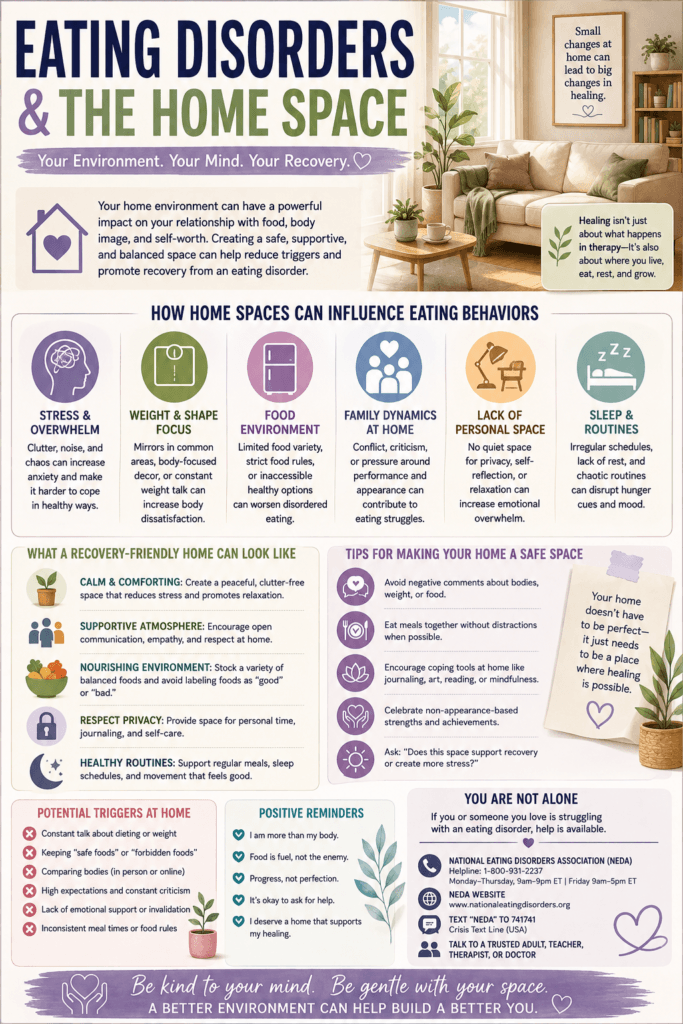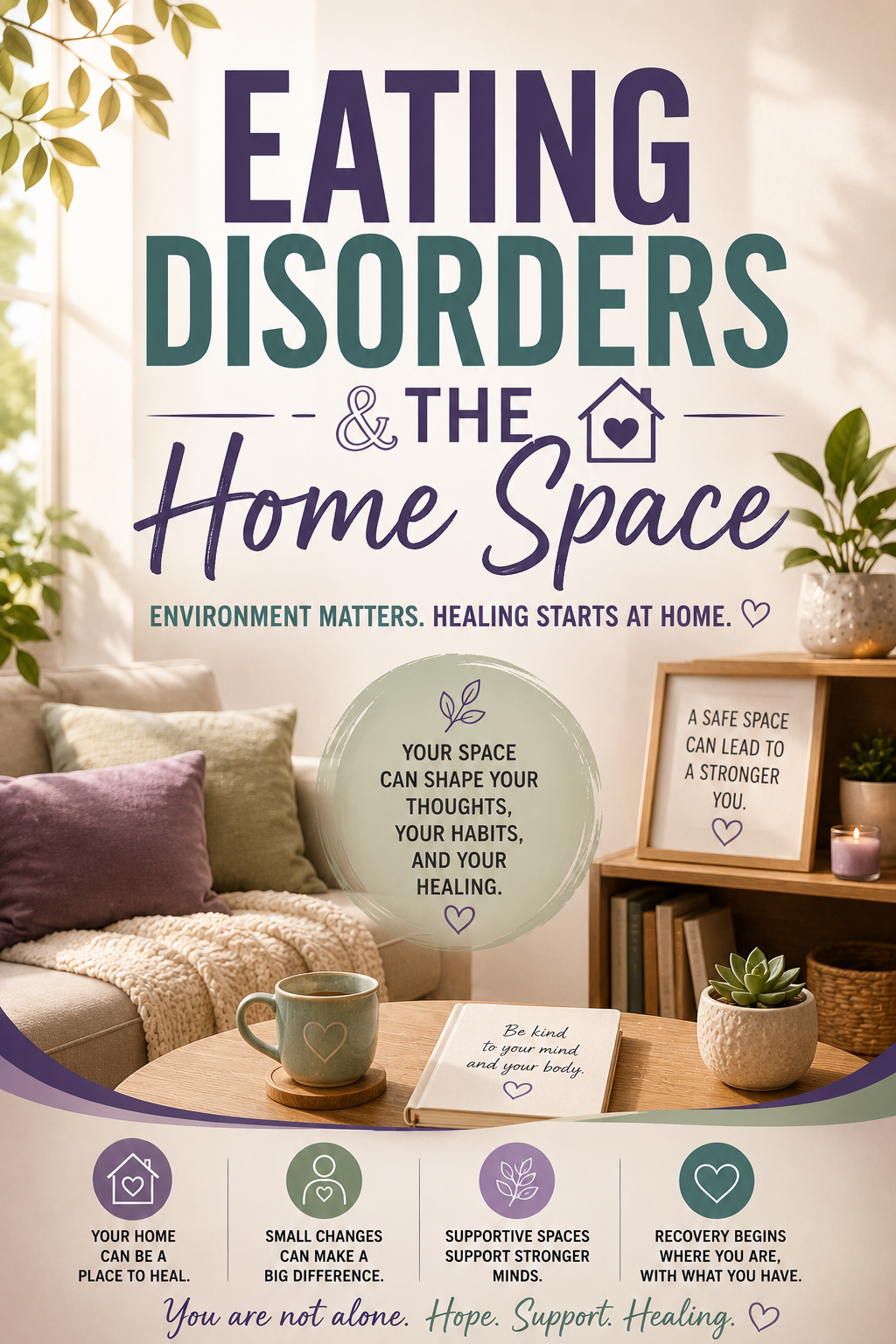
The environment you live in can affect much more than your sense of comfort; it may also influence emotional well-being, daily habits, and your relationship with food. Although eating disorders are often connected to genetics, body image, stress, and psychological factors, a person’s home surroundings may also shape eating behaviors. Family interactions, mealtime routines, food availability, privacy, household stress, clutter, and attitudes toward weight and eating can all influence how someone experiences food and body image. For people struggling with disordered eating, recognizing environmental stressors and adjusting everyday routines may help reduce triggers and create a healthier, more supportive setting for recovery.
How Your Living Space Connects to Food and Mood
Eating disorders, like anorexia, bulimia, and binge eating disorder, are serious medical conditions with roots that run deep. While genetics and trauma play roles, the environment does too. A cluttered, stressful, or isolating home can amplify anxious thoughts around food. On the flip side, supportive surroundings can help shape more positive behaviors.
Many people don’t realize that things like lighting, colors, and even sound levels in a kitchen or dining area can trigger certain habits. For example, living in a space with harsh lights or constant noise could lead to eating quickly, mindlessly, or even skipping meals. A calm, organized environment tends to support slower, more mindful eating, which is really important when you’re trying to rebuild a healthy routine.
Research shows that those experiencing food-related stress may use their physical space to self-isolate. If a person regularly eats alone in their room, that pattern can strengthen negative thinking and avoidance. Refresher: NEDA reports that nearly 30 million Americans will face an eating disorder in their lifetime, and the environment, though less discussed, is a piece of that puzzle.
Signs Your Environment Might Be Hurting Your Eating Habits
The idea that “home is a sanctuary” is great, but not everyone feels that way. Spotting connections between your space and eating behaviors is a helpful step. Some signals that your living space could be nudging you toward unhealthy patterns include:
- Frequent Eating Alone: Regular meals in bedrooms or isolated spots can reinforce feelings of secrecy, shame, or routine bingeing.
- Chaotic or Cluttered Kitchens: Disorganization might make it harder to prepare meals, leading to skipped meals, grazing, or reliance on ultra-processed snacks.
- Restricted Food Zones: If certain foods are “banned” from the main area or hidden, it can fuel feelings of guilt or make binging more likely when you do have access to them.
- Stressful Dining Atmosphere: Loud noises, uncomfortable lighting, or frequent arguments during meals often trigger emotional eating or appetite loss.
- Lack of Routine: Inconsistent meal times and eating on the go are linked to impulsive eating and body discomfort.
How to Make Your Home a Friendlier Place for Healthy Eating
Sometimes it just takes a few small tweaks to switch the vibe at home from stressful to soothing. Here are some down-to-earth ideas based on my own experience and solid advice from therapists and registered dietitians:
- Set Up a Dedicated Eating Space: Try to reserve a specific spot for meals, even if it’s a small table in a shared apartment. This encourages mindful eating, rather than zoning out with food in hand.
- Prioritize Comfort and Calm: Warm, soft lighting, calming music, and minimizing screen time at mealtimes support a slower, more satisfying experience.
- Declutter the Kitchen: An organized fridge and pantry make it simpler to see healthy options. Having cooking tools handy encourages real food prep, even for a quick snack.
- Add a Personal Touch: Display small plants, favorite photos, or cheerful mugs. These little things lift the mood, which makes supportive change feel easier.
- Nudge Routine in a Gentle Way: Placing a clock in the kitchen or keeping a weekly meal board can gently remind you of regular mealtimes without becoming strict or stressful.
I’ve worked with folks who noticed that simply eating at a decorated table instead of standing at the counter made them feel more grounded and less rushed. The point isn’t perfection; it’s creating small pockets of peace and consistency.
Common Environmental Triggers and How to Tackle Them
- Barricaded or Locked Food: Storing treats in hard-to-reach places might seem helpful, but it can fuel preoccupation and sneaky eating. Try keeping all foods visible and giving yourself permission to enjoy them in a relaxed setting.
- Busy Family, Stressful Meals: Arguments or high-energy situations can disrupt anyone’s appetite, especially for those sensitive to food anxiety. If family meals are tricky, carving out occasional solo meals (in a peaceful spot) can help reset your mindset.
- Lack of Privacy: For some, constantly sharing space with others leads to skipping or delaying meals. Creating a time to eat uninterrupted, even if it’s just a snack, restores a sense of control.
- Food as Decoration: Bowls of candy or snacks left out might trigger mindless munching or guilt spirals. Swapping these out for fruit, or simply keeping the counters clear, can reduce temptation and stress.
What About Tiny Apartments or Shared Homes?
Not everyone has a big kitchen or private dining space. If you’re working with limited space, even small routines help. Set up a fun placemat or tray for meals on your bed or at your desk, keep food in see-through containers to cut down on mystery, and, if possible, communicate your needs to roommates or family.
Tips for Friends and Family: Creating a Supportive Environment
If you want to support someone recovering from an eating disorder, setting a nonjudgmental tone around food is super important. Here are a few practical ways you can help:
- Use neutral language about meals and body size; skip comments on how much or how little someone is eating.
- Invite but don’t pressure; if someone wants company at meals, offer, but allow them to opt out comfortably.
- Support meal planning or gentle structure; sometimes the hardest part is making decisions when you’re overwhelmed.
- Leave room for treats and favorites without shaming or restriction. This helps show that all foods fit.
Sometimes just listening and respecting personal boundaries makes the biggest difference. If you’re unsure what helps, asking directly in a caring way can open up honest conversation.
Useful Habits for Building a Healthier Relationship with Food at Home
- Keep a Consistent Grocery List: A stocked kitchen makes it easier to plan, prep, and avoid last-minute panic or skipped meals.
- Check in with Yourself: Before and after eating, pause and see how you feel—hungry, full, stressed, or relaxed. This practice strengthens the mind-body connection.
- Journal Your Surroundings: Jot down details about where you eat each day and how it impacts your mood or eating habits. Over time, you’ll spot patterns and areas for change.
- Celebrate Little Wins: Every positive meal experience, no matter how small, is worth a pat on the back.
Frequently Asked Questions
Here are a few questions I often hear when talking about the way homes influence eating disorders:
Question: Can changing my environment really help with recovery?
Answer: Yes. While recovery is complex and involves medical and emotional support, organizing your living space can make it easier to build new habits and feel safer around food.
Question: My kitchen is always a mess because I’m busy. Will that really affect my eating?
Answer: A cluttered or stressful kitchen can contribute to chaotic eating patterns or avoidance. Spending a few minutes to tidy up can help make meals less overwhelming.
Question: I live with people who have unhealthy attitudes around food. How can I protect my own progress?
Answer: Setting personal boundaries and carving out your own routines or rituals (like meals with a supportive friend or in a calm nook) helps maintain your progress even in a tricky environment.
Key Takeaways for a Healthier Home Life
Switching up your surroundings doesn’t need to be a big renovation. Even minor tweaks, such as setting up a dedicated meal spot or practicing self-compassion at the table, help pave the way for gentler, less stressful eating. If you’re struggling, remember your living space can become a part of your support system, not just a backdrop to your day.
Look around your space and ask how it makes you feel at mealtimes. With a bit of intention and a few simple changes, your home can help you move closer to a positive relationship with food, one day at a time.
Video: Eating Disorder Recovery: How to Make Your Home a Safe and Supportive Space