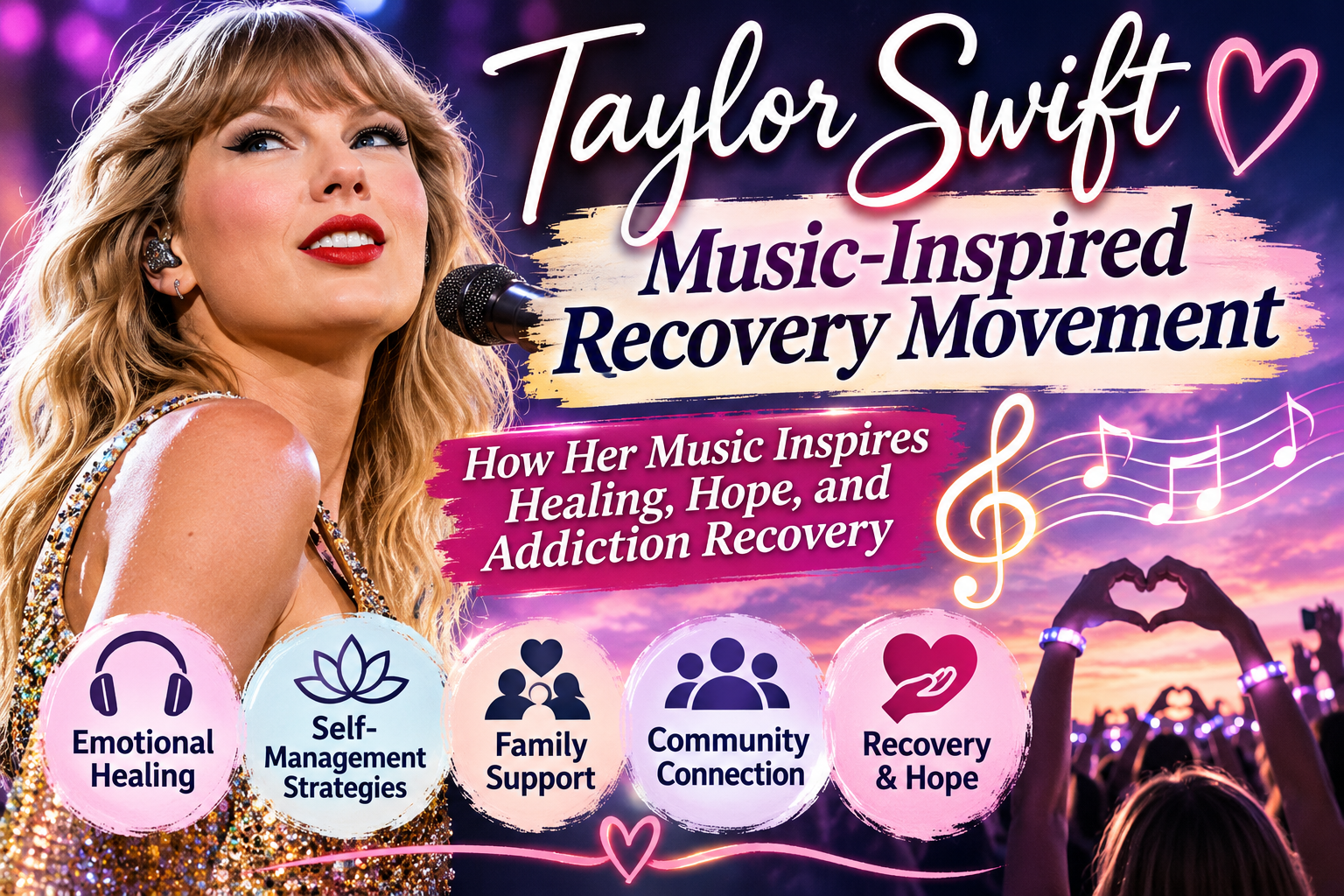
Taylor Swift’s music has inspired millions through themes of heartbreak, self-discovery, resilience, and emotional healing. Although she has not established an official addiction recovery movement or publicly disclosed a substance use disorder, her songs offer comfort, hope, and encouragement to listeners facing personal challenges. Her influence highlights how music, emotional expression, family support, and community connections can complement addiction treatment, strengthen coping skills, and promote lasting recovery.
Taylor Swift’s Personal Journey: Emotional Challenges and Resilience
Taylor Swift began her musical career as a teenager and became one of the most influential recording artists of her generation. Her success brought worldwide recognition, but it also exposed her to intense media scrutiny, public criticism, and pressure surrounding her appearance and personal relationships.
In her 2020 documentary, Miss Americana, Swift discussed her past struggles with disordered eating and body image. She described how public criticism and unrealistic beauty standards affected her relationship with food and how she saw herself. ABC News+1
Her willingness to discuss these experiences encouraged broader conversations about self-acceptance, emotional vulnerability, and mental health.
Important lessons from her experiences include:
- Recognizing emotional distress: Acknowledging insecurity, sadness, and stress is an important step toward healthier coping.
- Challenging unrealistic expectations: Self-worth should not depend entirely on appearance, achievements, or public approval.
- Practicing self-compassion: Individuals can learn to replace harsh self-criticism with more balanced thinking.
- Finding healthy emotional outlets: Creative expression can help people process difficult experiences.
- Seeking appropriate support: Professional care is important when emotional difficulties interfere with daily functioning.
Although Swift’s personal experiences differ from substance addiction, themes of self-acceptance and resilience can resonate with people recovering from substance use disorders.
How Taylor Swift’s Music Can Inspire Addiction Recovery
Music can evoke memories, influence mood, and help individuals express emotions that may be difficult to communicate.
For individuals recovering from addiction, listening to meaningful songs can provide encouragement during periods of loneliness, cravings, grief, or uncertainty.
Taylor Swift’s songwriting frequently explores emotional transitions, personal boundaries, relationships, and finding strength after difficult experiences.
“1989”. Album by Taylor Swift: buy or stream. | HIGHRESAUDIO
Shake It Off — Releasing judgment
This song can encourage listeners to focus less on criticism and more on personal growth. In addiction recovery, this message may help individuals challenge shame and negative labels.
Clean / Taylor Swift – News’mores爐邊新聞 – Medium
Clean — Emotional renewal
Although the song is not established as an account of Swift’s personal substance recovery, listeners may interpret its imagery of renewal as reflecting freedom from unhealthy patterns.
You’re On Your Own, Kid — Discovering inner strength
This song explores growing independence and self-discovery. Its themes may resonate with people learning to establish healthy boundaries and rebuild confidence.
folklore by Taylor Swift – Album Cover & Artwork | HD Download | Album Artwork Finder
This is me trying — Recognizing effort
Listeners sometimes connect this song with depression, regret, or recovery. It can remind individuals that progress may involve setbacks and that continued effort matters.
These interpretations are ways listeners may connect Swift’s music to recovery, not claims that she wrote each song specifically about addiction treatment.
The Science Behind Music and Addiction Recovery
Music therapy has increasingly been studied as a complementary intervention for substance use disorders.
A Cochrane systematic review involving 21 trials and 1,984 participants found that music therapy added to standard treatment likely reduced substance cravings and increased motivation for treatment. However, the evidence did not establish clear improvements in depression, anxiety, treatment retention, or sustained abstinence. Cochrane
Music-based interventions may help by:
- Encouraging emotional expression and reflection.
- Providing structured activities during treatment.
- Helping individuals identify and discuss difficult feelings.
- Increasing motivation to participate in recovery activities.
- Supporting interpersonal connection in group settings.
Formal music therapy is delivered by qualified professionals and differs from simply listening to favorite songs.
Nevertheless, personal music listening can be a useful wellness activity when incorporated into a comprehensive recovery plan.
Self-Management Strategies: Using Music to Strengthen Recovery
Taylor Swift’s emphasis on emotional storytelling provides a useful model for exploring feelings through creative expression.
People recovering from addiction can incorporate music into their daily routines as one component of self-management.
Create a recovery-focused playlist
Music can help establish emotional routines and provide encouragement during stressful moments.
Consider creating playlists for different recovery needs:
- Motivation: Songs that encourage confidence and personal growth.
- Relaxation: Calming music for stress reduction.
- Emotional reflection: Songs that help identify grief, sadness, or frustration.
- Celebration: Uplifting songs to recognize recovery milestones.
- Resilience: Music associated with perseverance and hope.
Listeners should recognize that some songs may trigger memories of substance use or intensify distress. Choosing music intentionally is important.
Practice emotional awareness
Addiction recovery often involves learning to identify and manage emotions without relying on substances.
Helpful techniques include:
- Writing journal entries inspired by meaningful songs.
- Identifying emotions experienced while listening to music.
- Practicing mindfulness or breathing exercises.
- Recognizing negative thought patterns.
- Using music to transition into healthier activities.
- Discussing difficult emotions with a therapist or trusted supporter.
Establish healthy routines
Recovery benefits from consistency and structure.
Individuals can combine music with exercise, relaxation, creative hobbies, or daily reflection.
For example, a person might begin the morning with an encouraging playlist, take a walk while listening to calming music, and finish the day by journaling about emotional challenges and achievements.
These routines may improve emotional awareness and support healthier coping habits.
Family Support Strategies: Strengthening Relationships Through Music
Family relationships can play a significant role in addiction recovery.
Loved ones may struggle to understand the emotional experiences of someone recovering from substance use. Music can provide a shared starting point for conversations about feelings, fears, and hopes.
Encourage open communication
Families can use meaningful songs to initiate supportive discussions.
Examples include:
- Asking what a particular song means to a loved one.
- Listening without criticizing their emotional responses.
- Discussing feelings associated with grief or relationship difficulties.
- Encouraging honest conversations about recovery challenges.
- Respecting personal boundaries and emotional privacy.
Create positive shared experiences
Families can strengthen relationships by participating in enjoyable activities that do not involve substance use.
Examples include attending concerts, having family music nights, singing together, or creating playlists for special occasions.
These experiences can help rebuild trust and create positive memories.
Recognize recovery progress
Families should acknowledge meaningful improvements without expecting perfection.
Recovery milestones may include attending treatment, maintaining healthy routines, repairing relationships, or learning new coping skills.
Supportive family behaviors include:
- Celebrating progress without pressuring someone.
- Encouraging participation in professional treatment.
- Avoiding blame and judgment.
- Establishing healthy boundaries.
- Seeking family counseling when needed.
Music can support connection, but it should never be used to pressure someone into discussing emotions before they are ready.
Community Support: How Music Brings People Together
Taylor Swift’s fan community demonstrates how shared musical interests can create opportunities for friendship, belonging, and emotional connection.
The friendship-bracelet tradition associated with her Eras Tour became a recognizable symbol of fan participation and shared experiences.
Although this fan activity is not an organized addiction recovery program, it illustrates how music-centered communities can encourage social interaction and connection.
For individuals recovering from addiction, supportive communities may reduce isolation and help establish healthier social networks.
Music-based community activities
Communities can develop recovery-friendly activities such as:
- Sober concerts and music appreciation gatherings.
- Songwriting workshops for emotional expression.
- Music therapy groups facilitated by qualified professionals.
- Community choirs and creative arts programs.
- Peer recovery meetings incorporating voluntary music activities.
- Youth workshops focused on healthy coping and emotional awareness.
Creating inclusive recovery spaces
Community programs should provide safe environments where individuals feel accepted regardless of their recovery stage.
Effective programs can encourage participation without requiring disclosure of personal trauma or substance use history.
Organizations may also collaborate with addiction treatment centers, schools, and mental health professionals to expand access to supportive creative activities.
The Importance of Professional Treatment Alongside Music
Music can provide comfort and motivation, but it cannot independently treat substance use disorders.
Evidence-based addiction treatment may include behavioral therapies, medications, peer support, and ongoing medical care.
For opioid use disorder, medications such as buprenorphine and methadone substantially reduce overdose and mortality risks. For alcohol use disorder, medications such as naltrexone and acamprosate may be appropriate.
Music-based interventions can complement these treatments by supporting emotional expression and engagement.
Individuals should seek professional assessment when experiencing persistent cravings, withdrawal symptoms, depression, or difficulty maintaining recovery.
Lessons From Taylor Swift’s Influence on Emotional Healing
Taylor Swift’s music and public discussions of personal challenges offer several lessons relevant to recovery.
- Emotional honesty encourages healing. Acknowledging difficult feelings can support healthier coping.
- Self-worth extends beyond public approval. Recovery involves developing a more stable sense of personal identity.
- Creative expression can support resilience. Music, writing, and art offer opportunities for emotional reflection.
- Supportive relationships matter. Family, friends, and communities can reduce isolation.
- Personal growth takes time. Emotional recovery is rarely a straight path.
- Professional treatment remains essential. Creative activities work best alongside appropriate clinical care.
Resources for Music-Based Recovery and Addiction Support
Individuals interested in incorporating music into addiction recovery can explore established treatment and community organizations.
| Organization | Support offered |
|---|---|
| American Music Therapy Association | Information about professional music therapy |
| SAMHSA | Substance use treatment resources |
| SMART Recovery | Evidence-informed recovery support |
| Alcoholics Anonymous | Peer support for alcohol recovery |
| NAMI | Mental health education and family resources |
Conclusion: Finding Hope and Healing Through Music
Taylor Swift’s influence extends beyond entertainment. Through emotional storytelling, public discussions of personal challenges, and songs that resonate with listeners, she has helped create opportunities for conversations about resilience, self-acceptance, and emotional well-being.
While she has not founded a formal addiction recovery movement, her music can inspire individuals to reflect on personal challenges, recognize their strengths, and seek supportive relationships.
For people recovering from addiction, music may become a meaningful tool for emotional expression, stress management, and motivation. Families can use shared musical experiences to strengthen communication, while communities can develop creative programs that promote belonging and connection.
The most important lesson is that recovery requires a comprehensive approach involving self-management, professional treatment, family encouragement, and community support.
Music may not cure addiction, but it can provide encouragement, connection, and hope throughout the recovery journey.
Frequently Asked Questions and Answers
Taylor Swift’s Music and Emotional Recovery
1. What is Taylor Swift’s Music-Inspired Recovery Movement?
The term describes using Taylor Swift’s music as inspiration for emotional healing, personal growth, and addiction recovery. It is not the name of an officially established organization or treatment program founded by Swift.
Her music may help listeners process difficult emotions, develop hope, and feel connected to others experiencing similar challenges.
2. Has Taylor Swift personally struggled with drug or alcohol addiction?
There is no verified public information establishing that Taylor Swift has experienced a substance use disorder or undergone addiction rehabilitation.
She has publicly discussed other personal challenges, including body image concerns and disordered eating. Her music can inspire people recovering from addiction without suggesting she has personally experienced that condition.
3. How can Taylor Swift’s music inspire addiction recovery?
Her songs explore themes such as overcoming criticism, rebuilding confidence, processing grief, and discovering personal strength.
Individuals in recovery may connect these themes with their own experiences of overcoming substance dependence, developing healthier relationships, and rebuilding self-esteem.
Music can provide encouragement, but it should complement professional treatment rather than replace it.
4. Which Taylor Swift songs may resonate with people in addiction recovery?
Several songs contain themes that listeners may interpret through a recovery perspective:
- Clean: Emotional renewal and moving beyond painful experiences.
- This Is Me Trying: Recognizing personal struggles and the importance of continued effort.
- Shake It Off: Managing criticism and maintaining confidence.
- You’re On Your Own, Kid: Personal growth, independence, and resilience.
- Daylight: Hope, perspective, and emotional change.
These are possible listener interpretations, not claims that the songs were written specifically as addiction recovery guidance.
5. Can listening to Taylor Swift’s music improve mental health?
Listening to meaningful music may help some people regulate emotions, reduce perceived stress, and feel less isolated.
However, emotional responses to music vary. Some songs may intensify sadness or trigger difficult memories.
Music is best used as one part of a broader mental wellness plan that includes healthy routines, supportive relationships, and professional care when needed.
Music Therapy and Addiction Treatment
6. Is there scientific evidence that music therapy helps addiction recovery?
Yes, although the evidence has limitations.
A Cochrane review of 21 clinical trials involving 1,984 participants found that music therapy added to standard substance use treatment likely reduced cravings and improved motivation for treatment.
However, researchers did not find clear evidence that it improved long-term abstinence, depression, anxiety, or treatment retention. Cochrane
7. What is the difference between music therapy and listening to Taylor Swift’s songs?
Music therapy is a structured clinical intervention provided by a qualified music therapist. It may involve songwriting, guided listening, singing, or playing instruments to achieve specific therapeutic goals.
Listening to Taylor Swift’s music independently is a personal coping activity. It may offer emotional comfort, but it is not equivalent to professional music therapy.
8. Can music help reduce cravings for drugs or alcohol?
Music may help some individuals manage cravings by redirecting attention, regulating emotions, and providing a healthy activity during stressful moments.
A personalized playlist can be part of a relapse prevention plan. However, music should not replace medications, counseling, or other evidence-based addiction treatments.
9. Can Taylor Swift’s music help people experiencing depression or anxiety?
Some listeners may find comfort in songs that reflect sadness, loneliness, uncertainty, or emotional growth.
Music can encourage emotional reflection and connection, but it is not an established standalone treatment for depression or anxiety disorders.
Individuals experiencing persistent symptoms should consider evaluation by a qualified healthcare professional.
10. Can music sometimes trigger addiction cravings or emotional distress?
Yes. Music can evoke powerful memories associated with previous relationships, environments, or substance use.
Individuals should recognize songs that intensify cravings or distress and consider choosing alternative music or coping strategies.
Self-Management Strategies
11. How can individuals use Taylor Swift’s music in their daily recovery routines?
Individuals can incorporate music into activities that promote emotional stability and personal growth.
Helpful approaches include:
- Creating playlists for motivation, relaxation, and encouragement.
- Listening to calming music during stressful moments.
- Journaling about emotions inspired by songs.
- Combining music with walking, exercise, or mindfulness.
- Celebrating personal recovery milestones with meaningful songs.
12. How can songwriting support emotional healing?
Songwriting allows individuals to express thoughts and feelings that may be difficult to communicate directly.
Writing about grief, guilt, hope, or personal achievements can encourage emotional awareness and reflection.
Individuals do not need musical experience to benefit from creative writing.
13. How can music help rebuild self-esteem during recovery?
Addiction can contribute to shame, damaged relationships, and reduced confidence.
Songs emphasizing resilience and self-acceptance may encourage individuals to challenge negative beliefs about themselves.
Self-esteem also develops through meaningful actions, including keeping commitments, maintaining healthy boundaries, and achieving realistic goals.
14. Can Taylor Swift’s personal experiences teach lessons about emotional resilience?
Yes. Swift has publicly discussed the effects of criticism, unrealistic beauty standards, and disordered eating.
In her documentary Miss Americana, she reflected on how public scrutiny affected her body image and relationship with food. ABC News+1
Her experiences can encourage discussions about self-acceptance and healthier responses to criticism, without equating eating disorders with substance addiction.
15. What should someone do when music alone does not relieve emotional distress?
If music does not provide adequate relief, individuals should consider additional coping strategies and professional support.
Counseling, peer recovery programs, appropriate medications, and structured treatment may be necessary.
Persistent cravings, withdrawal symptoms, severe anxiety, or depression should not be managed through music alone.
Family Support Strategies
16. How can families use music to support loved ones recovering from addiction?
Families can use music to create positive shared experiences and encourage communication.
Examples include listening to meaningful songs together, attending sober music events, discussing emotions inspired by lyrics, and celebrating recovery milestones.
The goal is to strengthen relationships without pressuring someone to disclose personal experiences.
17. Can Taylor Swift’s songs help parents communicate with teenagers about mental health?
Yes. Songs addressing insecurity, friendship, heartbreak, and personal identity can provide conversation starters.
Parents might ask teenagers what emotions they recognize in a song or how they relate to its message.
These conversations should encourage listening, understanding, and emotional safety rather than judgment.
18. How can families encourage healthy coping strategies through music?
Families can encourage music as one of several healthy coping activities.
They may support creative hobbies, provide opportunities for relaxation, and help loved ones develop consistent routines.
Family members should also encourage professional treatment when substance use or mental health symptoms require clinical attention.
19. Can family music activities help rebuild relationships affected by addiction?
Shared music activities may create opportunities for positive interaction and connection.
However, rebuilding trust also requires honesty, consistent behavior, respectful communication, and healthy boundaries.
Music can support relationship repair, but it cannot substitute for accountability or family therapy when needed.
20. What should families avoid when using music to encourage recovery?
Families should avoid forcing loved ones to listen to particular songs, using lyrics to criticize behavior, or assuming that positive music will eliminate cravings.
They should also avoid dismissing difficult emotions or pressuring someone to recover according to a specific timeline.
Support is most effective when it respects individual preferences and treatment needs.
Community Support and Recovery Connections
21. How can Taylor Swift’s fan community inspire recovery support networks?
Swift’s fan community illustrates how shared interests can bring people together.
Activities such as friendship-bracelet exchanges and concert gatherings can create opportunities for belonging and social connection.
Although these activities are not addiction treatment programs, they demonstrate how communities built around common interests may help reduce social isolation.
22. Can concerts and music events support sobriety?
Yes. Alcohol-free concerts and sober-friendly music events can provide enjoyable social experiences without requiring substance use.
Individuals in early recovery may benefit from attending events with trusted supporters, choosing environments that feel safe, and developing an exit plan if cravings occur.
23. How can communities develop music-inspired addiction recovery programs?
Community organizations can offer creative activities that complement established treatment services.
Programs may include:
- Professionally facilitated music therapy groups.
- Songwriting and creative expression workshops.
- Sober music appreciation events.
- Peer support gatherings with optional music activities.
- Youth programs focused on emotional coping skills.
- Collaborations between musicians and recovery organizations.
24. How can music help reduce stigma surrounding addiction?
Music can encourage empathy by expressing emotions associated with suffering, hope, and personal change.
Recovery-themed performances and educational events may help communities understand that addiction is a treatable medical condition.
Programs should avoid presenting addiction as a personal weakness or suggesting that motivation alone is sufficient for recovery.
25. What is the most important message of Taylor Swift’s music-inspired recovery concept?
The central message is that emotional expression, meaningful relationships, and personal purpose can contribute to healthier lives.
Taylor Swift’s music may inspire listeners to recognize their strengths, process difficult experiences, and develop hope for the future.
However, lasting addiction recovery often requires evidence-based treatment, ongoing self-management, family support, and access to community resources.
Video: