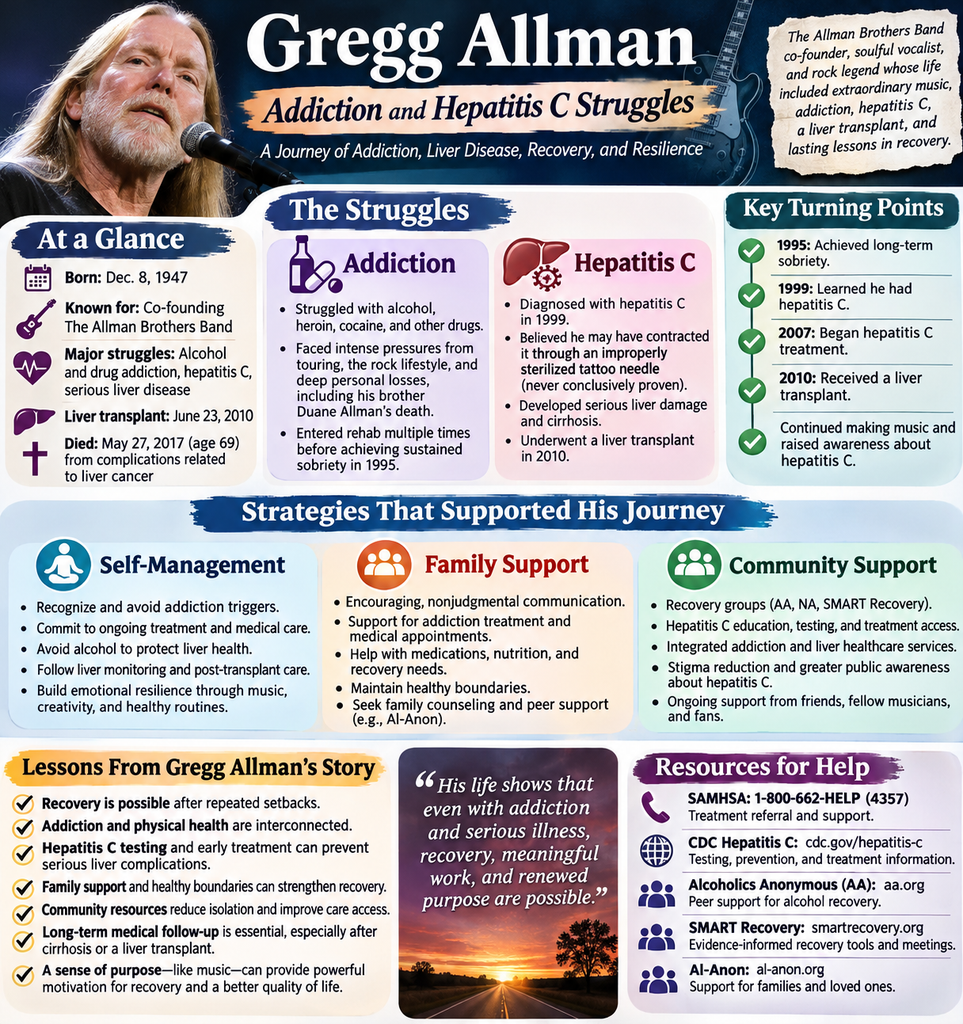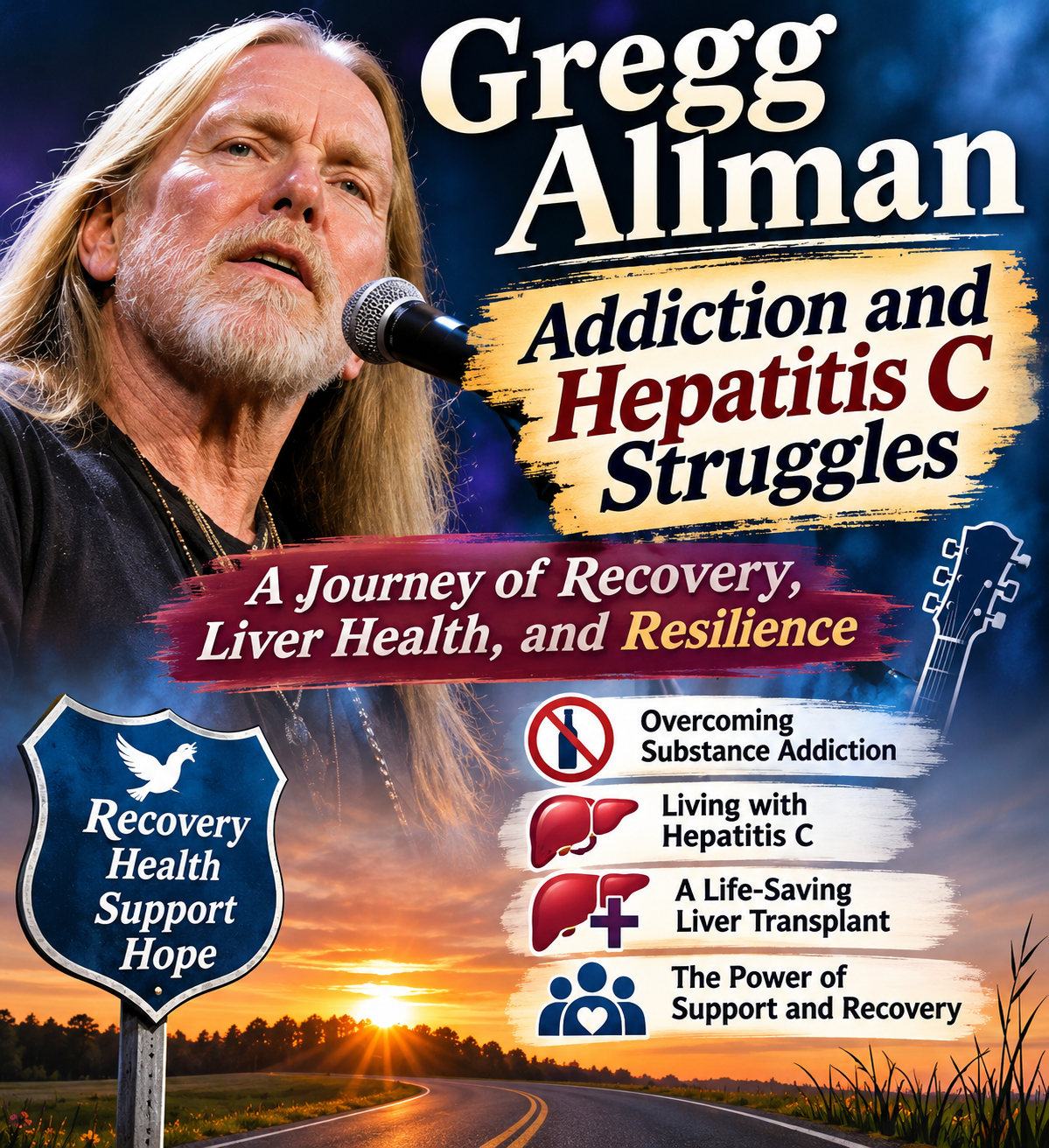
Gregg Allman, legendary musician and co-founder of the Allman Brothers Band, faced decades of alcohol and drug addiction, hepatitis C, and serious liver complications. Despite his musical success, his personal struggles affected his health, relationships, and well-being. His journey highlights the importance of self-management, family support, professional treatment, and community resources in overcoming addiction, managing chronic illness, and achieving lasting recovery.
Gregg Allman’s Struggles With Alcohol and Drug Addiction
During the height of his musical career, Allman struggled with alcohol, heroin, cocaine, and other substances. The pressures of touring, exposure to drugs, personal losses, and the rock-and-roll lifestyle contributed to an environment in which substance misuse became increasingly difficult to escape.
One of the most devastating experiences in his life was the death of his brother, Duane Allman, in a motorcycle accident in 1971. This tragedy was followed by additional losses and emotional challenges.
Allman underwent numerous rehabilitation attempts before achieving sustained sobriety beginning in 1995. His difficult experience at the Allman Brothers Band’s Rock & Roll Hall of Fame induction became a turning point in his decision to change his life. ARTS ATL+1
His experiences highlight several important lessons:
- Addiction is a chronic, treatable condition: Repeated treatment attempts do not mean recovery is impossible.
- Unresolved grief can complicate recovery: Emotional distress and traumatic losses may increase vulnerability to substance misuse.
- Motivation can change over time: Individuals may become more willing to seek help after recognizing addiction’s consequences.
- Recovery requires ongoing commitment: Maintaining sobriety involves developing healthy habits, recognizing triggers, and building support systems.
- Professional treatment matters: Medical supervision, behavioral therapy, and continuing care can improve recovery outcomes.
Allman’s story demonstrates that even individuals with fame, financial success, and professional accomplishments can experience severe substance use disorders.
Hepatitis C and Its Impact on Gregg Allman’s Health
Allman’s medical challenges became increasingly serious when he learned he had hepatitis C in 1999.
Hepatitis C is a viral infection that primarily affects the liver. It spreads through exposure to infected blood and can cause chronic inflammation, fibrosis, cirrhosis, liver failure, and hepatocellular carcinoma.
Allman publicly believed that he may have contracted the infection through an improperly sterilized tattoo needle decades earlier. However, the precise source of his infection was never conclusively established. His history of substance use should not be treated as proof of how he acquired hepatitis C. ajc+1
Understanding the complications
Hepatitis C can remain undetected for years because many individuals experience few or no symptoms until substantial liver damage has occurred.
Potential complications include:
- Chronic liver inflammation: Persistent viral infection can gradually damage liver cells.
- Liver fibrosis and cirrhosis: Progressive scarring interferes with normal liver function.
- Fatigue and weakness: Individuals may experience reduced energy and physical endurance.
- Liver cancer: Long-standing hepatitis C, particularly when cirrhosis develops, increases cancer risk.
- Liver failure: Advanced liver damage may require transplantation.
Allman began hepatitis C treatment in 2007. Despite medical care, chronic liver damage progressed, and he underwent a liver transplant at the Mayo Clinic in Jacksonville, Florida, on June 23, 2010. Allman Brothers Band+1
His experience illustrates why early hepatitis C screening and treatment are essential.
Today, direct-acting antiviral medications can cure more than 95% of hepatitis C infections, often within 8–12 weeks. However, patients with established cirrhosis may still require ongoing surveillance for liver cancer even after the virus is cured.
Self-Management Strategies: Lessons From Gregg Allman’s Recovery
Allman’s decision to pursue sobriety and continue medical treatment highlights the importance of personal responsibility supported by appropriate healthcare.
Although his recovery was complicated, his experience provides a foundation for discussing practical self-management strategies.
Recognizing addiction triggers
Individuals recovering from substance use disorders benefit from understanding situations, emotions, and behaviors that increase their risk of returning to substance use.
Helpful strategies include:
- Identifying emotional triggers such as grief, loneliness, anxiety, and frustration.
- Avoiding environments associated with previous substance use when necessary.
- Developing healthier ways to manage stress.
- Establishing consistent sleeping, eating, and exercise routines.
- Creating a written relapse prevention plan.
- Seeking professional support when cravings or warning signs appear.
Maintaining medical treatment
For individuals managing both addiction and hepatitis C, recovery involves addressing behavioral health and physical health simultaneously.
Important recommendations include:
- Attending scheduled medical appointments and completing prescribed antiviral treatment.
- Obtaining appropriate liver function assessments and follow-up testing.
- Avoiding alcohol when living with chronic liver disease.
- Discussing all medications and supplements with healthcare professionals to prevent liver-related complications.
- Maintaining recommended vaccinations, including hepatitis A and B when appropriate.
- Following liver cancer surveillance recommendations when cirrhosis is present.
Individuals with alcohol dependence should not abruptly stop heavy drinking without medical assessment because alcohol withdrawal can cause seizures and delirium tremens.
Developing emotional resilience
Allman’s continued involvement in music illustrates how meaningful activities can contribute to emotional well-being.
Healthy coping strategies may include mindfulness, counseling, physical activity, creative expression, and supportive social relationships.
Music, art, journaling, and other personal interests can provide healthy outlets for emotional distress. However, these activities should complement rather than replace evidence-based addiction treatment.
Family Support Strategies: Helping Loved Ones Through Addiction and Chronic Illness
Addiction rarely affects only one individual. Families may experience emotional exhaustion, financial stress, communication difficulties, and uncertainty about how to provide support.
Allman’s personal life included complicated relationships and family challenges. His story emphasizes the broader importance of family involvement without assuming that any particular family intervention determined his recovery.
Encouraging compassionate communication
Families can help by creating an environment where individuals feel comfortable discussing their struggles.
Effective approaches include:
- Listening without judgment: Encourage honest conversations about substance use and emotional distress.
- Avoiding shame and blame: Recognize addiction as a treatable medical condition.
- Encouraging professional treatment: Support appointments with addiction specialists, mental health professionals, and liver specialists.
- Recognizing progress: Celebrate treatment participation and healthier behaviors.
- Establishing healthy boundaries: Offer support without financing substance use or accepting unsafe behavior.
Supporting medical recovery
Family members can also play an important role when a loved one is managing hepatitis C or recovering from liver transplantation.
Practical support may involve helping organize medications, providing transportation to appointments, preparing nutritious meals, and recognizing concerning symptoms.
After liver transplantation, strict adherence to immunosuppressive medications is especially important to reduce the risk of organ rejection.
Families should also understand that hepatitis C is not transmitted through hugging, sharing meals, or ordinary household contact.
Protecting family well-being
Family members should recognize their own emotional needs.
Counseling, family therapy, peer support groups, and education about addiction can help reduce caregiver burnout.
Healthy family support is not about controlling another person’s recovery. It is about providing encouragement while maintaining personal boundaries and emotional stability.
Community Support Strategies: Building a Stronger Recovery Network
Allman’s career involved musicians, friends, healthcare professionals, and fans who formed an important part of his personal and professional environment.
His public discussion of hepatitis C also contributed to awareness about testing and the stigma associated with the disease. In 2011, he encouraged others to learn about hepatitis C and seek testing rather than ignore potential risks. ajc
Community support can strengthen addiction recovery and improve access to healthcare.
Recovery groups and peer support
Community-based recovery programs provide opportunities to connect with others who understand addiction.
Examples include:
- Alcoholics Anonymous (AA) and Narcotics Anonymous (NA).
- SMART Recovery and other evidence-informed peer support programs.
- Family support organizations such as Al-Anon and Nar-Anon.
- Community mental health centers.
- Recovery community organizations and peer recovery coaching.
These programs can help individuals develop accountability, reduce isolation, and build healthier relationships.
Improving hepatitis C education and screening
Community healthcare organizations can reduce complications through education, testing, and access to treatment.
Important initiatives include:
- Offering hepatitis C screening according to public health recommendations.
- Providing harm-reduction services and sterile injection equipment where available.
- Connecting individuals to antiviral treatment and liver specialists.
- Integrating addiction treatment with infectious disease services.
- Addressing stigma associated with hepatitis C and substance use.
- Supporting uninsured and underserved populations in accessing care.
Reducing stigma
Individuals with addiction or hepatitis C may avoid seeking treatment because they fear discrimination or judgment.
Community education can help explain that substance use disorders are medical conditions and that hepatitis C is a treatable viral infection.
Compassionate, evidence-based approaches are more effective than shame or punishment in encouraging engagement with healthcare.
Gregg Allman’s Liver Transplant and His Later Years
Allman’s liver transplant in 2010 gave him additional years to perform, record music, and spend time with loved ones.
Following his transplant, he continued his musical career and released new recordings. He also became more vocal about the importance of hepatitis C awareness.
Despite these accomplishments, his health remained fragile.
Allman experienced liver cancer, which eventually returned. He died on May 27, 2017, at age 69, from complications related to liver cancer. ARTS ATL+1
His life illustrates an important medical reality: even after achieving sobriety and receiving advanced medical treatment, some complications of longstanding liver disease may persist.
However, his recovery efforts and continued musical accomplishments demonstrate that meaningful personal growth remains possible despite serious illness.
Important Lessons From Gregg Allman’s Journey
Gregg Allman’s experience offers valuable lessons for individuals, families, healthcare professionals, and communities.
- Recovery is possible after repeated setbacks. Multiple treatment attempts should encourage reassessment and continued care rather than hopelessness.
- Addiction and physical health are interconnected. Substance use disorders may complicate chronic illnesses and medical treatment.
- Hepatitis C testing can save lives. Early diagnosis and antiviral therapy can prevent serious liver complications.
- Family involvement can strengthen recovery. Supportive relationships and healthy boundaries promote stability.
- Community resources reduce isolation. Recovery programs and accessible healthcare help individuals stay engaged in treatment.
- Long-term monitoring matters. Patients with advanced liver disease may require lifelong medical follow-up.
- Personal purpose supports recovery. Meaningful goals, relationships, and activities can motivate healthier living.
Resources for Addiction Recovery and Hepatitis C Support
Individuals and families facing similar challenges can find support through established healthcare and recovery organizations.
| Organization | Available support |
|---|---|
| SAMHSA | Substance use treatment information and referral resources |
| CDC Hepatitis C | Screening, prevention, and treatment education |
| Alcoholics Anonymous | Peer support for alcohol recovery |
| SMART Recovery | Evidence-informed recovery tools and meetings |
| Al-Anon | Support for families affected by alcohol misuse |
For confidential substance use treatment referrals in the United States, SAMHSA’s National Helpline is available at 1-800-662-HELP (4357).
Conclusion: Gregg Allman’s Legacy of Music, Recovery, and Resilience
Gregg Allman’s life was marked by extraordinary musical talent, painful personal losses, addiction, and serious health challenges. His journey through substance dependence, hepatitis C, liver transplantation, and cancer illustrates the long-term consequences that can accompany chronic illness and addiction.
Yet his story is not defined solely by hardship. His efforts to achieve sobriety, continue creating music, and raise awareness about hepatitis C reflect the importance of determination, medical treatment, and meaningful personal goals.
For individuals experiencing addiction, his journey offers an important reminder that seeking help is a sign of strength. For families, it reinforces the value of compassionate communication, education, and healthy boundaries. For communities, it highlights the need for accessible treatment, hepatitis C screening, and stigma-free support.
Recovery cannot erase every consequence of the past, but it can create opportunities for better health, stronger relationships, and a more meaningful future.
Gregg Allman’s legacy lives on not only through his music but also through the conversations his experiences continue to inspire about addiction, liver health, and recovery.
Frequently Asked Questions and Answers
Gregg Allman’s Addiction and Recovery
1. What substances did Gregg Allman struggle with?
Gregg Allman struggled with alcohol, heroin, cocaine, and other drugs throughout parts of his musical career. His substance use affected his personal relationships, physical health, and professional life. Despite repeated treatment attempts, he eventually achieved sustained sobriety in 1995.
2. What contributed to Gregg Allman’s addiction?
Several factors may have contributed to Allman’s struggles, including the pressures of touring, easy access to drugs and alcohol, and significant personal losses.
The death of his brother, Duane Allman, in 1971 was particularly devastating. Although grief and emotional distress can increase vulnerability to substance misuse, it is important not to assume that any single event caused his addiction.
3. How did Gregg Allman overcome his addiction?
Allman underwent multiple rehabilitation attempts before achieving lasting sobriety. A major turning point occurred around the Allman Brothers Band’s 1995 induction into the Rock & Roll Hall of Fame, when he recognized the impact of his drinking.
His experience demonstrates that recovery may require repeated treatment, personal commitment, and long-term behavioral changes.
4. Did Gregg Allman experience relapses during recovery?
Yes. Allman described repeated attempts to stop using substances before establishing sustained sobriety.
His experience illustrates that returning to substance use can occur during recovery and should prompt renewed treatment and support rather than shame or abandonment.
5. What role did music play in Gregg Allman’s recovery?
Music remained an important source of identity, creativity, and purpose throughout Allman’s life. After achieving sobriety, he continued performing, recording, and connecting with audiences.
Meaningful activities such as music can support emotional well-being and recovery, although they do not replace professional addiction treatment.
Gregg Allman’s Hepatitis C Diagnosis and Liver Disease
6. When was Gregg Allman diagnosed with hepatitis C?
Allman learned he had hepatitis C in 1999, although he believed he had contracted the virus decades earlier. Because hepatitis C often produces few symptoms during its early stages, the infection can remain undetected for many years.
His diagnosis emphasizes the importance of screening before significant liver damage develops. ajc
7. How did Gregg Allman contract hepatitis C?
Allman believed he may have contracted hepatitis C through an unsterilized tattoo needle when he was younger. However, the exact source of his infection was never conclusively established.
Hepatitis C spreads primarily through contact with infected blood, including shared injection equipment, inadequately sterilized tattoo instruments, and certain historical medical exposures.
8. Did Gregg Allman’s alcohol addiction make his hepatitis C worse?
Heavy alcohol consumption can accelerate liver damage in individuals with chronic hepatitis C. Alcohol and hepatitis C together increase the risk of progressive fibrosis, cirrhosis, and liver cancer.
Although the precise contribution of alcohol to Allman’s liver disease cannot be determined, his history demonstrates why avoiding alcohol is especially important for individuals with chronic liver disease.
9. Why did Gregg Allman need a liver transplant?
Allman developed advanced liver damage associated with chronic hepatitis C. Despite treatment beginning in 2007, his liver disease progressed, and physicians recommended transplantation.
On June 23, 2010, he underwent a successful liver transplant at the Mayo Clinic in Jacksonville, Florida. Allman Brothers Band
10. Did Gregg Allman’s liver transplant cure his hepatitis C?
A liver transplant replaces a severely damaged liver, but it does not automatically eliminate hepatitis C from the bloodstream.
In 2011, Allman publicly discussed continuing to live with hepatitis C after his transplant. His later viral treatment status is not fully established in the available reporting. Transcripts
11. Did Gregg Allman develop liver cancer?
Yes. Allman experienced liver cancer in association with his longstanding liver disease. He died on May 27, 2017, at age 69, from complications of liver cancer.
His experience illustrates why individuals with cirrhosis require ongoing monitoring, even after treatment for hepatitis C. Louder+1
12. Can hepatitis C be cured today?
Yes. Modern direct-acting antiviral medications can cure more than 95% of hepatitis C infections, usually within 8–12 weeks.
Early treatment can substantially reduce the risk of cirrhosis, liver failure, and liver cancer. However, individuals who already have cirrhosis may continue to require liver cancer surveillance after successful treatment. CDC
Self-Management and Long-Term Recovery
13. What self-management strategies can individuals learn from Gregg Allman’s experiences?
His journey highlights several approaches that may support recovery and long-term health:
- Recognizing triggers associated with alcohol or drug use.
- Participating in professional addiction treatment.
- Developing healthier coping strategies for stress and grief.
- Following medical recommendations for liver disease.
- Avoiding alcohol and other substances that threaten recovery.
- Maintaining meaningful activities, supportive relationships, and realistic goals.
These strategies work best when combined with individualized healthcare and continuing support.
14. Why is regular medical monitoring important for individuals with hepatitis C?
Chronic hepatitis C can cause progressive liver damage without obvious symptoms.
Medical monitoring helps healthcare professionals evaluate liver function, assess fibrosis or cirrhosis, determine treatment effectiveness, and identify complications.
Patients with cirrhosis generally require ongoing liver cancer surveillance, commonly with ultrasound every six months, with or without additional testing according to clinical guidelines.
15. Can individuals recovering from addiction safely receive hepatitis C treatment?
Yes. Current or previous substance use should not automatically prevent someone from receiving hepatitis C treatment.
Modern antiviral medications are highly effective, and combining infectious disease care with addiction treatment can improve health outcomes.
Integrated services may include medication treatment for opioid use disorder, counseling, harm-reduction education, and regular medical follow-up.
16. What lifestyle changes help protect the liver?
Individuals with hepatitis C or other chronic liver conditions can benefit from:
- Avoiding alcohol.
- Maintaining balanced nutrition and appropriate physical activity.
- Receiving hepatitis A and B vaccinations when indicated.
- Avoiding unnecessary medications or supplements that may harm the liver.
- Completing prescribed antiviral therapy.
- Following recommendations for liver monitoring.
Anyone with alcohol dependence should seek medical guidance before stopping abruptly because severe alcohol withdrawal can be life-threatening.
Family and Community Support
17. How can families support someone struggling with addiction and hepatitis C?
Families can provide emotional encouragement while helping their loved one access appropriate healthcare.
Supportive strategies include listening without judgment, encouraging addiction treatment, assisting with medical appointments, and learning about hepatitis C.
Healthy boundaries are equally important. Family members can offer compassion without accepting dangerous behaviors or taking responsibility for another person’s treatment decisions.
18. How can families help prevent addiction relapse?
Families can encourage continued treatment, recognize warning signs, and support healthy routines.
Helpful approaches include family counseling, respectful communication, relapse prevention planning, and avoiding unnecessary exposure to substance-related triggers.
Relapse prevention should focus on collaboration rather than surveillance, punishment, or blame.
19. What community resources are available for individuals with addiction and hepatitis C?
Several organizations offer treatment information and recovery support.
- SAMHSA — Substance use treatment information and referrals.
- CDC Hepatitis C — Education about screening, transmission, and treatment.
- Alcoholics Anonymous — Peer support for alcohol recovery.
- SMART Recovery — Recovery meetings and practical coping tools.
- Al-Anon — Support for families affected by another person’s drinking.
20. How can communities reduce stigma surrounding addiction and hepatitis C?
Communities can reduce stigma by treating addiction and hepatitis C as medical conditions rather than moral failures.
Public education, confidential screening, accessible addiction treatment, and respectful healthcare communication can encourage people to seek help earlier.
Allman himself promoted hepatitis C awareness and encouraged people to undergo testing rather than ignore the possibility of infection. ajc
Gregg Allman’s Legacy and Lessons for Recovery
21. What is the most important lesson from Gregg Allman’s addiction and hepatitis C struggles?
One important lesson is that addiction recovery and medical recovery are closely connected but require different forms of treatment.
Allman’s achievement of sobriety did not reverse all the damage associated with his chronic liver disease. His experience highlights the importance of addressing substance use, infectious diseases, and long-term medical complications together.
22. Did Gregg Allman continue performing after his liver transplant?
Yes. Allman returned to performing and recording music after his 2010 transplant.
He released Low Country Blues in 2011 and continued performing despite recurring medical difficulties.
His determination to remain involved in music illustrates how meaningful personal activities can support emotional resilience during serious illness. CBS News
23. How did Gregg Allman help raise awareness about hepatitis C?
Allman publicly discussed his diagnosis, liver transplant, and the importance of hepatitis C testing.
He participated in hepatitis C awareness efforts and encouraged people to seek medical evaluation, particularly because the infection can remain silent for years.
His advocacy helped bring public attention to the importance of screening and reducing stigma.
24. Can someone live a meaningful life after addiction and a serious medical diagnosis?
Yes. Many individuals recovering from addiction or living with chronic medical conditions continue to build fulfilling lives.
Professional treatment, supportive relationships, meaningful activities, and ongoing medical care can help individuals maintain independence and quality of life.
Allman’s continued musical career after achieving sobriety and receiving a liver transplant offers one example of resilience despite substantial health challenges.
25. What message does Gregg Allman’s journey offer to individuals and families facing similar struggles?
Gregg Allman’s story demonstrates that addiction can affect anyone, regardless of talent, success, or public recognition.
His experience encourages individuals to seek treatment, take chronic illnesses seriously, and build reliable support systems.
For families, it reinforces the importance of compassionate communication, healthy boundaries, and understanding the long-term nature of addiction recovery.
For communities, it highlights the value of accessible healthcare, early hepatitis C detection, and reducing stigma.
Video: