For someone recovering from alcohol use disorder (AUD), the thought “I’ll just have one drink” can seem harmless. A person may believe that after weeks, months, or years without alcohol, drinking is now something they can control. But for people whose recovery goal is abstinence, that first drink can represent an important relapse risk.
Not everyone who consumes alcohol develops alcohol use disorder, and recovery goals can differ from person to person. However, when someone has experienced loss of control over alcohol, attempting to return to drinking without discussing it with a qualified treatment professional can carry significant risks. Understanding those risks can help people recognize dangerous thinking before a temporary temptation becomes a larger setback.
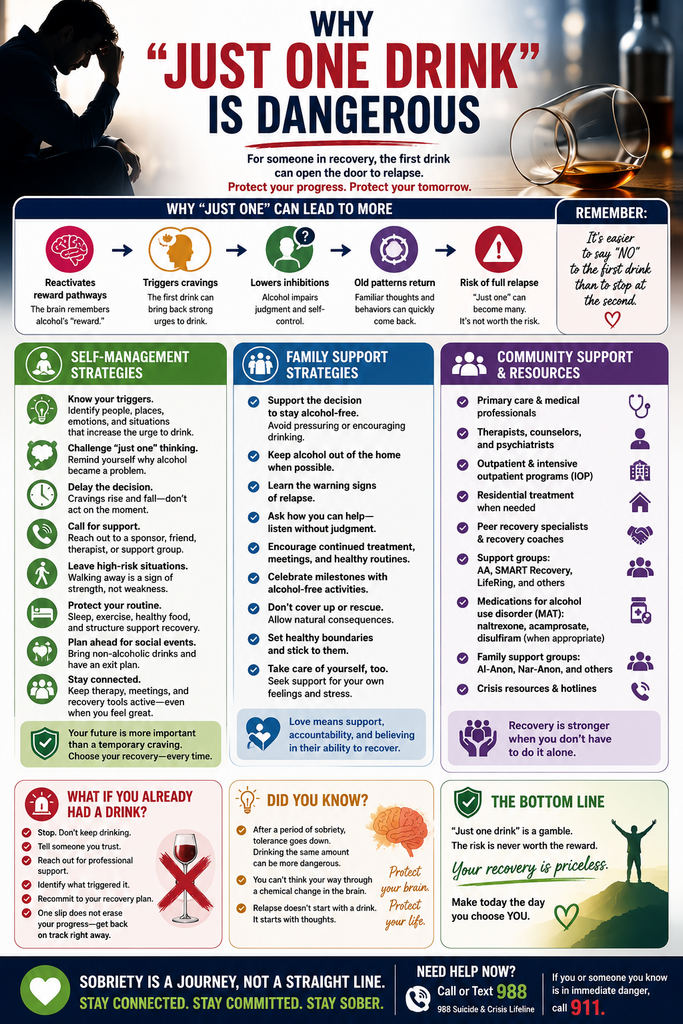
Why “Just One” Can Become More Than One
Alcohol affects brain systems involved in reward, judgment, inhibition, and decision-making. Once alcohol is consumed, the ability to stick to the original plan may become weaker.
The first drink may also reactivate familiar associations between alcohol and pleasure, stress relief, socializing, or emotional escape. Someone who intended to have one drink may begin thinking:
“One didn’t hurt me.”
“Maybe I can drink normally now.”
“I’ve been sober long enough.”
That shift in thinking can become as important as the alcohol itself.
The First Drink Can Reactivate Cravings
Cravings do not necessarily disappear simply because someone has been sober for a long time. Alcohol exposure, certain environments, emotional stress, celebrations, relationship conflict, or memories associated with drinking can reactivate urges.
Possible warning signs include:
- Thinking frequently about drinking again
- Romanticizing previous drinking experiences
- Remembering the “good times” while minimizing consequences
- Keeping alcohol nearby “just in case”
- Returning to bars or other high-risk environments
- Believing recovery support is no longer necessary
- Hiding thoughts about drinking from supportive people
- Planning situations where “just one” would seem acceptable
- Becoming increasingly confident that alcohol can now be controlled
Recognizing these thoughts early creates an opportunity to respond before drinking occurs.
Alcohol Lowers Inhibitions
There is another problem with relying on willpower after the first drink: alcohol itself can impair judgment.
Before drinking, someone may firmly intend to stop after one. After consuming alcohol, decision-making and inhibition can change. The second drink may suddenly seem reasonable.
For someone with a history of alcohol-related loss of control, the safest decision may need to happen before alcohol enters the body.
The Abstinence Violation Effect: “I Already Ruined It”
One drink does not have to become a prolonged relapse.
Sometimes the greater danger comes from what happens afterward. A person may think:
“I ruined my sobriety, so what’s the point?”
This all-or-nothing response is sometimes discussed as the abstinence violation effect. Shame and self-criticism following a lapse can contribute to additional drinking.
Instead, a lapse should trigger immediate action:
Stop. Tell someone. Get support. Reassess what happened.
A single episode does not erase months or years of recovery progress.
Reduced Tolerance Can Increase Risk
After a period without alcohol, tolerance may decrease. Returning to amounts someone previously consumed can therefore produce stronger effects than expected.
Heavy drinking after abstinence can increase the risk of accidents, impaired judgment, alcohol poisoning, medication interactions, and other medical consequences.
This is another reason why returning to previous drinking patterns can be dangerous.
Self-Management Strategies
Relapse prevention begins long before someone is standing in front of a drink. Learning to recognize triggers and preparing responses in advance can make difficult moments easier to manage.
- Identify your triggers. Know which people, places, emotions, celebrations, and stressful situations increase your desire to drink.
- Challenge “just one” thinking. Remember why alcohol became problematic rather than remembering only its temporary rewards.
- Delay the decision. Cravings can rise and fall. Give yourself time instead of acting immediately.
- Leave triggering situations. Walking away from alcohol is a recovery skill, not a social failure.
- Contact someone immediately. Call a sponsor, counselor, peer, family member, or trusted friend.
- Keep alcohol out of your environment. Reducing easy access can create valuable distance between an urge and an action.
- Protect your routine. Sleep, nutrition, exercise, treatment, and meaningful activities can support recovery.
- Plan for social events. Bring or order nonalcoholic beverages and have an exit strategy.
- Continue treatment when things are going well. Feeling better is not necessarily a reason to abandon the supports that helped you get there.
Family Support Strategies
Families can play an important role in relapse prevention without becoming responsible for controlling another person’s recovery.
Family members can:
- Avoid pressuring someone in recovery to drink.
- Keep alcohol out of the home when appropriate.
- Never joke that “one drink won’t hurt.”
- Learn the person’s individual relapse warning signs.
- Ask about cravings without accusation or interrogation.
- Encourage continued counseling and recovery activities.
- Support alcohol-free celebrations and social activities.
- Avoid covering up alcohol-related consequences.
- Maintain clear and healthy boundaries.
- Seek their own counseling or family-support resources when needed.
One particularly helpful question is:
“What would make staying in recovery easier for you right now?”
That approach encourages collaboration instead of control.
Community Support Strategies
Recovery becomes more sustainable when people have multiple sources of support. No single program is right for everyone.
Community resources may include:
- Primary-care professionals
- Addiction medicine specialists
- Behavioral-health clinicians
- Individual and group counseling
- Outpatient addiction treatment
- Intensive outpatient programs
- Residential treatment when clinically appropriate
- Peer recovery specialists
- Recovery community organizations
- Alcoholics Anonymous (AA)
- SMART Recovery and other mutual-support programs
- Family-support programs such as Al-Anon
- Community mental-health services
- Medications for alcohol use disorder when clinically appropriate
Medications such as naltrexone, acamprosate, and disulfiram may be appropriate for some people with AUD. Medication decisions should be individualized and discussed with a qualified healthcare professional.
What If Someone Already Had the Drink?
Respond quickly rather than waiting for the situation to become worse.
Contact a treatment provider or trusted recovery support. Remove access to additional alcohol when it is safe to do so. Identify what triggered the episode and determine whether treatment or recovery support needs to be increased.
Most importantly, avoid turning one setback into permission to continue drinking.
Instead of asking:
“How could I throw everything away?”
Try asking:
“What happened before I drank, and what needs to change so I can protect my recovery now?”
That question turns the experience into information that can strengthen the recovery plan.
Recovery Is About More Than Willpower
Alcohol use disorder is not simply a matter of making bad choices or lacking discipline. Recovery may involve changing behaviors, environments, relationships, coping strategies, and responses to stress while addressing underlying physical and mental health needs.
For someone committed to abstinence, refusing the first drink can therefore be much easier than trying to control the second, third, or fourth.
Conclusion
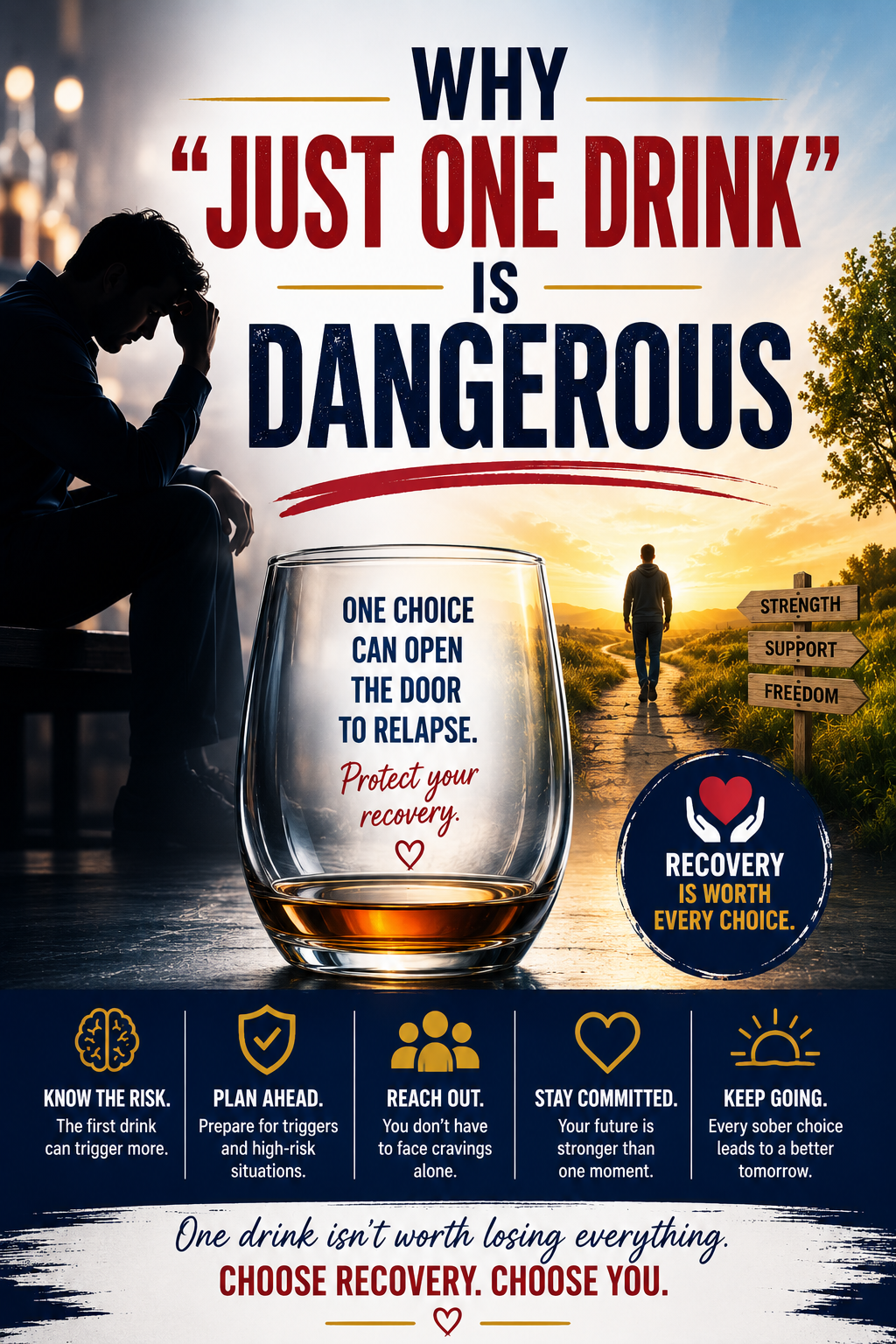
“Just one drink” can sound insignificant, particularly after a long period of sobriety. But for someone with a history of problematic alcohol use, that decision may reactivate cravings, weaken inhibition, revive old behavioral patterns, and increase the risk of further drinking.
The message is not that one drink means recovery is permanently lost. A lapse should become a signal for immediate support, not an excuse for shame or surrender.
Know your triggers. Protect your environment. Stay connected to treatment and supportive people. Ask for help when thoughts about drinking begin—not only after alcohol has already been consumed.
Sometimes relapse prevention comes down to recognizing one dangerous thought early enough to challenge it:
“It’s only one.”
For many people in alcohol recovery, protecting tomorrow begins with choosing not to take that first drink today.
Frequently Asked Questions
Here are some common questions:
1. Why can “just one drink” be dangerous for someone in recovery?
For a person recovering from alcohol use disorder (AUD), one drink may reactivate cravings, reduce inhibition, and make additional drinking more likely. For someone whose recovery goal is abstinence, avoiding the first drink can be an important relapse-prevention strategy.
2. Does one drink automatically mean someone will relapse?
No. One drink does not guarantee a prolonged relapse. However, it can increase risk, particularly for someone who previously had difficulty controlling alcohol use. If a lapse occurs, responding quickly can help prevent continued drinking.
3. Why can one drink trigger cravings?
Alcohol activates brain reward systems and can reconnect alcohol with previously learned experiences such as relaxation, pleasure, socializing, or emotional escape. Exposure may therefore strengthen the desire to continue drinking.
4. Can someone with alcohol use disorder eventually learn to drink moderately?
Recovery goals vary among individuals. Some people may pursue reduced drinking under professional guidance, while abstinence may be the safest or preferred goal for others, particularly those with severe AUD or a history of losing control. This decision should be made in consultation with a qualified healthcare professional.
5. Why does alcohol make it harder to stop after the first drink?
Alcohol can impair judgment, decision-making, and inhibition. Someone may intend to have only one drink while sober but find it harder to follow that plan after alcohol begins affecting the brain.
6. What thoughts can signal increasing relapse risk?
Warning signs may include:
- “I can control it now.”
- “One drink won’t hurt.”
- “I’ve been sober long enough.”
- “I deserve a drink.”
- Romanticizing previous drinking
- Planning opportunities to drink
- Hiding cravings from supportive people
- Returning to high-risk environments
- Pulling away from treatment or recovery supports
Recognizing these thoughts early provides an opportunity to intervene before drinking occurs.
7. What should someone do when a strong alcohol craving occurs?
Delay acting on the craving and change the environment. Leave the triggering situation, contact a trusted recovery support, use previously learned coping strategies, and remind yourself why you chose recovery. Cravings can change in intensity and do not have to be acted upon.
8. What if someone already had one drink?
One drink does not erase previous recovery progress. Stop drinking, contact a trusted person or treatment professional, identify what triggered the lapse, and reassess the recovery plan. The goal is to prevent a lapse from becoming continued drinking.
9. Why can shame make relapse worse?
Someone who drinks after a period of abstinence may think, “I’ve already ruined everything, so I might as well keep drinking.” This all-or-nothing thinking can contribute to continued alcohol use. A more constructive response is to treat the lapse as information about what needs additional support.
10. Does alcohol tolerance change during sobriety?
Yes. Alcohol tolerance can decrease after a period of abstinence. Returning to previously tolerated amounts may therefore produce greater impairment than expected and increase the risk of injury, alcohol poisoning, and other consequences.
11. How can someone prepare for parties or social situations involving alcohol?
Plan ahead. Bring or order a nonalcoholic beverage, attend with a supportive person, prepare a response if someone offers alcohol, avoid high-risk situations when necessary, and have an exit plan if cravings become difficult to manage.
12. How can families help prevent alcohol relapse?
Families can support recovery by keeping alcohol out of the home when appropriate, avoiding pressure to drink, learning warning signs, supporting treatment participation, planning alcohol-free activities, and maintaining healthy boundaries.
13. Should family members constantly monitor someone in recovery?
Generally, recovery support should not become surveillance. Families can express concern, maintain boundaries, and encourage treatment while recognizing that they cannot control another person’s choices. Family counseling can help establish healthier roles and expectations.
14. Are medications available to help prevent alcohol relapse?
Yes. Medications used in the treatment of alcohol use disorder include naltrexone, acamprosate, and disulfiram. They work differently and are not appropriate for everyone, so medication decisions should be made with a qualified healthcare professional.
15. What community resources can support alcohol recovery?
Support may include addiction-medicine professionals, primary-care providers, therapists, outpatient or residential treatment programs, peer recovery specialists, and mutual-support groups such as Alcoholics Anonymous (AA), SMART Recovery, LifeRing, and others.
16. Does relapse mean treatment failed?
No. A return to drinking can indicate that the current recovery plan needs reassessment. Treatment intensity, triggers, coping strategies, medications, mental-health concerns, or recovery supports may need to be adjusted.
17. What is the most important message about “just one drink”?
For someone committed to alcohol abstinence, the safest time to make the decision may be before the first drink. Once alcohol is consumed, cravings and impaired judgment can make stopping more difficult.
Video: What Happens When You Have ‘Just One Drink’ #alcoholism #recovery